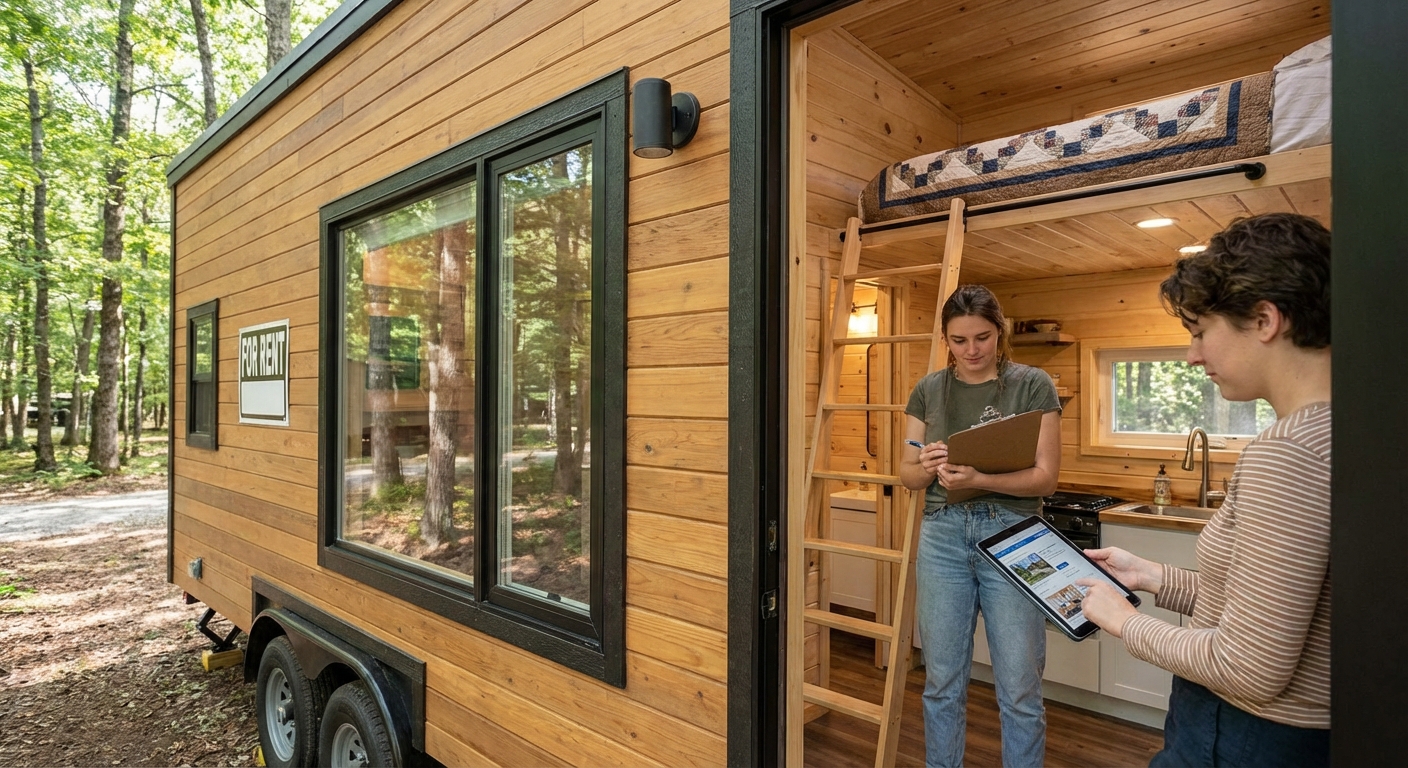
Guide to Rent To Own Houses for First Time Renters
actually went through a rent-to-own agreement myself and helped two friends negotiate theirs. That experience completely changed how I talk about this topic.
Is rent-to-own risky? Yes, if you walk in blind.
Can it be a smart bridge from renting to owning? Also yes — if you treat it like a serious real estate deal, not a casual lease.
Let me break down what I learned the hard way, with the stuff I wish someone had told me before I signed anything.
What Exactly Is a Rent-To-Own House?
A rent-to-own (RTO) house is basically a hybrid:
- You rent the property now
- You get the option (or obligation) to buy it later at a pre-agreed price
When I tested this myself, my agreement had three main parts:

- Lease agreement – Just like a regular rental: monthly rent, term length (mine was 3 years), who fixes what, late fees, all of that.
- Option to purchase – A separate document saying I could buy the home at $295,000 any time during the lease term.
- Option fee + rent credits – I paid an upfront, non-refundable option fee of 3% of the purchase price, and a portion of my rent ($250/month) would count as a “credit” toward the down payment if I decided to buy.
Some contracts are just “lease-option” (you can buy). Others are lease-purchase (you’re obligated to buy). That difference is huge.
In my experience, most first-time renters don’t realize that if they sign a lease-purchase and can’t qualify for a mortgage later, they can be legally on the hook for a house they can’t actually finance.
Why First-Time Renters Get Attracted to Rent-To-Own
I remember seeing the listing that hooked me: “Rent now, own later – bad credit OK!” It felt like a cheat code for homeownership.
The appeal is very real:
- Lower bar to get started – You usually don’t need a bank-approved mortgage right away.
- Time to fix your finances – You can work on your credit score, pay down debt, and build income history during the lease.
- Locked-in purchase price – In a rising market, this can be gold. I locked my price at $295,000. Two years later, comps were around $330,000.
- Psychological benefit – You’re not just “throwing money away on rent.” Some of it is structured to help you buy.
But here’s the part the glossy Facebook ads skip: if you don’t end up buying, you usually lose your option fee and all those rent credits.
When one of my friends backed out of his deal after a job loss, he walked away from over $9,000 in credits. That stung.
The Real Costs (That Sneak Up On You)
Let’s unpack the money side with actual numbers from my contract.
1. Option Fee
I paid a 3% option fee:
- Purchase price: $295,000
- Option fee (3%): $8,850 (non-refundable)
Many programs charge 2–5% up front. Some big corporate rent-to-own platforms push even higher when demand is strong. HUD and CFPB both warn that in most contracts, this is non-refundable, even if you don’t buy.
2. Higher-Than-Market Rent
My rent was about $250/month higher than comparable rentals nearby.
The seller justified it because $250/month was credited toward my future purchase. But that only matters if you successfully buy. If you move out? That “credit” vanishes.
3. Repairs and Maintenance
This part surprised me.
On a normal rental, the landlord handles big repairs.
On my rent-to-own, I was responsible for all maintenance, plus the first $500 of repairs every time. When the water heater died 10 months in, my “future homeowner” pride evaporated real fast.
A lot of RTO contracts shift homeowner-level responsibilities onto you before you’re the legal owner.
How the Process Usually Works (Step-by-Step)
Here’s the typical flow I’ve seen, including my own deal and ones I’ve reviewed for friends:
- You find a property offering rent-to-own (private seller, investor, or specialized company).
- You negotiate purchase price now, even though you’ll buy later (usually 1–5 years out).
- You pay an option fee (sometimes called “option money” or “option consideration”).
- You sign two documents – the lease and the purchase-option/lease-purchase agreement.
- You move in and pay rent – often with a “credit” portion baked in.
- During the lease:
- You work on your credit
- You save for the remaining down payment
- You (often) take care of maintenance
- Before the lease ends: you apply for a traditional mortgage.
- If approved: you buy at the agreed price, using your option fee and credits.
- If not approved or you bail out: the seller keeps the option fee and credits, and you move out.
I recently walked someone through this and we treated it like a countdown clock: “Can you get mortgage-ready in 24 months?” That single question dictated whether rent-to-own made sense.
The Upside: When Rent-To-Own Can Actually Be Smart
I’m not here to trash rent-to-own. Used wisely, it can work.
From what I’ve seen firsthand, RTO can make sense if:
- Your credit is bruised but fixable in 1–3 years (late payments, medical debt, thin history).
- Your income is stable or growing, but you lack savings for a full down payment right now.
- You’re in a hot market, and locking in a price now might be a win.
- You truly want that specific house and area, not just “any” starter home.
I had a friend who used rent-to-own after a divorce wrecked his credit. He spent two years aggressively rebuilding his FICO score and documenting self-employment income. By the end of his lease, he qualified for an FHA loan and his locked-in price was about $40,000 below market. For him, it was a massive win.
The Downsides: Where People Get Burned
Here’s where my skepticism came from — and it’s not unfounded.
In my experience, the big risks are:
- Contract traps – Vague or predatory language. I’ve seen clauses where if you’re late on rent twice, you lose the option to buy and your credits.
- Overpriced homes – Some sellers quietly pad the purchase price because they assume many tenants won’t actually buy.
- Unrealistic timelines – Expecting a 540 credit score renter to be mortgage-ready in 12 months is… optimistic.
- No independent inspection – People skip a home inspection because “I’m just renting now.” Then discover structural issues later.
- No legal review – Using a generic template the seller downloaded and edited themselves. Terrifying.
When I had a real estate attorney review my agreement, he caught three separate clauses that would’ve allowed the seller to cancel my option over minor issues. That $350 legal bill was some of the best money I’ve ever spent.
Red Flags I Watch For (And You Should Too)
When I evaluate rent-to-own deals now, these are instant red flags:
- The seller refuses to put everything in writing (“Don’t worry, we’ll work it out later”).
- The option fee is huge (above ~5–7%) or vaguely described.
- The contract doesn’t clearly state whether it’s an option or an obligation to buy.
- There’s no clear plan for who pays what repairs (roof, HVAC, plumbing, etc.).
- You’re not allowed to do a professional home inspection.
- The seller tells you not to involve a lawyer or agent because it’s “just a simple agreement.”
If you’re seeing two or three of these in one deal, walk away. There will be other houses.
How to Protect Yourself as a First-Time Renter
Here’s what I now recommend — based on both my own contract and the mistakes I’ve seen other people make.
1. Run the Numbers Like an Investor
Ask yourself:
- How much am I paying upfront (option fee)?
- How much extra rent am I paying compared to normal rentals nearby?
- What happens to that money if I don’t buy?
When I did the math on a friend’s contract, we realized he was effectively paying over $1,000/month extra for “credits” that only worked if everything went perfectly. He walked away from that deal.
2. Get the Home Inspected — Yes, Even as a “Renter”
I recently discovered just how common it is for RTO tenants to skip inspections. That’s wild to me now.
If you’re treating this like a path to ownership, treat it like a purchase from day one:
- Hire a licensed home inspector
- Use the report to negotiate repairs or price
- If major issues show up and the seller won’t budge, be ready to walk
3. Pull Your Credit and Create a Mortgage Timeline
Before you sign anything, talk to a mortgage broker or loan officer. Not a random online forum, an actual lender.
Ask them:
- What’s my realistic timeline to qualify?
- What type of loan am I most likely to get (FHA, conventional, VA)?
- What down payment will I need on top of my rent-to-own credits?
When I did this, the loan officer basically said, “You’re 18–24 months away if you stick to a plan.” That shaped the lease term I negotiated.
4. Have a Real Estate Attorney Review the Contract
I know, nobody wants another bill. But this isn’t a Netflix subscription, it’s a six-figure asset.
Specifically ask your attorney to check:
- What conditions could make me lose my option?
- What happens if I’m late on rent? Once? Twice?
- Who pays for which repairs, in exact terms?
- What happens if I can’t get financing by the end of the lease?
I’ve yet to see a rent-to-own contract that didn’t need at least a few edits to be fair to the tenant.
Alternatives You Should At Least Compare
When I looked back at my own deal, I realized there were a couple of routes I could’ve taken instead of rent-to-own. For some people, these may actually be better:
- Save aggressively and rent normally for 1–3 years, then buy with a traditional mortgage.
- FHA loans – As low as 3.5% down for qualified borrowers, often more flexible on credit.
- Down payment assistance programs – Many states and cities offer grants or low-interest loans for first-time buyers.
- Buying with a co-borrower – Partnering with a trusted family member or friend (this one needs iron-clad agreements).
Sometimes rent-to-own is the right bridge. Other times, it’s the expensive detour.
So, Is Rent-To-Own Right For You?
Here’s my honest take after being on both sides of this — as a tenant-buyer and as the “friend who reads the contracts” for others:
Rent-to-own can make sense if:
- You deeply want that specific house and neighborhood
- Your credit/income situation is improving, not chaotic
- You’re disciplined enough to treat this like a deadline, not a vague hope
- You’re willing to pay for professional help (inspection + attorney)
It’s probably a bad idea if:
- You’re barely hanging on financially month to month
- You haven’t looked at your credit report in years
- The seller is pressuring you to sign now or lose the deal
- You’re hoping “something will work out” with financing later
When I tested rent-to-own myself, it worked out only because I treated it like I was buying from day one, not “just renting.” If you’re a first-time renter thinking about this path, you don’t need to be scared of it — you just need to be strategic, and a little bit stubborn about protecting yourself.
Print the contract. Grab a highlighter. Ask ugly questions. And don’t be afraid to walk away.
Future-you, holding your own house keys, will be glad you did.
Sources
- Consumer Financial Protection Bureau – What to know before entering a rent-to-own agreement - Federal guidance on risks and protections in rent-to-own housing.
- U.S. Department of Housing and Urban Development (HUD) – Are rent-to-own homes a good idea? - HUD counseling guide discussing pros, cons, and common pitfalls.
- Federal Trade Commission – Rent-to-own: Costly convenience - FTC breakdown of cost structures and consumer protections in rent-to-own models.
- Forbes – What Is A Rent-To-Own Home? - Overview of how rent-to-own agreements work in residential real estate.
- Freddie Mac – CreditSmart Homeownership Education - Educational resources on preparing financially and credit-wise for buying a home.