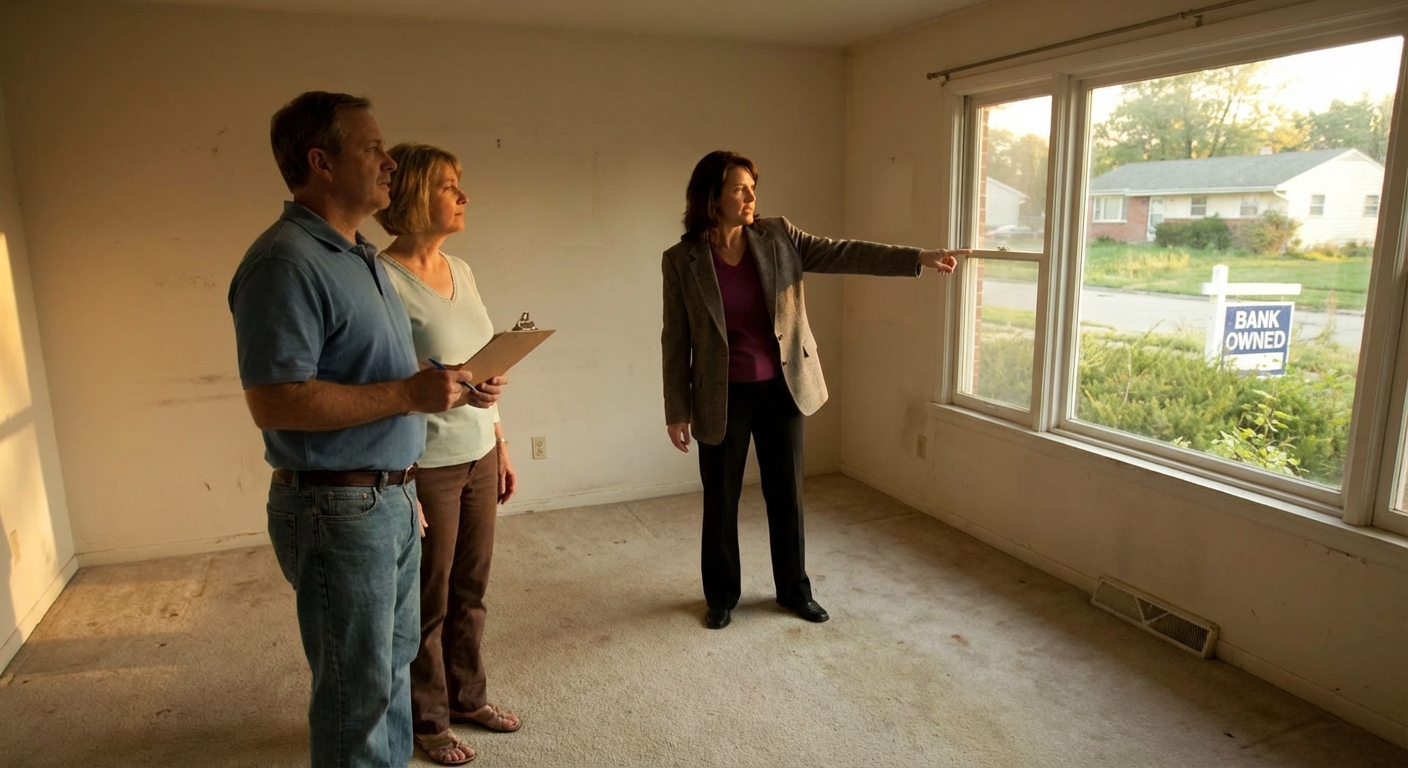
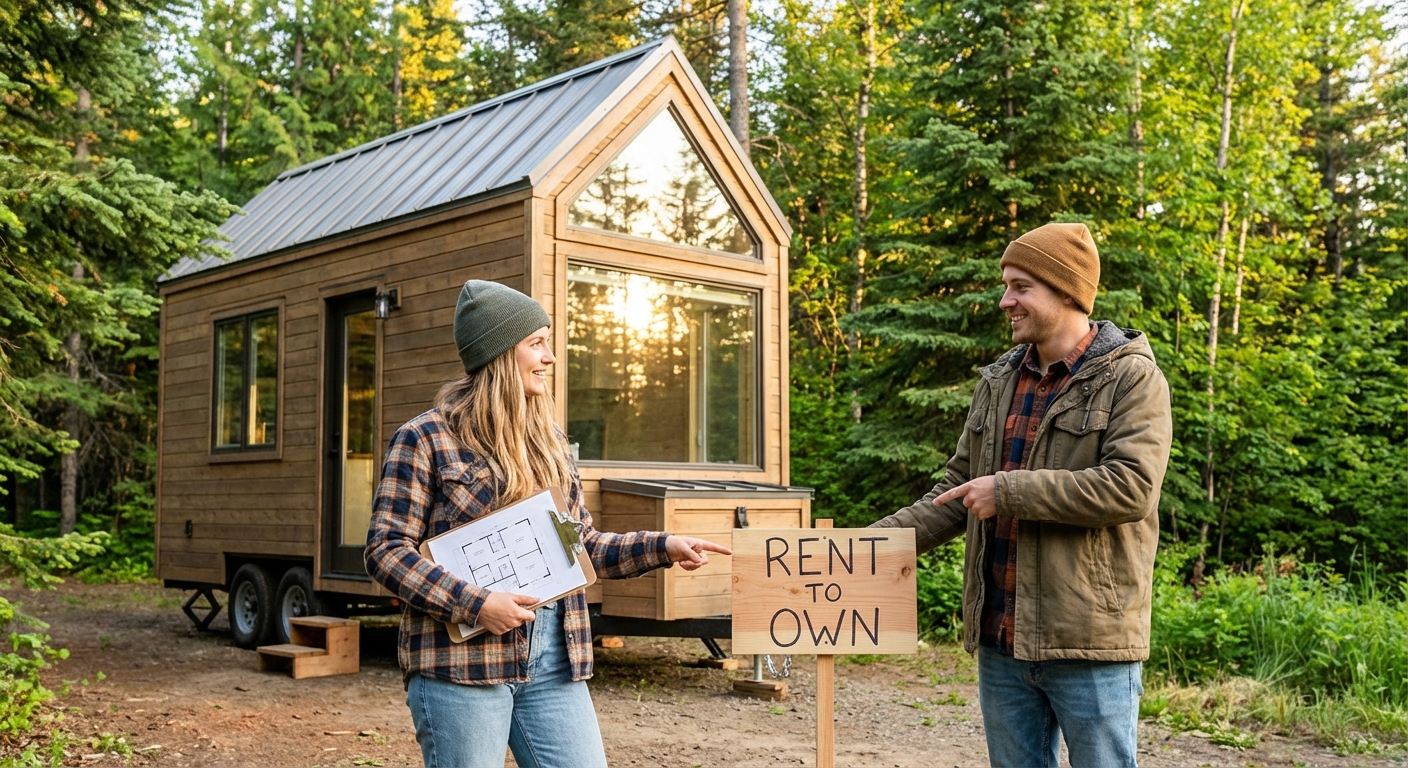
Guide to Rent to Own Tiny Houses
ile helping a friend who’d been outbid on three “normal” homes in a row. That experience sent me down the rabbit hole of contracts, zoning, and some surprisingly creative financing.
This guide is what I wish we’d had at the start.
What “Rent to Own” Actually Means for Tiny Houses
When I first heard “rent to own,” I assumed it was just renting with a fancy bow on top. Not quite.
Rent to own (RTO) is a hybrid between renting and buying:- You move into the tiny house as a tenant.
- You pay monthly rent, usually higher than market rent.
- A portion of that rent (often 10–30%) is credited toward the future purchase price.
- You get an option (not an obligation) to buy the home later, at a price typically agreed upfront.
In tiny house land, this usually happens in one of three ways:
- Rent to own the structure only, parked on someone else’s land (often in a tiny house community or RV park).
- Rent to own the tiny house + land package, like a micro‑subdivision or rural lot.
- Lease‑purchase with an owner‑builder, where an individual who built the tiny home finances you directly.
When I tested a few deals for a client in Oregon, I noticed something interesting: the monthly payment looked high compared to a mortgage, but the barrier to entry (upfront cash and credit score) was dramatically lower.
Why People Choose Rent to Own Tiny Houses
In my experience, three types of people are drawn to this setup:
- Those priced out of traditional homeownership
When I helped my friend, her credit score was in the high 500s after medical bills. Conventional lenders basically laughed her out of the room. A tiny house RTO let her move toward ownership without qualifying for a 30‑year mortgage.
- Digital nomads and lifestyle minimalists
A tiny house on wheels with an RTO contract gives them time to try the lifestyle before committing fully. One couple I spoke with in a Colorado tiny home community did a 3‑year rent‑to‑own as a “trial marriage” to tiny living.
- Self‑employed or gig‑economy workers
Income volatility can absolutely wreck a conventional underwriting application. RTO deals often rely more on income history and references than rigid debt‑to‑income ratios.
According to a 2020 survey from the Tiny House Industry Association, over 63% of tiny house owners report lower housing costs than before and significantly higher satisfaction with their financial situation. That tracks with what I’ve seen on the ground: people using tiny RTOs as a stepping stone to more freedom, not just smaller space.
How a Typical Rent to Own Tiny House Deal Is Structured
Let me break down a common structure I’ve seen (and negotiated):
- Option fee (upfront)
You pay a non‑refundable option fee (often 2–7% of the agreed purchase price). For a $75,000 tiny house, that might be $2,000–$4,000. It buys you the right, but not the obligation, to purchase later.
- Monthly rent
You pay market or slightly above‑market rent. Say:
- Base rent: $1,000/month
- Extra rent‑to‑own premium: $200/month
- Credit applied to purchase each month: $150/month (the rest is the seller’s incentive)
- Rent credit
Over 3 years, $150/month becomes $5,400 in credits. That’s like forcing yourself to save a down payment. But — and this is huge — you usually lose those credits if you walk away or default.
- Purchase price and term
You agree on a purchase price upfront (for example, $75,000) and a timeframe, such as 3–5 years, to exercise your option to buy. Some contracts let the final price float with an appraisal; most keep it fixed.
- End‑of‑term financing
By the time your term ends, you’re expected to:
- Get a loan (personal loan, RV loan, chattel loan, or land‑plus‑home mortgage if it qualifies), or
- Pay cash from savings, sale of another asset, or family assistance.
The best RTO contracts I’ve seen spell out all numbers in a plain‑English summary page at the front. If the seller won’t do that, I get nervous.
The Big Pros (From Someone Who’s Actually Seen These Work)
When I talk to people living in rent‑to‑own tiny houses, a few advantages keep coming up.
1. Lower up‑front cost
Compared to a traditional 20% down payment on even a modest home, a few thousand dollars in an option fee is doable for many renters. One client of mine in Tennessee moved into a brand‑new 280‑square‑foot tiny home with $3,000 upfront instead of the $35,000 she was staring at for a conventional starter home.
2. Chance to “test drive” tiny living
This isn’t a theoretical perk. I watched a couple realize, six months in, that they absolutely hated sharing one tiny closet. Their contract let them walk away after a year, losing some credits but avoiding a full purchase regret.
3. Time to repair credit and build a down payment
Rent credits + 2–3 years of on‑time payments can be powerful when you walk into a bank later. I’ve had underwriters tell me they like seeing consistent housing payments even more than a short, perfect credit history.
4. Creative path around mortgage barriers
Because many tiny houses (especially on wheels) don’t meet standard mortgage guidelines — HUD’s manufactured housing rules or traditional appraisal frameworks — conventional loans can be a mess. RTO creates a workaround while lending products slowly catch up.
The Cons and Hidden Traps You Really Need to Know
I’ve also seen rent‑to‑own tiny deals go sideways. Here’s where people get burned.
1. Non‑refundable money
Option fees, rent premiums, and sometimes even repairs can be non‑refundable. If you lose your job, break up, or have to move for family reasons, you might walk away with nothing but experience.
I watched one buyer lose nearly $8,000 in credits after a medical emergency forced a relocation. It wasn’t the seller being evil — the contract was just brutally clear.
2. Overpaying vs. market value
Because you’re paying for flexibility and access, RTO tiny homes can be priced above what you’d pay with cash. And tiny homes depreciate more like vehicles if they’re on wheels and not attached to land.
A 2022 article in Forbes on tiny houses pointed out that many tiny homes don’t appreciate like standard real estate, especially if they lack permanent foundations and legal zoning as full‑time residences. You’re not always building classic equity.
3. Zoning and legality nightmares
This is the sneaky one. Some municipalities treat tiny homes as RVs; others as accessory dwelling units; others just say “nope.” If you’re in an area where full‑time living in a tiny home is technically illegal, you could face:
- Fines
- Eviction
- Forced relocation of the house
I once reviewed a contract where the seller refused to guarantee that full‑time occupancy was legal. That was an instant red flag and we passed.
4. Maintenance and responsibility blur
Who fixes the composting toilet when it rebels? Who replaces the roof if there’s a leak? Contracts vary wildly. I’ve seen some where the tenant‑buyer is responsible for everything as if they already own the home, even though they technically don’t.
If it’s not crystal‑clear, assume you’ll be the one holding the wrench and the bill.
Key Clauses to Watch for in Your Contract
I’m not your lawyer (and you absolutely should have one), but here are the big items I insist clients clarify before signing:
- Exact option fee and what happens if you walk away
Is any part refundable? Under what conditions?
- Rent credit math
- How much of each payment goes toward the purchase?
- Is it a flat dollar amount or a percentage?
- Does late payment kill your credits for that month?
- Purchase price formula
- Is it fixed from day one?
- Does it adjust based on an appraisal?
- Is there a minimum or maximum cap?
- Maintenance responsibilities
Spell out systems: roof, HVAC, composting or flush toilet, trailer base, tires, skirting, etc.
- Default and eviction terms
- How many days late counts as default?
- Is there a grace period?
- What happens to your stuff if you’re evicted?
- Zoning and use guarantees
I push for language where the seller warrants that:
- The tiny house is legally allowed as a dwelling where it sits, or
- They disclose in writing that it’s a gray area and you accept that risk.
I learned the hard way on one deal that “we’ve never had a problem” is not a legal guarantee.
Financing the Purchase at the End of the Term
A lot of people think, “Future me will figure it out.” Future you deserves better planning.
Here are the most common financing paths I’ve seen work:
- Personal loans: For cheaper tiny homes ($30k–$60k), unsecured personal loans can bridge the gap. Rates are higher than mortgages but lower than some rent‑to‑own markups.
- RV or chattel loans: If your tiny home is built to RV standards (like RVIA certification), some lenders treat it like an RV. These often have shorter terms (10–20 years) and variable rates.
- Land‑plus‑home mortgage: If the tiny home is on a permanent foundation, meets building codes, and sits on its own parcel, you may qualify for a traditional mortgage. This is where appraisal and zoning really matter.
- Cash‑out refinance on other property: A few clients have used equity in another home or land to pay off the tiny house at the end of the RTO term.
My advice: start talking to lenders in year one, not month 35 of a 36‑month contract. I’ve seen last‑minute funding scrambles kill otherwise good deals.
How to Vet a Rent to Own Tiny House Opportunity
Whenever I evaluate one of these deals, I run through a simple checklist:
- Google the seller or community
Reviews, lawsuits, BBB complaints, local Facebook groups. If three people say, “They kept my option fee for a technicality,” I pay attention.
- Check zoning and legality yourself
Call the city or county planning department. Ask direct questions about full‑time occupancy in a tiny home at that location. I’ve had more than one planner quietly say, “Off the record, we don’t enforce it much, but technically it’s not allowed.” That’s a risk calculation you have to own.
- Get the contract reviewed by a real estate attorney
Especially one familiar with manufactured housing or mobile homes. The U.S. Department of Housing and Urban Development (HUD) has specific rules for manufactured housing; a lawyer who knows those nuances can save you from surprises.
- Inspect the tiny home like any other house
Hire an inspector who understands tiny construction: weight distribution, trailer condition, moisture issues, insulation, and off‑grid systems.
- Run your numbers pessimistically
Assume:
- You might not buy.
- You might lose the option fee and some rent credits.
- You’re paying a premium for flexibility.
If it still feels worth it under those assumptions, you’re probably in safer territory.
Who Rent to Own Tiny Houses Are (and Aren’t) Good For
From what I’ve seen, rent‑to‑own tiny houses are best for people who:
- Crave homeownership but can’t yet qualify for conventional financing.
- Are genuinely excited about small‑space living, not just desperate for any option.
- Are willing to read (and negotiate) a contract carefully.
- Can handle the risk of losing some or all of their upfront money.
They’re usually not ideal for:
- Anyone looking for guaranteed appreciation and traditional equity growth.
- People uncomfortable with legal gray areas in zoning.
- Those who move frequently for work.
When I step back, the pattern is clear: the happiest RTO tiny homeowners treat this as a strategic bridge — from renting to flexible, lower‑cost ownership — not a magical loophole that makes housing cheap and risk‑free.
If you go in eyes open, ask hard questions, and get the right help, a rent‑to‑own tiny house can be a very real, very practical way to buy your way out of the rent treadmill.
Sources
- U.S. Department of Housing and Urban Development – Manufactured Housing - Overview of HUD rules for manufactured and factory-built homes
- Forbes – The Pros And Cons Of Buying A Tiny House - Analysis of tiny house costs, appreciation and financing challenges
- Tiny Home Industry Association - Industry organization with data and resources on tiny house living and regulation
- Consumer Financial Protection Bureau – What is a rent-to-own or lease-to-own contract? - Federal guidance on how rent-to-own contracts work and key risks
- Cornell University – Land Use & Zoning Law - Background on zoning concepts that affect where tiny houses can legally be placed