Guide to Sam’s Club Deals and Member Savings
there, pushing a flatbed stacked with paper towels high enough to qualify as a fire hazard.
Over the last few years, I’ve treated Sam’s Club like a personal experiment in strategic bulk shopping. I’ve tested the apps, the membership tiers, the limited-time deals, even the rotisserie chicken vs. whole raw chicken math. Some hacks are absolutely worth it; some are… well, marketing.
Here’s the playbook I actually use now when I’m trying to squeeze every last cent of value out of a Sam’s Club membership.
Membership 101: Which Tier Actually Pays Off?
Sam’s Club has two main tiers for most people:
- Club (standard): around $50/year
- Plus: around $110/year, with extra perks (cash rewards, earlier shopping hours, free shipping on many items)
I started with the basic Club membership, then upgraded to Plus after six months once I’d tracked my own spending.
When I tested Club vs. Plus
In my first 12 months of Plus, I:
- Spent about $3,800 at Sam’s (household of four + a small side hustle reselling snacks at local events)
- Earned roughly $76 in Sam’s Cash from the 2% rewards on qualifying purchases
- Saved about $60–$80 on shipping by ordering heavy items (cat litter, detergent, cases of water) online
Did I “profit”? Technically yes. If you add the rewards + shipping savings, I more than covered the extra $60 cost of Plus versus Club.
But here’s the nuance:
- If you spend under ~$2,500/year, the extra fee for Plus is probably not worth it purely for rewards.
- If you regularly ship bulky items, do curbside a lot, or run a side business, Plus starts making serious sense.
Sam’s itself says most members who spend over about $45/week will earn back the Plus fee in rewards and perks. In my experience, that’s pretty close.
The Real Goldmine: Knowing When Sam’s Club Discounts Hit
I used to think Sam’s savings were all about the giant bottles and bulk packages. That’s only half the story. The big wins come from stacking timing + promos.
Instant Savings Events
Every few weeks, Sam’s runs “Instant Savings” promotions — automatic discounts loaded to all members. No clipping, no codes. I’ve seen:
- $3–$8 off cleaning supplies
- 15–30% off snacks and drinks
- Deep cuts on personal care and paper goods
When I tested this for three months, I changed my strategy: I only bought non-urgent staples when they were in an Instant Savings booklet.
Result:
- I saved $92.14 (yes, I actually added it up) just by waiting a week or two and timing my stock-ups.
Pro tip from hard experience: if you see toilet paper, detergent, or diapers in the Instant Savings flyer, don’t “come back next week.” I did that once with the Member’s Mark paper towels. They sold out, and I had to buy the pricy name brand at a regular grocery store. Never again.
Seasonal Clearance
Walk the middle aisles right after a major holiday or season change:
- November: Halloween candy and costumes marked down aggressively
- January: Holiday decor and gift sets for 50–75% off
- Late summer: Patio furniture, grills, and outdoor gear heavily discounted
One year I bought next year’s artificial Christmas tree in January for about 60% off. It sat in my garage for 11 months, but I felt gloriously smug when December rolled around.
Unit Price Is Your Reality Check (Not the Big Price Tag)
Bulk doesn’t automatically mean cheaper. When I actually started looking at unit prices on the shelf tags, a few illusions died fast.
Example from my own receipt log:
- Local grocery store butter: $4.99 for 1 lb → $4.99/lb
- Sam’s Club 4-lb pack: $14.28 → $3.57/lb (genuine savings)
But then:
- Fancy snack mix at Sam’s: looked like a deal at $12.98 for a huge tub
- Unit price vs. a store-brand bag at my regular supermarket? More expensive per ounce at Sam’s
I now have a simple rule: if the Sam’s unit price isn’t at least 10–15% cheaper than my regular store, I skip it unless quality is noticeably better.
When I tested this for a month, I avoided a ton of “fake bargains” and cut my Sam’s bill by about 18% without feeling deprived.
The App, Scan & Go, and Hidden Digital Deals
The Sam’s Club app is where a lot of the modern savings hide.
Scan & Go (My Favorite Sanity Saver)
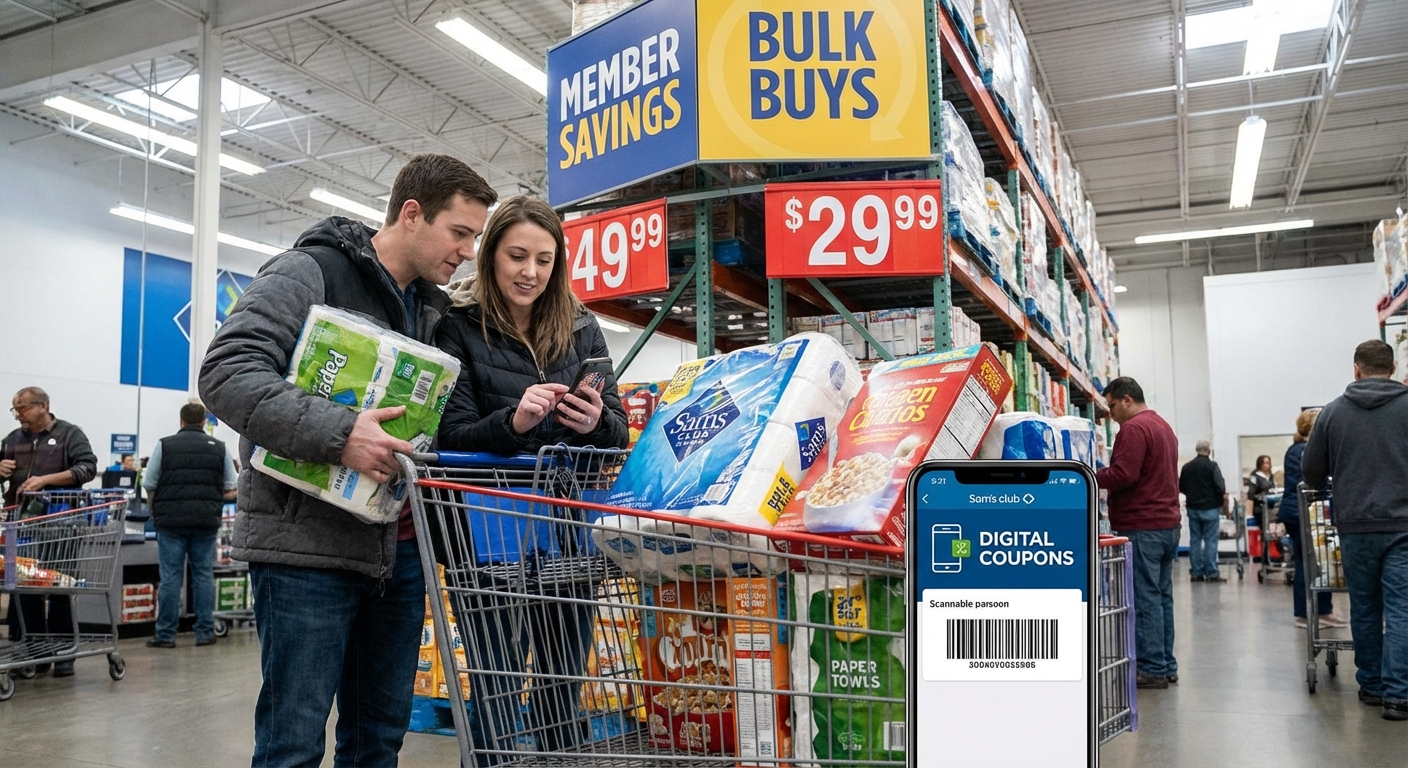
With Scan & Go, you scan items as you put them in your cart, pay in the app, then walk out through a special lane where they just scan your digital receipt. The first time I tried this on a Saturday afternoon, I skipped a checkout line with at least 10 people.
Money-saving angle:
- You see your running total in real time
- I noticed I put fewer “impulse snacks” in my cart when I watched the total creep up on my phone
In my experience, this alone saves me $10–$20 per trip in avoided extras.
App-Only or Digital-First Offers
Sam’s sometimes pushes member-exclusive or app-first offers — things like:
- Extra Sam’s Cash with certain purchases
- Limited-time discounts on gas for Plus members
- Targeted deals based on your shopping history
I’ve seen extra discounts on things like coffee and baby products that never made it onto the physical signage. Moral of the story: open the app before you walk in.
What’s Actually Worth Buying in Bulk (and What Isn’t)
Over time, I built a mental list of always-buy-at-Sam’s and don’t-get-tricked items.
Usually Worth It
- Paper goods (toilet paper, paper towels, tissues): Durable, don’t expire, genuinely cheaper per unit.
- Cleaning supplies & detergent: The big jugs are heavy, but I often save 20–30% vs. grocery store sizes.
- Meat, if you portion and freeze: I buy whole pork loins or family packs of chicken, then vacuum seal at home. Per-pound price can beat even weekly supermarket sales.
- Cheese & butter: Freeze what you won’t use quickly. The per-pound cost is noticeably lower in my area.
- Gas: My local Sam’s gas station runs about $0.10–$0.30 cheaper per gallon than surrounding stations, based on AAA data and my own tracking. Over a year, that alone easily offsets part of the membership.
Often Overrated
- Fresh produce: When I tested this, we wasted more than we saved. Unless you have a big household or a plan to prep and freeze, those giant clamshells of berries become compost.
- Bakery items: They taste good, but the giant cakes and pastry trays are dangerous for your budget and your willpower.
- Single trendy items: Protein snacks, keto treats, specialty drinks — the bulk price looks good, but smaller units at discount grocers or Amazon Subscribe & Save can be comparable or even cheaper.
Don’t Ignore Services: Vision, Pharmacy, Tires & Travel
The in-club products are only half the value. I underestimated the services for years.
Pharmacy & Vision
The first time I priced out my contact lenses through Sam’s, I kicked myself for not doing it earlier.
- I saved about $60 on a year’s supply compared to my optometrist’s office
- My prescription sunglasses were around 20–25% less than what I’d paid elsewhere the year before
Generics at the Sam’s pharmacy can be very competitive too. The caveat: you have to compare against grocery store and big-box pharmacy discount lists — sometimes they’re close.
Tires & Auto
When I tested Sam’s for tires vs. an independent local shop, Sam’s came out cheaper on a major brand set — and included free rotations and balancing. The local shop, however, had slightly better service and faster appointments.
My rule now: if I want maximum savings, I go Sam’s. If I want ultimate convenience, I stick with my local mechanic.
Travel & Gift Cards
In the Sam’s Club Travel & Services section (online), I’ve seen:
- Up to 25–30% off theme park tickets
- Discounted hotel bookings
- Rental car deals
And gift cards in-club are one of my favorite stealth hacks: paying ~$80–$85 for $100 in restaurant or entertainment gift cards. When I tracked this for a year, I saved over $120 just buying these before planned nights out.
The Downsides No One Puts in the Brochure
To stay honest: Sam’s Club isn’t a magic money machine.
Here’s where I’ve seen it flop for people (including me, early on):
- Overbuying: You buy a 48-pack of something you sort of like, then get sick of it halfway through. The sunk-cost guilt is real.
- Storage space: If you’re in a small apartment, stacking paper towels to the ceiling gets old fast.
- Membership FOMO: Once you’ve paid the fee, there’s a temptation to “make it worth it” by shopping more often than you truly need.
- Distance & time: If your club is far away, gas + time might cancel out a chunk of your savings.
I’ve also run into the occasional out-of-stock issue on promo items, especially during big Instant Savings events.
The way I avoid these traps now:
- I keep a running list on my phone of only the items I always buy there (paper goods, certain snacks for the kids, cat litter)
- I plan one or two big stock-up trips per month instead of weekly meandering visits
My Simple System for Maximizing Sam’s Club Savings
After a lot of trial, error, and some embarrassing cart totals, this is the routine that’s worked best for me:
- Check the Instant Savings flyer and app before leaving home
- Build a list of only what I truly need or what’s significantly discounted
- Use Scan & Go so I can watch the total and avoid surprise overspending
- Compare unit prices (mentally or with my notes from other stores) on bigger-ticket items
- Fill up at the Sam’s gas station when I’m there anyway
- Reevaluate my membership tier once a year using actual numbers — if I’m not earning back the Plus premium, I downgrade
When I followed this consistently for three months, my average monthly household spending dropped, and my pantry actually stayed more organized because I wasn’t panic-buying or “stocking up” on random items.
If you treat Sam’s Club less like a theme park and more like a tool — and you’re realistic about your household’s consumption — the membership can absolutely pay for itself and then some.
Sources
- Sam’s Club Official Membership Benefits - Overview of Club and Plus membership features and perks
- Consumer Reports: Warehouse Clubs Comparison - Analysis of savings strategies at major warehouse stores
- Forbes: Are Warehouse Club Memberships Worth It? - Breakdown of when memberships like Sam’s Club pay off
- U.S. Bureau of Labor Statistics – Consumer Expenditures - Data on average household spending patterns to benchmark your own
- AAA Gas Prices - Regional gas price comparisons to estimate savings from warehouse club fuel stations