Guide to Saving Money at Trader Joe’s
Everyone around me had a “favorite TJs item” the way people have favorite children. I just saw cute packaging and assumed I’d walk out broke with three frozen meals and a bag of grapes that cost like a car payment.
Then I actually started tracking what I spent there.
When I tested my usual weekly haul at Trader Joe’s versus my regular supermarket, my total dropped by about 18% the first week and has stayed consistently lower ever since. Not because I bought less, but because I learned how to shop Trader Joe’s instead of just wandering around like a hungry raccoon.
This is the guide I wish I had when I started.
Start With a “Base List,” Not a Vibe
When I go to Trader Joe’s without a plan, I come home with:
- 3 different frozen dumplings
- 2 random dips
- A candle
- Zero actual meal ingredients
So now I keep a “base list” on my phone — the core items I buy almost every trip because they’re genuinely cheaper or higher quality than my local grocery store. I fill that in first, then allow myself 1–2 “fun” picks.
In my experience, these categories are where the savings really stack up:
- Cheese – Their private-label cheeses are wild for the price. A 1-lb block of mozzarella or cheddar is often under $5, and specialty cheeses (like Unexpected Cheddar) regularly undercut competitors by 20–30%.
- Nuts & seeds – Almonds, walnuts, pepitas, and trail mixes are usually significantly cheaper per ounce than big-brand equivalents. I’ve tested this against Costco and my local chain; TJs wins often unless I’m buying in huge bulk.
- Frozen fruits & veggies – Blueberries, mango, stir-fry blends. When I compared unit prices, many bags were cheaper than fresh and perfect for smoothies and batch cooking.
If I stick to my base list and a hard cap of two impulse items, I stay on budget almost automatically.
Master the Private Label Game
Trader Joe’s entire business model is built around private label. Almost everything is their own brand, which means they can negotiate directly with manufacturers and skip a lot of brand markup.
I recently dug into a 2019 Forbes feature on Trader Joe’s and learned that they carry around 4,000 SKUs, compared with 30,000–50,000 at a typical supermarket. That limited assortment gives them huge buying power on fewer items and keeps prices down.
When I tested this, I did a nerdy little experiment:
- I bought basic pantry staples at Trader Joe’s (olive oil, pasta, tomato sauce, peanut butter, rice).
- Then I matched them as closely as possible at my regular store, even choosing the store-brand options.
My Trader Joe’s basket was about 12% cheaper.
The trick is: trust the Trader Joe’s label for basics. Don’t hunt for brands that aren’t there. You’ll overpay when you skip their versions.
Where I’ve consistently saved with their store brand:
- Extra virgin olive oil
- Organic pasta sauce
- Greek yogurt
- Canned beans and tomatoes
- Seasonal coffee blends
But it’s not blindly perfect.
Where the Private Label Hype Isn’t Worth It
In my experience, a few categories don’t save you much (and sometimes cost more):
- Single-serve snacks – The little snack packs of nuts or trail mix are adorable but expensive per ounce. I buy the big bags and portion them out at home.
- Some sauces and marinades – The specialty ones add up fast, especially for small bottles. I treat these as “fun extras,” not staples.
Bottom line: if there’s a Trader Joe’s version of a staple, it’s probably your best money move. Just double-check anything in tiny, pretty packaging.
Know What’s Actually Cheap (and What Just Looks Cute)
One trap I fell into early on: assuming everything at Trader Joe’s is a bargain. It’s not.
When I started price-tracking a few repeat items in a notes app, a pattern popped up.
Consistent Money-Savers (For Me)
- Bananas – The famous 19¢ per banana (as of 2023) is real and still listed on their site. I’ve never beaten that at another major chain.
- Bagged salads – Their salad kits are often $0.50–$1 cheaper than other grocery stores’ similar mixes.
- Flowers – Not food, but their $3.99–$9.99 bouquets are way cheaper than florist or supermarket florals. Great for gifts without blowing your budget.
- Organic staples – Some organic produce and dairy items are priced closer to conventional supermarket items. When I compared organic milk and eggs, TJs usually came out ahead.
Sneaky Budget Killers
- Prepared refrigerated meals – Delicious, yes. Budget-friendly, not always. A $6–$7 single-serve meal vs. a $10–$12 DIY meal that feeds 3–4 people adds up.
- Fancy beverages – Sparkling juices, cold brew concentrates, seasonal drinks — they’re fun, but they turn a $60 trip into an $85 trip fast.
- Cheese overload – Cheese is a deal there… until you buy five kinds “to try.” I’ve done this. My bank account did not applaud.
I still buy these, but I mentally categorize them as “restaurant replacements” or “treats,” not core groceries.
Use the Free Samples as a Strategy, Not Entertainment
When my local Trader Joe’s brought back samples post-2020, I watched people (including me) do the same thing: try the sample, grab two boxes, toss them in the cart without even checking the price.
Now I use samples to prevent bad buys instead.
If I like a sample, I always:
- Look at the price per serving in my head (roughly): “Is this $6 for 2 servings or 6 servings?”
- Ask myself: “Would I buy this again at this price?”
When I started doing this, my cart went from “15 random frozen things I might hate” to “3 or 4 I know I really like and will finish.” That alone probably saves me $15–$20 per visit in wasted food.
Pro tip from an employee I chatted with: they’ll often open a product for you to sample if you ask nicely and they’re not slammed — especially snacks or sweets. That’s straight from the Trader Joe’s customer experience playbook, not a secret hack.
Lean Into the Freezer Aisle (Smartly)
Trader Joe’s frozen aisle is like Netflix: too many options, not enough stomach.
When I tested swapping some of my usual fresh buys for frozen TJs versions, I was surprised:
- Frozen stir-fry veggies + frozen brown rice + tofu = 10–15 minute dinners for under $2 per serving.
- Frozen fruits made my smoothies about 30–40% cheaper than buying fresh berries that spoiled halfway through the week.
But not all frozen is a money win.
What’s usually worth it:
- Plain frozen veggies (broccoli, green beans, mixed veggies)
- Frozen berries and mango
- Plain rice and grains
- A couple of “emergency” meals like dumplings or enchiladas
What can crush your budget if you overdo it:
- Fully prepared frozen entrées as a daily habit
- Appetizers that feel “cheap” but add up (mini quiches, pastry bites, etc.)
I treat frozen entrées like I treat takeout: great for bad days, not my default.
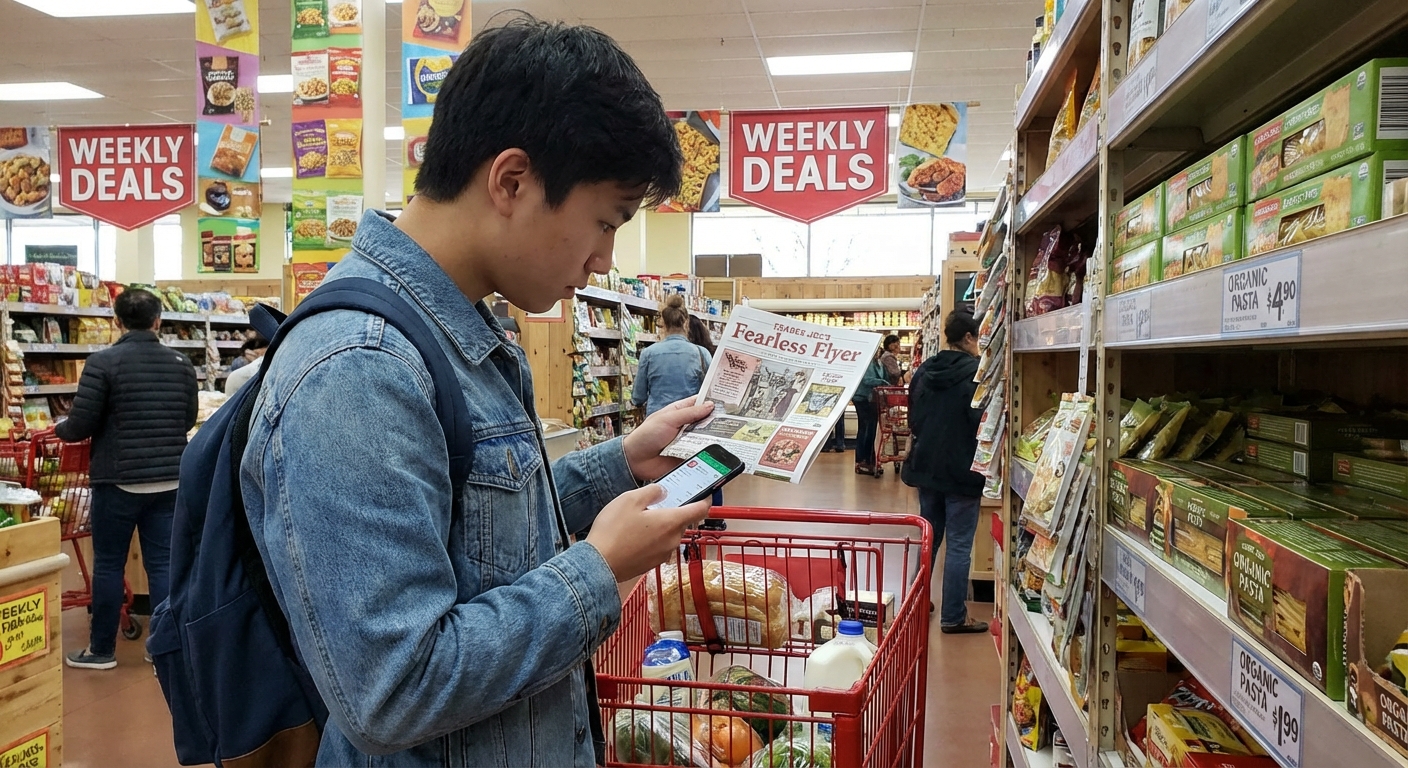
Shop the Fearless Flyer… With Actual Fear
I used to treat the Fearless Flyer (Trader Joe’s monthly-ish flyer) like a shopping checklist. That’s a good way to spend extra money on things you never knew you “needed.”
Now, I use it as a research tool:
- I circle 3–4 things that genuinely fit how I eat.
- I pick only one or two to actually buy that month.
- I ignore anything that’s just seasonal for the sake of FOMO.
There’s a reason this works: TJ’s is extremely good at seasonal scarcity and clever copywriting. Marketing professors actually use them as case studies in branding.
Once I admitted I was being marketed to, not “discovering hidden gems,” my wallet breathed a sigh of relief.
Don’t Sleep on the Return Policy
Here’s something a crew member told me when I complained (gently) about a product I didn’t like: “You know you can just bring it back, right?”
Trader Joe’s has a famously generous satisfaction guarantee. If you try something and it’s bad or just not your thing, you can return it — even opened — with your receipt, and they’ll refund you.
I don’t abuse this, but it actually encourages me to try one new item per trip without feeling like I’m gambling $5–$7. And it reduces food waste for me because I’m not forcing myself to finish something I hate “because I paid for it.”
From a money-saving perspective, this policy protects you from the sunk-cost trap. You’re not stuck with a $10 jar of specialty sauce you’ll never use again.
Timing and Crowd Strategy (Yes, This Matters)
This isn’t a conspiracy theory: I genuinely spend more when the store is packed.
When I shopped Saturday midday, I grabbed things just to get out faster. When I switched to weeknights after 7pm or early weekday mornings, I:
- Had time to compare prices calmly.
- Actually read labels.
- Didn’t panic-buy snacks while stuck in a long line.
A 2018 study on shopping behavior published in the Journal of Retailing and Consumer Services found that crowding increases stress and leads to more impulsive decisions. I didn’t need a study to tell me that, but it’s nice backup.
My best money-saving Trader Joe’s windows personally:
- Tuesday or Wednesday evenings
- Right at opening on a weekday
Your location may vary, but if you’re always shopping during the rush, test a quieter time and see what happens to your receipt.
When Trader Joe’s Isn’t Actually the Cheapest Option
I love Trader Joe’s, but I don’t pretend it’s unbeatable.
Here’s where I’ve found other stores win:
- Big bulk items – Giant bags of rice, oats, or beans are usually cheaper at Costco or ethnic markets.
- Very specific ingredients – Specialty Asian, Indian, or Latin ingredients are often better (and cheaper) at dedicated markets.
- Name-brand loyalty – If you’re particular about certain brands (like a specific cereal or oat milk), TJ’s often doesn’t carry them at all.
My current routine looks like this:
- Trader Joe’s for: weekly produce, cheese, frozen staples, snacks, flowers
- Warehouse store or local market for: big bags of grains, oils, and specialty ingredients
That split gives me the best blend of price and quality without overcomplicating things.
The Bottom Line: Make Trader Joe’s Work For You, Not Against Your Budget
When I stopped treating Trader Joe’s like an aesthetic experience and started treating it like a strategic grocery store, a few things changed:
- My weekly bill dropped by around 15–20% compared with my old store.
- I wasted less food because I wasn’t panic-buying cute but random items.
- I still got the fun seasonal stuff — just in a more intentional way.
If you walk in with:
- A solid base list
- A cap on impulse buys
- A skeptical eye for prepared foods and fancy drinks
- A willingness to try store-brand basics
…Trader Joe’s turns into a genuinely budget-friendly powerhouse instead of a landmine of tiny pumpkin-spice purchases.
And yes, you can still buy the dark chocolate peanut butter cups. Just maybe not every time.
Sources
- Trader Joe’s Official FAQ - Official details on products, policies, and pricing philosophy
- Forbes: The Secrets Behind Trader Joe’s Success - Background on TJ’s private-label and limited-SKU strategy
- USDA: Retail Trends - Data on grocery retail structures and pricing
- Journal of Retailing and Consumer Services (via ScienceDirect) - Research discussing store crowding and its impact on consumer behavior
- Consumer Reports: Best and Worst Supermarkets - Comparative look at supermarket satisfaction and value, including Trader Joe’s