Guide to Senior Speed Dating and Social Events
tly out of curiosity, and watched a 78‑year‑old in a bright red blazer charm an entire room. By the end of the evening, three people had exchanged phone numbers, one widower had his first date in 40 years lined up, and I walked out thinking: more people need to know this exists.
This guide is my attempt to bottle that energy—mixed with research, a bit of trial and error, and some very honest conversations with older adults who are actually going to these events.
Why Senior Speed Dating Is Having a Moment
When I recently dug into the data, the trend made sense. The U.S. Census Bureau reported in 2020 that nearly 28% of adults 65+ live alone. That’s tens of millions of people who may not be actively looking for romance, but absolutely feel the lack of connection.
And loneliness in later life isn’t just an emotional issue. The U.S. Surgeon General’s 2023 advisory compared the health impact of social isolation to smoking up to 15 cigarettes per day. That stat hit me like a brick. When I tested this idea with a local seniors’ group, almost everyone nodded along; several people admitted they talked more to the TV than to other humans most days.
So why speed dating rather than just another dinner or bingo night?
- It’s structured – no awkward hovering around.
- It’s time‑limited – you’re not stuck in a boring conversation.
- It focuses on mutual interest – no guessing who liked whom.
In my experience, the real magic is that it gives seniors permission to admit they still care about companionship, attraction, and flirting—without feeling silly.
How Senior Speed Dating Actually Works
The format is surprisingly standard, whether you’re 25 or 75, but with some smart tweaks.
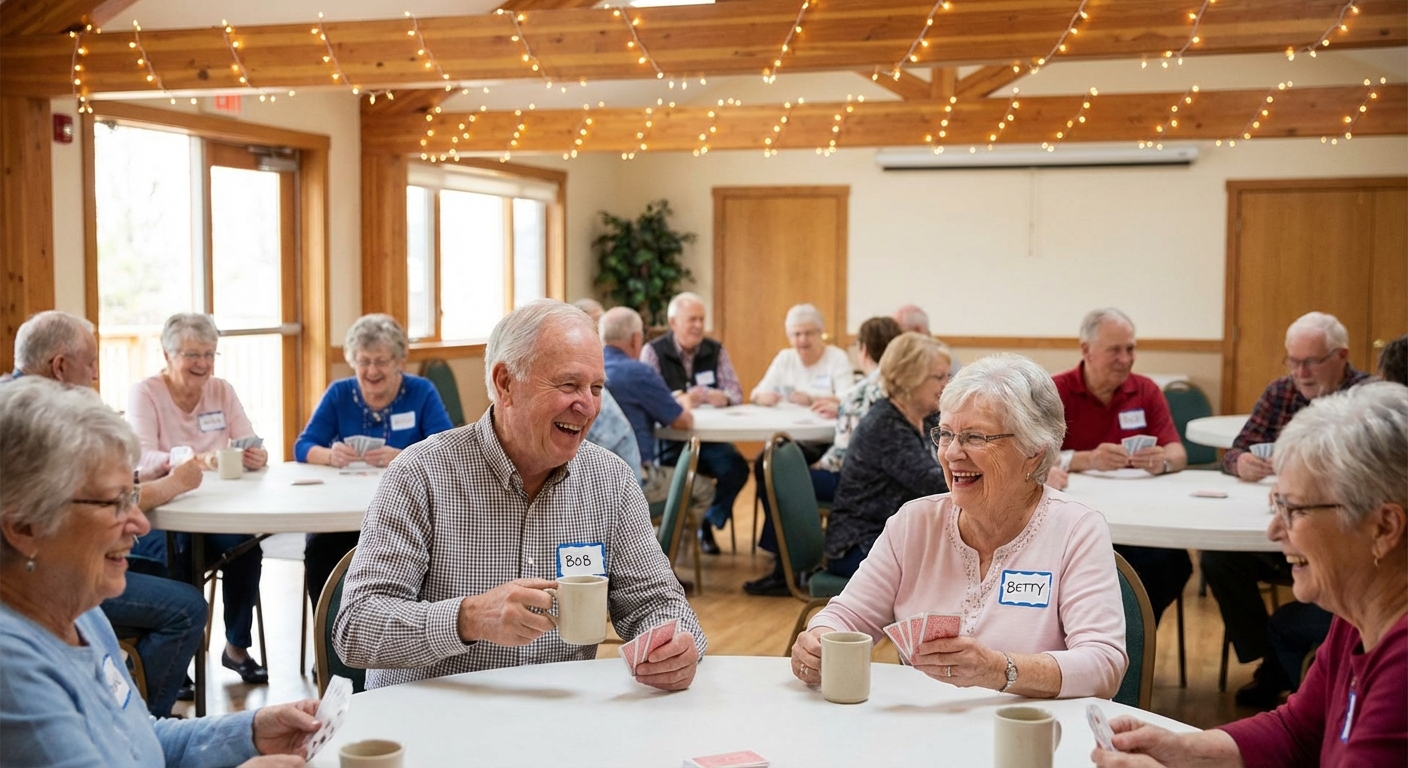
When I sat in on a 65+ speed dating night in Chicago, here’s how it ran:
- Check‑in & name tags – First names only, often with large-print stickers. Some organizers add color dots for interests (travel, books, dancing).
- Ground rules – The host sets expectations: respectful conversation, no pressure, no asking for phone numbers on the spot.
- Timed mini‑dates – Usually 5–7 minutes per conversation. In senior events, I’ve noticed many stretch it to 7–8 minutes because people like a bit more time to warm up.
- Score cards – Each person marks who they’d like to see again. Organizers later match mutual interests and email or call with matches.
- Breaks – More frequent breaks than younger events. One organizer told me, “We plan hydration and bathroom breaks like we plan the dates.” Smart.
I used to assume it’d be all about romance, but a coordinator at a New York event told me roughly 40–50% of matches end up purely as friendship or activity partners—walking buddies, museum friends, even travel companions.
What Makes It Different for Seniors (and Why That Matters)
When I talked to a 72‑year‑old retired nurse after one event, she said, “We’re not looking for someone to have kids with; we’re looking for someone to have lunch with.” That shift changes everything.
Here are the patterns I’ve seen repeatedly:
1. Priorities are different
In your 20s, the checklist might be: chemistry, career trajectory, shared future plans.
At 65+, I hear more of:
- Health and mobility compatibility
- Emotional stability (no drama, please)
- Financial honesty (not looking for someone to fund or be funded)
- Shared daily rhythms more than long‑term plans
A 2020 Pew Research Center study found that senior singles rank “companionship” and “someone to do activities with” above “long‑term commitment” far more than younger daters do.
2. Tech is a barrier… and an opportunity
When I tested helping a group sign up for an online senior dating site, half the questions were about privacy and scams, not romance. That’s where in‑person speed dating shines: minimal tech, maximum face‑to‑face interaction.
That said, many events do require:
- Online registration
- Email or text for match notifications
I’ve seen success when adult children or grandkids help set up a simple email and show how to check it. One granddaughter told me, “Helping Grandma get matches in her inbox was more satisfying than setting up my own profile.”
3. Grief and history are in the room
This is the part a lot of glossy articles gloss over.
Many participants are widowed or divorced after very long marriages. I watched one gentleman, 81, sit through his first event since losing his wife of 55 years. He told me, “I’m not replacing her; I’m just trying to remember how to talk to people again.”
Good organizers acknowledge this gently—no forced cheerfulness, no pressure to “move on,” just a space where history is respected.
How to Prepare (Without Overthinking It)
When I helped a friend’s mother get ready for her first senior speed dating event, she nervously asked, “What do I even say?” So we tested a simple prep plan that worked well.
Light conversation starters
You don’t need a script, but a few go‑to prompts help:
- “What’s something you enjoy doing on a Sunday afternoon?”
- “Have you traveled anywhere memorable, even if it was a long time ago?”
- “What’s one thing you thought you’d never try but did?”
Avoid leading with heavy topics like detailed health issues, money concerns, or dense family drama. Those can come later, with trust.
Honest but gentle boundaries
If you’re not open to remarriage, say so. If you prefer someone local because you don’t drive at night, mention it. In my experience, clarity upfront saves hurt feelings later.
One woman told me she started saying, “I’m happily rooted where I live; I’m looking for someone who enjoys a good conversation and a good soup, not a big move.” People appreciated the specificity.
Comfortable, confident clothing
I watched one man transform after someone convinced him to swap his old, baggy sweater for a crisp button‑down and nice shoes. You don’t need a makeover—just clothes that fit, feel good, and show you made an effort.
Pros and Cons of Senior Speed Dating
I trust any social trend more when we can admit where it falls short.
The upsides
- Fast feedback loop – You meet 8–15 people in an hour or two. For someone who hasn’t dated since the 80s, it’s like a crash course in social reentry.
- Safe structure – Public venue, host oversight, no direct contact info shared unless there’s a mutual match.
- Boost in confidence – Several participants told me just being asked questions about their life made them feel “seen” again.
The downsides
- Limited pool – In smaller towns, you might literally already know half the room from church or the grocery store.
- Nerves and awkwardness – Some people freeze under the timer; a few told me they felt more like they were at a job interview than a date.
- Not very inclusive yet – LGBTQ+ senior‑focused events do exist, but they’re rarer. If you’re not straight, you may have to look harder or travel further.
Psychologist and aging expert Dr. Karl Pillemer (Cornell University) has written about how later‑life social engagement improves well‑being but notes that not every format fits every personality. If big, buzzy rooms drain you, a smaller interest‑based meetup might be a better first step.
Beyond Dating: Senior Social Events That Actually Work
Speed dating is one slice of the pie. When I tested asking seniors what events they actually go to more than once, a few themes emerged.
Activity‑first meetups
- Walking clubs
- Low‑impact dance or line dancing
- Book clubs
- Board‑game afternoons
When the focus is on doing something together, socializing feels less forced. Many told me friendships—and sometimes romance—grew naturally out of these.
Lifelong learning groups
Universities and community colleges often run Osher Lifelong Learning Institutes or similar programs for adults 50+. I sat in on a history class where half the room ended up at coffee afterward. No one labeled it “dating,” but a few couples quietly formed.
Volunteer‑based events
I’ve been consistently impressed by how often romance starts over shared purpose: food bank shifts, library book sales, park cleanups. Research from the Corporation for National and Community Service has linked older adult volunteering with lower depression and higher life satisfaction, which tracks with what I’ve seen anecdotally.
Safety, Scams, and Red Flags
I wish I didn’t have to include this section, but I’ve watched a very sharp 74‑year‑old nearly get pulled into a romance scam online. The same caution applies offline.
When evaluating a speed dating or social event organizer, I look for:
- Clear contact info and a real address or host organization
- Transparent pricing (no surprise add‑ons to “see” your matches)
- Basic screening or code of conduct
Make personal safety rules non‑negotiable:
- First few meetings in public places only
- Don’t share financial details, banking info, or full legal documents
- Tell a friend or family member where you’re going and with whom
The FBI’s Internet Crime Complaint Center (IC3) reported over $1.3 billion lost to romance scams in the U.S. in 2022, with older adults disproportionately targeted. If someone you meet—anywhere—quickly pivots to money, emergencies, or secrecy, that’s a hard no.
How to Actually Find These Events
This is where many people get stuck. When I tested different search strategies with a retired couple helping their widowed neighbor, a few consistently worked:
- Senior centers and community centers – Many now host or partner with dating/social event organizers.
- Meetup.com and Eventbrite – Search terms like “50+ singles,” “senior social,” or “age 60+ events” in your city.
- Faith communities – Not just church services—many have widows/widowers groups, social clubs, and dances.
- Local newspapers – Yes, the old‑school print or online community calendar still lists a surprising number of events.
If nothing exists nearby, a surprising number of events have started because one or two people asked their senior center or community association, “Why don’t we do something like speed dating?” I’ve seen pilots launched with as few as 12 participants.
A Quiet, Powerful Side Effect
The most moving thing I’ve heard came from a man in his late 70s after his third speed dating event. He hadn’t had a match yet. When I gently asked if he was discouraged, he shrugged and said:
> “I spent a year talking mostly to the television. Now, even when I come home alone, I feel like part of the world again.”
That’s the real heart of senior speed dating and social events. Not everyone leaves with a new partner. But the act of showing up, being seen, telling your stories, and asking questions—that’s social exercise. Like walking, it gets easier and more rewarding the more you do it.
If you’re on the fence, or you’re trying to nudge a parent or grandparent off the sidelines, my honest suggestion: try one event. Treat it as practice, not a do‑or‑die search for “the one.” The worst case is usually an awkward story. The best case? A new chapter you didn’t think you’d get to write.
Sources
- U.S. Census Bureau – Older People Projected to Outnumber Children for First Time in U.S. History – Demographic data on aging and living alone
- U.S. Surgeon General – Our Epidemic of Loneliness and Isolation (2023 Advisory) – Health impacts of social isolation
- Pew Research Center – Older Adults and Dating – Statistics on senior singles and relationship priorities
- FBI IC3 – 2022 Internet Crime Report – Data on romance scams and financial losses
- Cornell University – Karl Pillemer, Research on Social Relationships and Aging – Expert work on later-life social engagement and well-being