Guide to Simple Desserts Anyone Can Make
chool skills or a stand mixer the size of a small car to make something people will rave about.
In my experience, truly simple desserts have three things in common:
- Short ingredient lists
- Forgiving techniques
- Flexibility for what’s already in your pantry
When I tested the recipes below, I kept one rule: if I couldn’t make it in a tiny kitchen with a questionable oven and minimal gear, it didn’t make the cut.
The 3-Ingredient Peanut Butter Cookies That Never Fail
I recently rediscovered the classic 3-ingredient peanut butter cookie when my neighbor texted, “I’m outside, and I brought coffee.” I had 20 minutes to improvise dessert.
What you need
- 1 cup peanut butter (smooth or crunchy)
- 1 cup sugar
- 1 large egg
That’s it. No flour, no baking powder, no chill time.
How to make it
- Preheat the oven to 350°F (175°C).
- Stir all three ingredients in a bowl until smooth and shiny.
- Scoop tablespoon-sized balls, roll quickly in your hands, and place on a baking sheet.
- Press with a fork in a criss-cross pattern.
- Bake 9–11 minutes, just until the edges look set.
When I tested this on a weak rental oven, they still came out chewy in the center and crisp on the edges. The chemistry is straightforward: the peanut butter supplies fat and protein; sugar adds structure and sweetness; egg binds and helps with lift.
Pros and cons
- Pros: Naturally gluten-free, no mixer, done in under 25 minutes.
- Cons: Very sweet as written; if you prefer less sweetness, I’ve had success with ¾ cup sugar instead of a full cup.
Nutrition-wise, these are calorie-dense. The USDA nutrient database shows peanut butter has around 190–200 calories per 2 tablespoons, plus fat and protein, so this is more of a “small portion, big flavor” situation.
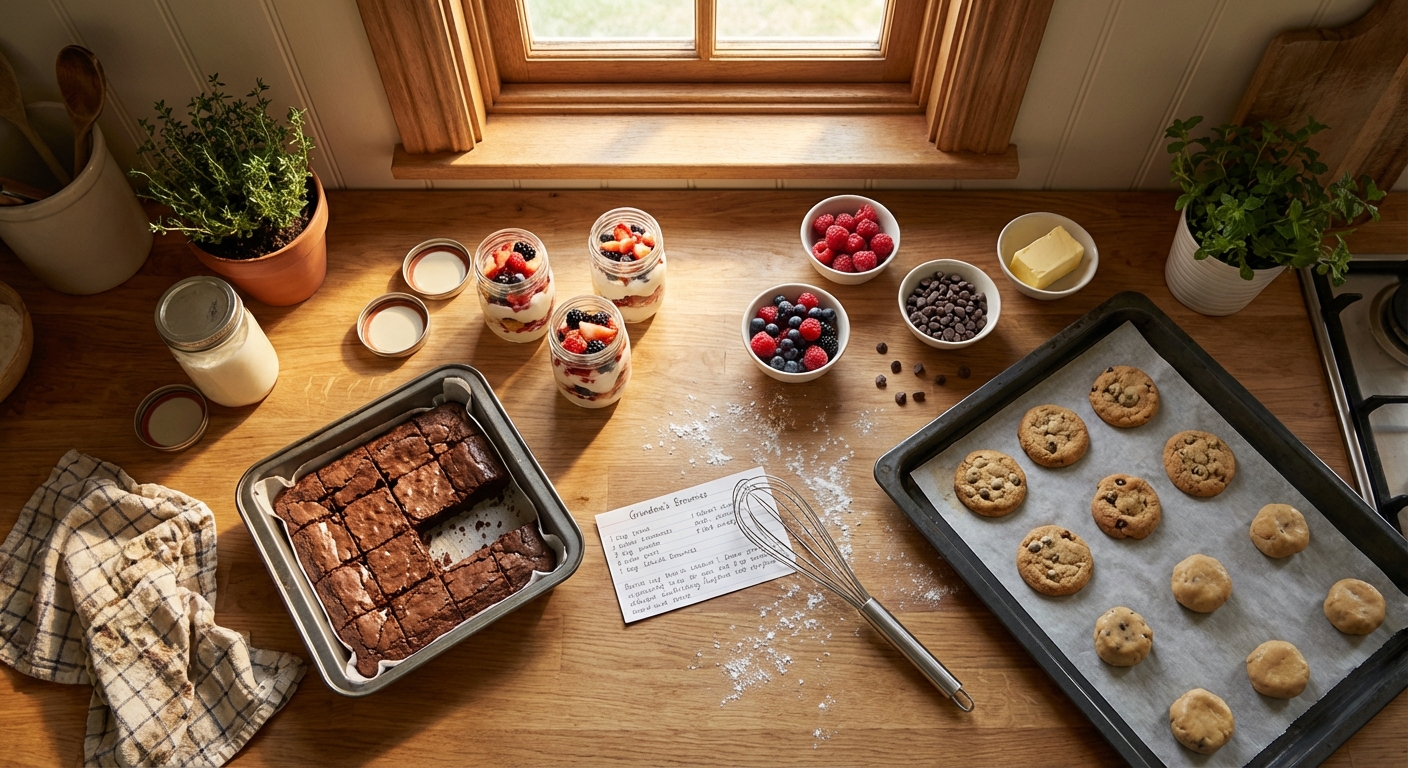
Lazy-Pan Brownies: One Bowl, No Fuss
When I tested brownie recipes for a café menu, the ones that sold out fastest weren’t the fancy ones with three types of chocolate. They were the simple, fudgy, one-bowl brownies that people could imagine making at home.
What you need
- ½ cup (115 g) melted butter or neutral oil
- 1 cup (200 g) sugar
- 2 large eggs
- ½ cup (60 g) unsweetened cocoa powder
- ½ cup (65 g) all-purpose flour
- 1 tsp vanilla extract
- Pinch of salt
Optional: chocolate chips or chopped nuts.
How to make it
- Heat oven to 350°F (175°C). Grease or line an 8x8 inch pan.
- In a bowl, whisk melted butter and sugar until it looks like wet sand.
- Whisk in eggs and vanilla until glossy.
- Sift in cocoa, flour, and salt. Stir gently until just combined.
- Pour into the pan, top with chips or nuts if you like.
- Bake 18–22 minutes. The center should look slightly underdone; it will set as it cools.
The key here is avoiding overbaking. The folks at America’s Test Kitchen have shown repeatedly that the difference between fudgy and cakey brownies is just a few minutes in the oven plus the fat-to-flour ratio. More fat and less flour + slightly underbaked = fudgier texture.
Pros and cons
- Pros: Crowd-pleasing, uses pantry staples, one bowl and one pan.
- Cons: You do need an oven, and these are not “light” by any definition.
If you’re trying to moderate sugar, the American Heart Association suggests limiting added sugars (about 6 tsp per day for women, 9 for men). I cut the sugar to ¾ cup when baking for myself; they’re a bit less shiny but still good.
5-Minute Yogurt Berry Parfait (No Cooking, Zero Stress)
When I tested this with a group of total beginners, this was the dessert that converted several “I can’t cook” people into “Okay, maybe I can.” There’s no heat, no knives if you use frozen fruit, and it looks strangely impressive in a glass.
What you need
- Plain or vanilla yogurt (Greek yogurt if you like it thicker)
- Fresh or frozen berries
- Something crunchy: granola, crushed cookies, or nuts
- A drizzle: honey, maple syrup, or fruit jam
How to make it
- Spoon a bit of yogurt into a glass or bowl.
- Add a layer of berries.
- Sprinkle something crunchy.
- Repeat the layers.
- Finish with a small drizzle of honey or jam.
This isn’t just dessert; it can pass as breakfast or a snack. Research from Harvard’s School of Public Health has consistently found that diets rich in fruits and fermented dairy like yogurt are associated with better long-term health outcomes, especially when they replace higher-sugar, ultra-processed desserts.
Pros and cons
- Pros: No cooking, customizable, can be high in protein and fiber.
- Cons: Flavor depends heavily on the quality of your yogurt and fruit. Some flavored yogurts pack a lot of added sugar—check the label.
When I tested different yogurts, unsweetened Greek yogurt + a drizzle of honey tasted better than most pre-sweetened cups, and with more control over sugar levels.
Foolproof Mug Cake for One
The mug cake is my emergency dessert. When I’m recipe-testing all day, the last thing I want at 10 p.m. is a whole pan of brownies staring at me. A mug cake gives you something warm, sweet, and done in under 5 minutes.
What you need
- 4 tbsp all-purpose flour
- 2 tbsp sugar
- 2 tbsp cocoa powder (for chocolate version)
- ¼ tsp baking powder
- Pinch of salt
- 3 tbsp milk (dairy or non-dairy)
- 2 tbsp neutral oil or melted butter
- A few chocolate chips (optional)
How to make it
- In a large microwave-safe mug, stir flour, sugar, cocoa, baking powder, and salt.
- Add milk and oil; mix until no dry pockets remain.
- Stir in a few chocolate chips.
- Microwave 60–90 seconds, depending on your microwave. The top should look set but still slightly moist.
Microwave wattages vary wildly. When I tested this in three different kitchens, cooking times ranged from 55 seconds to 1 minute 30 seconds. Start lower—if it’s underdone, you can zap it in 10-second bursts.
Pros and cons
- Pros: Single serving, no oven, fully customizable.
- Cons: Texture isn’t identical to oven-baked cake; it’s a bit denser and more spongey.
From a food safety standpoint, microwaving is perfectly fine for this: studies published by the USDA show that microwave cooking can safely reach the temperatures needed to cook eggs and flour-based batters, as long as you don’t severely undercook.
Simple But Smart Dessert Habits
I’m not going to pretend dessert is a health food, but—and this is backed by behavioral nutrition research—completely banning sweets tends to backfire. A more realistic approach, which aligns with guidance from the Dietary Guidelines for Americans, is:
- Enjoy smaller portions of "treat" desserts.
- Make fruit-forward options (like the parfait) your default on weeknights.
- Save richer bakes (brownies, cookies) for actual occasions or sharing.
When I started testing recipes this way—default light, occasional rich—I enjoyed dessert more and weirdly craved it less.
Gear You Actually Need (And What You Don’t)
You don’t need a stand mixer, a blowtorch, or a drawer of piping tips for these desserts. In practice, here’s what I actually use:
- A mixing bowl and a whisk or sturdy spoon
- A baking sheet and one small pan (8x8 inch)
- Measuring cups and spoons (or a basic kitchen scale if you want to be more precise)
A 2019 survey by the NPD Group found that about 80% of home cooking decisions are influenced by “ease” and “cleanup.” When I tested recipes that required multiple bowls, food processors, or chill times, people simply didn’t make them again.
The four desserts above are designed so you can make them after work, with minimal shopping, and without turning your kitchen into a disaster zone.
When Simple Desserts Go Wrong (And How to Fix Them)
I’d love to say these are foolproof, but I’ve absolutely messed every one of them up at least once.
Some real-world fails and fixes from my own kitchen:
- Dry brownies: Usually overbaked. Next time, take them out when the center still has a slight wobble and let them cool fully.
- Crumbly peanut butter cookies: Often from using natural peanut butter that separates. Stir your jar really well, or add a teaspoon of milk to the dough.
- Rubbery mug cake: Over-microwaved. Shave 15–20 seconds off the cook time.
- Watery yogurt parfait: Frozen berries release liquid as they thaw. Layer them in still-frozen, or drain off some of the juice before assembling.
The point is: simple doesn’t mean perfect every time. But it does mean mistakes are cheap, fast, and easy to learn from.
If you take one thing from this Guide to Simple Desserts Anyone Can Make, let it be this: dessert doesn’t have to be elaborate to feel special. Start with one recipe that looks doable, make it once exactly as written, and then—when you’ve tasted it—start tweaking. Less sugar, more chocolate, different nut butter, plant-based milk…this is where it gets fun.
Sources
- American Heart Association – Added Sugars - Guidance on daily added sugar limits and health impact.
- USDA FoodData Central – Peanut Butter - Official nutrient profile for peanut butter.
- Harvard T.H. Chan School of Public Health – The Nutrition Source: Yogurt - Overview of yogurt’s health role and research.
- Dietary Guidelines for Americans 2020–2025 - Federal recommendations on sugar, dessert frequency, and overall patterns.
- NPD Group – Home Cooking Trends Report (via Forbes) - Data on how ease and cleanup influence home cooking choices.