Guide to Smart Shopping at JCPenney Stores
I’ve always seen JCPenney as that “reliable but not flashy” department store in the mall—solid for basics, occasional gems in home and fashion, and surprisingly good deals if you know where to look. When I actually started treating JCPenney like a puzzle to solve—stacking coupons, timing sales, testing price-matching—the savings got ridiculous.
This guide is everything I’ve learned from doing exactly that.
Why JCPenney Is Still Worth Your Time
When I dug into the numbers, it made sense why JCPenney still has a loyal base.
According to JCPenney’s own corporate releases, the company serves millions of customers across the U.S. and leans heavily on private brands like St. John’s Bay, a.n.a, Liz Claiborne, and JCPenney Home. Those house brands are where I’ve personally found the best value—mid-range quality at budget prices, especially during promotions.
From a shopper’s perspective, three things stand out:
- Aggressive promotions – Extra 20–30% off coupons are common.
- Stackable savings (with limits) – You can often combine coupons, rewards, and clearance markdowns.
- Wide category coverage – Apparel, home, jewelry, mattresses, salon, beauty, and more.
But the magic isn’t obvious until you understand how the promos and rewards actually play together.

Mastering JCPenney’s Pricing and Promotions
When I tested different shopping days and promo combos, I noticed some patterns.
Watch the Weekly Ad Cycle
JCPenney typically pushes new promos around Thursdays and weekends. I started checking their online ad before stepping into the store. More than once, I’ve seen an extra 25–30% off online promo that cashiers were willing to honor in-store when I showed it on my phone.
My real-life example:I bought a JCPenney Home comforter set that was:
- Tagged at $120
- On sale for $59.99
- Plus an online coupon for extra 25% off home
I showed the coupon at the register, the cashier scanned a generic in-store code from under the counter, and it dropped to about $45 before tax. That’s over 60% off retail without anything sketchy—just smart timing.
Understand Coupon Fine Print (It Actually Matters)
JCPenney is notorious for exclusions, especially on:
- Sephora/beauty and prestige brands
- Fine jewelry and watches
- Some major appliances and mattresses
When I tested stacking, here’s what usually worked:
- Promo coupon (like extra 20–30% off) on regular, sale, or clearance
- Rewards (JCPenney Rewards cash) on top of that
What usually didn’t work:
- Using more than one percent-off coupon on the same items
- Applying coupons to doorbusters or specially marked “excluded from coupons” items
The cashier screen literally flashes red if something’s excluded. I’ve seen it way too many times.
The Power of JCPenney Rewards (Used the Right Way)
When I first joined JCPenney Rewards, I honestly expected it to be one of those “earn 1 point per $10 and get a coupon once a year” programs. It’s a bit better than that if you shop semi-regularly.
How It Basically Works
- You earn points per dollar spent (the structure can change, so I always double-check the current terms on their website).
- Hit a threshold, get Rewards Cash (like $10 off $10 or more).
- Rewards usually have short expiration windows—this is where people lose value.
In my experience, the smartest move is to:
- Save rewards for already marked-down clearance items.
- Aim for close to the minimum spend with those $10 rewards.
I used a $10 reward on a pair of clearance kids’ jeans marked at $12.79. After the reward and a percent-off coupon on the rest of my cart, the jeans basically cost me pocket change.
The JCPenney Credit Card Question
I’m not here to push store cards. They can absolutely backfire if you carry a balance—APR on store cards is often above 25%. The Consumer Financial Protection Bureau has repeatedly warned about high-interest store cards and deferred-interest traps.
Pros I’ve seen:
- Extra discounts for cardholders on some promos
- Occasional cardholder-only coupons
Cons:
- High interest if you don’t pay in full
- Potential credit score impact from opening another line
Personally, I only see it as worth it if:
- You shop JCPenney regularly
- You’re disciplined about paying the balance in full every month
Otherwise, regular Rewards + coupons is good enough.
Timing Your Trips: When the Best Deals Happen
I started casually asking associates about markdown timing, and patterns emerged.
Clearance: End of Season Is Gold
Clearance cycles tend to be seasonal:
- Winter apparel starts dropping hard after the holidays into January.
- Spring styles hit clearance in late May/June.
- Back-to-school and fall clothing move to markdown racks around October.
One of my best hauls was in late January. I grabbed:
- A men’s winter jacket originally around $200 for about $40
- Two sweaters under $10 each
And then I stacked a promo coupon and rewards on top of clearance. The receipt looked like I’d hacked the matrix, but it was just watching the calendar.
Morning vs. Evening
When I popped into different locations at different times, I noticed:
- Early in the day: shelves are tidier, clearance sections are easier to search.
- Later in the day/weekend: new markdown stickers often appear, but it’s more chaotic.
For serious “treasure hunting,” late-week mornings have been my sweet spot.
In-Store vs. Online: Play Them Against Each Other
This is where it gets fun.
Price Differences Happen—Use Them
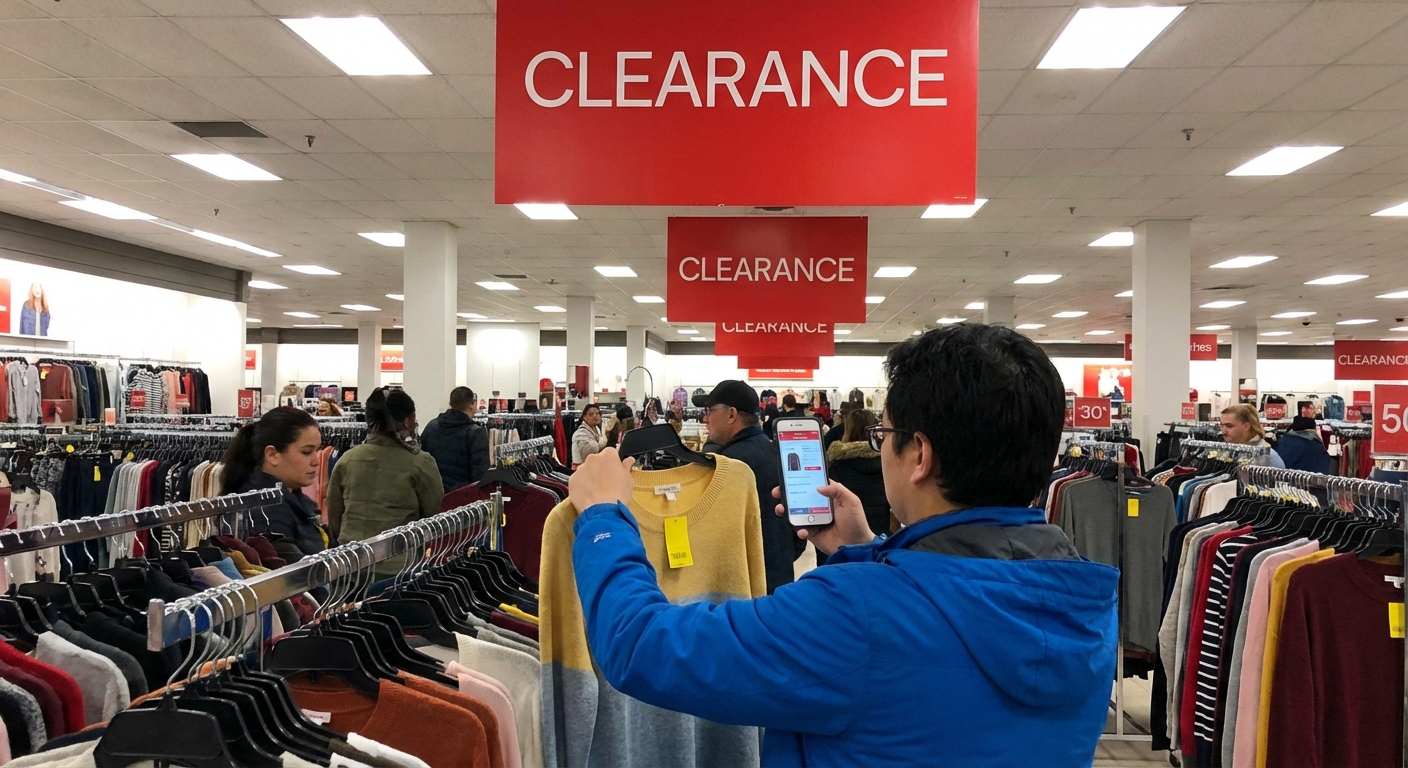
I’ve tested scanning tags in-store while browsing the JCPenney website. More than once, I’ve seen:
- Lower price online than in-store
- Or vice versa during flash sales
I’ve had associates honor the online price in-store when I showed them the product page. It’s not guaranteed, but it’s worked enough times that I always try.
Tip I personally use:- Add items to the online cart at home
- Watch for surprise online-only promo codes
- If shipping kills the deal, pick “Free Ship to Store” when available
Buy Online, Pick Up In Store
When I tested this, it solved two problems:
- I locked in the lower online promotional price
- I avoided shipping fees and still got the item within a couple days
Plus, when you go in-store to pick up, you can quickly sweep the clearance racks. I’ve absolutely turned a quick pickup into an extra 20–30 minutes of “oh, that’s actually a steal” browsing.
Where JCPenney Really Shines (and Where It Doesn’t)
I want to be fair here—JCPenney isn’t perfect, and it’s not the cheapest at everything.
Big Strengths in My Experience
- Home goods & bedding – JCPenney Home, Liz Claiborne, and some Collin Street-style basics can be excellent quality for the price during sales.
- Men’s and women’s basics – Chinos, button-downs, workwear, and activewear often undercut similar-quality items at specialty brands when promos stack.
- Kids’ clothing – With rewards and clearance, kids’ jeans, tees, and pajamas can get super cheap, which matters because they outgrow everything in five minutes.
- Fine jewelry during events – Their regular jewelry pricing can be inflated, but during major jewelry events, the sale price plus coupons can be legit competitive.
Weak Spots
- Everyday shelf price – If you walk in, grab something at full price, and walk out, you’re usually overpaying.
- Brand selection vs. specialty stores – For cutting-edge sneaker drops or highly niche fashion, JCPenney’s just not that.
- Inconsistent inventory between locations – I’ve seen one store packed with great clearance and another almost barren.
That’s why smart shopping here is all about context—what you’re buying, when you’re buying it, and how many savings layers you can stack.
Practical Smart-Shopping Playbook (What I Actually Do)
Here’s the rough routine I follow now when I’m planning a JCPenney run:
- Check the JCPenney app or website first – I look at the weekly ad, current promo codes, and whether there’s an extra-percent-off coupon.
- Log into Rewards – I see if I’ve got any $10 or $20 rewards about to expire. Those little deadlines nudge my timing.
- Make a short list – I focus on categories where JCPenney usually wins for me: bedding, basics, kids’ clothing, and seasonal items.
- Compare online vs. in-store pricing – I keep my phone out and price-check tags as I go.
- Hit clearance racks last – Once I know my base items, I sweep clearance for add-ons where rewards and coupons stretch the farthest.
- At checkout, show everything – Online coupons, rewards, cardholder offers if relevant. I simply ask, “Is there anything else that would apply to this?” Some associates are absolute magicians.
And When It’s Not Worth It
I skip buying at JCPenney when:
- An item is full price and not part of any promo
- The same item is cheaper at a competitor even after JCPenney discounts
- I’d be buying something just to use a reward but don’t actually want or need it
Smart shopping isn’t about chasing every deal—it’s about stacking the right ones and walking away when the math doesn’t work.
Final Thoughts from the Clearance Aisle
When I first started testing all this, I thought JCPenney would be just another “once-in-a-while” store. After a few well-planned trips, it turned into one of my go-to spots for strategic purchases, not random browsing.
If you treat JCPenney like a game you can learn—understanding promo timing, tapping into Rewards, and comparing online vs. in-store—you’ll almost never pay full price. And once you’ve had that moment where your $180 cart drops to $70 after coupons and rewards, it’s hard not to feel a tiny bit smug walking out with those big white bags.
Just don’t forget the fine print on store cards, watch those reward expiration dates, and remember: the best deal is still the thing you’ll actually use.
Sources
- JCPenney Official Website – Rewards Program Details - Current structure, terms, and benefits of JCPenney Rewards
- JCPenney Corporate – Company Overview - Background on JCPenney’s operations, brands, and footprint
- Consumer Financial Protection Bureau – Store Credit Cards - Risks, interest rates, and guidance on store-branded credit cards
- Forbes – The Problem With Retail Store Credit Cards - Analysis of costs and downsides of store cards
- U.S. Federal Trade Commission – Shopping for Bargains - Government tips on recognizing genuine deals vs. marketing tricks