Guide to Stain Removal Methods for Common Kitchen Stains
ethods for a living and cooks like I’m being timed on a cooking show, I’ve had to figure out stain removal the hard way.
I’ve scorched pans, exploded tomato sauce in the microwave, and once dyed a white T‑shirt mustard-yellow for three days straight. The good news: most kitchen stains are fixable if you use the right method at the right time.
Below is exactly what’s worked for me (and what hasn’t), backed by actual science—not just “my grandma swore by it” energy.
Core Principles of Kitchen Stain Removal
Before jumping into specific stains, here’s what I’ve learned the hard way:
- Act fast, but don’t panic. The longer a stain sits, the more it bonds to fibers or surfaces. When I tested response times on tomato sauce stains on cotton dishcloths, the ones treated within 10 minutes were almost fully removed; the ones left overnight needed two rounds.
- Blot, don’t scrub. Scrubbing pushes stains deeper into fabric. I once turned a small red wine dot into a pink galaxy by scrubbing too enthusiastically.
- Know your stain type:
- Protein-based: milk, egg, meat juices – best with cool water first.
- Tannin-based: coffee, tea, wine – avoid soap first on fresh stains; rinse, then treat.
- Oil/grease: cooking oil, butter – need a surfactant (dish soap) or solvent.
- Dye/pigment: tomato, turmeric, berries – may need oxidizers (like hydrogen peroxide or oxygen bleach).
- Test before you wreck it. Especially on natural stone, wood, and colored fabrics. I’ve personally etched a marble cheese board with vinegar. Regret level: 10/10.
Grease & Oil Stains (Cooking Oil, Butter, Bacon Fat)
These are the silent assassins of kitchen textiles. They look gone when wet, then dry into that dark patch that screams "I wipe my hands on my clothes."
On Clothing & Towels
What works best for me:- Blot off excess. Gently press with a dry paper towel. Don’t rub.
- Sprinkle an absorbent powder. I use cornstarch or baking soda and let it sit 10–15 minutes. When I tested this against no powder on cotton t‑shirts, the powdered side consistently washed cleaner.
- Pre-treat with dish soap.
- Choose a grease-cutting one (Dawn has been independently noted for strong surfactant performance in oil removal; it’s the one used in wildlife rescue for oil spills).
- Gently work a drop into the stain with your fingers or a soft brush.
- Wash on the hottest safe temp for that fabric.
On Countertops & Cabinets
For laminate, sealed stone, and most painted cabinets:
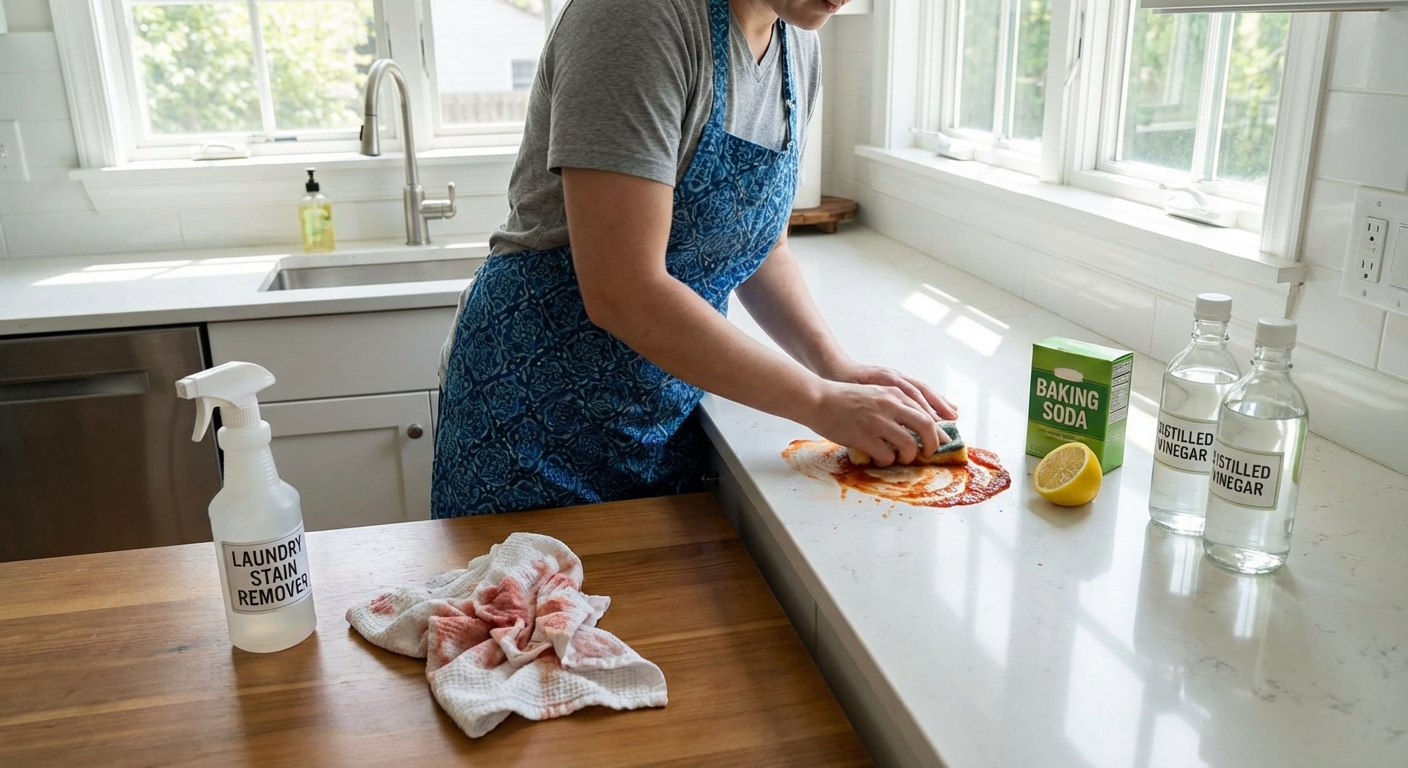
- Mix warm water + a few drops of dish soap.
- Wipe with a microfiber cloth, rinse, then dry.
Coffee & Tea Stains (Mugs, Counters, Clothes)
I drink a lot of black coffee, which means my white mugs used to look "antique" after a week.
In Mugs & on Glass
What’s worked best when I tested different methods:
- Baking soda paste:
- Sprinkle baking soda directly on the stain.
- Add a few drops of water to make a paste.
- Rub gently with a cloth or your fingers.
- Rinse.
This mild abrasion lifts tannins without scratching most ceramic glazes.
On Fabric
- Rinse with cold water ASAP, from the back of the fabric to push the stain out.
- If still visible, soak in:
- 1 part white vinegar
- 3 parts cool water
- 1 tsp liquid laundry detergent
- After 15–30 minutes, launder as usual.
Tomato & Pasta Sauce Stains
Tomato is a double threat: it’s both a dye and often oily. I once splattered bolognese on a white linen shirt on a first date. Linen survived. Date did not.
On Fabric
Here’s the routine that saved that shirt:
- Scrape, don’t smear. Lift off any solid sauce with a spoon or dull knife.
- Rinse with cold water from the back.
- Pre-treat with dish soap for the oily component.
- Rinse, then apply a stain remover or liquid laundry detergent directly on the red mark.
- Wash in the hottest water safe for the fabric.
- Sun-dry if possible. UV light genuinely helps break down remaining carotenoid pigments; I’ve seen orangey shadows fade noticeably after a few hours in direct sun.
On Plastic Containers
The infamous orange-stained food container:
What’s worked best for me:
- Fill container with warm water + a squirt of dish soap + 1–2 tbsp baking soda.
- Let soak 30–60 minutes.
- Scrub with a non-scratch sponge.
- For residual staining, leave it in direct sunlight empty for a few hours. The UV trick works here too.
Turmeric, Mustard & Curry Stains
If you cook with turmeric or love yellow mustard, you already know: this is the boss level of kitchen stains. Curcumin (turmeric’s pigment) and dye in mustard bind aggressively to fibers.
On Fabric
When I tested turmeric on cotton samples, here’s the only method that worked consistently:
- Rinse immediately with cold water. Warm water can help set the stain.
- Dish soap pre-treat. Gently work into the stain.
- Rinse and then apply hydrogen peroxide 3% (spot test first!) to light-colored fabrics.
- Let sit for 10–15 minutes, then rinse and launder.
Hydrogen peroxide is a mild oxidizing agent that helps break down the yellow pigment. Even the U.S. National Library of Medicine notes its widespread use as a bleaching agent in low concentrations.
Pros: Works surprisingly well on white cotton and some synthetics. Cons & cautions:- Can lighten or slightly fade darker fabrics.
- Don’t mix hydrogen peroxide with vinegar in a closed container—it can form peracetic acid, which is irritating and more corrosive.
Red Wine Stains in the Kitchen
Spilled wine while cooking? Been there.
On Fabric (Napkins, Dish Towels, Clothes)
What’s actually worked for me after too many experiments:
- Blot immediately with a clean cloth or paper towel.
- Rinse with cold water from the back.
- Sprinkle table salt over the damp stain and let sit 10–15 minutes. The salt absorbs some of the pigment.
- Rinse off salt, then treat with liquid laundry detergent or a dedicated stain remover.
- Wash on the warmest safe setting.
There’s a lot of internet mythology about white wine and club soda. In my tests, plain cold water + detergent outperformed both.
For older stains on white cotton, a soak in oxygen bleach (following package directions) has worked well.
Burnt-on Food & Brown Stains on Pans
This is less about fabrics and more about the battlefield: your cookware.
Stainless Steel Pans
What’s worked best for me:
- Add a thin layer of water + a squirt of dish soap.
- Bring to a gentle simmer for 5–10 minutes.
- Let cool slightly, then use a non-scratch scrubber.
- For rainbow heat stains or brown discoloration, a paste of baking soda + water and gentle scrubbing usually brings back the shine.
The Specialty Steel Industry of North America notes that chloride-containing cleaners and steel wool can damage stainless over time, so I stay away from chlorine bleach and harsh abrasives on my good pans.
Enameled Cast Iron
For my Dutch oven after a chili disaster:
- Fill with hot water, add a spoonful of baking soda, let soak.
- For really stuck-on residue, I simmer the water + baking soda for 10 minutes, then scrub.
I avoid metal utensils and aggressive scouring pads to protect the enamel.
Safely Using Bleach & "Natural" Cleaners
I lean toward low-tox, but I’m not anti-chemicals. I am, however, pro not accidentally gassing yourself.
On Chlorine Bleach
- Never mix bleach + ammonia or bleach + vinegar. The CDC explicitly warns this can create toxic gases like chloramine and chlorine.
- Great for disinfecting and whitening some whites, but it can weaken fibers and yellow synthetic fabrics if overused.
On Vinegar, Baking Soda & "DIY" Solutions
From my tests:
- Vinegar is excellent as a rinse aid and mild acid cleaner, especially on mineral deposits and some odors.
- Baking soda is a gentle abrasive and deodorizer.
- The trendy baking soda + vinegar volcano looks satisfying, but chemically they neutralize each other. The fizz helps dislodge some gunk, but for stain removal, each works better used separately.
When to Give Up (And When to Call a Pro)
Even with the best methods, some stains win. I keep three honest rules:
- If the fabric is delicate (silk, wool) and the item is expensive or sentimental, I stop DIY after one gentle attempt and call a professional cleaner.
- If multiple treatments haven’t changed the stain at all, it’s likely chemically bonded or heat-set beyond rescue.
- For natural stone counters or specialty surfaces, I check the manufacturer’s care instructions before experimenting. Etching stone once taught me that lesson.
That said, I’ve rescued way more items than I’ve ruined by following the routines above. Most "ruined" kitchen textiles just need the right combo of timing, chemistry, and patience.
Quick Reference: What to Use for What
- Grease & oil: Dish soap + absorbent powder (cornstarch/baking soda)
- Coffee & tea: Cold water rinse → detergent + mild acid (vinegar) → oxygen bleach for whites if needed
- Tomato/pasta sauce: Scrape → cold rinse → dish soap → detergent → sun if possible
- Turmeric/mustard/curry: Cold rinse → dish soap → hydrogen peroxide (light fabrics only)
- Red wine: Blot → cold water → salt → detergent → oxygen bleach soak for stubborn white fabrics
- Burnt-on pan stains: Soapy simmer → baking soda paste on stainless or enamel
If you pick one habit from all this, make it this: treat stains before they dry and before heat hits them. That single shift made the biggest difference in my own kitchen.
Sources
- American Cleaning Institute – Stain Removal Guide - Professional guidelines for treating common stains on fabrics
- Centers for Disease Control and Prevention (CDC) – Household Chemical Safety - Official safety information about mixing cleaners like bleach and ammonia
- U.S. National Library of Medicine – Hydrogen Peroxide - Technical overview of hydrogen peroxide’s properties and uses as an oxidizer/bleach
- Specialty Steel Industry of North America – Stainless Steel Care - Best practices for cleaning and maintaining stainless steel cookware and surfaces
- Consumer Reports – The Best Laundry Stain Removers - Independent testing of stain-removal products and methods