Guide to Stretching Household Budgets with Big Lots
I walked in for a cheap set of hangers.
I walked out with a notebook full of price comparisons, a trunk full of deals, and a new line item in my monthly budget: “Big Lots run (planned, not panic-buy)”.
This is my honest, slightly obsessive, guide to squeezing every last bit of value out of Big Lots without falling into the trap of buying junk you don’t need.
Why Big Lots Can Actually Move the Needle on Your Budget
When I tested my monthly spending, I compared my usual Walmart/Target runs to a Big Lots-heavy month. I tracked receipts for basics: paper towels, snacks, cleaning supplies, small home goods, and even some furniture.
My rough results over 3 months:- Month 1 (no Big Lots strategy): Baseline
- Month 2 (random Big Lots trips): ~6–8% savings
- Month 3 (intentional Big Lots strategy): ~12–15% savings on household goods
Is this a scientific study? No.
Does it matter to a real budget? Absolutely. For a family spending $300–$400 a month on household items, that can be $40–$60 back in your pocket.

Big Lots sits in an odd space: it’s not a traditional dollar store, not a full grocery store, and not quite a department store. They’re a closeout and discount retailer, which means:
- They buy overstock, discontinued, seasonal, and sometimes slightly older-packaging items from big brands at a discount.
- You see rotating inventory and pockets of very strong value—mixed in with some stuff that isn’t actually that cheap.
Once I understood that, my strategy shifted from “Big Lots is cheap” to “Big Lots is selectively cheap.” That’s when the real savings started.
What Big Lots Is Genuinely Great For (When You Do the Math)
1. Cleaning Supplies & Paper Goods
In my experience, this is Big Lots’ strongest category for routine household savings.
When I compared prices, I found:
- Name-brand laundry detergent for 10–25% less than my local grocery store
- Paper towels and toilet paper multi-packs that matched or beat warehouse-club unit prices—without me needing a membership
I kept a simple system: I wrote the price per ounce or per sheet on my phone’s notes app. After two trips, I could tell instantly when something was a real deal versus “it just looks cheap on a big orange tag.”
2. Snacks & Pantry “Nice-to-Haves”
I’m talking chips, crackers, cookies, trail mix, cereal, and random specialty items. Are these core survival items? No. But for many of us, they’re real parts of the grocery cart.
When I tested this, I noticed:
- Name-brand cereal at Big Lots was often 20–40% cheaper when on closeout.
- Odd flavors or older packaging versions were significantly cheaper, with the same expiration date range as what I saw at my regular store.
The catch: the inventory rotates. When I find a true win (like a favorite granola at half-price), I’ll stock up within reason—but I still check the unit price.
3. Seasonal Decor & Holiday Stuff
I once bought Halloween decor at full price in October somewhere else, then walked into Big Lots a week later and felt my soul leave my body. Same category of items, visibly cheaper.
Now, I hit Big Lots first for:
- Halloween decor, candy bowls, string lights
- Thanksgiving tableware and disposable serving pieces
- Christmas ornaments, wrapping paper, gift bags, and storage bins
The real move? Shop just after the holiday. Big Lots tends to markdown seasonal stock very aggressively. It’s not glamorous digging through the post-holiday bins, but future-you in December is going to be impressed with past-you.
4. Small Furniture & Home Organization (With Caveats)
I bought a storage ottoman from Big Lots when I was reworking my living room on a strict budget. A similar piece at another retailer was $120+. At Big Lots I paid $60, and two years later it’s still solid.
In my experience, these categories can offer real value:
- Bookcases and small shelving units
- Storage ottomans and accent tables
- Plastic totes, baskets, and closet organizers
But I’m picky. I always:
- Check the hardware and joints (wiggle test)
- Look at weight capacity (Big Lots often lists it)
- Read a few online reviews when possible
Some pieces are absolutely “budget but decent.” Others scream “college dorm for one semester only.” That’s where discernment—and not the price tag—saves you money.
Where Big Lots Isn’t Always the Best Deal
Stretching a budget isn’t just about finding low prices—it’s also about avoiding fake savings.
Based on my receipts and a couple afternoons of slightly nerdy price-checking, here’s where I’m cautious:
- Beverages: Single drinks and some multipacks were often cheaper at warehouse clubs or on sale at grocery stores.
- Name-brand pet food: Occasionally cheap, but often close to regular price elsewhere. I compare every time.
- Electronics & small appliances: You might find bargains, but return policies and long-term reliability aren’t always as strong as buying from a dedicated electronics store or Amazon.
I treat these areas as “check but don’t assume” categories.
How I Systematically Use Big Lots to Stretch a Household Budget
This is the part where I move from “I found deals” to “I actually changed my budget habits.”
Step 1: Join Big Rewards (Only If You’ll Actually Use It)
I resisted loyalty programs for years because I hate spam. Big Lots’ Big Rewards program ended up being one of the few I kept.
When I joined and tracked rewards for a few months, I noticed:
- Frequent $5 off $15 or similar coupons popping up
- Member-only promotions on categories I already buy (paper goods, snacks)
- Occasional % off total purchase coupons that stack well with clearance
I used a dedicated email so it doesn’t clutter my main inbox. If you’re going to shop there more than once a month, it’s worth it.
Step 2: The “Once-a-Month Stock-Up” Strategy
When I tested different shopping habits, the biggest savings came from batching Big Lots trips.
Here’s my routine:
- Make a list of non-perishable items we run through regularly: trash bags, paper towels, laundry detergent, dish soap, zipper bags, floor cleaner, snack basics.
- Do one Big Lots run per month with that list.
- Buy enough to last until the next month only if the unit price is better than my usual store.
This stopped me from making random “I’ll just pop in” trips that destroyed my budget with impulse decor and clearance snacks.
Step 3: Compare Unit Prices Like a Hawk
The boring truth of bargain hunting: unit price is everything.
When the U.S. Bureau of Labor Statistics talks about inflation in household goods, they’re looking at real price per ounce, per pound, etc.—not the size of the bottle or the brightness of the “Value Pack” label. That’s the level of detail I try to bring into my own cart.
I keep a small cheat sheet on my phone of “good prices” for staples. When I see an item at Big Lots:
- I check the price per ounce/sheet/roll
- I compare it to my cheat sheet numbers from Walmart/Target/Aldi
If it beats my baseline or matches it but offers better quality or convenience, into the cart it goes.
Avoiding the “Cheap Store, Big Bill” Trap
Here’s the honest downside of Big Lots: it’s very easy to walk in for paper towels and leave with a cart of throw pillows, random mugs, and cinnamon-scented things you never knew you needed.
What’s worked for me:
- Pre-commit a budget: I walk in with, say, $60 as my ceiling for this trip. I’ll actually put items back to stay under it.
- Separate wants and needs in the cart: I keep “needs” in the main basket and “maybes” in the child seat area. Before checkout, I challenge every “maybe.”
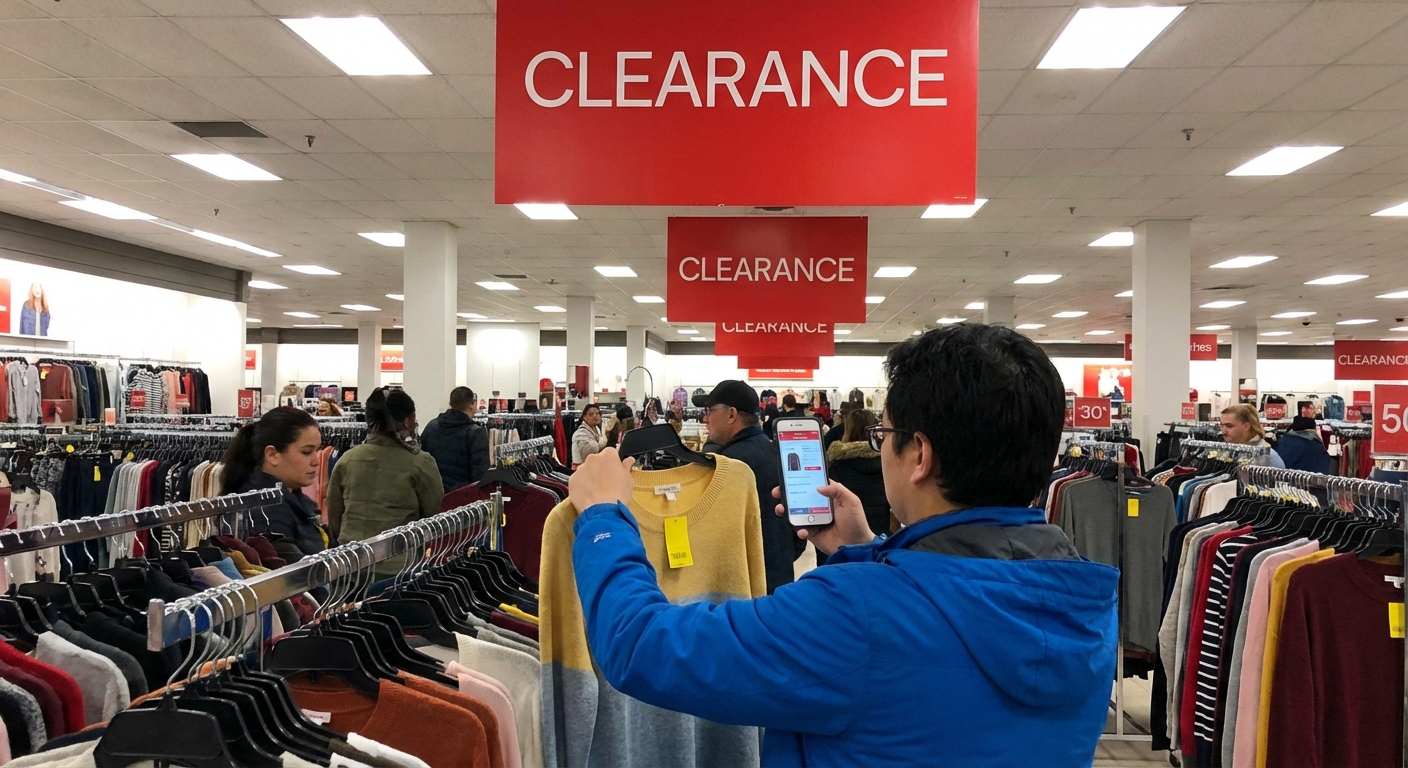
- Never trust orange stickers blindly: Clearance colors are marketing. Math is reality.
When I stuck to this, my Big Lots trips became genuine budget tools instead of semi-chaotic retail therapy.
Who Big Lots Works Best For (and Who It Doesn’t)
From my experience and talking with other budget-obsessed friends, Big Lots is especially good for:
- Families burning through paper goods and snacks
- Renters or new homeowners furnishing on a tight budget
- People who don’t have or want a warehouse club membership
It’s less ideal if:
- You rely heavily on fresh produce and refrigerated goods (their selection is limited)
- You hate rotating inventory and want the exact same brand every time
- You don’t enjoy doing quick mental math or price comparisons
For me, pairing Big Lots with a discount grocery store has been the sweet spot.
The Bottom Line: Big Lots as a Strategic Tool, Not a Random Stop
When I treated Big Lots like a one-off bargain store, I saved a little.
When I treated it like a structured part of my household budget plan—with:
- a monthly stock-up trip,
- a running list,
- unit price comparisons,
- and a hard spending cap,
—I started seeing real, repeatable savings.
It won’t magically fix a broken budget. But if you’re willing to be intentional and ignore some of the impulse-buy traps, Big Lots can quietly become one of the most powerful budget-stretchers in your shopping rotation.
If you decide to test it yourself, save a month of receipts, compare them, and see what the real numbers look like for your household. The deals feel good—but the data is what really tells you if it’s working.
Sources
- Big Lots – Company Information - Official overview of Big Lots’ business model and operations
- U.S. Bureau of Labor Statistics – Consumer Price Index: Household Items - Data on price changes for household goods and supplies
- Forbes – How To Save Money On Groceries Without Using Coupons - Strategies for cutting grocery and household spending
- Consumer Reports – How to Find the Best Deals When You Shop - Research-based tips on spotting real vs. fake discounts