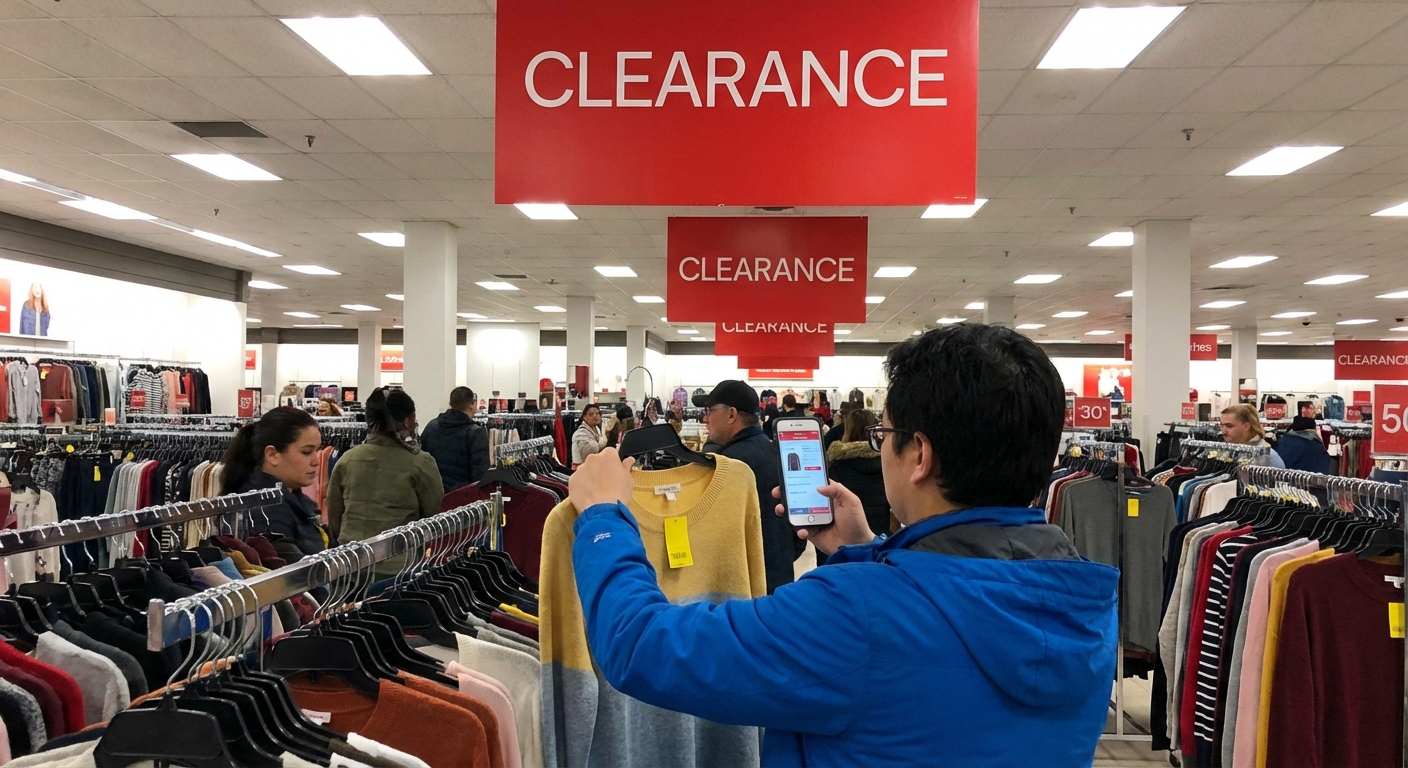
Guide to Target Deals and Weekly Savings
87 poorer with a candle, two throw pillows, and a random snack mix I absolutely did not need. Sound familiar?
When I finally decided to treat Target like a strategy game instead of a vibes-only shopping trip, my monthly spend dropped by about 30%. Same store, same products, completely different approach.
This guide is everything I’ve learned actually testing Target deals, cross-checking fine print, and abusing the weekly ad like it’s my side hustle.
How Target’s Deal System Really Works
In my experience, Target savings break down into a few layers that stack if you know what you’re doing:
- Weekly ad & category promos (the big headliners)
- Target Circle offers (percent-off and product-specific)
- Gift card deals ($5, $10, $15 gift cards when you hit a spend threshold)
- Manufacturer coupons (often stackable with Circle)
- RedCard savings (5% off almost everything)
When I tested this on a boring household restock—laundry detergent, paper towels, cleaning spray—I pulled 27% off the total just by stacking the above.
Weekly Ad: Where the Real Game Starts
Target drops its weekly ad every Sunday, both in-store and on the Target app/website. Most people scroll it like a catalog; I treat it like a playbook.
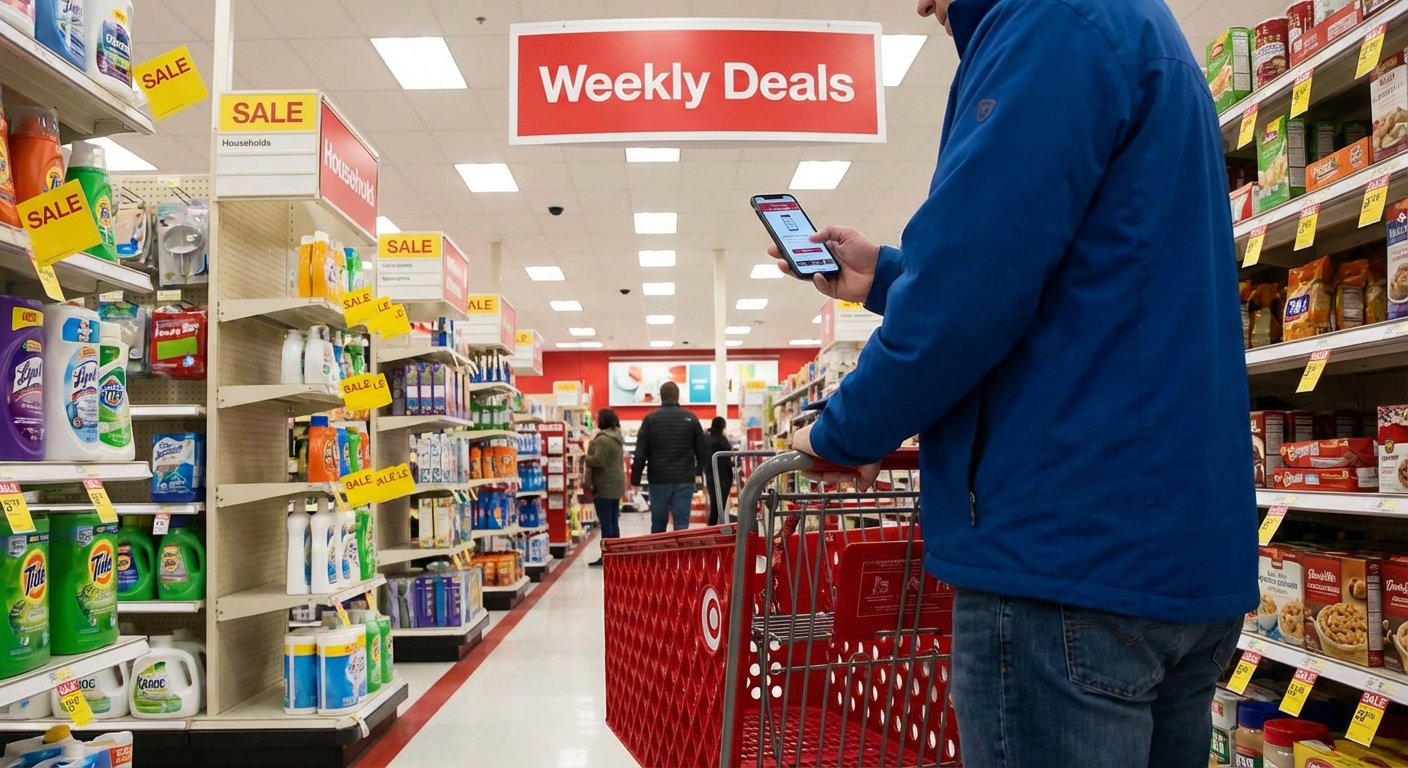
Here’s how I work it:
- Step 1: Scan for category promos
Things like: “Spend $50 on household essentials, get a $15 Target gift card” or “Buy 3, get a $10 gift card on select beauty brands.” These are where you can stack.
- Step 2: Match your real needs
I used to chase every deal. Now I only build carts around stuff I actually buy monthly anyway: detergent, toilet paper, pet food, skincare, kids’ snacks.
- Step 3: Time your big hauls
When I tested timing my bulk household shopping with a strong weekly promo, I saved an extra $20–$30 per trip compared to buying random refills during the week with no promo at all.
Pro: Weekly ad deals often combine with Circle offers and coupons. Con: The best promos are usually category based, which nudges you to buy more than you planned. I set a hard budget before I even open the app.Target Circle: The Engine Behind Most Savings
Target Circle is free, but most people barely tap what it can do.
When I first started paying attention, I realized there were 20–30 offers quietly waiting in my account that I’d never activated.
Types of Target Circle Offers
- Percent-off deals – e.g., 20% off dog treats, 15% off a skincare brand.
- Category offers – 10% off Halloween décor, 20% off bedding.
- Bonus rewards – extra Target Circle earnings when you hit certain thresholds.
I recently tested building a cart only after activating every relevant Circle offer, and the register difference was wild. I got:
- 20% off my favorite method cleaner
- 15% off a brand-name detergent
- An extra 10% off a seasonal décor item
…and all of that worked on top of a “Spend $50, get $15 gift card” weekly promo.
Insider tip: Target Circle offers are usually applied at checkout after scanning your barcode or using your phone number, so you must activate them beforehand. Downside: Not all items in a brand are included, and exclusions can be sneaky. I’ve had “select varieties only” burn me a few times. I always tap into the details in the app now.The Gift Card Hustle: When It’s Worth It
Gift card promos are where people either win big…or overspend for sport.
You’ll see deals like:
- “Buy 3 select haircare, get a $5 gift card.”
- “Spend $100 on baby items, get a $20 gift card.”
- “Buy 2 select vitamins, get a $10 gift card.”
When I tested these, I noticed three patterns:
- The best value is on products you’d buy anyway. Stocking up on diapers or detergent? Perfect. Random protein powder? That’s how you end up with a $40 tub you hate.
- Per-unit math matters. I’ll literally pull out my phone calculator to check price per ounce. Sometimes buying 3 “deal” items is still more expensive than 1 big generic.
- Gift cards can roll. I often use the gift card from one trip on the next weekly deal, which effectively chains savings forward.
RedCard: The Quiet 5% That Adds Up
I was weirdly resistant to RedCard at first. Another card? Hard pass.
Then I did the math.
Between groceries, household stuff, and occasional clothing, I was spending around $250–$300 a month at Target.
- 5% of $300 = $15 a month
- That’s $180 a year for…doing nothing different.
There are two versions:
- RedCard Debit – connects to your checking account; no credit check.
- RedCard Credit – traditional credit card.
The benefits I actually use:
- 5% off almost every purchase
- Extra 5% off many Target subscriptions
- Extended return window on many items
Stacking Strategy: How I Build a “Max Savings” Cart
Here’s how I layered everything on a real trip for household essentials.
Scenario: I needed detergent, toilet paper, trash bags, and dish soap.- Check weekly ad
Found: “Spend $50 on household essentials, get $15 gift card.”
- Activate Target Circle offers
- 15% off Tide detergent
- 10% off Select trash bags
- Add manufacturer coupons
Clipped a $3 off Tide coupon from a coupon app.
- Pay with RedCard
Extra 5% off the total after discounts.
When I tested this setup:
- Shelf total: about $62
- After Circle and coupons: around $52
- RedCard 5%: drops it to ~ $49.40
- Plus a $15 gift card back
Net effective cost: roughly $34.40 of value for $62 worth of product.
Is it a bit of effort? Yeah. But once you’ve done it 2–3 times, it becomes second nature.
In-Store vs. Online: Where the Better Deals Hide
I’ve tested identical carts in-store and online more times than I’d like to admit.
What I’ve noticed:
- Online-only Circle offers pop up more often than most people realize, especially on electronics, home, and seasonal décor.
- Same Day Delivery and Drive Up sometimes have digital promos that don’t exist in-store.
- Clearance items are usually better in-store. I’ve snagged 70% off clearance throws, frames, and kids’ clothes that never showed as discounted online.
My current rhythm:
- Big, planned stock-up hauls: usually online + pickup or Drive Up so I can see the total and offers cleanly before hitting “Place order.”
- Treasure-hunt, clearance, or “I want to eyeball quality”: in-store.
When Target Deals Are Not a Deal
I love Target, but I’m not blind to the traps.
In my experience, deals aren’t worth it when:
- You’re buying name-brand just because it’s on promo, when store brand is still cheaper even without a discount.
- You’re pushing to hit a spend threshold (like $50) by tossing in random stuff you don’t need—that $15 gift card isn’t free at that point.
- Another retailer has a lower everyday price. I’ve seen Costco or Walmart beat a heavily “discounted” Target price on bulk items more than once.
I run a simple rule: if I didn’t plan to buy it this month, a promo doesn’t magically make it a need.
My Short, Honest Takeaways
After dozens of Target runs where I consciously tested strategies instead of just wandering the aisles like a raccoon in a candle factory, here’s what actually moves the needle:
- Check the weekly ad first, build your list around real needs that match active promos.
- Always activate relevant Target Circle offers before you step in the store or place an order.
- Use gift card deals only on items you’d buy anyway—especially household, baby, and pet.
- Let RedCard quietly shave off 5% in the background if you’re a regular Target shopper.
- Watch your psychology. Target is elite at making wants feel like needs. The best “deal” is still overpaying if it’s for stuff that’ll sit in a closet.
When I stopped treating Target like random retail therapy and started playing the savings game on purpose, my cart didn’t get smaller—my total just got smarter.
Sources
- Target Circle Program – Official Overview - Target’s official page explaining Circle benefits, offers, and terms
- Target RedCard Benefits - Official breakdown of RedCard debit and credit perks and details
- “How Retailers Use Psychology to Boost Sales” – BBC Worklife - Explains common retail tactics that also show up in big-box stores like Target
- “The Psychology Behind Impulse Purchases” – Forbes - Insight into why we overspend during seemingly small shopping trips
- Consumer Price Index Data – U.S. Bureau of Labor Statistics - Official price data for comparing store prices vs. inflation and value over time