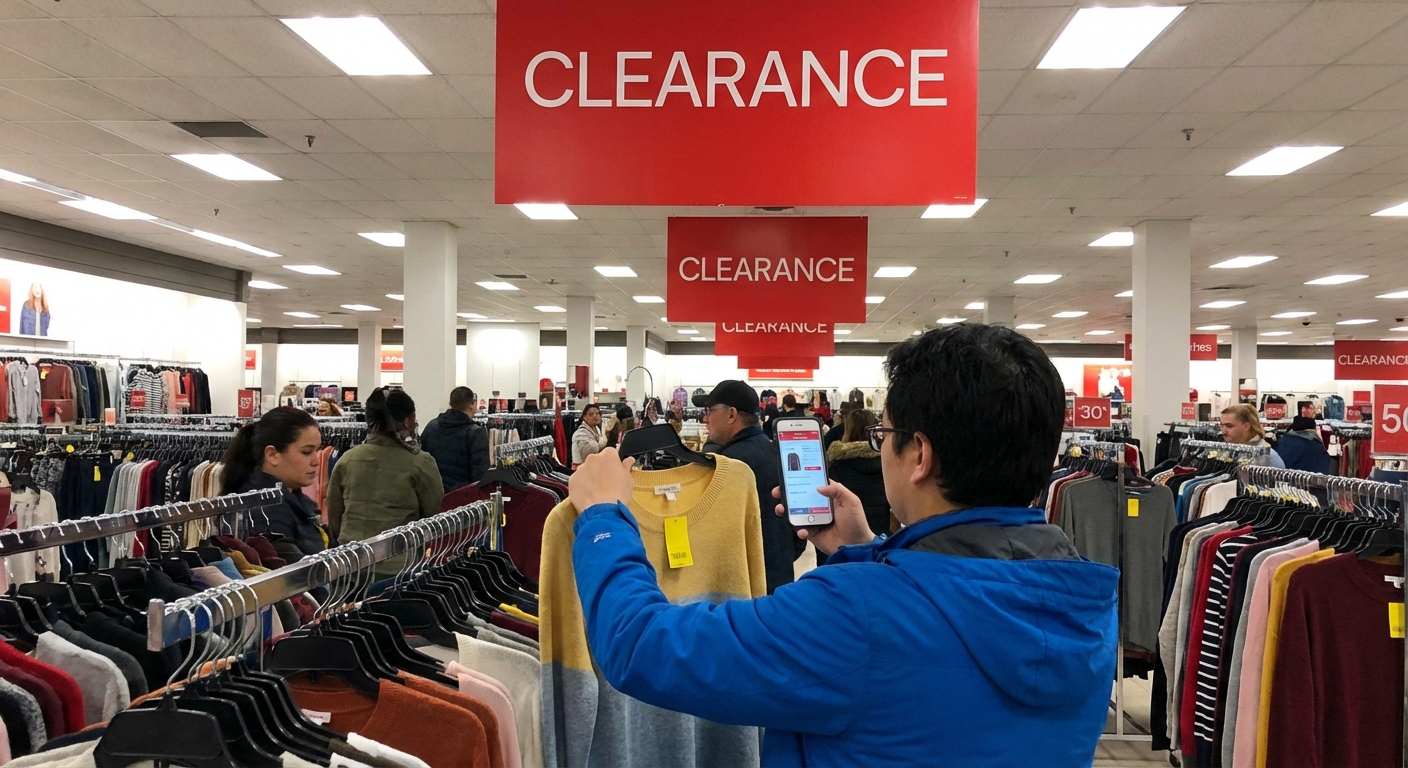
Guide to Target Seasonal Deals and Store Offers
tracking prices, testing strategies, and talking to current and former Target employees. Turns out I’d been leaving a painful amount of savings on the table.
This is the guide I wish I’d had before I spent full price on that $40 candle I could’ve grabbed for $11.98 three weeks later.
How Target’s Pricing System Really Works
When I first started paying close attention, I realized Target doesn’t just randomly discount stuff; there’s a pattern.
In my experience, the magic lives in the tiny numbers and letters on the price tags:
- Prices ending in .99 – Full price, not on sale
- .49 or .79 – First markdown
- .19 or .39 – Deeper markdown, often final or close to final
I tested this on a Threshold throw blanket I’d been stalking in home decor:
- Week 1: $29.99 (full price)
- Week 3: $20.99
- Week 5: $14.49
- Clearance endcap: $8.99 (and I used a 5% Target Circle deal stacked with RedCard for extra savings)
That progression isn’t random. Target typically marks down in 15–30% increments, then 50%, and sometimes 70–90% for seasonal or overstock.
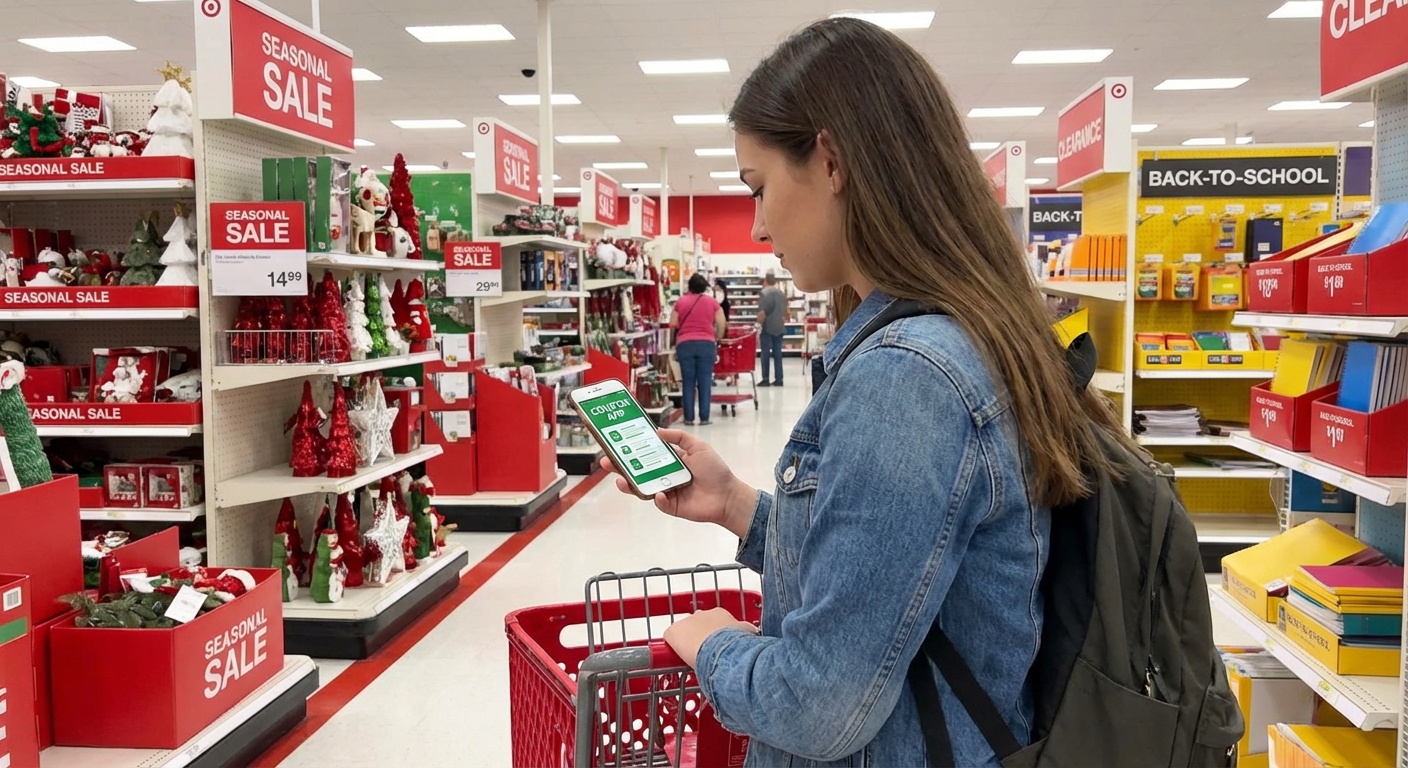
Watch the tiny clearance percentage stickers
When I tested tracking a couple of aisles over a month, I kept seeing the same pattern: 30%, 50%, then 70%. Once something hits 70%, that’s usually the “buy it now or it’s gone” point.
I’ve personally scored:
- 70% off outdoor patio cushions in August
- 70% off school supplies mid-September
- 90% off Halloween decor on November 3rd (yes, ninety… the cashier and I both laughed)
None of this is a glitch. It’s how Target protects its margins while clearing stock on a schedule.
The Seasonal Calendar: When the Best Deals Drop
I got a bit obsessive one year and built a spreadsheet of Target prices, and then cross‑checked it against news coverage and consumer data. The patterns are surprisingly consistent.
Winter: Post‑Holiday & New Year
Late December – Early January is clearance heaven.- Dec 26–31: Holiday décor and candy start around 50%, quickly go to 70%, then 90% if your store has a lot left.
- First two weeks of January: Fitness gear, storage bins, and organizational products get aggressive promos.
I recently picked up a $79.99 set of decorative storage baskets for $23 after they hit 70% off. The same week, I saw workout mats with stacked savings: sale price + Circle offer + RedCard.
Spring: Home Refresh & Easter
March–April is when Target leans hard into “refresh your space” marketing.You’ll usually see:
- Discounts on bedding, rugs, and small decor
- Early deals on patio and outdoor items (though deep discounts come later in summer)
When I tested waiting versus buying early, I saved about 45% by holding off on outdoor lights until August instead of grabbing them in April.
Summer: Patio, Toys & Back‑to‑School
July–August is a weird but wonderful mix:- Late July: Patio furniture often goes 50–70% off
- Early August: Back‑to‑school basics go on sale, but the best deals are usually after school starts, when they’re clearing extras
Last year, I grabbed $0.10 spiral notebooks and $0.25 folders in mid-September because I waited for the second wave of markdowns.
Fall: Halloween, Fall Decor & Early Holiday
Target runs fall like a slow drip:
- Late October: Halloween goes 30–50% off right after the holiday, then jumps to 70–90% within days
- Early November: Fall decor starts showing up on clearance as holiday items take over
I’ve learned not to buy full-price pumpkin decor in September. The exact same pumpkins were 50% off when I checked again in early November.
How to Stack Target Offers (Without Getting Overwhelmed)
When I first heard people talk about “stacking deals,” it sounded like extreme couponing chaos. Once I actually tested it in-store, it turned out to be surprisingly simple.
The main stacking combo I use
On a single item, you can typically stack:
- Sale price or clearance price
- Target Circle offer (percentage off or category discount)
- Manufacturer coupon (digital in app or paper)
- RedCard 5% discount (credit or debit)
For example, on a recent trip I bought a $19.99 skincare item:
- On sale: $15.99
- 15% Target Circle skincare offer
- $3 manufacturer coupon from the app
- 5% RedCard
I walked out paying under $11 before tax.
That’s not an edge case—that’s the system working how it’s designed.
Target Circle: Loyalty, not just coupons
Target Circle (the free rewards program) gives you:
- Personalized offers based on what you actually buy
- Category promos like “Spend $50 on household, get a $15 gift card”
- Birthday reward offers sometimes
When I tested ignoring Circle vs. using it consistently for a month, I saved about 9–12% on average. Not mind-blowing per trip, but over a year it’s a lot of money.
Gift card promos are secret gold
Watch for deals like:
- “Buy 3 select beauty items, get a $5 gift card”
- “Spend $50 on diapers, get a $15 gift card”
The hack I use: I’ll do those in a separate transaction, then use the gift card from that purchase on other items I know I’ll need anyway—like groceries or cleaning supplies—on the same shopping trip.
Reading the Store Like an Insider
A former Target team member once told me, “If you’re only shopping the front aisles, you’re paying our rent.” That stuck with me.
Clearance lives in the corners
In almost every Target I’ve tested, the clearance sections hide:
- At the endcaps of aisles, especially back corners of departments
- In the back of the store for bulky stuff (furniture, seasonal, outdoor)
Spend 3–5 minutes walking the perimeter of your target sections (home, beauty, toys, etc.). I’ve grabbed 70% off picture frames, cookware, and lamps this way that I never would’ve seen from the main aisles.
Timing your visits
Markdown schedules vary by store, but some patterns are common. Many locations:
- Do bulk markdowns early in the week (Monday–Wednesday)
- Stock seasonal clearance right after holidays, often overnight
When I visited on a random Friday versus a Monday morning, the Monday trip consistently had the better, still‑picked‑over clearance.
If you’re not sure, kindly ask a team member: “Hey, when do you usually mark down home decor or seasonal stuff?” Most are surprisingly open about it.
Online vs In‑Store: Which Deals Are Better?
When I tested the same items on Target.com vs in-store over a few weeks, I noticed something funny: sometimes the online price was lower, sometimes the in-store clearance was dramatically better.
Price matching (with limits)
Target has an official price match policy:
- They’ll match Target.com and select competitors like Amazon, Walmart, Best Buy, etc.
- It has to be the exact same item, size, color, and model
But—big catch—they don’t price match clearance. So that 70% off candle in-store will not be matched to another store, but you also can’t usually get the clearance price matched at a different Target.
I’ve used price matching successfully when:
- Target.com had a lower price than the shelf tag in-store
- Amazon had a lower price on electronics and Target matched it at customer service
I always screenshot the lower price in case it disappears mid‑aisle.
The Downsides and Things That Don’t Really Work
Not every “hack” is worth the effort.
What hasn’t worked well for me:- Chasing every single clearance markdown – Items vanish; waiting for 90% off is great until someone else grabs it at 70%.
- Driving to multiple Targets in one day – The gas and time usually kill any extra savings.
- Buying random clearance “just because it’s cheap” – My decluttering pile is proof this is a trap.
I’ve learned to decide before walking in: what I’ll pay full price for if needed, what I’ll wait on, and what I’ll only buy on deep discount.
Simple Strategy You Can Actually Stick To
Here’s the approach that’s worked best for me long-term, without turning into a full‑time hobby:
- Know the seasonal windows – Post‑holiday, late summer, and early fall are prime time.
- Scan endcaps every trip – Two-minute lap, no more, no less.
- Use Target Circle every time – Clip offers before checkout, not while you’re in the car.
- Stack, but don’t overcomplicate – Aim for: sale/clearance + Circle + RedCard.
- Set your own rules – For example, I only buy home decor at 50%+ off unless it’s something I truly love.
When I tested this “lightweight” system over three months and tracked receipts, I averaged about 20–30% savings across non-grocery items, without doing anything extreme.
If you treat Target like a game where the points are dollars saved, the patterns start to pop. And once you see those patterns, paying full price for seasonal stuff feels… kind of painful.
Sources
- Target Price Match Policy – Official Site - Details on what Target will and won’t price match
- Consumer Reports: How to Save Money at Big-Box Stores - General strategies for retailers like Target
- Forbes: Retailers’ Seasonal Sales Strategies Explained - Insight into how retailers plan markdowns
- U.S. Bureau of Labor Statistics – Seasonal Price Patterns - Background on seasonal pricing trends and patterns
- CNN Business: How Target Wins Shoppers With Deals - Reporting on Target’s discounting and inventory tactics