Guide to Timeless Luxury Watch Styles Explained
, and bezel insert*… and I was pretending very hard that I understood any of it.
If you’ve ever felt like luxury watches are a secret language spoken by guys in tailored suits and vintage Porsche caps, you’re not alone. When I started actually trying and testing different watches on my own wrist, though, the patterns became clear: there are a handful of core styles that never really go out of fashion.
This is the guide I wish I’d had when I bought my first “real” watch.
The Classic Dress Watch: Your Wrist Tuxedo
My personal gateway drug into luxury watches was a simple, two‑hand dress watch with a white dial and black leather strap. I wore it with everything for a year, even hoodies. It just worked.
A classic dress watch is all about restraint:
- Thin case (usually under ~10mm)
- Clean dial (often just hour markers, maybe a date)
- Leather strap (usually black or brown)
- Smaller diameter (around 36–40mm)
Brands like Patek Philippe (think Calatrava), Jaeger‑LeCoultre (Master Ultra Thin), and Cartier (Tank, Santos) basically wrote the rulebook here.
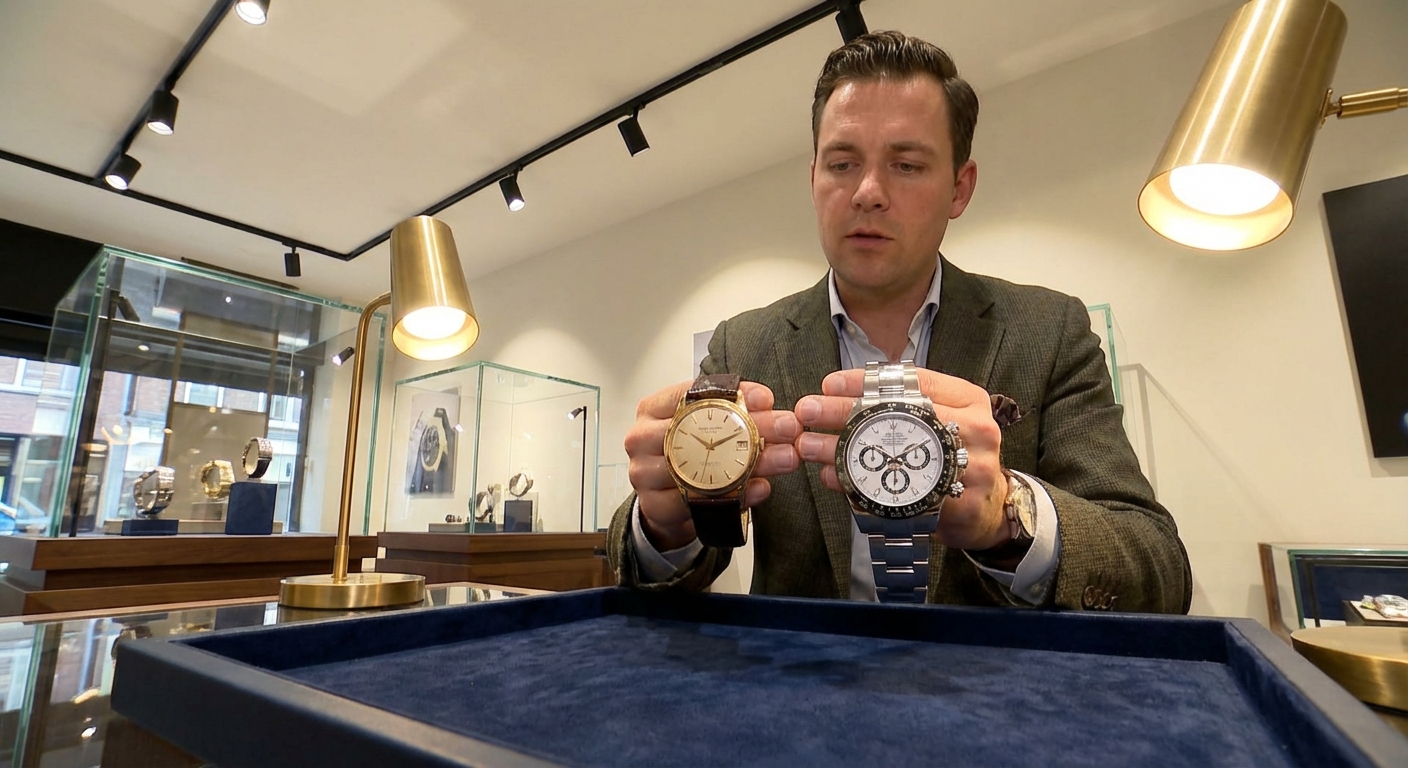
In my experience, a good dress watch makes you look pulled-together even when you’re running on three hours of sleep and gas-station coffee. It slips under a shirt cuff, doesn’t scream for attention, and ages beautifully as the leather strap softens.
Downsides:- Not great for water or sports
- Can feel a bit too formal with ultra-casual outfits
- Often lower legibility at a quick glance compared to sportier styles
If you go to weddings, job interviews, or any event with a dress code, a solid dress watch is still the most timeless “first luxury” move you can make.
The Dive Watch: The Everyday Tank You’ll Actually Wear
When I tested my first proper dive watch (a Rolex Submariner, borrowed from a friend who is far too trusting), I finally understood the hype. It was weirdly versatile: I could’ve worn it with a blazer or to the beach.
Classic dive watch traits:
- Rotating bezel with minute markings
- Highly legible dial with lume (glow-in-the-dark markers)
- Screw-down crown
- Strong water resistance (often 200m+)
- Usually on a metal bracelet
Think Rolex Submariner, Omega Seamaster Diver 300M, Blancpain Fifty Fathoms (widely credited as one of the first modern dive watches in 1953).
Why they’re timeless:Diving watches came out of real tool use. Jacques Cousteau literally used them. That functional DNA never goes out of style. For most people I’ve helped choose a first luxury watch, a dive watch ends up being the “wear it daily, beat it up, never baby it” choice.
Pros from my experience:- Insanely versatile – jeans, T-shirt, or casual suit
- Tough enough for travel, pool, weekend chaos
- Strong resale demand for iconic models
- Can feel chunky on smaller wrists
- Rotating bezel can scratch easily
- Overkill if your most extreme activity is opening spreadsheets
If you want one watch that does almost everything, it’s very hard to argue against a dive watch.
The Chronograph: The Complication That Looks Like You Mean Business
The first time I strapped on an Omega Speedmaster Professional (“Moonwatch”), I immediately felt 20% more competent, even though I mostly used the chronograph to time pasta.
Chronographs are watches that function as a stopwatch, usually with:
- Pushers (buttons) at 2 and 4 o’clock
- Sub-dials for elapsed minutes/hours
- A tachymeter scale around the bezel or on the dial
Famous examples include the Speedmaster, Rolex Daytona, TAG Heuer Carrera, and Zenith El Primero.
Why they’re beloved:They’re linked to racing, aviation, and space exploration. NASA officially qualified the Omega Speedmaster for manned spaceflight in 1965, and it was worn during the Apollo 11 moon landing in 1969. That’s not just marketing—it’s documented history.
What I’ve noticed wearing chronographs:- They project a slightly more technical, “engineer” vibe
- The dials are busier, which can either be charming or chaotic
- They’re fun to interact with; clicking the pushers is oddly satisfying
- Thicker cases due to more complex movements
- Less instantly readable at a glance
- Servicing a mechanical chronograph can be pricey compared to time-only watches
If you love motorsports, aviation, or just secretly want your wrist to look like a cockpit instrument panel, the chronograph is your playground.
The Field Watch: Understated, Military DNA, Surprisingly Cool
I recently rediscovered field watches when I was testing different pieces for a hiking trip. I wore a simple, no‑nonsense field watch for a week, and it was weird how “right” it felt in almost every situation.
Hallmarks of a classic field watch:
- Clean, high-contrast dial (often with 24‑hour inner track)
- Rugged case, usually 36–40mm
- Easy to read at a glance
- Often on canvas, NATO, or leather strap
This style traces back to military watches from World War I and II. Brands like Hamilton (Khaki Field), Longines, and IWC have deep roots in this space.
Why they work so well:Field watches are kind of the opposite of flashy luxury. They quietly say, “I care about design, but I also know how to change a tire.” In my experience, they pair insanely well with casual and smart‑casual outfits—chinos, flannels, denim.
Pros:- Usually lighter and slimmer than divers or chronos
- Very legible
- Classy, vintage-inspired aesthetic that doesn’t age badly
- Not always as water-resistant as dive watches
- Can feel too minimal if you like “wow factor” pieces
If you want something subtle, slightly vintage, and practical, a well-made field watch is a timeless under-the-radar choice.
The Dressy Sports Watch: Where Luxury and Flexibility Collide
When I finally tried an integrated-bracelet sports watch (a Girard-Perregaux Laureato, because I couldn’t quite justify an Audemars Piguet), I understood why these designs are so chased.
We’re talking about pieces like:
- Patek Philippe Nautilus
- Audemars Piguet Royal Oak
- Vacheron Constantin Overseas
Core traits:
- Slim profile but with sporty detailing
- Integrated bracelet (the bracelet flows straight from the case)
- Often a textured dial (tapisserie, horizontal grooving)
- Capable water resistance, but more “yacht club” than “deep sea”
These designs blend the elegance of a dress watch with the practicality of a sport watch. Gérald Genta’s 1970s designs (Royal Oak in 1972, Nautilus in 1976) basically created this entire category. The result is a watch you can wear with a suit, polo, or even a nice tee and still look put together.
Real talk – pros:- Hugely versatile, especially for travel and business
- Often hold value well, some even appreciate (though that’s never guaranteed)
- Wear flatter and more comfortably than many chunkier divers
- Extremely expensive from top brands; long waitlists at authorized dealers
- Overhyped in some circles
- Polished surfaces and sharp edges can show scratches fast
From a pure style perspective, this is one of the most future-proof categories. But it’s also where you can easily overpay if you get swept up in hype instead of your own taste.
How I Actually Choose What to Buy (Beyond the Hype)
After trying and rotating through different styles, I’ve settled on a few personal rules that keep my collection (and budget) under control:
- Start with lifestyle, not brand. If you swim and travel a lot, a dive or sports watch makes more sense than a fragile dress piece.
- Test the size in real life. Specs lie. A 41mm dive watch wears very differently from a 41mm dress watch because of bezel size, lug shape, and dial layout.
- Ignore the flex factor. The most worn watch in my box isn’t the most expensive—it’s the one that disappears on my wrist and fits 90% of my days.
- Check service and parts reality. Luxury mechanical watches are like cars; servicing every 5–10 years is standard. Brands like Rolex and Omega have strong global service networks, which matters long term.
And yes, there are pros and cons to the whole luxury-watch experience itself:
What works:- Mechanical watches can last decades when maintained
- Some models have proven long-term value retention
- They’re one of the few pieces of “male jewelry” socially accepted everywhere
- You can absolutely overspend chasing status
- Servicing and insurance add up
- Fakes and “Frankenwatches” are a real problem; buying from trusted dealers or directly from brands is vital
If you treat a luxury watch as a personal tool and companion rather than a financial instrument or status badge, you’ll almost always end up happier.
Matching Your Personality to a Timeless Style
When friends ask me what to buy, I usually translate their personality into a watch archetype:
- Minimalist, likes tailoring, hates clutter? Classic dress watch.
- Active, travels often, wants one-and-done piece? Dive watch.
- Techy, into cars/planes/space stories? Chronograph.
- Quietly stylish, outdoorsy, hates flash? Field watch.
- Exec/entrepreneur vibe, wants refinement with edge? Dressy sports watch.
If you’re still unsure, go try them on. When I tested watches across these styles, I was shocked by how quickly my wrist told me yes or no, regardless of what was cool on Instagram.
Luxury watch styles are “timeless” not because of price tags, but because they were born from real-world needs: telling time in a cockpit, under the sea, in a trench, in a boardroom. Once you understand those origins, choosing the right one stops feeling like decoding a secret club—and starts feeling like choosing the story you want to wear every day.
Sources
- Omega – The Speedmaster and space exploration - Official history of the Speedmaster’s role in NASA missions
- Rolex – The Submariner - Brand overview of the Submariner dive watch line
- Patek Philippe Nautilus Collection - Official presentation of an iconic luxury sports watch
- Forbes – Why Mechanical Watches Are Still Big Business - Market context for luxury timepieces
- BBC – A brief history of the wristwatch - Historical background on how key watch styles evolved