Guide to Understanding Bohemian Rug Styles
t out, and realized I’d basically bought a loud geometric piece that clashed with everything. That’s when I went down the rabbit hole of real Bohemian rug styles—history, patterns, weaving techniques, all of it.
This guide is what I wish I’d had before that first impulse purchase.
What Bohemian Really Means in Rugs
When designers say “boho rug” now, they’re usually talking about a mix of:
- Global-inspired motifs (Moroccan, Turkish, Persian, kilim)
- Layered, lived-in texture
- Unconventional color mixes
- A relaxed, collected-over-time vibe
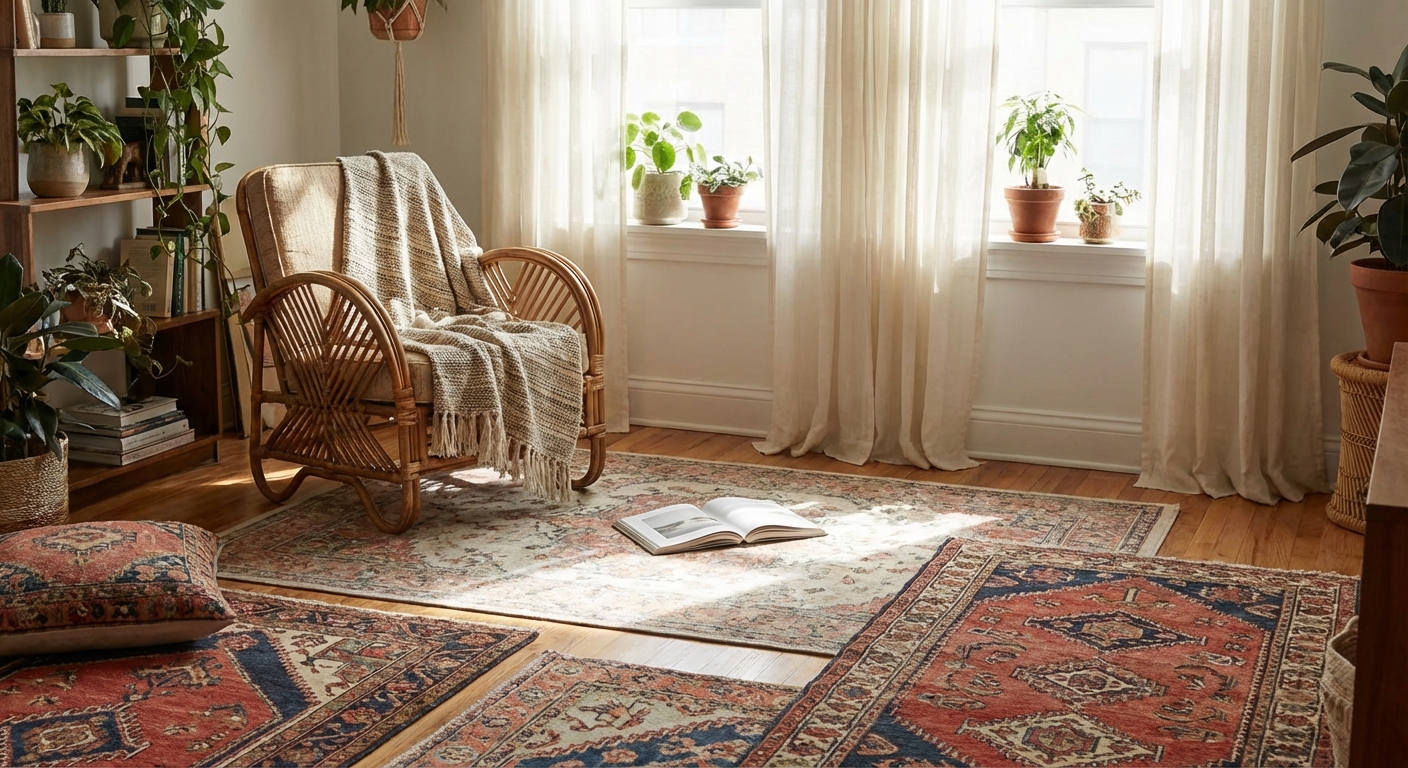
But historically, the word “Bohemian” referred to unconventional, artistic lifestyles—think creatives collecting pieces from markets, travels, and flea finds. In rug language, that translates to pattern-rich, story-driven textiles that don’t look like they came from a single matching set.
In my experience, the rugs that feel authentically boho are the ones that look slightly imperfect, maybe even a bit sun-faded in spots, and like they have a life before you.
Core Bohemian Rug Styles (And How They Actually Differ)
When I started testing rugs in my own home and clients’ spaces, I realized most “boho” rugs you see online are heavily inspired by a few core traditions.
1. Moroccan & Beni Ourain–Inspired Rugs
Those creamy, shaggy rugs with black or brown diamonds you see all over Instagram? That’s the Beni Ourain look—originally handwoven by Berber tribes in the Atlas Mountains.
Key traits:- High-pile, super soft, almost shag style
- Usually ivory or cream with simple, dark geometric lines
- Asymmetrical or slightly wonky patterns (which I love)
2. Kilim & Flatweave Boho Rugs
When I first rolled out a flatweave kilim in my entryway, I was convinced I’d hate the lack of plushness. Instead, it became the most hardworking rug in the house.
What they are:Kilim rugs are flatwoven—no pile, just interlocked warp and weft yarns. They’re common in Turkish, Persian, Afghan, and North African traditions.
Key traits:- Lightweight and reversible (huge bonus)
- Bold geometrics, tribal motifs, stripes, or diamonds
- Often strong color palettes: rust, indigo, teal, mustard, magenta
3. Overdyed & Distressed Persian-Style Rugs
I used to think the distressed Persian look was just a fast fashion trend, but it actually has roots in authentic rug restoration.
Overdyed rugs are typically traditional-style rugs that have been:- Stripped or faded
- Dyed one bold color (teal, fuchsia, emerald, etc.)
- Washed so the pattern ghosts through the color
Modern power-loomed rugs mimic this by printing faded, vintage-style designs.
Pros:- Instantly makes a space feel curated and eclectic
- Hides stains surprisingly well—in one client’s family room, a wine spill disappeared into the pattern
- Cheap versions can look flat and pixelated up close
- Authentic overdyed antique rugs can be pricey and sometimes thinner than expected
4. Jute, Hemp, and Natural Fiber Boho Rugs
When I tested a chunky jute rug under our living room coffee table, it was the first time the space finally felt grounded.
Key traits:- Neutral, sandy tones
- Braided, woven, or boucle textures
- Sometimes combined with cotton or wool for pattern
On their own, they’re more coastal or organic modern. But in a bohemian context, they’re the base layer—you stack colorful kilims or smaller patterned rugs on top.
Pros: Sustainable, durable, and forgiving with foot traffic. Cons: Not the softest; can shed fibers; some people find them scratchy.5. Global-Inspired “Boho” Printed Rugs
Let’s be honest: not everyone has the budget (or patience) for wool, hand-knotted rugs. I’ve tested plenty of power-loomed polyester and printed rugs for clients who need kid- and pet-friendly floors.
These often mix:
- Moroccan diamonds
- Tribal arrows
- Vintage floral medallions
- Faded, layered patterns
They’re not heritage pieces, but they’re:
- Affordable
- Easy to clean
- Great for renters or high-risk zones like playrooms
The key is being honest with yourself: if you want longevity and heirloom quality, you’re not getting it from a $120 8x10 rug. And that’s okay—as long as you’re not expecting it to age like a wool Persian.
How to Read a Boho Rug Like a Pro
When I started treating rugs like furniture investments instead of just color splashes, my spaces got better and my regrets got fewer. Here’s how I evaluate a bohemian rug now:
1. Material Matters More Than Marketing
- Wool: Naturally stain-resistant, durable, great bounce back. A good wool rug can last decades.
- Cotton: Softer, lighter, usually cheaper; better for low-traffic or layered looks.
- Polyester / Polypropylene: Budget-friendly, highly stain-resistant, but can flatten and look tired earlier.
- Jute / Sisal / Hemp: Textured, natural, tough, but not cuddly.
I once compared two similar “Moroccan boho” rugs side by side—one wool, one poly. After just three months, the poly version looked matted where we walked; the wool still looked fresh.
2. Pattern Scale vs. Room Size
A common mistake I see (and have made): using a tiny, intricate pattern in a big, open room. It just turns into visual static.
My rule of thumb:
- Small rooms: Go bolder or tighter pattern; it becomes a focal point.
- Large rooms: Medium to large-scale motifs so you can actually appreciate them from across the room.
3. Color: How Boho Is Too Boho?
Boho doesn’t have to mean rainbow chaos.
When clients are nervous, I ask them to pick two accent colors they already love in the room—maybe rust and deep teal—and then find a rug that includes those plus neutrals. That way the rug feels intentional, not like a random explosion.
One thing I’ve learned the hard way: super bright synthetic dyes sometimes read harsher in person than in product photos. If you’re color-sensitive, look at user photos, not just studio shots.
Pros and Cons of Going Full Boho With Rugs
Why people fall in love with boho rugs:- They add instant personality and warmth.
- They’re wildly forgiving of mismatched furniture.
- Layering different styles (Moroccan + kilim + jute) creates that “traveled” look without having ever left your city.
- Too many competing patterns can make a small space feel chaotic.
- Cheap imitations pill, shed, or fade quickly, which can look more “college rental” than “curated bohemian loft.”
- Some vintage or hand-dyed rugs may not be colorfast—my first overdyed rug bled slightly when I spot cleaned it.
My honest view: boho rugs work best when they’re the star or the backup singer—not both. Either let the rug be the main pattern in the room, or keep it more subdued if your pillows, art, and bedding are already loud.
How to Start: A Simple Boho Rug Strategy
If you’re overwhelmed by options, here’s the approach I use when helping friends or clients:
- Pick your base: Natural jute or a solid wool rug in a neutral tone.
- Add one statement boho rug: Overdyed Persian, Moroccan diamond, or kilim style. Place it in the area you see first—entryway, living area, or under the coffee table.
- Repeat one color from that rug elsewhere: A throw pillow, a vase, or a piece of art. This is what makes the room feel intentional instead of “random Etsy haul.”
- Live with it for a week: Notice how it looks in morning vs. evening light, and how it feels under bare feet. I’ve returned rugs that looked amazing at noon and muddy at 6 p.m.
The best bohemian rugs don’t just look good on Instagram. They’re the ones you actually enjoy walking on every single day.
Sources
- The Metropolitan Museum of Art – Rugs and Carpets - Historical context on woven rugs and regional styles
- Victoria and Albert Museum – Middle Eastern Rugs - Overview of traditional rug techniques and motifs
- Design Within Reach – Rug Guide - Brand guide on rug materials and construction
- Consumer Reports – Buying Rug Guide - Practical advice on rug durability and materials
- Harvard University – Textile Conservation Resources - Technical insight into textile fibers and longevity