Guide to Understanding Hydroponic Growing Systems
is wrong. Where’s the dirt?”* That was my very clumsy entry into hydroponics, and since then I’ve tested multiple systems in my apartment, on a tiny balcony, and later in a small backyard greenhouse.
If you’ve ever looked at those lush, Instagram-worthy indoor gardens and wondered how on earth they work, this guide will walk you through it—without the hype, but with plenty of real-life experience.
What Hydroponics Actually Is (Without the Jargon Overload)
Hydroponics is simply growing plants without soil. Instead, the roots sit in a nutrient-rich water solution, usually supported by an inert medium like clay pebbles, rockwool, coco coir, or perlite.
The core idea: give plants water, nutrients, oxygen, and light in a more controlled way than traditional soil gardening.
In my experience, the biggest mental shift is this: the water is the soil. Everything soil normally does—holding nutrients, providing structure, storing moisture—you’re now doing deliberately with equipment and solutions.
A lot of commercial lettuce, basil, and even tomatoes you see in supermarkets are already hydroponically grown. The USDA has allowed certified organic labeling for some hydroponic crops since 2017 (controversial, but true), and large-scale operations use it because of consistency and efficiency.
Why People Love Hydroponics (And Where It Can Go Wrong)
When I tested my first deep water culture bucket, the growth speed honestly shocked me. My basil plant in hydroponics outpaced my basil in potting soil by at least 2x.
Real advantages I’ve seen:- Faster growth – Plants get nutrients directly delivered in water. Plants don’t waste energy searching through soil.
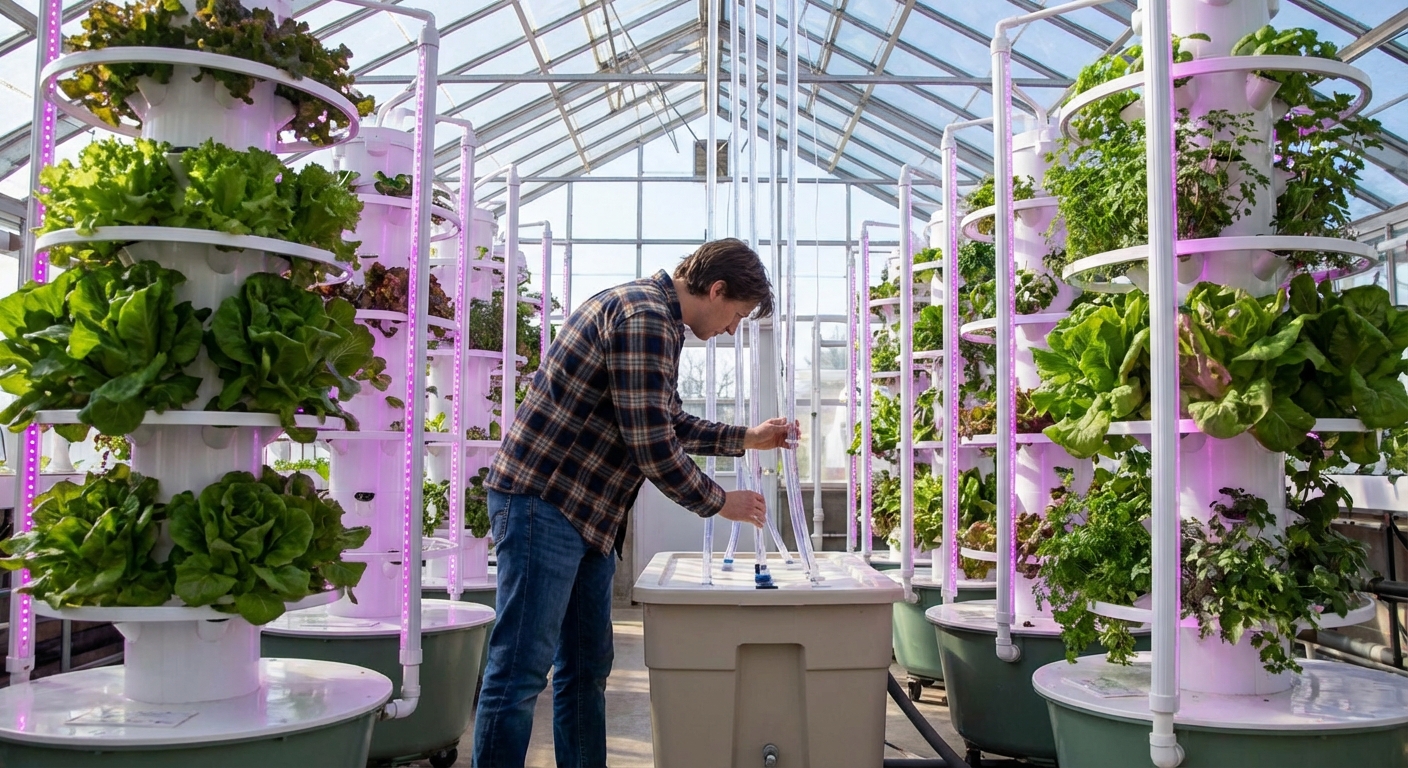
- Higher yields in small spaces – Vertical hydroponic towers or shelf systems can turn a corner of your kitchen into a mini-farm.
- Water efficiency – Recirculating systems use far less water than traditional gardening. Studies from the University of Arizona have shown water savings of up to 90% compared to field growing.
- Cleaner and less mess – No heavy bags of soil, fewer fungus gnats, and you can grow indoors year-round.
But there are trade-offs people gloss over in those dreamy TikTok videos.
Real downsides I’ve personally hit:- System failures are brutal – When my pump died during a summer heatwave, I didn’t lose “some” plants. I lost all of them in that system within a day.
- Upfront cost – Reservoirs, pumps, air stones, lights, pH meters… it adds up. A DIY system can be cheap, but a nice indoor kit can cost more than setting up a few raised soil beds.
- Learning curve – You become part-gardener, part-lab tech. You’ll be checking pH, EC (electrical conductivity), and mixing nutrient solutions.
- Electricity dependence – No power = no pump = no circulation. Soil doesn’t have that problem.
Hydroponics isn’t “better than soil” universally. It’s just a different tool—and it shines in certain situations: small spaces, urban living, harsh climates, or when you really care about speed and predictability.
The Main Types of Hydroponic Systems (And Which Actually Work at Home)
There are dozens of variations, but after trying several and researching commercial setups, these are the main types that matter for home growers.
1. Deep Water Culture (DWC)
This was my first love. Plants sit in net pots in a lid, and their roots dangle directly into an aerated nutrient solution.
How it works:- A bucket or tub holds the nutrient solution.
- An air pump plus air stone oxygenates the water so roots don’t suffocate.
- Plants grow on top in net pots filled with clay pebbles or similar media.
- Setup is cheap and beginner-friendly.
- You need to keep water temperature under control (ideally 18–22°C / 65–72°F). Above that, I’ve seen root rot (Pythium) show up.
2. Nutrient Film Technique (NFT)
I built a small NFT system with PVC-like channels on a metal rack in my living room. It looked like something between a science project and a salad factory.
How it works:- A very thin film of nutrient solution flows continuously through sloped channels.
- Plant roots sit in the channel, touching the shallow moving water.
- Excess solution drains back to a reservoir—closed loop.
- Crazy fast growth for lettuce.
- Efficient use of water and nutrients.
- Roots can clog channels if you let them turn into a jungle.
- If the pump stops, roots dry out fast because there’s very little standing water.
3. Ebb and Flow (Flood and Drain)
I used this in a small greenhouse with a big tray. It felt like the most forgiving system to me.
How it works:- A tray filled with grow media (clay pebbles, rockwool, coco mix) holds the plants.
- A pump periodically floods the tray with nutrient solution, then it drains back to the reservoir.
- Roots get nutrients when flooded and oxygen when it drains.
- Very flexible—you can grow almost anything, from lettuce to tomatoes.
- If the pump fails, the medium retains some moisture, so you don’t lose everything instantly.
4. Drip Systems
Drip systems are what many commercial greenhouses use (often with rockwool slabs).
How it works:- Each plant gets a small drip emitter delivering nutrient solution on a timer.
- Excess drains back to the reservoir (recirculating) or is discarded (run-to-waste).
- Great control but more plumbing, more points of failure (clogged emitters are annoyingly common).
- Awesome for tomatoes, peppers, cucumbers.
5. Wick Systems (The “Low-Tech” Option)
When I was testing “lazy” systems for a friend who travels a lot, the wick setup won. No moving parts.
How it works:- A wick (cotton, nylon, etc.) pulls nutrient solution from a reservoir up into the growing medium by capillary action.
- No electricity, super simple.
- Limited moisture delivery; not great for big, thirsty plants.
- Best for herbs and small greens.
Nutrients, pH, and Other Nerdy Stuff You Actually Need to Know
The first time I mixed nutrients, I eyeballed everything.
That was a mistake.
Hydroponic nutrients aren’t just “fertilizer.” They’re carefully balanced mixes of macronutrients (N, P, K, Ca, Mg, S) and micronutrients (iron, manganese, boron, zinc, copper, molybdenum, etc.). They come as:
- Two-part or three-part liquid nutrients (like General Hydroponics Flora Series)
- Dry salts you weigh and dissolve (more advanced but cheaper long-term)
- pH – Ideally around 5.5–6.5 for most hydro crops. If pH drifts too high or low, nutrients become unavailable. I’ve literally watched plants go pale from iron lockout because my pH went over 7.
- EC (Electrical Conductivity) – A measure of total dissolved salts (nutrient strength). Too low = hungry plants, too high = nutrient burn.
When I finally bought a decent pH meter and EC meter instead of guessing, my plant health improved dramatically. It’s one of those upgrades that feels “extra” until you see the difference.
What You Can Realistically Grow (And What’s a Pain)
Based on my own setups and digging into research from places like Cornell and the University of Arizona’s Controlled Environment Agriculture Center:
Hydroponic all-stars:- Lettuce (butterhead, romaine, leaf types)
- Spinach (a bit fussier about pH and temps)
- Basil, mint, parsley, cilantro
- Pak choi, kale, chard
These are quick, compact, and very responsive to hydroponic conditions.
Doable but more involved:- Tomatoes (need support, pruning, stable nutrients)
- Peppers
- Cucumbers
- Strawberries
I’ve grown cherry tomatoes and jalapeños hydroponically, and they were incredible—but they highlighted every weakness in my system: fluctuating nutrient levels, inconsistent lighting, overcrowding.
Not ideal for home hydro (in my experience):- Root crops like carrots, potatoes, onions—possible, but more trouble than they’re worth for beginners.
- Very large perennials or trees (citrus, avocado) unless you’re building a serious custom setup.
Common Problems I’ve Hit (So You Don’t Have To)
A few ugly truths from my own screwups:
- Algae growth – Any light hitting nutrient solution = green slime. It competes for oxygen and nutrients.
- Fix: Opaque reservoirs, cover any exposed water.
- Root rot – Brown, slimy, bad-smelling roots.
- Causes: Warm water, poor oxygenation, pathogens.
- Fix: Keep temps down, add more aeration, clean equipment regularly, don’t overcrowd.
- Nutrient burn – Leaf tips turning brown and crispy.
- Causes: EC too high.
- Fix: Dilute your solution, follow the lower end of manufacturer’s recommendations.
- Nutrient deficiencies – Yellowing between veins (magnesium), pale new growth (iron), etc.
- Fix: Check pH first. Many “deficiencies” are just lockout from wrong pH.
Every time something went wrong, I thought hydroponics was “too complicated.” But over time, patterns emerge. Once you understand pH, EC, and temperature, most issues become pretty predictable.
Should You Actually Try Hydroponics?
Here’s my honest breakdown after several years of tinkering:
Hydroponics makes a lot of sense if:
- You’re short on space but big on curiosity.
- You like a bit of tech mixed with your gardening.
- You want very fresh greens year-round.
It’s probably not ideal if:
- You hate “fiddly” systems and just want to stick something in the ground and walk away.
- Your electricity is unreliable.
- You’re on a super-tight budget and aren’t into DIY.
Personally, I now use a hybrid approach: soil beds outdoors for big, rugged crops, and hydroponic systems indoors for fast greens and herbs I use constantly. That balance has been the sweet spot for me.
If you start small—a single DWC bucket or a compact countertop system—you’ll get a feel for it without turning your living room into a laboratory.
And that first bite of lettuce or basil you grew in plain water? It feels like cheating. The good kind.
Sources
- University of Arizona Controlled Environment Agriculture Center – Hydroponic Lettuce Production - Research and resources on commercial-style hydroponic systems and water efficiency.
- Cornell University – Hydroponics: A Versatile System for Vegetable Production - Extension publication covering system types and nutrient management.
- U.S. Department of Agriculture (USDA) – Organic Hydroponics Ruling Discussion - Background on hydroponics and organic certification debates.
- General Hydroponics – Nutrient Feeding Schedules - Practical reference for nutrient mixing and EC ranges.
- BBC Future – How Vertical Farming Reinvents Agriculture - Overview of hydroponics and controlled environment agriculture at scale.