Guide to Using Kitchen Stain Removal Powder for Common Household Stains
s brown splatter from 2021. Then I recently discovered how powerful a good kitchen stain removal powder can be when you actually use it properly – not just toss a scoop in the wash and pray.
Over the past few months, I’ve been nerding out on stain chemistry (yes, that’s a thing) and testing different powders on real-life kitchen disasters. This guide is everything I wish I’d known before I ruined three aprons and a perfectly good white T‑shirt.
What Exactly Is Kitchen Stain Removal Powder?
When I say “kitchen stain removal powder,” I’m talking about the oxygen-based stain removers marketed for greasy, food-heavy messes – not scouring powder or dishwasher detergent.
Most of them are based on some combo of:
- Sodium percarbonate – an oxygen bleach that releases hydrogen peroxide when dissolved in warm water.
- Surfactants – detergent-like ingredients that lift oily and greasy residues.
- Enzymes – like protease, amylase, and lipase that break down protein, starch, and fat-based stains.
- Alkaline builders – raise pH so stains loosen more easily.
Oxygen bleach isn’t the same as chlorine bleach. It’s generally gentler on fabrics, colors, and your nose. The American Cleaning Institute explains that oxygen bleaches work best in warm to hot water and are particularly good for organic stains like food, drink, and body fluids.
When I tested different brands side-by-side, the ones with enzymes listed on the label consistently beat the “plain” oxygen powders, especially on oily stains and dried-on food.
General Rules Before You Touch Any Stain
Here’s my personal, battle-tested checklist:
- Act fast when you can. Fresh stains are ten times easier to deal with. I’ve pulled out tomato stains 24 hours later, but it took way more soaking.
- Blot, don’t rub. Rubbing drives the stain deeper into fibers. I gently press with a clean cloth or paper towel.
- Cold first for protein-based stains. Anything like milk, egg, or meat juice – start with cold water. Hot water can “cook” the protein in, literally.
- Test on a hidden spot. When I ignored this rule on a printed cotton apron, some of the print faded before the stain even did.
- Never mix with chlorine bleach. Oxygen-based powders + chlorine bleach = unsafe combo. The label warnings are there for a reason.
How to Use Powder: Three Basic Methods
Over time I’ve basically settled into three core routines.
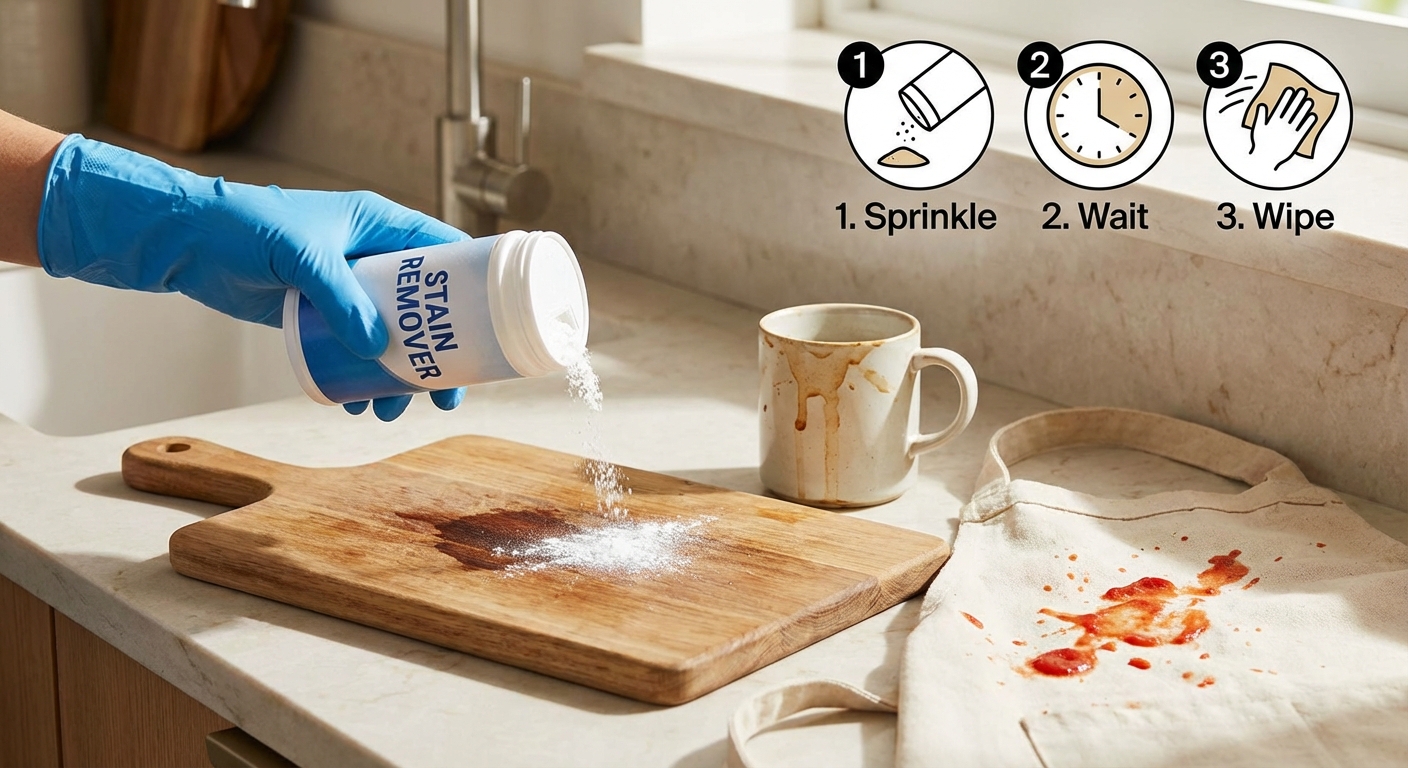
1. Quick Paste for Fresh, Localized Stains
This is what I do when I splash something right now:
- Dissolve ½–1 teaspoon of powder in just enough warm water to make a paste.
- Dab or gently spread it on the stain using a spoon or old toothbrush.
- Let it sit 5–15 minutes (check the label – some are more aggressive).
- Rinse, then launder as usual.
When I tested this on a fresh soy sauce drop on a white cotton T-shirt, I got a completely clean result with zero ring – the kind of before/after that makes you annoy your friends with laundry photos.
2. Soak for Stubborn, Set-In Stains
For my stained dish towels and cloth napkins, soaking has been the MVP.
- Fill a basin or bucket with warm to hot water (follow garment care label).
- Add stain removal powder per instructions (usually 1–2 scoops per gallon).
- Stir to fully dissolve.
- Submerge items completely.
- Soak 1–6 hours, occasionally agitating.
- Rinse, then wash in the machine.
For old turmeric stains, I had to do two soak cycles: first to lighten, second to nearly erase. Not perfect, but the towels went from “embarrassing” to “guest acceptable.”
3. Boost Your Regular Laundry
This is the lazy-but-effective method I use weekly for kitchen textiles:
- Add your usual detergent.
- Add ½–1 scoop of stain removal powder directly to the drum.
- Use warm or hot water if the fabric allows.
It’s not magic on ancient stains, but it keeps new ones from becoming permanent residents.
Common Kitchen Stains & How I Actually Remove Them
1. Grease & Oil (Cooking Oil, Butter, Bacon Fat)
These are the sneaky ones – you often don’t see the stain until it’s been washed and dried.
What I do:- Blot as much oil as possible with paper towel.
- Rinse the back of the fabric with warm water.
- Make a paste of stain powder and warm water.
- Work it gently into the fabric (I use a soft brush).
- Let sit 10–20 minutes.
- Wash on warm with an extra scoop of powder.
In my experience, enzyme-containing powders that list lipase do noticeably better on greasy splatters on aprons and T-shirts.
2. Tomato Sauce, Ketchup & Curry
Tomato and turmeric are the drama queens of kitchen stains.
Tomato-based stains:- Rinse from the back with cold water.
- Treat with powder paste.
- Let sit 15–30 minutes.
- Soak in warm water with powder for 1–3 hours.
- Wash on warm.
These are tough because turmeric is a dye.
- Rinse immediately if possible.
- Pre-treat with paste.
- Soak in hot water (if safe for fabric) with extra powder.
- Expect improvement, not always perfection.
When I tested on a white microfiber cloth, the yellow stain faded about 80% after one long soak. On natural cotton, I got it to maybe 90% after two rounds.
3. Coffee & Tea
The tannins in tea and coffee love to bond with fabric.
My routine:- Rinse under cold water ASAP.
- Apply paste and gently rub.
- Let sit 5–15 minutes.
- Wash warm with powder in the cycle.
A 2013 paper in the Journal of Surfactants and Detergents basically confirms what I saw: oxygen bleaches shine on tannin-based stains like tea.
4. Red Wine
Yes, you can rescue the dish towel that caught your merlot.
- Blot, don’t rub, the excess.
- Rinse with cold water.
- Soak in cool water with powder (oxygen bleach can be used in cool water, but works slower).
- After 1–2 hours, check. If improved, wash warm with powder.
I’ve had better luck on cotton than on synthetic blends here. Polyester fibers are less forgiving.
5. Protein Stains (Milk, Egg, Meat Juices)
These can go from “no big deal” to “permanent” fast if you hit them with hot water too early.
What works for me:- Rinse in cold water first.
- Soak in cool water with powder (enzymatic formulas work best).
- After soaking, wash warm (not hot) with another scoop of powder.
The CDC and various textile labs consistently recommend colder first contact with protein so you don’t denature it into the fibers.
Where Powder Works Brilliantly (and Where It Doesn’t)
In my experience, kitchen stain removal powder is amazing for:
- White and light-colored cotton towels, aprons, and tablecloths
- Reusable kitchen cloths and napkins
- Sink-side hand towels
- Food-stained oven mitts and trivets (check filler material)
It’s less reliable or more risky for:
- Delicate fabrics: silk, wool, cashmere
- Dark items that bleed or fade easily
- Items with metallic prints or foiling
- Leather or suede (don’t do it)
I once used a strong oxygen powder on a dark blue apron with a printed logo. The stain disappeared. So did about 20% of the color intensity in that logo.
Safety, Storage & Realistic Expectations
A few honest notes from my kitchen-laundry experiments:
- Ventilation matters. Some powders have a mild chemical smell when you mix them. I open a window or run the fan.
- Gloves are a good idea if you’ve got sensitive skin. These are alkaline products.
- Follow the scoop guidelines. I tried the “more is more” approach once. All I got was gritty residue on fabrics and no real improvement.
- Not every stain is savable. Heat-set, tumble-dried, months-old turmeric on cheap cotton? Sometimes it’s going to be a “clean but slightly stained” situation.
The Federal Trade Commission’s care label rules and fabric care guides from universities all echo the same theme: treat quickly, respect the fabric type, and don’t expect miracles from any product on damaged fibers.
Choosing a Good Kitchen Stain Removal Powder
When I shop now, I scan labels for:
- Oxygen-based bleach (sodium percarbonate) rather than only whitening agents.
- Enzymes (protease, amylase, lipase) for food-heavy stains.
- Clear directions for pre-soak vs. in-wash use.
- Color-safe wording if I plan to use it on non-whites.
Brands like OxiClean, Vanish, and some supermarket generics use similar chemistry. The differences I’ve noticed are more about concentration and how well they dissolve than about raw stain-fighting power.
Final Thoughts from My Kitchen Sink
After testing powders on everything from bolognese shirts to coffee-splattered placemats, here’s where I’ve landed:
- A good kitchen stain removal powder won’t turn you into a laundry wizard overnight, but it’s the single biggest upgrade I’ve made to how I care for kitchen textiles.
- Used correctly – paste, soak, boost – it can rescue things I would’ve thrown out a few years ago.
- It’s not perfect, and you’ll still lose a few battles (turmeric, I’m looking at you), but your “ruined” pile will shrink dramatically.
If you’ve got a drawer full of stained-but-still-loved kitchen towels, it’s absolutely worth grabbing a tub of stain powder, rolling up your sleeves, and doing a little experiment session of your own. Just… maybe don’t start with your favorite tablecloth.
Sources
- American Cleaning Institute – Cleaning Ingredients: Oxygen Bleach - Overview of how oxygen bleach works on stains
- CDC – Healthy Laundry Practices - Guidance on water temperature and hygiene for laundering
- US Federal Trade Commission – Clothing & Textiles: Care Labels - Official guidance on fabric care and labeling
- Penn State Extension – Laundry and Clothing Care - Educational resources on stain removal and fabric-safe practices
- The New York Times Wirecutter – The Best Laundry Detergent - Comparative testing and discussion of detergents and stain removers