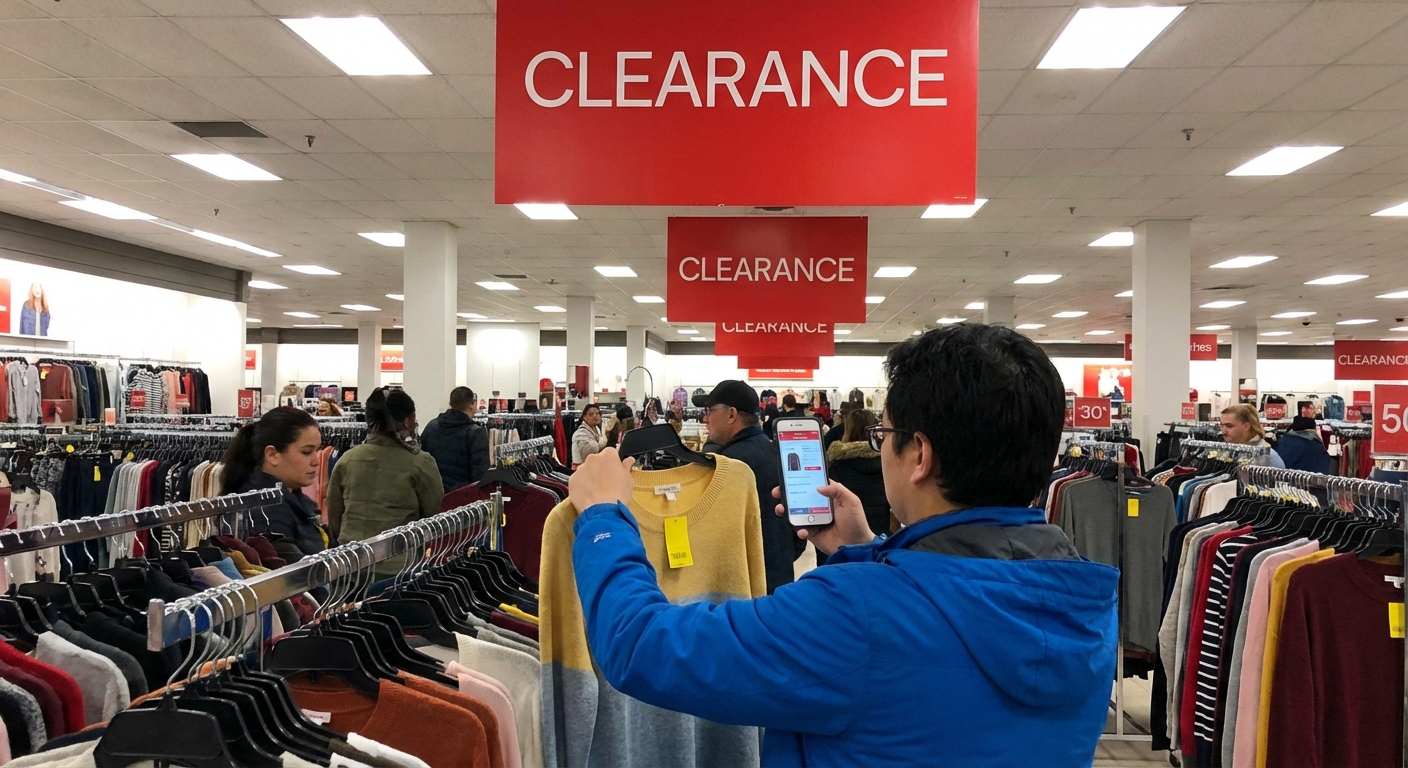
Guide to Walmart Clearance Sections and Hidden Deals
studying the store layout, tracking markdown patterns, and talking to employees. That’s when the real fun started.I’m talking $0.75 name-brand shampoo, $5 small appliances, $3 kids’ shoes, and a $29 air fryer that still feels like my personal Super Bowl win.
This guide is everything I’ve learned from walking those aisles way more than I’ll admit publicly, testing clearance apps, and cross-checking it all with actual retail data.
How Walmart Clearance Really Works (Not Just Random Stickers)
When I first started paying attention, clearance felt chaotic. Yellow stickers everywhere, prices that made no sense. Once I dug in, I realized it’s not random at all.
Walmart’s system is driven by:
- Markdown cycles – Inventory that isn’t selling or seasonal items get systematically reduced.
- Store-level discretion – Managers can adjust prices based on local demand and overstock.
- Planogram changes – When shelves are reset for new products, older items get kicked to clearance.
Retail analysts have noted that big-box stores like Walmart use “markdown optimization” software to fine-tune pricing. McKinsey reported in 2018 that data-driven markdown strategies can boost margins by 2–5% for large retailers, which is exactly the kind of system Walmart is known to use.
In my experience, that means prices drop in stages: full price → minor discount → deeper clearance → final “just get it out of here” price.
Where the Good Clearance Is Actually Hiding
The obvious clearance aisle is just the entry-level stuff. When I tested different locations over several months, I kept finding the best deals in the least obvious spots.
1. The Main Clearance Aisle (The Gateway)
This is usually along a side wall or near the back of the store. It’s worth a quick sweep, but:
- A lot of “ok” deals, not the insane ones
- Often picked over
- Many items missing tags or in the wrong spot
I still walk it every time, but I don’t rely on it.
2. End Caps: The Real Treasure Zones
When I say end caps, I mean the ends of the aisles, especially:
- Near toys, home goods, and electronics
- Along the main back wall
I once grabbed a $15 LEGO set on an end cap that was still full price on the shelf 20 feet away. Same item, different barcode on the shelf tag, totally different outcome at checkout.
I’ve learned to walk the back sides of end caps too—the side facing the wall, not the main aisle. That’s where markdowns are often shoved when new seasonal stuff comes in.
3. Hidden In-Dept Clearance (My Favorite Hack)
Some of the best markdowns never make it to the official clearance areas. They stay right within their department:
- Shoes: Look for random yellow tags on lower shelves.
- Clothing: Check the tiny clearance racks tucked between regular racks or against back walls.
- Home & kitchen: Scan single odd items that look out of place—last of a discontinued line.
When I tested this, I walked the main clearance aisle in 4 different stores, then spent an extra 20 minutes scanning random yellow tags inside departments. About 70% of my best deals came from those in-section markdowns, not the general clearance aisle.
4. Garden Center & Seasonal Areas
My most shocking find: a $98 patio set marked down to $40 in the garden center… in October. The barcode scanned correctly, but the sticker still said $98. Nobody had bothered to change the physical tag.
Seasonal gold mines:
- Fall: Patio, grills, outdoor décor
- Post-Christmas: Lights, wrapping, inflatables, some toys
- Post-back-to-school: Backpacks, dorm items, organizers
When to Shop: Timing Your Walmart Clearance Hunts
Over time, I started noticing patterns—especially when I visited the same store at different times and days.
Best Days (In My Experience)
When I casually asked employees and cross-checked with my own trips, a pattern emerged:
- Mid-week (Tuesday–Thursday): Markdowns often hit after weekend sales data is reviewed and stock is adjusted.
- Early mornings: Right after overnight or early shift changes prices. I’ve literally seen employees putting out new yellow tags at 7:30 a.m.
Every store’s different, but when I tracked price changes with photos and timestamps for a month, the biggest jumps in new clearance tags happened between Tuesday and Thursday in my area.
Seasonal Transitions
Big clearance phases usually line up with:
- January: Post-holiday everything
- Late July–August: Summer and patio
- November: Halloween and fall décor
Retailers like Walmart rely on tight seasonal inventory turnover. The National Retail Federation regularly highlights how quickly major chains move from one season’s stock to the next—if it’s still on the floor when the new stuff arrives, that’s your clearance window.
Using Apps and Barcodes to Find Hidden Markdowns
When I tested the “scan everything” strategy, I felt slightly unhinged… but it worked.
1. Walmart App Price Scanning
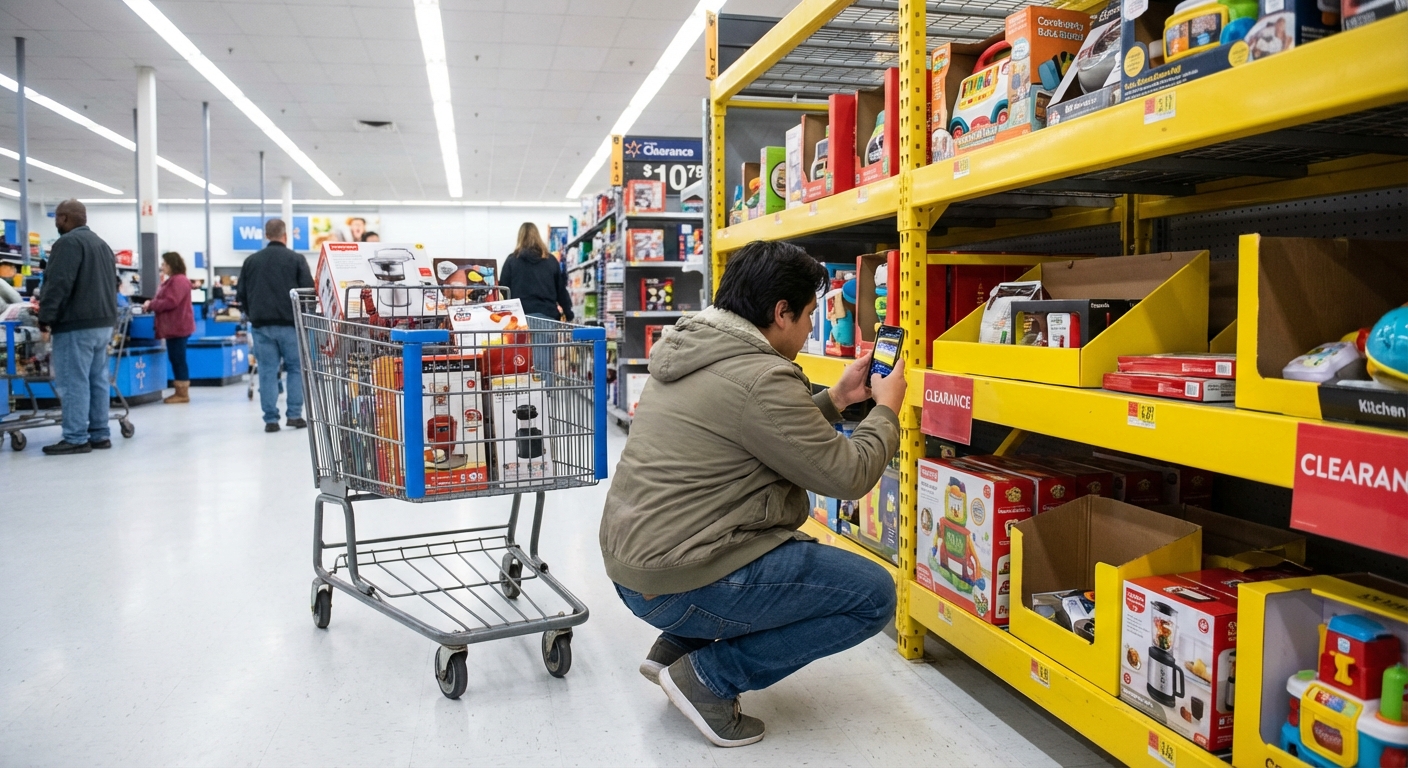
The official Walmart app has a built-in scanner:
- Open the app in-store.
- Tap the barcode icon.
- Scan the product.
Why bother?
- Shelf tags are often wrong or outdated.
- The app price usually reflects the current store price.
I’ve found items marked $19.88 on the shelf that scanned for $5. When I asked a cashier about it, they confirmed the system price rules, and the lower price honored.
2. Online vs In-Store Price Discrepancies
Sometimes the in-store clearance price is better than the online price, and sometimes it’s the other way around.
I’ve:
- Ordered online for store pickup when the price was lower on the site.
- Bought in-store instantly when the local clearance was far cheaper than online.
Walmart’s price-match policy has evolved over the years and no longer broadly matches Walmart.com in-store, so I don’t assume I’ll get the online price at the physical register. I check first, then choose the better route.
Talking to Employees (Without Being That Person)
The most underrated clearance hack I’ve tested is… being nice.
I’m not kidding. When I started politely asking employees questions like:
- “Do you guys usually mark down garden stuff on a specific day?”
- “Are these toy markdowns done for the week, or is more coming out?”
…I got surprisingly detailed answers.
One associate told me their store usually did toy markdowns on Wednesdays and apparel on Thursdays because of their truck schedule. I started timing my visits and saw it play out exactly like they said.
You won’t always get a clear answer, but if you’re respectful and not demanding, people often share more than you’d expect.
The Pros and Cons of Chasing Walmart Clearance
I love a ridiculous deal, but I’ve also learned where the line is.
What Makes Walmart Clearance Worth It
- Huge discounts on essentials – I’ve scored half-price laundry detergent, kids’ clothes, and storage bins that we actually needed.
- Household upgrades on a budget – Air fryer, blender, and bedding all came from clearance hunts.
- Occasional resell potential – Some people flip finds on Facebook Marketplace or eBay, especially toys and tools.
The Downsides (I’ve Fallen for All of These)
- Time sink – You can easily burn an hour scanning and digging only to walk out with one $3 towel.
- Impulse buys – I’ve bought things just because they were cheap… and then never used them.
- Hit-or-miss quality – Clearance doesn’t always mean great. Sometimes it means the item was returned, older, or just not that good.
On top of that, selection varies massively by store and region. Research from urban planning and retail studies shows that Walmart assortments are adjusted by local demand and demographics, so your store’s clearance section won’t look like a YouTuber’s viral haul from another state.
Practical Strategy: How I Run a 20-Minute Clearance Sweep
When I don’t want to lose my whole afternoon, I follow a simple route:
- Open the Walmart app and get the scanner ready.
- Walk the main clearance aisle once. Quick scan, no overthinking.
- Hit key end caps: toys, home, electronics.
- Do a fast pass through clothing clearance racks and shoe aisles.
- If it’s a seasonal change, swing through garden/seasonal.
- Scan anything that:
- Has a yellow tag
- Looks out of place or like a last-one-left item
My personal rule now: I only buy it if I’d be happy at full price minus 30%. That mental trick stops me from hoarding random $2 junk I’ll never use.
When Clearance Isn’t the Best Deal
There are times I walk away, even from clearance:
- Cheaper at other retailers – Around Black Friday, I cross-check big items against Target, Amazon, and Best Buy.
- Higher unit price – Multi-packs on clearance can still be more expensive per unit than a regular-size item on sale.
- Worn packaging on electronics – If the box is badly damaged or has multiple security stickers, I get nervous about returns/repairs.
Consumer Reports and the Federal Trade Commission both remind shoppers to look beyond the sticker price—warranty, return policy, and long-term reliability all matter, especially for electronics and appliances.
Final Take: Clearance as a Tool, Not a Lifestyle
Walmart clearance isn’t magic, and it’s definitely not a guaranteed gold mine every trip. Some days I walk out with nothing and a slightly bruised ego.
But when I:
- Time my visits reasonably well
- Scan prices with the app
- Check hidden in-aisle markdowns
- Talk (nicely) to employees
…I consistently find deals that actually make a difference in my budget.
Use clearance as a strategy, not a hobby you lose hours to. When it works, it feels like you’ve outsmarted the system just a little—and honestly, that’s half the fun.
Sources
- National Retail Federation – Seasonal and Holiday Trends – Data on how major retailers manage seasonal inventory and markdowns.
- McKinsey & Company – Reinventing the retail store – Discussion of data-driven markdown and inventory optimization in large retail.
- Walmart Corporate – Store Pickup & Pricing Policies – Background on Walmart’s approach to pricing and online vs. in-store experience.
- Federal Trade Commission – Shopping Online and In Stores – Guidance on comparing prices, returns, and warranties.
- Consumer Reports – How to Shop Smart at Big-Box Stores – Tips on evaluating deals beyond the sticker price.