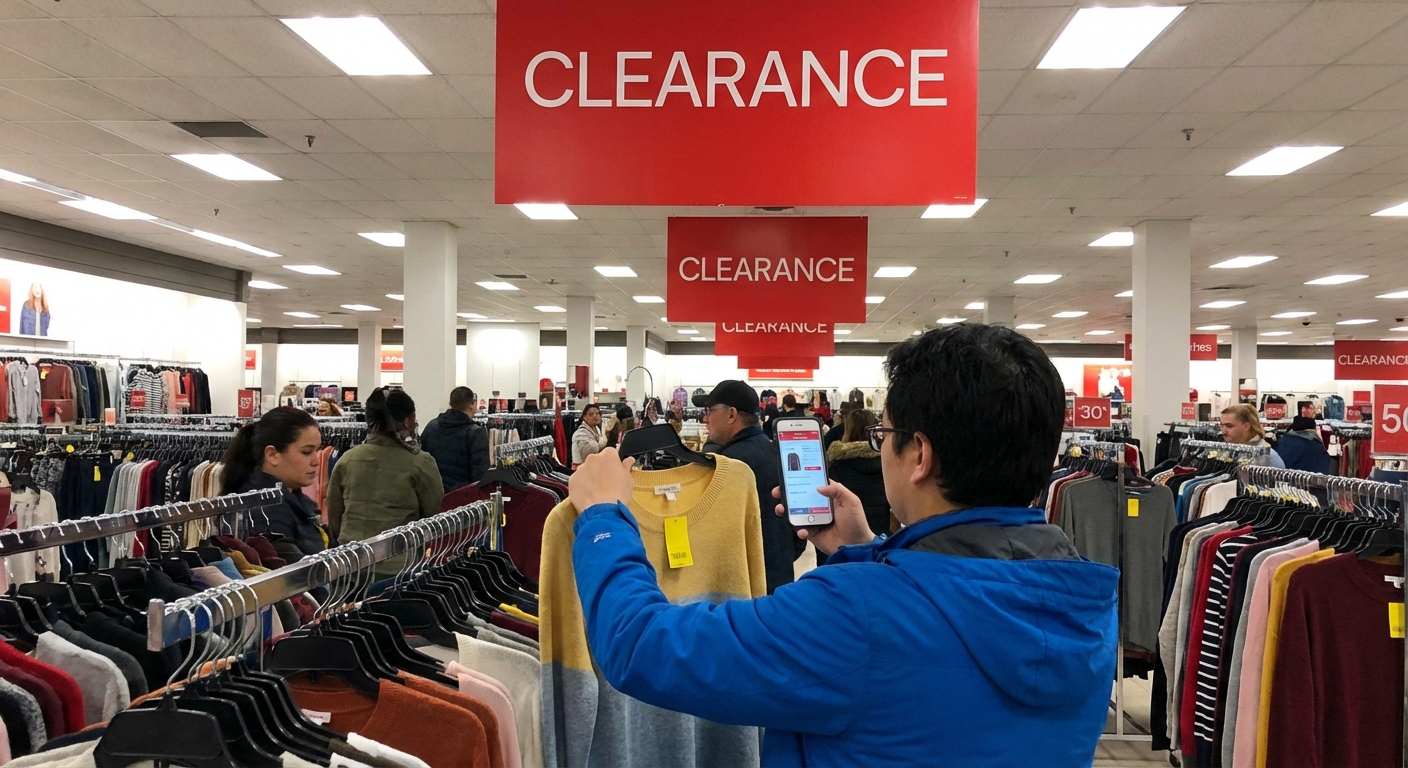
Guide to Walmart Seasonal Deals and Special Offers
een candy, a flannel shirt, a Blu‑ray player, and a $50 gift card I hadn’t expected to earn.
That was the day I started actually tracking Walmart’s seasonal cycles like a sport.
This guide is everything I’ve learned since: the patterns, the timing, the traps, and the genuinely ridiculous deals that only show up for a few days each season.
How Walmart’s Seasonal Deal Cycles Really Work
In my experience, Walmart doesn’t just throw random discounts at the wall. Their promotions follow a pretty predictable retail calendar tied to inventory turns.
Here’s the simple version of what I’ve seen over the years:
- Quarter 1 (Jan–Mar): Holiday clearance → fitness → tax‑time deals
- Quarter 2 (Apr–Jun): Spring cleaning → gardening → early summer/outdoor
- Quarter 3 (Jul–Sep): Back‑to‑school → college/dorm → early fall
- Quarter 4 (Oct–Dec): Halloween → Black Friday / holiday → post‑holiday clearance
When I started mapping this out against my receipts (yes, I actually did that one winter like a nerd), the discounts lined up with when Walmart needs shelf space for the next season’s inventory. That’s why the biggest hidden savings are in the transition weeks.
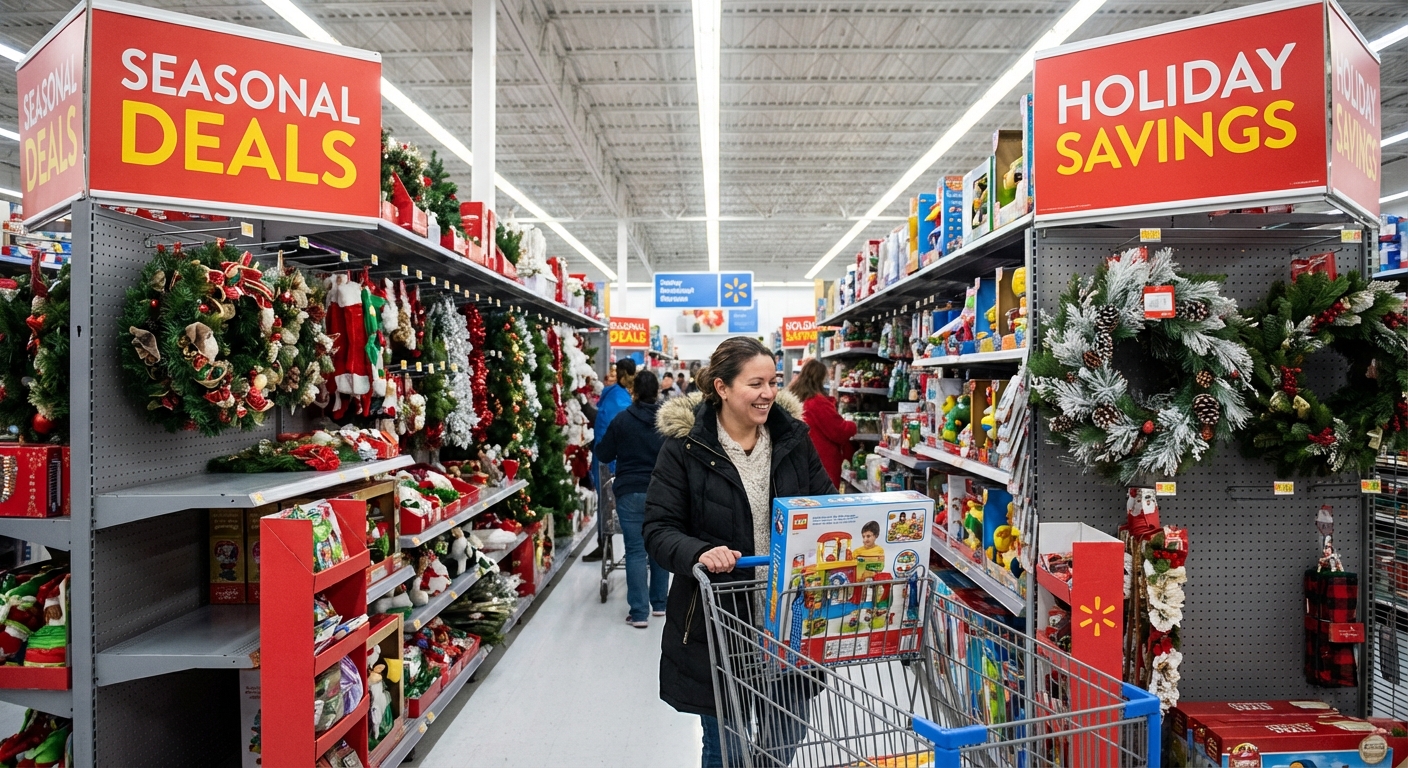
Winter & Post‑Holiday: The Clearance Gold Mine
The best deal I ever got at Walmart wasn’t on Black Friday. It was on January 3rd.
I walked into the seasonal aisle and it looked like Christmas had been vacuum‑packed: gift wrap, candy, décor, even small appliances with holiday packaging – all at 50–75% off. I picked up:
- LED string lights for 75% off (still using them 3 years later)
- A $99 holiday‑edition air fryer for $39
- Name‑brand chocolate that frankly did not survive the week
In my experience, post‑holiday markdowns usually follow this pattern:
- Dec 26–28: 30–50% off
- Dec 29–Jan 2: 50–70% off
- After Jan 3: Up to 75–90% off, but selection gets weird and picked over
Same thing repeats after Valentine’s Day, Easter, and Halloween—anything with seasonal packaging is fair game.
Pro tip I tested last year: Go early in the morning on the second day of clearance. Markdown stickers are usually updated overnight, and you get a better price with better selection.Spring & Summer: Outdoor, Grills, and Hidden Timing
When I tested Walmart’s spring deals, I focused on patio furniture and grills because those can swing huge in price.
Here’s what I’ve personally seen over several years:
- Late March–April: Nice promos on lawn & garden, but not rock‑bottom
- Memorial Day window: Competitive national promos, especially on charcoal and basic grills
- Late July–August: This is when the serious markdowns start
One summer I watched a mid‑range gas grill drop from $297 to $197 to $124 over about three weeks in August. I held my nerve until it hit $124 and grabbed it. Two days later, the model was gone from shelves.
Same pattern hits:
- Pool accessories and inflatables
- Outdoor cushions
- Patio sets
The balancing act: wait long enough for real clearance, but not so long that only the dented, sun‑faded leftovers remain. In my experience, mid‑August is the sweet spot for a lot of outdoor gear.
Back‑to‑School & College: Where Walmart Quietly Dominates
If there’s one season where I think Walmart is almost unfairly good, it’s back‑to‑school.
One August, I did a mini experiment: I took a standard school supply list and priced it at Walmart, Target, and a grocery chain. Walmart came out cheapest by roughly 15–25% on basics like:
- 1‑subject notebooks
- Crayons and colored pencils
- Folders and binders
- Glue sticks
Walmart knows this is a customer‑acquisition moment, so they run loss leaders—products they sell at or near cost to pull you into the store. I once grabbed 25‑cent spiral notebooks and 50‑cent glue sticks, then watched my cart magically grow to $80 of “just a few things.”
For college students, the dorm and apartment deals spike from late July to early September:
- Mini‑fridges, microwaves, and coffee makers
- Bedding bundles and mattress toppers
- Small storage and shelving
If you stack online‑only bundle pricing with Walmart+ free delivery, the savings can beat many campus “specials” that sound good but aren’t.
Fall & Halloween: Costumes, Candy, and When to Actually Buy
I used to be that person panic‑buying Halloween candy on October 30th and paying full price for whatever sad leftovers remained.
Once I started tracking prices, here’s what I saw:
- Early October: Best selection, minimal discounts
- Mid October: Occasional small rollbacks on popular candy multipacks
- Nov 1–3: 50%+ off candy and costumes, but selection drops fast
My personal strategy now is:
- Buy costumes 7–10 days before Halloween so sizes are still available
- Grab candy 2–3 days before, ideally during a weekend promo if it pops up in the app
- Then raid the candy clearance after Halloween for baking or just… “pantry storage” (no comment)
I once bought a full‑body dinosaur costume at 75% off on November 2nd and used it the next year. Zero regrets.
Black Friday & Holiday: What’s Actually Worth It
I’ve worked my way through enough Black Friday chaos to say this bluntly: not every Black Friday “deal” at Walmart is a deal.
What tends to be legitimately strong:
- Entry‑level TVs and streaming devices
- Game consoles with bundled games or gift cards
- Kitchen appliances (air fryers, pressure cookers, blenders)
- Select toys and board games
What I’ve found to be more hit‑or‑miss:
- Mid‑range laptops with weird specs (low RAM, small SSDs)
- Housewares that go to similar prices in January clearance
In the last few years, Walmart’s pushed a “Black Friday Deals for Days” model—staggered online and in‑store events in November. When I tested this, I actually grabbed two of the best deals online a week before traditional Black Friday, avoiding the mob entirely.
If you do one thing:
> Screenshot or save the product’s price history using Walmart’s app or a browser extension before believing the “original price” anchor. Some “$299 down to $179” deals were selling at $199 just a few weeks earlier.
How to Stack and Maximize Walmart Seasonal Savings
Here’s where the real fun starts. Over multiple seasons, I experimented with stacking different discounts. When it worked, the effective prices got absurd.
The combos that worked best for me:
- Rollback + Clearance
Sometimes a product goes on Rollback, then gets moved to seasonal clearance. I once bought a $49 holiday throw blanket for $11 this way.
- Coupons + Rollbacks
For groceries and household items, combining manufacturer coupons with Rollbacks during seasonal promos (e.g., summer BBQ events) can drop prices below warehouse‑club levels.
- Walmart+ perks
Free shipping on lower order values lets you pounce on short‑lived online‑only seasonal deals without padding your cart just to hit a threshold.
- Gift card promos
Around holidays and back‑to‑school, I’ve seen promotions like “Buy X in participating products, get a $10 eGift card.” If it’s stuff you were going to buy anyway, it’s basically a rebate.
Downside: stacking takes attention. I’ve absolutely overbought seasonal snacks because I was chasing “value” and ignored the fact that my pantry is not a warehouse.
Online vs In‑Store: Where the Better Seasonal Deals Hide
When I tested this across multiple seasons, a funny pattern emerged:
- In‑store: Better for last‑minute and physical clearance (especially bulky items like patio sets, grills, and décor)
- Online: Better for electronics, toys, and seasonal bundles that never hit shelves
More than once I’ve seen an item marked full price in store, scanned it with the Walmart app, and discovered it’s cheaper online with free pickup or delivery. A Bluetooth speaker I bought in December was $39 on the shelf and $25 online the same day.
If you remember nothing else from this article, remember this:
> Always scan or search the item in the Walmart app before you buy, especially during seasonal events.
The Downsides and Traps I’ve Run Into
To keep this honest, not everything about Walmart’s seasonal deals is magical.
Things that have annoyed me or backfired:
- Doorbusters with microscopic inventory – I’ve shown up right at opening for a Black Friday deal that apparently existed in a quantity of three.
- Quality trade‑offs – Some ultra‑cheap seasonal items (looking at you, $5 Halloween décor) just don’t last.
- Impulse overload – Seasonal aisles are designed to make you toss in “just one more thing.” My budget has felt that.
- Regional differences – A clearance deal someone posts online doesn’t always match what I see locally. Walmart’s inventory is very regional.
So yes, there are massive savings—but they come with a side of discipline and a willingness to walk away when the deal isn’t actually a deal for you.
Practical Playbook: How I Shop Walmart’s Seasons Now
Here’s the rough strategy that’s worked best for me after years of trial, error, and too many clearance candles:
- Shop “off‑season” on purpose – Winter for holiday leftovers, late summer for outdoor, post‑holiday for décor.
- Use the app as a price scanner – Check for online vs in‑store differences and watch price drops on saved items.
- Time big purchases – TVs and electronics around Black Friday and early November; grills and patio gear in August; décor after each holiday.
- Avoid the “it’s cheap so I’ll buy it” trap – I literally ask myself: “Would I buy this at full price?” If the answer’s no, I put it back.
When I stick to that, Walmart’s seasonal deals become less of a random surprise and more of a predictable system I can game in my favor.
If you like hunting for value and don’t mind a bit of timing and strategy, there’s a lot of money sitting in those blue aisles—especially in the weeks most people aren’t paying attention.
Sources
- Walmart Corporate – News & Seasonal Promotions - Official announcements on sales events and seasonal strategies
- National Retail Federation – Consumer Holiday Spending Data - Seasonal spending trends and timing
- Forbes – How Retailers Use Loss Leaders To Lure You In - Insight on promotional pricing and doorbusters
- U.S. Bureau of Labor Statistics – Consumer Price Index Data - Context for price trends in common retail categories
- Consumer Reports – Black Friday Shopping Tips - Guidance on evaluating whether seasonal deals are real bargains