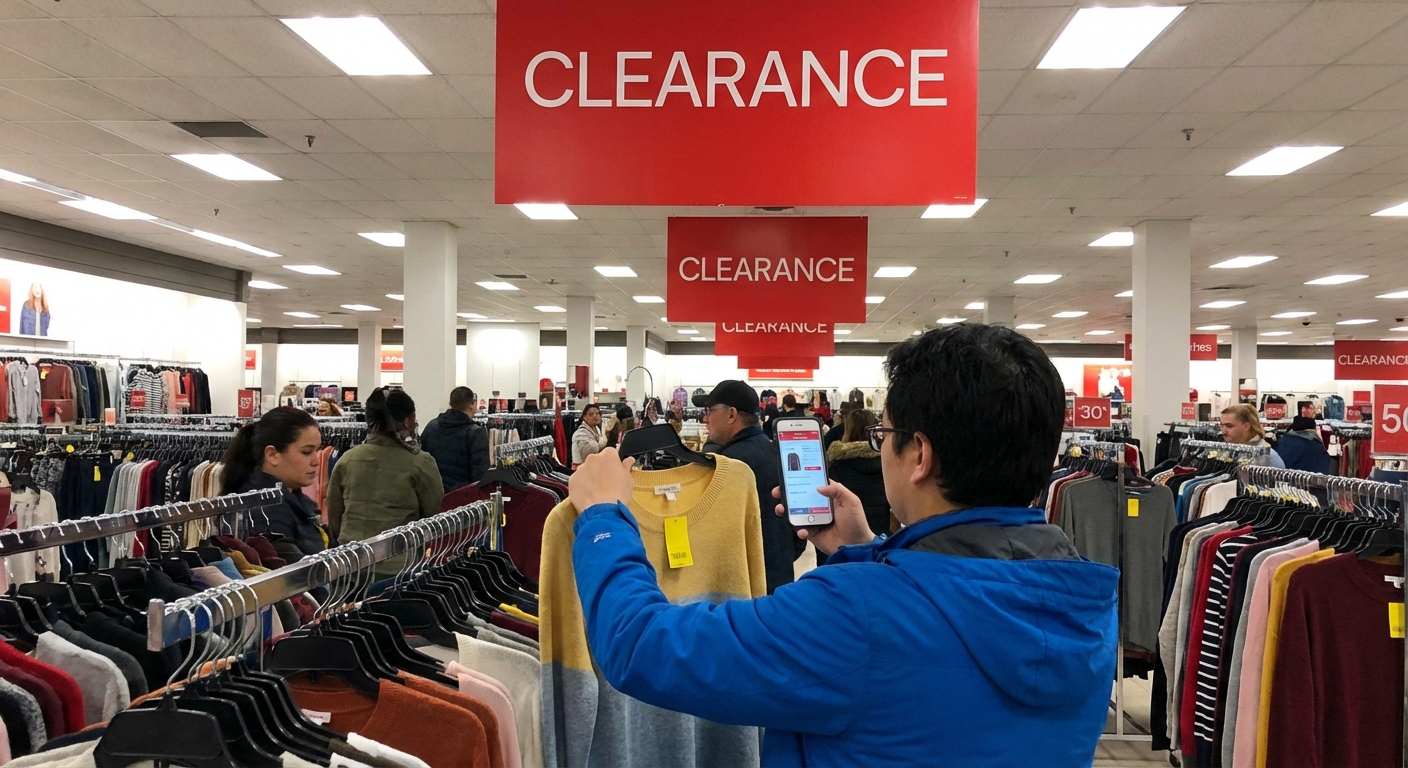
Guide to Whole Foods Clearance Sections and Finds
suming they were a marketing trick. Then I started actually tracking prices, timing my visits, and—yes—awkwardly kneeling on the floor to dig through bottom shelves.
When I tested a month of “clearance-first” shopping at my local Whole Foods, I cut my grocery bill by about 18% without changing what I normally eat. And that was without clipping a single coupon.
Here’s exactly how I’ve learned to work the Whole Foods clearance sections and the types of finds that are actually worth grabbing.
Where Whole Foods Hides Its Clearance
The first thing I learned: there’s no single, uniform clearance layout. Every store has its own little quirks, but there are patterns.
1. Bottom Shelves and Endcaps
In my experience, the sneakiest deals live on:
- Bottom shelves in each aisle
- Endcaps near the back of the store
Look for the small yellow or orange shelf tags that say things like “Clearance,” “Discontinued,” or “Manager’s Special.” At my store, they’re often half-hidden behind neatly-fronted full-price items. I once found a discontinued, organic pasta sauce for 70% off literally two jars deep behind the full-price version.
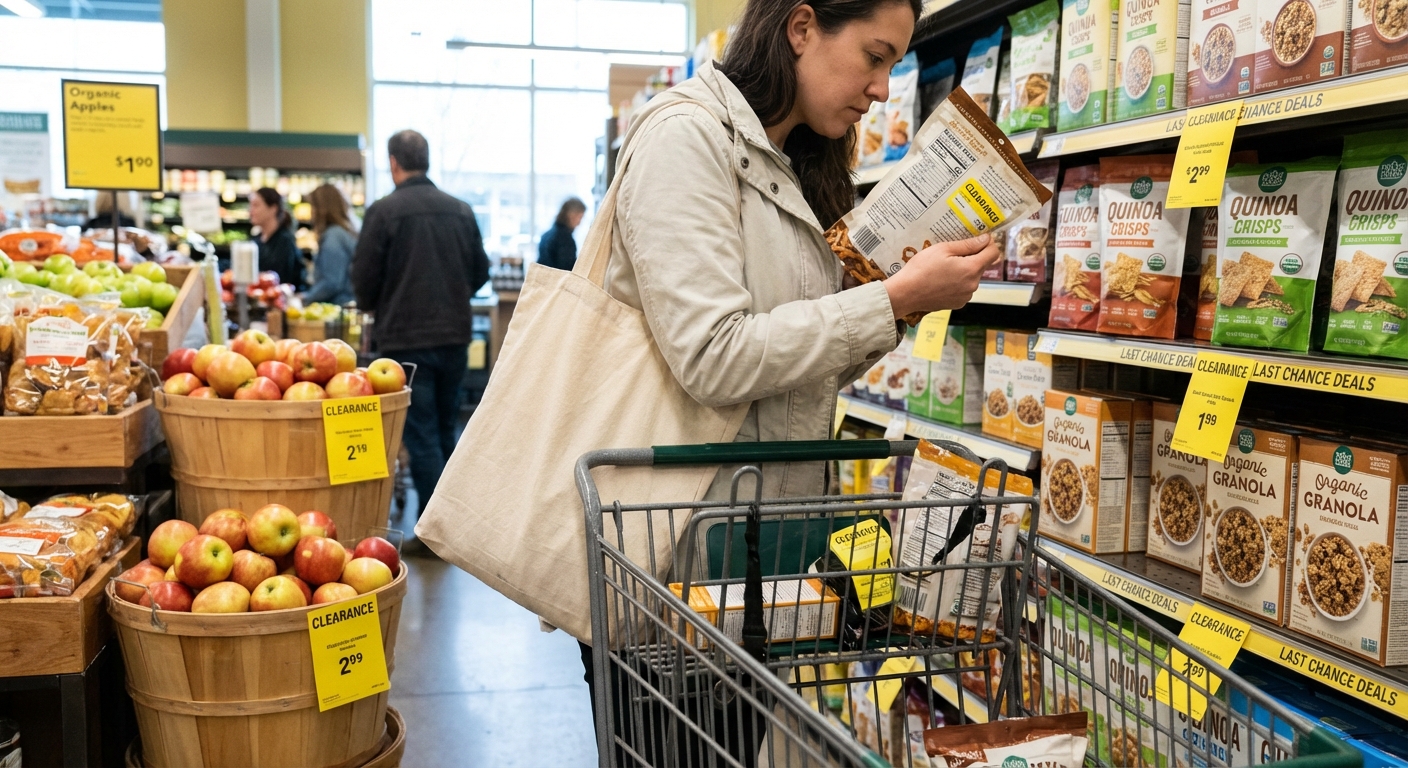
2. The Produce Clearance Rack
If your store has one, this is where the chaos and magic happens.
Mine uses a rolling cart tucked near the back of produce with bags of “ugly” or slightly overripe fruits and veggies. When I tested this section for a week, I snagged:
- A bag of perfectly usable organic bell peppers for $1.49
- Overripe bananas (ideal for freezing or banana bread) for under $1 a bunch
- Avocados that just needed to be eaten that day at about half price
Not every store has a dedicated cart, but if you don’t see it, ask a produce team member: “Hey, where do you put overripe or discounted produce?” I’ve had them pull a box from the back more than once.
3. Refrigerated & Frozen “Last Call” Areas
I recently discovered a tiny clearance nook inside the refrigerated case near the dairy section—basically, a few shelves where short-dated yogurts, hummus, and specialty cheeses go to be adopted.
Look for:
- Small baskets or caddies inside the fridge
- Stickered items with “50% off” or similar markdowns
Frozen clearance is more hit-or-miss, but when it hits, it hits hard. I’ve found discontinued ice creams, frozen pizzas, and vegan meat alternatives for 40–60% off because they were changing brands or flavors.
4. Health, Beauty, and Supplements
This is the most underrated clearance zone in the entire store. Whole Foods rotates a lot of skincare and supplement lines. When they reset a shelf, markdowns can be steep.
I’ve personally found:
- Mineral sunscreen at 60% off because of a packaging change
- High-end shampoo marked down from $26 to $9.99
- Vitamins close to expiration for 50%+ off (I pass on these unless I know I can actually use them in time)
If you take supplements regularly, this is a goldmine—but you have to be extra strict about checking expiration dates.
How the Markdowns Actually Work
Whole Foods isn’t totally transparent about their markdown logic, but after talking with a couple of team members and watching patterns, here’s what I’ve noticed.
Reasons Items Hit Clearance
In my experience, products usually end up on clearance for one of these reasons:
- Short-dated or close to expiration – Often a week to a month out.
- Discontinued by Whole Foods – The product is getting replaced or the brand is leaving.
- Packaging change – Old look, same product inside.
- Seasonal – Holiday snacks, pumpkin everything, specialty baking items.
- Slow sellers – Niche health foods or weird flavors that just didn’t move.
A 2018 analysis by Forbes on Amazon’s ownership of Whole Foods noted more aggressive price promotions and portfolio changes in private-label items, which often trickle down to clearance when they reset shelves.[^forbes]
Typical Discount Ranges
This varies by region and manager, but I consistently see:
- 20–30% off for mild markdowns
- 40–50% off for short-dated or discontinued
- 60–70% off on end-of-season or final-clearance products
The deepest discounts usually show up after holidays or reset periods (e.g., early January, post-summer, post-Thanksgiving).
Best Categories to Hunt in (From My Own Wins)
1. Specialty Pantry Goods
Stuff like fancy pasta sauces, grain mixes, gluten-free flours, imported condiments—this is where I’ve found some of my best upgrades.
When I tested building a week’s worth of dinners from clearance pantry items, I assembled:
- Organic marinara, normally $6.99, for $2.99
- Wild rice blend from the 365 brand for 40% off
- A jar of harissa that looked intimidating but ended up being the MVP of the week
These items are usually safe quality-wise even close to date, as long as packaging is intact.
2. Snacks and “Fun” Foods
We’re talking chips, cookies, bars, and random trendy items like protein puffs or seaweed crisps.
Pros:
- Great way to try expensive niche brands without paying full price
- Often marked down due to flavor changes or rebranding
Cons:
- Easy to buy junk you don’t need just because it’s cheap
- Some flavors are discontinued for a reason (I still regret the “chili mango coconut chips” incident)
3. Cheese and Deli
When I asked a cheese team member how they decide markdowns, she told me they often discount:
- Ends or odd cuts
- Cheeses nearing their sell-by dates
- Seasonal or holiday boards that didn’t sell
I once built a full cheese board for under $15 using clearance wedges. One was a $9.99 goat cheese marked down to $3.99 simply because they changed the logo.
4. Plant-Based & Alternative Products
In my experience, this category swings hard between hot trend and clearance bin. When a plant-based brand doesn’t move, it moves straight to markdown.
You’ll see deals on:
- Oat and nut milks in older packaging
- Vegan yogurts with upcoming best-by dates
- Meat alternatives when a brand is swapped out
This section is great for experimenting with new lifestyles or recipes without committing to full-price experiments.
What’s Actually Worth Buying (and What I Skip)
I’m not going to tell you to grab everything with a yellow tag. Some clearance items are a pass.
My "Always Check" List
- Shelf-stable pantry items (cans, jars, dry goods) – Minimal risk if sealed.
- High-end condiments and oils – Things like tahini, chili crisp, nice olive oils.
- Cheese – As long as there’s no mold beyond what’s expected for that style.
- Frozen foods – If the packaging isn’t damaged and there’s no freezer burn.
My "Approach With Caution" List
- Short-dated dairy – I’ll buy if I know I can use or freeze it in time.
- Supplements & probiotics – I’m picky here; some need full potency.
- Skincare – If the seal is broken or it’s a natural product that degrades quickly, I pass.
The FDA notes that “best by” and “use by” dates (except on infant formula) are mostly about quality, not strict safety.[^fda] That said, I still treat anything with dairy, meat, or eggs more cautiously.
Timing Your Trip: When Clearance Is Best
I started casually asking employees when they do markdowns, and patterns emerged.
In my experience, good times to check:
- Weekday mornings – After overnight or early shifts pull short-dated items.
- Day after holidays – Easter, Thanksgiving, Christmas, etc.
- End of month – Some stores reset shelves and planograms on a monthly cycle.
Your store might operate differently, but I’ve had the best luck around mid-morning on Tuesdays and Wednesdays.
If you’re comfortable, ask politely: “Do you have a usual day or time when you mark down clearance items?” I’ve had staff tell me, “Oh, we usually hit dairy on Monday mornings and dry goods on Thursdays.” That’s like getting the cheat code.
How Amazon Prime Discounts Stack (and When They Don’t)
Since Amazon bought Whole Foods in 2017, Prime members get additional promotions, including those blue-tag deals. However, the Amazon Prime discount usually doesn’t stack on top of clearance—they’re separate promo systems.
Where Prime can still help:
- Extra deals on non-clearance essentials, so you can spend more of your budget exploring the clearance section.
- Digital receipts and tracking in the app to compare regular vs. clearance pricing over time.
A CNN Business analysis from 2019 found that while overall Whole Foods prices dropped slightly under Amazon, many shoppers still perceived it as pricey.[^cnn] That’s exactly where clearance hunting bridges the gap.
Pros and Cons of Shopping Whole Foods Clearance
Why I Keep Doing It
- Real savings on premium items (not just cheap stuff made cheaper)
- Low-risk way to try new brands I’d never pay full price to experiment with
- Less food waste – You’re literally rescuing perfectly good food from being tossed
The Tradeoffs
- Inconsistent selection – Some days are a gold mine; some are a desert.
- Impulse danger – Discounts can trick you into buying things you don’t actually like.
- Time – Digging through shelves and checking dates isn’t a 5-minute errand.
I’ve learned to go in with a loose plan: shop my regular list first, then take one dedicated loop for clearance “maybes.” If it doesn’t replace something on my list or add clear value (like a pantry upgrade), it stays on the shelf.
Quick Strategy to Start (Without Overthinking It)
If you want to test this without turning into a full-on clearance gremlin like me, here’s what I’d do for your next trip:
- Walk the store once and scan bottom shelves + endcaps for yellow tags.
- Check the produce rack for discounted fruits/veggies you can use or freeze soon.
- Peek into dairy and cheese for short-dated items you already buy.
- Give yourself a “clearance budget”—say $10–$15 for experimental items.
- Take photos of regular vs. clearance tags so you can track what’s actually a good deal.
Do this for 2–3 trips and you’ll start seeing patterns in your specific store—what categories tend to hit clearance, which days are richest, and which items are reliably worth watching.
It’s not about chasing every markdown; it’s about strategically letting Whole Foods foot part of the bill for your nicer groceries.
Sources
- FDA – Food Product Dating - Explanation of "best by" and "use by" dates and safety
- Forbes – How Amazon Changed Whole Foods - Analysis of pricing and strategy post-Amazon acquisition
- CNN Business – Has Amazon really made Whole Foods cheaper? - Price comparisons and shopper perceptions
- Whole Foods Market – Official FAQ - Brand policies and customer information
- Harvard T.H. Chan School of Public Health – Nutrition Source: Reading Food Labels - Guidance on evaluating packaged foods