Guide to Whole Foods Seasonal Deals Worth Buying
ually saves money versus what just feels fancy. Spoiler: there are genuinely smart deals hiding in those aisles—if you know when and where to look.
This is the guide I wish I’d had before I blew $18 on a tiny tub of out-of-season berries.
Why Whole Foods Seasonal Deals Can Actually Be Worth It
When Amazon bought Whole Foods in 2017, the first thing I noticed (besides those big green Prime signs everywhere) was price drops on certain staples. According to a 2019 CNBC analysis, Whole Foods cut prices three times in two years, especially on produce and seasonal items.
When I started tracking my receipts, a pattern jumped out: the best value wasn’t random sales—it was seasonal promos stacked with:
- Prime member discounts (usually an extra 10% off yellow sale tags)
- Weekly "Whole Deal" sales
- Volume discounts (buy 3–6 and save more)
When I tested this with my weekly grocery run last summer, my cart was about 70% seasonal items on promo and 30% pantry staples. My receipt was roughly 18% cheaper than my usual total (yes, I did the math—on my phone, in the parking lot, like a true nerd).
The Seasonal Categories That Actually Deliver Value
Not every sale at Whole Foods is a win. Some are “you’d pay less at a discount grocer but we put it on a pretty sign” deals. These are the categories that, in my experience, are usually worth grabbing when the season hits.
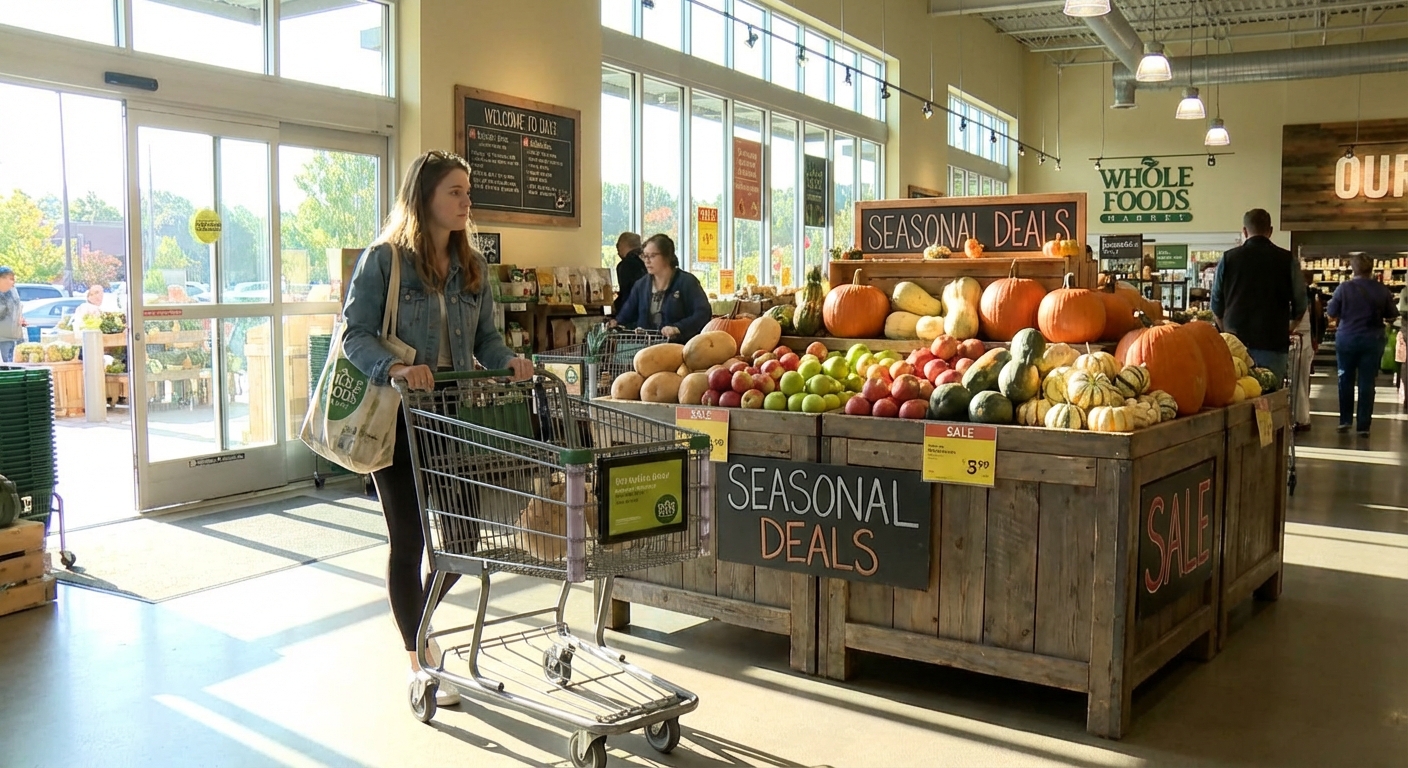
1. Fresh Produce (When It’s Truly in Season)
I recently compared winter strawberries vs. peak-summer strawberries at my local Whole Foods. In January, a one-pound clamshell was $6.99 and tasted… watery. In June, they dropped to $3.99–$4.49 on promo and were actually flavorful.
What I’ve found worth buying seasonally:
- Berries (summer) – Blueberries, blackberries, strawberries. Whole Foods often runs 2-for deals or Prime-exclusive discounts. I freeze extras for smoothies.
- Stone fruit (late summer) – Peaches, nectarines, plums. The organic ones can be hilariously expensive off-season but reasonable in peak season.
- Winter squash (fall–winter) – Butternut, kabocha, delicata. Heavier produce tends to be pricey elsewhere; on sale, these can actually beat my local supermarket by $0.30–$0.60 per pound.
- Leafy greens (winter–early spring) – Kale, chard, collards. I’ve seen organic bunches drop to $1.49–$1.79 on promo.
- Better flavor, higher nutrient density when truly in season
- Often cheaper than off-season conventional produce elsewhere
- Not every “Season’s Best” sign equals a real deal—check the per-pound price
- Some regions get better pricing than others (my California friends pay less than I do)
2. Rotisserie Chickens & Prepared Seasonal Mains
This is one category where I was deeply skeptical. Then one hectic October evening, I grabbed a $7.99 rotisserie chicken during a Prime promo and clocked how far it went.
From one bird I got:
- Dinner for two (with roasted veggies)
- Chicken salad for two lunches
- Stock from the carcass (three mason jars worth)
Cost per serving: around $1.50–$2, which is shockingly competitive with buying raw organic chicken parts.
Around Thanksgiving and Christmas, Whole Foods usually runs seasonal deals on:
- Whole roasted turkeys
- Ham dinners
- Plant-based holiday mains (Field Roast, Tofurky, etc.)
These are worth it if you value time and oven space. When I tested a Thanksgiving pre-order package, it wasn’t cheaper than DIY, but it saved me roughly 5–6 hours and my sanity.
Pros:- High convenience-to-cost ratio
- Good flavor consistency (the herb seasoning on the chicken is legit)
- You’re paying for prep and packaging; raw ingredients are cheaper
- Nutritional info can be vague on certain prepared dishes
3. Frozen Seasonal Items (Limited-Time Flavors That Actually Make Sense)
Whole Foods loves a seasonal limited run in the freezer section. Some of it is pure FOMO bait, but a few I’ve come to rely on:
- Seasonal frozen vegetables – Think butternut squash cubes, Brussels sprouts, riced cauliflower blends. When these hit promo, they’re cheaper than buying fresh and doing the chopping yourself.
- 365 Everyday Value frozen fruit – Summer is when mango, pineapple, and mixed berry bags often go on sale. I stock up, because frozen fruit prices spike wildly in winter.
- Plant-based ice creams and seasonal flavors – Peppermint, pumpkin, gingerbread. Not a "must" buy, but I’ve seen 2-for deals or 30–35% off selected brands.
In my experience, frozen seasonal veggies and fruits are where the real value is. According to USDA research, frozen produce can retain comparable nutrients to fresh, especially when flash-frozen at harvest.
Pros:- Long shelf life and reduced food waste
- Great for meal prep and smoothies
- Specialty desserts are still pricey even on sale
- Easy to impulse-buy more than you’ll realistically eat
4. Seasonal Beverages: Coffee, Tea & Sparkling Stuff
I didn’t think seasonal beverages could be a smart buy—until I started tracking coffee deals.
Every fall and winter, I’ve seen:
- 365 Whole Foods Market seasonal coffee (pumpkin spice, winter blends) drop by $2–$3 per bag
- National brands like Stumptown, Allegro, and Counter Culture run 20–30% off promos
- Sparkling waters and seasonal kombuchas go 4-for deals
When I tested this last year, I bought three bags of seasonal whole-bean coffee on promo and stored them properly (cool, dark cabinet). Taste stayed solid for about three months.
Pros:- High-quality beans cheaper than most boutique coffee shops
- Good time to test new brands or roasts
- Coffee does lose flavor over time; don’t hoard a year’s worth
- Seasonal flavors (looking at you, syrupy pumpkin spice) can be hit or miss
5. Holiday Baking Staples & Specialty Items
This is where Whole Foods can be amazing value… or quietly rob your wallet.
Here’s what I’ve found genuinely worth buying when the holiday promos hit (usually November–December, sometimes around Easter):
- Organic sugar, flour, and chocolate chips – I’ve seen 365-brand baking staples undercut name brands at conventional grocers when on sale.
- Spices – Whole and ground spices (cinnamon, nutmeg, cloves) sometimes run 20–30% off. Since fresher spices are noticeably more potent, this feels like a multi-month investment.
- Nuts – Almonds, pecans, walnuts. When these are on seasonal sale, they can beat bulk-bin prices elsewhere, especially for organic.
What I don’t think is worth it, most of the time: super-fancy niche baking mixes or tiny specialty sugar decorations. The price-per-use is high, and you’ll probably only use them once.
Pros:- Good chance to upgrade ingredients without doubling your budget
- Seasonal promos often align with big cooking/baking holidays
- Easy to overbuy “just in case” items
- Some seasonal specialty brands stay expensive even on sale
How to Spot the Real Seasonal Deal (vs. Clever Marketing)
Over a few years of receipt-hoarding and label-studying, I’ve picked up a few rules:
- Yellow tag + Prime badge = pay attention. Prime members typically get an extra 10% off sale items. I always double-check at checkout, because discounts occasionally don’t scan on day one of a promo.
- Compare per-ounce or per-pound pricing. That beautifully packaged seasonal trail mix might be $8, but the unit price could be 2–3x higher than bulk nuts.
- Skip most out-of-season fresh berries and tomatoes. They’re often expensive, lower in flavor, and shipped long distances. Frozen usually wins on value and taste.
- Use the Whole Foods app or Amazon app filters. I’ve had times where the app showed a promo before the physical shelf tags were updated.
When I tested price comparisons with my local regular supermarket and a discount chain, Whole Foods usually won on:
- Organic, in-season produce on sale
- 365-branded basics on promo
- Rotisserie chickens and seasonal ready-made mains
It usually lost on:
- Conventional snack foods
- Brand-name cereals and soda
- Random specialty seasonal novelties (those $9 small-batch gingerbread cookies, for example)
When Whole Foods Seasonal Deals Are Not Worth It
To keep this honest: there are plenty of times I’ve put something back on the shelf.
I tend to skip seasonal deals when:
- The discount is under 10% and the base price is already higher than competitors
- It’s a super niche product I’ll absolutely forget about in my pantry
- The “limited time only” label feels like pure FOMO marketing
I also remind myself that “seasonal” doesn’t automatically mean “best price anywhere.” Warehouse clubs and local farmers’ markets can rival or beat Whole Foods on many in-season items. I’ve had better deals on bulk berries at Costco in peak summer, for instance.
A Simple Strategy You Can Steal for Your Next Trip
If you want a low-effort way to make Whole Foods seasonal deals actually work for you, here’s what’s worked for me:
- Decide 2–3 categories you’ll prioritize each season. For example: produce + coffee + baking supplies.
- Check the weekly sales online first. I spend three minutes skimming the Whole Foods sale page or the Amazon app.
- Build meals around what’s on seasonal promo. Last winter I planned an entire week of dinners around discounted squash, kale, and rotisserie chicken.
- Cap yourself at 1–2 “fun” seasonal splurges. Maybe that limited-time ice cream or sparkling drink—just not ten of them.
When I actually follow this system, I still shop at Whole Foods without the “did I just overpay for vibes?” guilt—and my total drops enough that I notice.
If you treat Whole Foods like a curated seasonal market and not an everything store, the deals start to make a lot more sense. You won’t win on every line item, but for thoughtfully chosen, in-season promos—especially with Prime stacked on top—it can be a surprisingly smart place to shop.
Sources
- USDA Seasonal Produce Guide - Overview of what fruits and vegetables are typically in season in the U.S.
- CNBC – Here’s how Amazon has changed Whole Foods in the two years since the acquisition - Analysis of price cuts and strategy after Amazon’s 2017 acquisition.
- USDA – Fresh vs. Frozen Fruits and Vegetables - Research on nutritional quality and cost comparisons.
- Whole Foods Market – Weekly Sales and Deals - Official listings of current store and Prime member deals.
- Harvard T.H. Chan School of Public Health – Nutrition and Healthy Eating - Guidance on building balanced meals with produce and proteins.