How I Cut My Impulse Buys in Half Using a “48-Hour Cart Rule”
ets I didn’t remember ordering. If you’ve ever stared at your credit card statement and thought, “Wait… what exactly is Glow Hydrating Mega Ultra Serum XL and why did I buy three?”, this one’s for you.
Over the last year, I turned my chaotic impulse shopping into something way closer to calm, intentional spending—without becoming a boring minimalist monk. The biggest game-changer? A simple system I call my 48-Hour Cart Rule. It’s not a hack that fixes everything, but it genuinely sliced my impulse buys by about half and made the things I do buy feel way more satisfying.
Here’s exactly how I use it, why it works (psychology-backed, not just vibes), and where it fails spectacularly—because yes, there are loopholes.
The Moment I Realized My “Great Deals” Were Actually Just Clutter
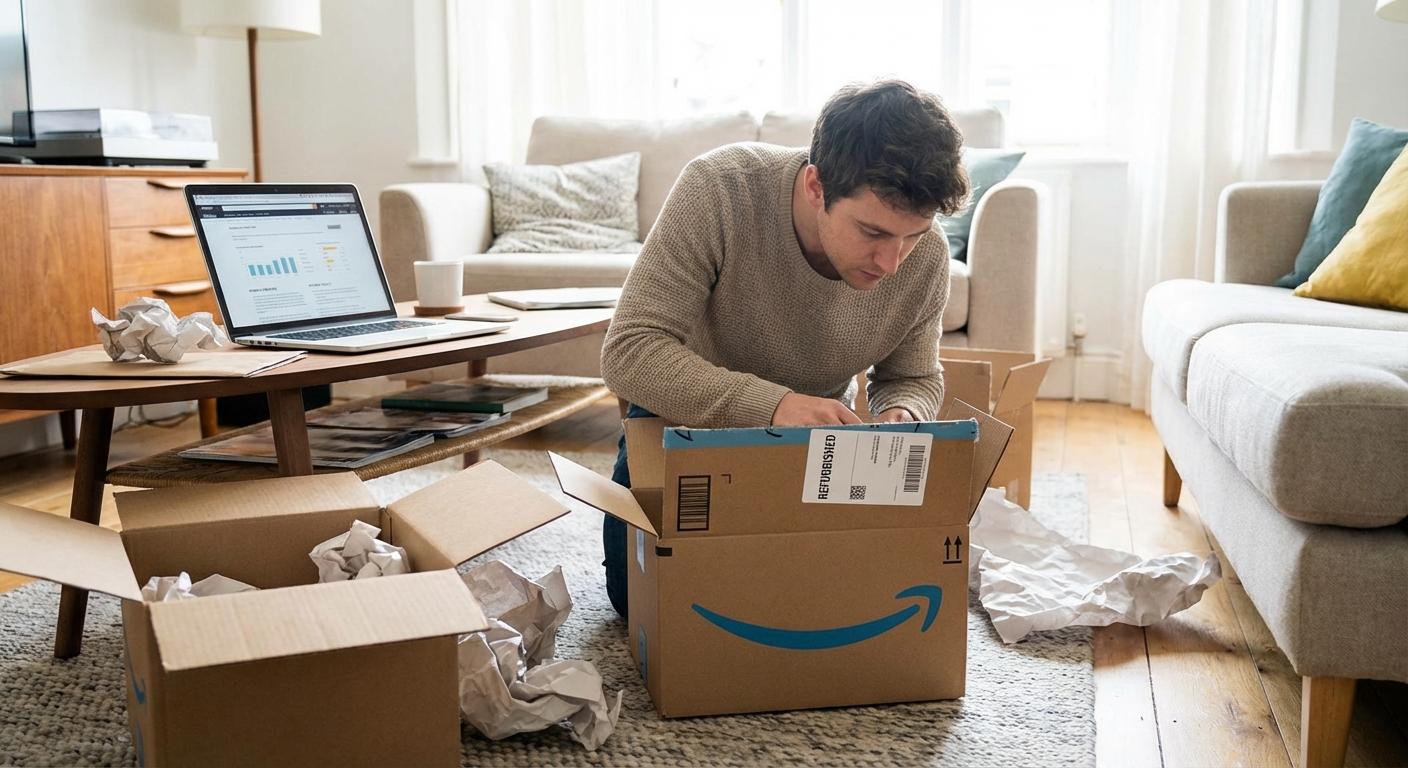
The turning point was a box.
A literal cardboard box in my hallway, filled with returns I never shipped. When I finally opened it, I found:
- A second ring light (for… my other face?)
- A “smart” water bottle that never once connected to Bluetooth
- A neon hoodie still with tags
- Three sets of “aesthetic” food storage containers I never even washed
When I totaled the cost, it was just over $320. Not life-ruining, but definitely “I could’ve gone on a weekend trip” money.

I did what any rational person would do: I spiraled. Then I started reading research on impulse shopping to figure out why I kept doing this even when I knew better.
Two things hit me hard:
- A 2023 survey from Bankrate found that 73% of U.S. adults admitted to making impulse purchases, often triggered by online browsing and social media ads.
- The American Psychological Association has written about how emotional states like stress, boredom, and loneliness are strongly linked to “retail therapy” behavior.
I wasn’t just “bad with money.” I was building a tiny emotional rollercoaster with my shopping cart as the ride.
That’s when I tried something weirdly simple: I stopped checking out immediately. Every non-essential item had to sit in my cart for 48 hours before I could buy it. No exceptions. No “but it’s on sale.” Nothing.
That became my 48-Hour Cart Rule.
How the 48-Hour Cart Rule Actually Works (And Why It Doesn’t Feel Miserable)
Here’s the basic structure I use:
- Step 1 – Add to cart like normal.
I don’t fight the “ooh shiny” moment. I let myself add it to my cart or wishlist. Zero guilt.
- Step 2 – Tag it with a reason.
I literally type a note in the cart (or in my notes app):
- “Gift for Sarah’s birthday”
- “Replacing broken headphones”
- “Just want this because TikTok made it look cool”
- Step 3 – Start a 48-hour timer.
I use a recurring shortcut on my phone. If it’s still there (and still makes sense) after 48 hours, I’m allowed to buy it. But I don’t have to.
- Step 4 – Quick 3-question filter before checkout:
- Will I use this at least 10 times in the next 3 months?
- Can I pay for this in full, right now, without dipping into savings or using “buy now pay later”?
- Do I already own something that does 70% of the same job?
If I say “no,” “no,” and “yes,” it’s usually a sign I’m chasing a mood, not solving a problem.
When I tested this system for a month, I noticed something wild: around 60–70% of the items just… expired in my brain. I’d open my cart after two days and think, “Why was I so excited about a mini waffle maker shaped like a cat?”
Psychologically, this lines up with research on “cooling-off periods” used in consumer protection laws and even in behavioral therapy. Giving your brain time lets the emotional spike (I want it!!) fade, so your more rational side can take over.
The surprising upside? The things that do make it through the 48 hours feel like events. I enjoy them more because I remember why I chose them.
Where This Rule Totally Breaks (And How I Handle the Traps)
I’m not going to pretend the 48-Hour Cart Rule is perfect. There are three big situations where it falls apart for me:
1. The Fake Urgency Trap (“Only 2 left!”, “Sale ends in 3 hours!”)
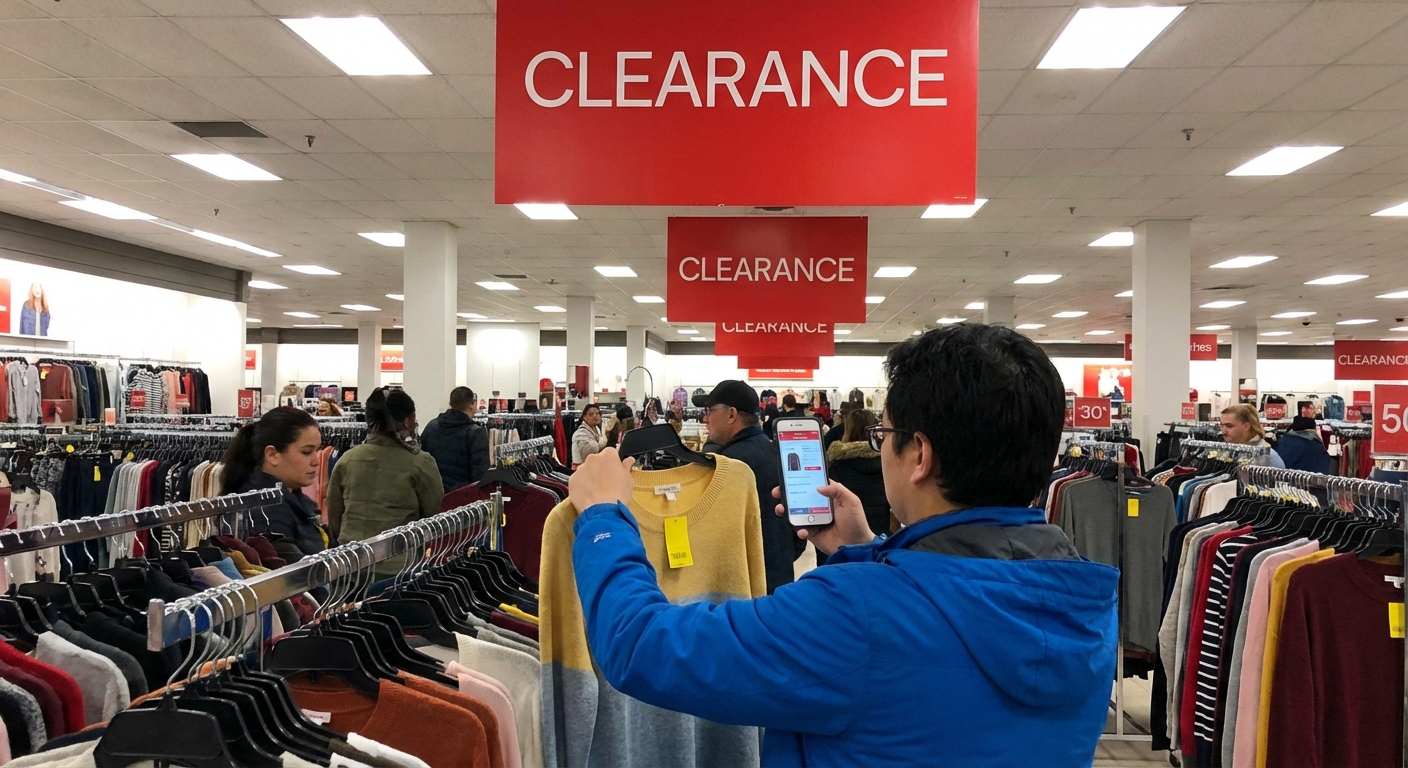
When I tested this during a massive holiday sale, those countdown timers worked a little too well on me.
Here’s what helped:
- I looked up data from the UK’s Competition and Markets Authority and the U.S. Federal Trade Commission on misleading scarcity tactics. A lot of “X people are viewing this!” messages are just automated nudges, not reality.
- I created my personal exception rule: I only break the 48-hour wait if:
- It’s a true limited thing (like concert tickets), and
- I had already planned for it in my budget that month.
If a brand screams, “Last chance!” but I discovered the product 5 minutes ago, I assume it’s not really my last chance.
2. “But It’s Only $9.99” Purchases
Low-ticket items were my kryptonite. Pens, mugs, cute phone stands—it felt like “basically free.”
Then I read a 2022 Consumer Financial Protection Bureau piece on how small purchases add up, especially when mixed with buy now, pay later services. That stung.
So now I treat all under-$20 impulse buys as a bundle. I’ll screenshot them into a “Maybe This Month” album, and at the end of the month, I give myself a flex budget (for example, $40) and pick my favorites as a group. Suddenly the $9 mug has to compete with that $16 book and those $12 socks I’ll actually wear.
Weirdly, turning them into a competition exposes which ones are just dopamine bait.
3. “Emotional Emergency” Shopping
There are days where I’m not shopping for fun—I’m shopping because I’m tired, mad, lonely, or anxious.
In my experience, no rule works when I’m deep in that mood. So I made a personal deal with myself: on days my brain is clearly not okay, I can browse, but I can’t buy. I don’t even log into payment accounts on those days.
Instead, I keep a small “comfort list” that isn’t stuff-based:
- Call a friend
- Watch a ridiculous movie
- Go for a 20-minute walk
- Make an aggressively fancy snack out of normal ingredients
It sounds cheesy, but swapping the “shopping == comfort” wiring has probably saved me more money than any budgeting app.
The Nerdy Side: Why This Works Better Than “Just Have More Discipline”
When I started looking into the science behind this, a few things made everything click.
1. Decision Fatigue Is Real
Psychologist Roy Baumeister and others have written about decision fatigue—the more decisions you make, the worse your later decisions become. Online shopping is basically a decision slot machine: sizes, colors, shipping options, upsells, “people also bought,” etc.
By outsourcing the timing to a rule (“I decide in 48 hours, not now”), I removed one big decision from a brain that’s already tired.
2. Future You Is More Rational
Behavioral economists like Richard Thaler (Nobel Prize, 2017) have shown how our “present self” and “future self” often disagree. Present Me wants the heated foot massager now. Future Me wants to not pay interest on my credit card bill.
The 48-hour delay forces present-me and future-me to talk. When I come back later, I can usually see which one is louder.
3. Identity-Based Shopping Is Sneaky
When I tested this for a few weeks, I noticed many of my carts had a theme: “cool content creator gear,” “productive person stationery,” “organized adult home stuff.”
I wasn’t just buying items—I was buying identities.
Seeing all those items piled together after 48 hours made it obvious. I could ask, “Do I actually want this thing, or do I just want to feel like the kind of person who owns this?”
Sometimes the answer is still “Yes, and that’s fine.” But at least I know what I’m really paying for.
What This Looks Like in Real Life (Not in a Perfect Spreadsheet World)
Here’s how a normal week might look for me with this rule running in the background.
Monday:I see a TikTok about a “life-changing” silicone scalp massager. Add to cart. Tag: “Hair upgrade? Not sure.” Start 48-hour timer.
Wednesday:Notification goes off. I open the cart. I realize I already have a perfectly good shampoo brush I forgot I owned. Delete.
Thursday:Friend sends me a link to matching sweatshirts for an upcoming trip. Add to cart. Tag: “Group trip memory. Already planned budget.” This passes the vibe check. I buy it immediately because the trip was already in my budget and this is tied to a real event, not boredom.
Friday night:I’m tired and doomscrolling. Aesthetic desk lamp? Add to wishlist. Close app. No checkout allowed after 10 p.m.—that’s another rule I added when I realized late-night me has the worst judgment.
Over a month, when I tracked this in a simple notes doc, about 7 out of 10 items died in the cart. The ones I bought? I used way more often.
The Stuff I Still Mess Up (Because I’m Human, Not a Spreadsheet)
To keep this honest:
- I still occasionally panic-buy during actual sales (my weakness is travel gear).
- I sometimes convince myself that a thing is “practical” when it’s low-key just pretty.
- I still have a box of “I swear I’m going to return this” items that stares at me like a judgmental raccoon.
But I’ve stopped expecting perfection. The goal isn’t to never buy anything impulsive again; it’s to raise the bar so my spending lines up better with what I value: books, travel, gifts for people I care about, and a few gadgets I’ll genuinely use.
The 48-Hour Cart Rule doesn’t require budgeting apps, spreadsheets, or a personality transplant. It’s just one guardrail that gives me enough pause to ask, “Is this really it? Is this really the thing I want my money and attention going toward?”
Most of the time, the answer is no. And when the answer is yes, it actually feels good to hit “Place Order.”
Conclusion
If your carts and wishlists feel like a chaotic museum of random versions of you—gym you, cozy you, hyper-productive you—the 48-Hour Cart Rule is a simple way to slow that down without killing the fun.
You don’t have to use my exact version. Yours might be:
- A 24-hour rule instead of 48
- A “no checkout after 9 p.m.” rule
- A “max 3 impulse buys per month” rule
- Or a “screenshot now, decide on the 1st of next month” ritual
The point is to build friction between “want” and “buy” so your real priorities have a chance to show up.
If you try it, track your cart for just one week. Don’t judge yourself—just watch what survives the waiting period. That little experiment alone can tell you more about your shopping habits than any generic financial advice ever will.
And honestly? Watching your old impulses quietly expire in your cart is its own kind of satisfying.
Sources
- Bankrate – Impulse purchases survey 2023 – Data on how many people make impulse buys, common triggers, and financial impact.
- American Psychological Association – The psychology behind “retail therapy” – Explores emotional drivers of shopping and how mood influences spending.
- Consumer Financial Protection Bureau – Buy now, pay later and small purchases – Discusses how even small, repeated purchases can affect financial health.
- Federal Trade Commission – Dark patterns and deceptive design – Covers scarcity tactics, countdown timers, and other online nudges that push impulse buying.
- Nobel Prize – Richard H. Thaler Prize in Economic Sciences 2017 – Background on behavioral economics and concepts like present bias that underpin why “cooling-off” rules work.