How I Turned “Doing Nothing” Into a Hobby: The Real Art of Slow Weekends
idge and stared at the door like it betrayed me. That’s when I accidentally discovered something that’s now my favorite hobby: slow weekends—intentionally unproductive, deeply enjoyable, weirdly life-improving leisure time.
This isn’t about scrolling your phone for six hours and calling it “self-care.” It’s about treating rest, low-pressure hobbies, and small pleasures as a legit pastime you can actually get better at. I’ve tested different slow-weekend “rituals,” tracked what actually made me feel recharged, and even dug into some research to see why some downtime works better than others.
Here’s how I turned doing less into a hobby that made the rest of my week way better.
Why “Intentional Laziness” Works Better Than Random Rest
The first time I tried a slow weekend on purpose, I failed by 11 a.m.
I’d promised myself: “No work.” By breakfast I was “just checking” my email, by lunch I was tweaking a slide deck, and by 4 p.m. I was tired and annoyed at myself. That’s when I realized: rest doesn’t happen by accident—you have to treat it like a plan, the same way you’d plan a trip or a workout.
When I started reading up on this, something clicked. Psychologist Sabine Sonnentag, who researches recovery from work, talks about four key elements of real rest: psychological detachment (mentally letting go of work), relaxation, a sense of mastery (doing something you’re good at or improving), and control over your time. In other words, flopping on the couch and doom-scrolling may feel like rest, but it doesn’t always tick those boxes.
I tested this on myself: one Saturday I let my phone live in another room and spent a few hours baking bread. I’m not an expert baker—I once made a loaf dense enough to qualify as a weapon—but I noticed something. When my hands were deep in dough, my brain finally stopped replaying Slack conversations from Tuesday.
Research from the American Psychological Association shows that hobbies that are absorbing but low-stakes (like knitting, baking, sketching, gardening) reduce stress, improve mood, and even support better sleep. The key is that you’re actively doing something you enjoy, not passively consuming content and calling it “relaxing.”
From there, I started thinking of slow weekends as a hobby with a few goals:
- Protect my brain from work creep
- Do things that feel good now and leave me a bit more energized on Monday
- Make space for “pointless” joy: reading, wandering, doodling, people-watching
Once I framed it that way, rest stopped feeling like wasted time and started feeling… almost like a sport I was learning to play.
Building a Slow-Weekend Ritual (Without Turning It Into a Chore)
The danger with any “lifestyle habit” is turning it into another performance contest. I tried making a super-structured Saturday schedule once—blocks for reading, stretching, tea breaks—and it felt like I’d hired a tiny, annoying project manager to live inside my head.
What finally worked was lighter: having a menu instead of a schedule.
I keep a note on my phone called “Slow Weekend Ideas.” It’s not aspirational; it’s realistic, low-friction stuff I actually like:
- Brewing coffee slowly with my pour-over and drinking it outside
- Re-reading a favorite book instead of starting a new one
- Trying a new route on a walk and getting a bit “lost on purpose”
- Doing a puzzle, LEGO set, or tiny model kit
- Listening to a full album start to finish, no skipping
- Cooking something with way too many steps but zero urgency
When I tested this menu approach, I noticed three things:
- Decisions got easier. Instead of asking, “What should I do with my day?”, I’d just pick something off the list. Decision fatigue went way down.
- Guilt dropped. Because I’d already told myself that this stuff “counts”—that sitting on a park bench watching dogs is part of the plan—I didn’t feel like I was wasting time.
- I stayed off autopilot. I spent less time in that half-checked-out, half-scrolling mode where an hour disappears and you’re not sure what you even saw.
The research backs this up more than I expected. A study published in Psychosomatic Medicine found that leisure activities were associated with lower blood pressure, lower stress hormones, and better perceived health. But the effect was strongest when people actually valued their leisure time instead of viewing it as “leftover” time.
So now, when I wake up on a slow Saturday, I’ll do something very unproductive yet surprisingly powerful: I ask, “What would make today feel spacious?” Then I pick two or three things from the menu and that’s it. No pressure to “use every moment well.” The goal is the opposite.
The Weirdly Powerful Mix: One Active, One Creative, One Cozy
After about two months of experimenting, I noticed my best weekends all had the same pattern: something active, something creative, and something cozy.
1. The Active Thing
This doesn’t have to be a workout. In my case, “active” often looks like:
- A 40-minute walk with a podcast
- Light cycling to a café instead of driving
- Hauling a plant from one side of the apartment to the other and calling it “indoor landscaping”
When I moved my body at least once, my energy stayed smoother and my sleep on Sunday night was better. There’s a mountain of evidence that light to moderate physical activity boosts mood, reduces anxiety, and improves sleep quality. The CDC cites that regular movement—even walking—reduces risk of depression and helps regulate stress.
I tested this by tracking my mood for four weekends. On the ones where I barely moved, Monday felt like climbing out of wet cement. On the ones where I at least walked outside for 20–30 minutes, Monday was… not magical, but less heavy.
2. The Creative Thing
I’m not an artist, but I’ve learned creativity is less about talent and more about permission to be bad at something. My weekend “creative” things have included:
- Doodling geometric shapes with colorful pens
- Making a playlist that tells a story
- Writing notes to my future self in a journal
- Taking photos of weird shadows and reflections on buildings
When I tested this, something surprising happened: my weekday work ideas got better. It lines up with research on “incubation” in creativity—stepping away from focused problem-solving and engaging in playful, unrelated tasks can help your brain form new connections in the background.
One Saturday, I spent an hour drawing really questionable trees. On Monday, I solved a work problem I’d been stuck on for a week in about 10 minutes. The trees were awful, but apparently my neurons appreciated the break.
3. The Cozy Thing
This is where the magic of doing almost nothing lives.
For me, the cozy thing is often:
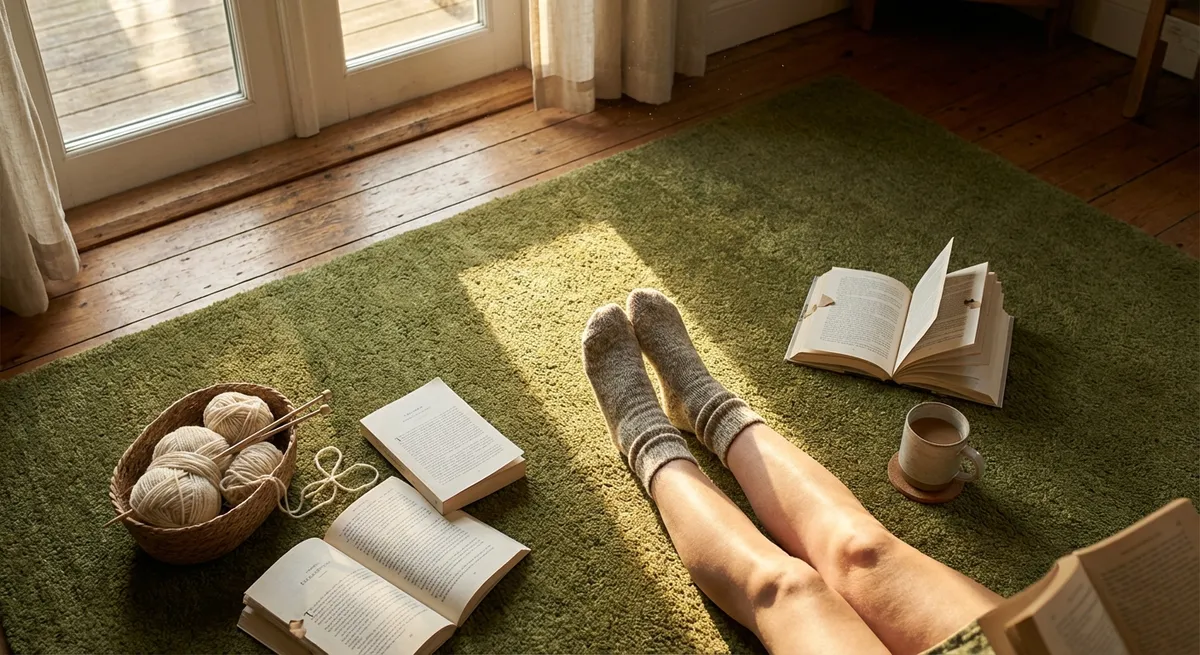
- Making tea and reading 10–20 pages of a book
- Rewatching a comfort show while wrapped in a blanket
- Sitting by a window and just… staring outside for a bit
On paper it doesn’t sound like much. But this is where my brain finally powers down from “what’s next?” mode. Studies on mind-wandering and default mode network activity suggest that quiet time—without constant input—can help with emotional processing and self-reflection. It’s like background maintenance for your mental hard drive.
The one rule I gave myself here: phone away, at least for part of it. When I tested “cozy but staring at TikTok” versus “cozy and actually present,” the second one always left me calmer and less jittery.
The Dark Side of “Chill”: When Leisure Starts to Feel Like a Competition
I wish I could say slow weekends instantly fixed everything. They didn’t. At one point I swung too hard in the other direction and turned rest into another productivity metric.
I caught myself thinking:
- “Did I optimize my downtime?”
- “This doesn’t feel restorative enough, I’m doing it wrong.”
- “Maybe I need a better morning routine for my leisure days.”
That’s when I realized: I’d accidentally swallowed a very Instagram version of rest where everything had to be aesthetic, photogenic, and slightly advanced-level. My tea had to be in a pretty mug, my book had to be hardcover, my walk had to include a cute café.
So I started stripping it back and asking a blunt question: “Is this for me, or is this for imaginary people watching my life?”
Sometimes the honest answer stung. I’d catch myself arranging my lunch to look better in a photo even though I wasn’t actually enjoying the meal. Once I let that go, my weekends got less cinematic but way more satisfying.
There’s also a class and time privilege to slow weekends that’s worth acknowledging. If you work weekends, care for kids or relatives, or have multiple jobs, you might not get a clean “day off.” I’ve been there too. During my busiest period, I carved out slow pockets instead of whole days:
- 20 minutes of reading between tasks
- A slow walk home instead of rushing
- A no-phone rule for the first 15 minutes after waking up
It wasn’t perfect, but it still helped. The research on micro-breaks and short leisure activities shows even 10–15 minutes of something absorbing and enjoyable can reduce fatigue and improve focus later.
The point isn’t to create the “perfect” leisure life. It’s to reclaim some space where your brain isn’t trying to earn its existence.
How to Start Your Own Slow-Weekend Experiment (Without Overthinking It)
When I talk about this with friends, someone always says, “That sounds great, but I wouldn’t even know where to start.” Here’s the simplest version of the experiment I’ve run on myself and a couple of willing test-subject friends:
- Pick one day or half-day. Not forever—just one test run.
- Decide one non-negotiable boundary. For me, it was “no work apps after breakfast.” For you it might be “no email,” “no errands before noon,” or “no social media in bed.”
- Choose three things: one active, one creative, one cozy. They can be tiny. A 15-minute walk, 10 minutes of doodling, 20 minutes with a book totally counts.
- Notice how Monday feels. That’s the real scoreboard. You don’t need to feel euphoric—just a bit less drained or resentful is a win.
When I tested this framework, I expected to feel bored. And yeah, sometimes I did. But that boredom felt… spacious. There’s a difference between “I’m bored and restless” and “I’m bored and finally not being yanked around by notifications.”
If you try this, you don’t need to post it, track it, or make it a #journey. Just run your own small experiment. Tweak. Keep what feels good. Ditch what doesn’t.
Slow weekends, for me, became less about escape and more about remembering who I am when I’m not being useful to anyone. That’s the real hobby here: rebuilding a relationship with your own attention, curiosity, and energy.
And honestly? That’s the one skill that makes the rest of life feel a whole lot lighter.
Sources
- American Psychological Association – “The benefits of hobbies” – Overview of how leisure activities support mental and physical health
- Sabine Sonnentag, “Recovery, work engagement, and proactive behavior” (Journal of Applied Psychology) – Foundational research on psychological detachment and recovery from work
- CDC – Physical Activity and Mental Health – Evidence on how regular, moderate movement improves mood, stress, and sleep
- Psychosomatic Medicine – “Leisure Activities and Health: A Review of the Evidence” – Research review linking leisure time with reduced stress and better health outcomes
- Harvard Health Publishing – “Give your brain a break: Learning and memory” – Explanation of how downtime and stepping away can support creativity and cognitive function