How to Spot Fake Products Online: Seller Checks and Listing Red Flags
er than everywhere else. I convinced myself I’d found a hidden gem.
When they arrived, the logo was slightly crooked, the box looked like it had been printed on a home inkjet, and the insole felt like cardboard. When I tested them on a short run, the sole cushioning collapsed so badly my knees ached for two days.
That order turned into a deep dive into how counterfeits work online. Since then, I’ve been actively hunting fakes for friends and family—partly as a hobby, partly out of spite. This is the playbook I actually use now before I click “Buy”.
Why Fake Products Are Getting Harder to Spot
In my experience, the big shift is that counterfeiters have gotten really good at:
- Mimicking professional product photography
- Copying brand language and layout from official sites
- Using real customer photos stolen from other listings
The U.S. Government Accountability Office (GAO) did a test-buy investigation in 2018 and found about 40% of brand-name products they bought from third-party marketplace sellers were likely counterfeit. That wasn’t on shady websites—those were major platforms.
So relying on gut feeling alone isn’t enough anymore. You need a checklist.
Step 1: Do a Quick Seller Background Check
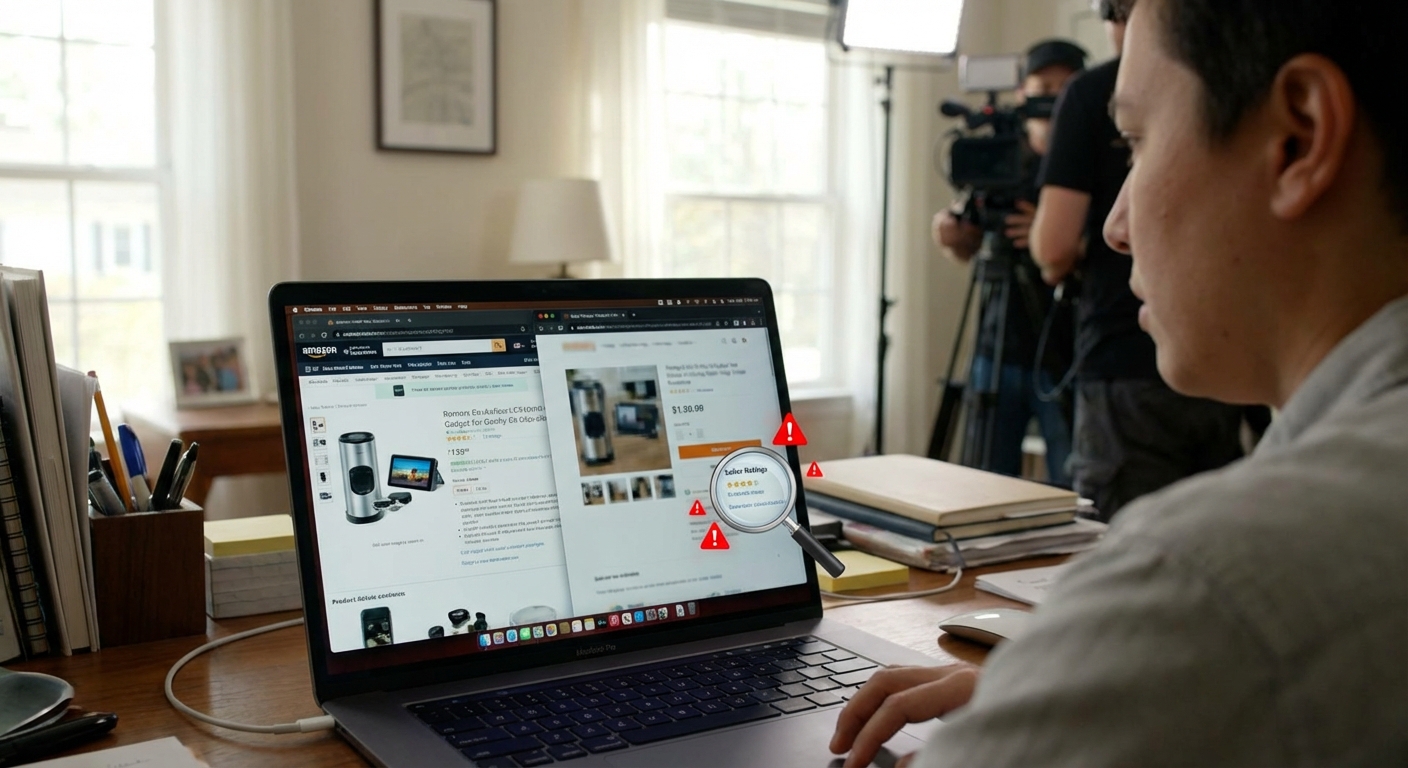
The fastest way I filter risk is by treating the seller like the product.
1. Check who’s actually selling and shipping
On Amazon, eBay, Walmart, etc., I always look for this combo:
- “Sold by [Brand Name] and Fulfilled by [Platform]”
- Or “Ships from and sold by [Brand Name]”
If it’s a high-risk item (electronics, cosmetics, supplements) and the seller is “BestDeals247” with no brand relation, I pause.
When I recently checked for a popular skincare serum, the official brand site listed only three authorized marketplaces and sellers. The listing I was about to buy from wasn’t on that list. I backed out. Two weeks later, Reddit was full of posts about irritated skin from likely-fake versions of the same serum.
2. Scroll deep into seller feedback
I don’t just look at the star rating. I:
- Click the seller name
- Filter reviews by 1-star and 2-star
- Search within reviews for words like “fake”, “counterfeit”, “not authentic”, “smelled weird”, “packaging different”
Red flag patterns I’ve seen:
- Multiple people saying: “I own the real one, this isn’t it”
- Complaints that warranty wasn’t honored by the official brand
- Comments about different batch codes or missing serial numbers
If even a few detailed reviews mention authenticity problems, I treat that seller as radioactive.
3. Check seller age and product range
When I tested this on a few sketchy listings, I noticed a pattern:
- New seller (account created a few months ago)
- Hundreds of listings
- Random mix of categories: luxury perfume, power tools, baby formula, phone chargers
Real retailers usually specialize or at least stay within a category. When someone’s selling Dior perfume next to lawnmower blades and protein powder, I’m out.
Step 2: Analyze the Listing Like a Detective
Counterfeiters often slip up in the details.
1. Too-good-to-be-true pricing… with context
Discounts alone don’t prove anything. But:
- If everywhere else sells a $200 item for $180–$210
- And one random seller has it for $79 with free shipping
…I ask myself: would the brand really undercut its own website by more than half?
I google: `"[Product Name] MSRP"` or check the brand’s official site. Some brands (like Apple, Nike, Chanel) almost never do deep discounts on core products. When I see a 70% “sale” on those, it’s basically a neon sign.
2. Weird or inconsistent product photos
Here’s what I look for now:
- Mismatched packaging between photos
- Slight color differences in the logo or label
- Crooked or blurred printing on close-ups
- Photos that look like they were taken from another region (non-local power plugs, different language on the box) but the listing claims local stock
Pro tip I use a lot: reverse image search.
- Screenshot the main product image
- Drop it into Google Images or TinEye
When I did this with a suspicious “branded” hair straightener, the image turned out to be from a 2016 blog review on an entirely different product. The seller just stole the photo.
3. Sloppy or oddly phrased descriptions
Not all non-native English is suspicious. But there’s a difference between imperfect language and copy-paste chaos.
Phrases that make me wary:
- “Real 100% original genuie product!!” (yes, with that spelling)
- Overuse of brand name and keywords in a spammy way
- Contradicting details in specs (e.g., “stainless steel” then “plastic handle only” in another section)
When I tested this on five random fake listings friends sent me, all five had:
- At least one obvious grammar trainwreck in the first paragraph
- A technical spec that contradicted the brand’s official product page
Step 3: Compare With the Brand’s Official Info
One of the most reliable moves is what I call “the side‑by‑side test”.
- Open the official brand website for the exact product.
- Open the marketplace listing in another tab.
- Compare:
- Packaging design (fonts, colors, logo placement)
- Volume/size (ml, oz, GB, etc.)
- Model number / SKU / style code
- Any safety markings (UL, CE, FDA-related labeling)
When I did this with a pair of “discounted” AirPods Pro, I noticed:
- Apple’s official photos showed very specific engraving and vent placements.
- The marketplace listing’s photos had vents slightly off-center and missing regulatory markings.
Apple’s own site warns about this and explicitly recommends buying either directly from Apple or listed Authorized Resellers. After that, I stopped gambling on third-party AirPods altogether.
Many brands keep anti-counterfeit guides on their websites now—especially luxury, skincare, supplements, and electronics. I’ve used these for:
- Spotting fake Nike sneakers (tongue label differences)
- Comparing perfume batch codes
- Checking watch serial numbers
If the brand doesn’t have any guidance or clear reseller policy, I assume enforcement is weaker and I’m extra careful.
Step 4: Use Reviews, But Don’t Be Naive About Them
Online reviews are both useful and a minefield.
What I actually do with reviews
- Sort by “Most recent” and skim the last 3–6 months
- Look for photos from buyers, not just the seller
- Pay attention to medium reviews (3–4 stars) – they’re often the most honest
Patterns I treat as red flags:
- A flood of 5-star reviews in a very short window
- Many reviews with oddly similar wording
- Reviews that talk about a totally different product (often a sign of listing hijacking)
I also occasionally run a product through tools like ReviewMeta or Fakespot (they’re not perfect, but useful as a second opinion). A “C” or “questionable authenticity” score doesn’t prove anything, but it pushes me to investigate harder.
High-Risk Categories Where I’m Extra Paranoid
In my experience, some categories attract fakes way more than others. I’m borderline obsessive with checking these:
- Cosmetics & skincare – contamination and unknown ingredients can wreck your skin.
- Supplements & weight-loss products – dosage, fillers, or banned substances can be dangerous.
- Electronics & chargers – cheap counterfeit chargers have been linked to fires and shocks.
- Baby products – bottles, formula, car seats; I don’t gamble here, ever.
- Luxury goods – bags, watches, perfumes; counterfeits can be extremely convincing.
For these, I usually:
- Buy directly from the brand or a clearly listed authorized retailer
- Avoid random third-party sellers even if the marketplace is legit
I’ve overpaid a little sometimes, but I sleep better knowing my phone charger isn’t a potential fire starter.
What To Do If You Suspect You Bought a Fake
I’ve been here. Twice.
Here’s what’s worked for me and people I’ve helped:
- Document everything
- Take clear photos of the product, packaging, labels, and serial numbers.
- Screenshot the listing, seller info, and order page.
- Contact the brand
- Many brands will confirm authenticity via photos or batch/serial numbers.
- Some even have dedicated anti-counterfeit email addresses or forms.
- Use the platform’s protection
- File a claim: “Item not as described – suspected counterfeit.”
- Platforms like Amazon and eBay usually side with the buyer if you present clear evidence.
- Report the seller
- It doesn’t always feel satisfying, but it does help build a pattern against bad actors.
Downside: this process can be annoying and slow. Upside: once you’ve done it once, you get much faster at spotting red flags before you purchase.
When to Walk Away (My Personal Rules)
Over time, I’ve made myself some hard rules that have saved me a lot of money and headaches:
- If a product touches my skin, lungs, or stomach, I only buy from trusted or official channels.
- If a deal makes me feel like I’ve “outsmarted” everyone else, I assume I’m the one being outsmarted.
- If I can’t identify the seller, verify the product details, or match it to the brand’s info in under 5 minutes, I close the tab.
I still hunt for bargains, but I’d rather miss one legit crazy deal than roll the dice on something that could harm me or just fall apart in a week.
Once you start checking sellers and scanning listings with this mindset, spotting fakes becomes almost a reflex. You’ll scroll past sketchy listings the way you ignore spam emails—barely even tempted.
Sources
- U.S. Government Accountability Office – Intellectual Property: Agencies Can Improve Efforts to Address Risks Posed by Changing Counterfeits Market – Test-buy investigation on online counterfeits
- U.S. Customs and Border Protection – Fake Goods, Real Dangers – Government overview of counterfeit risks and tips
- Apple – How to Identify Counterfeit or Uncertified Accessories – Official guidance on spotting fake Apple accessories
- U.S. Food & Drug Administration – Counterfeit Medicine – FDA information on fake medicines and related online risks
- Harvard Business Review – The Fight Against Fakes – Analysis of how brands and marketplaces combat counterfeit goods