Hydroponic Farming Guide
l down a late‑night YouTube rabbit hole on hydroponics, ordered a cheap kit "just to test it," and… here we are. I now harvest greens from a shelf unit next to my desk.
This Hydroponic Farming Guide is everything I wish I’d known when I first mixed nutrient solution in a salad bowl and nearly killed a basil plant.
What Hydroponic Farming Actually Is (Without the Jargon)
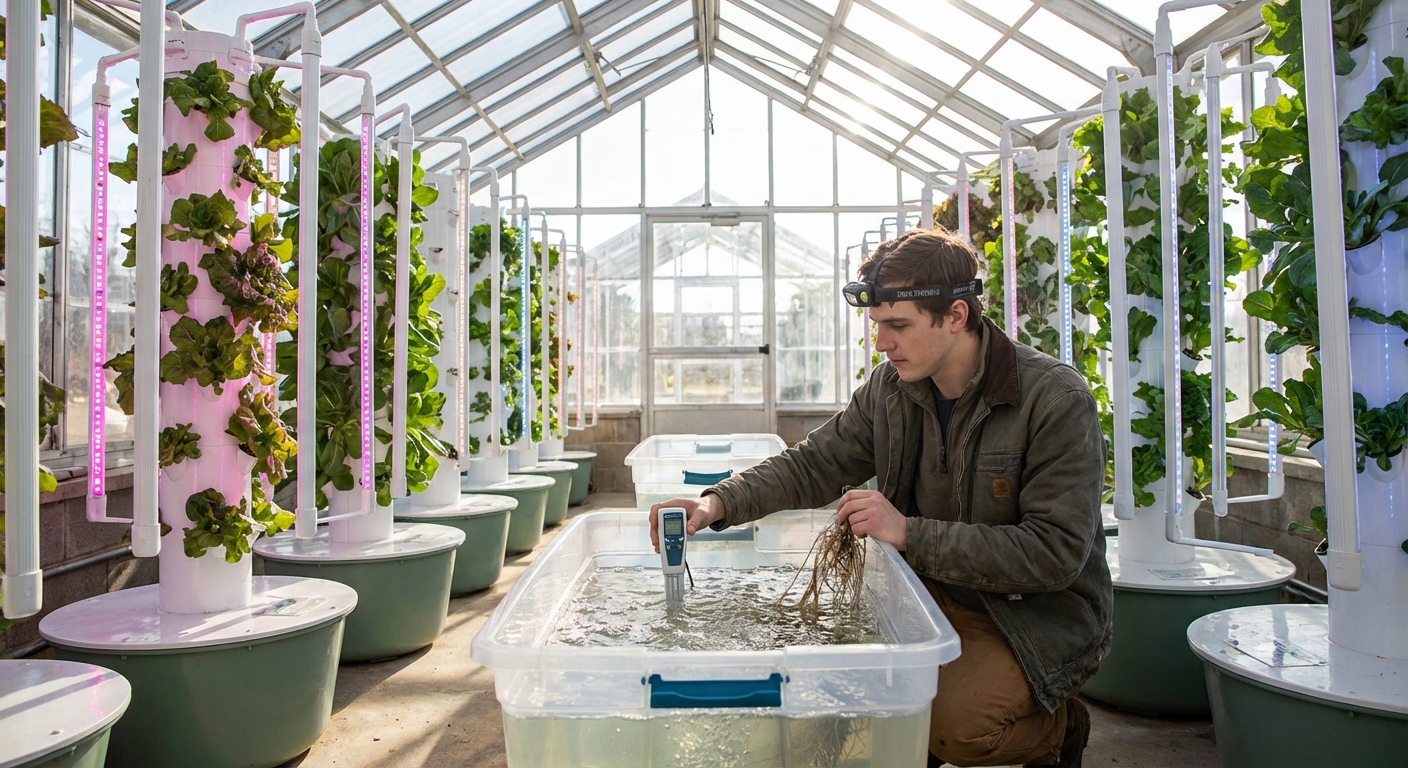
Hydroponics is growing plants in water instead of soil. The roots sit in a nutrient-rich solution, and you control almost everything: water, nutrients, light, pH, and oxygen.
When I tested my first deep water culture (DWC) bucket, I remember pulling out a lettuce plant after three weeks and the roots looked like a white beard—thick, clean, and way longer than my soil-grown version the same age.
The big idea:
- Soil is just a delivery system for water and nutrients.
- Hydroponics skips the soil and delivers both directly to the roots.
- Because of that, plants can grow faster and more efficiently.
A 2019 paper in Horticulturae reported yield increases of 20–50% for leafy greens in hydroponic systems compared to soil, under controlled conditions. That lines up with what I’ve seen: my hydro lettuce reaches harvest in about 30 days vs 45–50 days outside in garden beds.
Why Hydroponics Is So Addictive (Pros) – And Where It Sucks (Cons)
The Pros I Noticed Fast
- Ridiculous growth speed – My first butterhead lettuce in DWC was ready in 4 weeks. Same variety in soil? Almost 7 weeks.
- No weeding, ever – I didn’t realize how much I hated weeding until I just… stopped doing it.
- Uses way less water – Recirculating systems reuse water. Studies cited by the USDA have found water savings of up to 90% vs traditional field farming for some hydroponic crops.
- Grow indoors, year-round – When we had a cold snap last winter, my outdoor garden died off. My indoor basil and mint under LEDs didn’t care at all.
- Cleaner harvests – No soil, no mud, no rinsing grit out of every crevice of your lettuce.
The Cons No One Brags About
- If the pump dies, plants crash fast – In my second system, a cheap aquarium pump died while I was out for a weekend. I came home to wilted, sad lettuce. In soil, plants have more buffer.
- Upfront cost – Even a basic home setup with a reservoir, pump, air stones, and decent LED grow light isn’t free. You can DIY cheaply, but good equipment adds up.
- You can’t wing it with nutrients – I once tried "eyeballing" nutrients. Bad idea. Burned every single seedling.
- Monitoring can feel fussy – pH meters, EC (electrical conductivity) pens, mixing stock solutions… if you hate numbers and adjustments, there’s a learning curve.
So yes, it’s amazing—but it’s not magic. It’s more like owning a super‑productive but slightly needy house pet.
The Main Types of Hydroponic Systems (And What I’d Start With)
There are a lot of fancy terms, but in my experience, you only need to understand four to get started.
1. Deep Water Culture (DWC)
This is what I started with.
- Plants sit in net pots suspended over a reservoir of nutrient solution.
- An air pump and air stone oxygenate the water.
2. Kratky (No-Pump) Method
When I tested Kratky on my windowsill with mason jars, I was honestly shocked by how well it worked.
- Non-circulating: no pumps, no electricity.
- You fill a container with nutrient solution, put a plant in a net cup, and let the water level drop as the plant uses it.
3. Nutrient Film Technique (NFT)
You’ve probably seen this in photos: long channels with plants in a row.
- A thin film of nutrient solution flows through a slightly sloped channel.
- Roots sit in the stream; the rest is exposed to air.
4. Ebb and Flow (Flood and Drain)
I converted an old grow tent to an ebb and flow table one spring.
- A tray floods with nutrient solution several times a day, then drains back into a reservoir.
- Grow media (like expanded clay pebbles) holds moisture between floods.
What You Actually Need to Get Started at Home
You don’t need to drop thousands on a commercial-style system. Here’s what I use in my apartment setup.
1. Container & Support
- For DWC: a lightproof plastic tote or bucket with a lid.
- Net pots (2"–3" for greens, 3"–5" for larger plants).
- Growing media: I like rockwool cubes for seed starting, then expanded clay pebbles around the cubes.
2. Nutrient Solution
When I first started, I tried to DIY nutrients from random fertilizer. It… kind of worked, but deficiencies popped up quickly.
Now I use:
- A complete hydroponic nutrient mix (General Hydroponics Flora series, or similar).
- Cal-Mag supplement if I’m using reverse-osmosis or very soft tap water.
You’ll want to follow the manufacturer’s chart, but then tweak based on what you see. Tomatoes love a stronger EC; lettuce prefers a lighter mix. As a rough guide, I keep lettuce around 0.8–1.2 mS/cm EC, tomatoes closer to 2.0–2.5 mS/cm.
3. pH Control
The first time I measured my tap water, the pH was 8.4—way too alkaline.
- Ideal pH for most hydroponic crops: 5.5–6.5.
- I use a digital pH meter, plus "pH Up" and "pH Down" solutions.
I check pH every 1–2 days. It drifts as plants feed, especially in smaller reservoirs.
4. Oxygen & Circulation
- Air pump + air stone for DWC.
- Submersible pump for NFT or ebb and flow.
When I accidentally turned my air pump off overnight, my lettuce drooped noticeably by morning. Roots need oxygen as much as they need nutrients.
5. Light
If you’ve got a sunny south-facing window, you can get away with that for leafy greens.
When I upgraded to LED grow lights, the difference was night and day:
- Tighter internodes (no leggy plants).
- Darker, richer leaf color.
- Faster time to harvest.
Look for full-spectrum LED grow lights with:
- 25–40 watts per square foot for high-light crops.
- 12–16 hours of light per day for most vegetables indoors.
Step‑by‑Step: A Simple First Hydroponic Project
Here’s exactly how I set up my most successful beginner-friendly system.
My “Starter Lettuce Tote” Build
- Choose a container – I used a 10–14 gallon opaque storage tote with a flat lid.
- Drill holes – 6–8 holes in the lid for 2" net cups, spaced about 6 inches apart.
- Add air – Drop in an air stone connected to an aquarium pump; run the tubing out the side.
- Mix nutrients – Fill the tote with water, add hydro nutrients to lettuce strength, adjust pH to ~5.8–6.0.
- Start seeds – Germinate lettuce in rockwool cubes. When roots peek out, move the cubes into the net cups filled with clay pebbles.
- Turn on the air pump – This runs 24/7.
- Add light – Hang an LED grow light 12–18" above the plants.
Maintenance:
- Top up with plain water as it evaporates.
- Check pH every couple of days.
- Every 2–3 weeks, I dump and refresh the solution. When I tried to stretch it longer, I saw nutrient imbalances—yellowing lower leaves, tip burn, etc.
From seed to salad took me about 4 weeks using this exact setup.
Common Problems I’ve Run Into (And How I Fixed Them)
1. Yellowing Leaves
When my first basil turned pale yellow, I panicked. Turned out to be one of three usual suspects:
- Nitrogen deficiency (solution too weak).
- Iron deficiency (pH too high; iron gets locked out above ~6.5).
- Old leaves naturally aging.
What worked: Slightly boosting EC and bringing pH back down to 5.8–6.0 fixed it within a week.
2. Slimy, Brown Roots
I’ve fought root rot (Pythium) a few times.
Causes I’ve seen:
- Warm water (above ~72–75°F / 22–24°C).
- Low oxygen.
- Organic gunk building up in the reservoir.
My fixes:
- Added a second air stone.
- Switched to a larger reservoir to keep temps cooler.
- Cleaned everything with diluted hydrogen peroxide between crops.
3. Algae Blooms
If light reaches your nutrient solution, algae throws a party.
I once used clear tubing for my pump—by week two, it looked like a science experiment.
Now I:
- Use opaque containers and tubing.
- Cover any exposed water.
Is Hydroponic Produce “As Healthy” As Soil‑Grown?
This comes up a lot. I dug into this after a friend insisted soil-grown veggies "have more minerals."
The short version from the research and my reading:
- Plant nutrition is mostly about available nutrients, not where they come from.
- A 2015 review in Horticultural Science and multiple university extension resources note that nutrient content in hydroponic vs soil-grown plants is usually comparable, if the nutrient solution is well balanced.
Where soil still wins:
- Complex soil microbiomes can offer subtle benefits we don’t completely understand yet.
- Flavor can differ based on how aggressively you push growth in hydro. I’ve noticed my fastest-grown lettuce can be milder than soil-grown, which some people like and others don’t.
So no, hydroponics isn’t “fake food.” But it is highly dependent on you not cutting corners with nutrients.
When Hydroponics Makes Sense – And When It Doesn’t
Hydroponics makes a ton of sense if:
- You’ve got limited space (balcony, apartment, tiny yard).
- You want consistent, fast leafy greens and herbs.
- You enjoy tinkering and don’t mind testing pH and EC.
It’s less ideal if:
- You hate equipment, timers, and monitoring.
- You’re on a super-tight budget and don’t want any upfront cost.
- You mostly want root crops (carrots, potatoes) – hydro can do them, but it’s awkward, and soil is easier.
Personally, I treat hydroponics as a complement to outdoor gardening, not a replacement. I grow tomatoes and peppers hydroponically when I want to geek out, and I still keep a messy, wonderful soil bed outside for the rest.
Final Thoughts From My Grow Rack
When I started, I assumed hydroponics was only for high-tech greenhouses and vertical farms with venture capital money. After killing a few seedlings and misreading my pH pen more than once, I realized it’s actually just another way to garden—just with more control and less dirt under your nails.
If you’re even mildly curious, try a simple Kratky jar or a DWC tote with lettuce. Watch the roots explode, taste that first harvest, and then decide how deep you want to go. For me, that first crunchy, homegrown hydro lettuce wrap was enough to turn a late-night experiment into a full-on obsession.
Sources
- USDA: Controlled Environment Agriculture - Overview of hydroponics and controlled-environment farming
- University of Arizona Controlled Environment Agriculture Center - Educational resources on hydroponic systems and plant nutrition
- Cornell University Hydroponics: Growing Plants without Soil - Practical hydroponics guidance from an academic program
- Horticulturae Journal – Hydroponic Lettuce Production Study - Peer-reviewed research on hydroponic crop performance
- Forbes: Inside The Vertical Farming Industry - Industry context for hydroponics and controlled environment agriculture