I Stopped Chasing “Perfect” Coffee—and My Mornings Got Way Better
tead of just drinking it—and it completely rewired my mornings. Not by buying a $900 machine, but by changing how I approached that one cup.
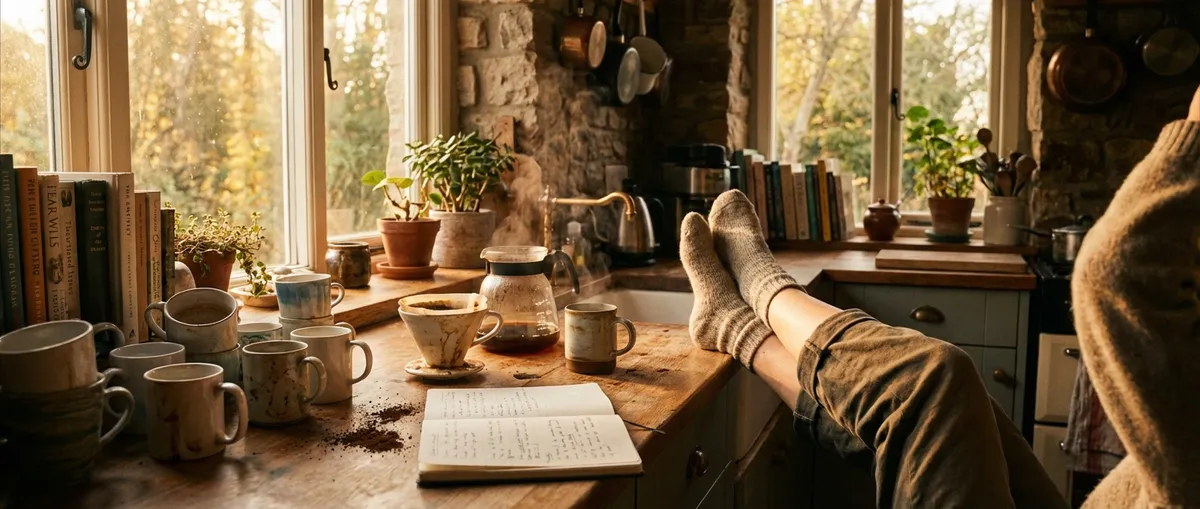
Over a few months, I turned my kitchen into a low-key coffee lab: different beans, weird-looking kettles, too many mugs in the sink. I messed up a lot. But when I finally hit a clean, sweet cup that tasted like dark chocolate and orange instead of “burnt and bitter,” I was hooked.
This isn’t about becoming a coffee snob. It’s about learning just enough to make your daily cup go from “background noise” to “wow, I kinda want to wake up for this.”
How I Realized My “Strong Coffee” Was Just… Burnt
For years, I equated “strong” coffee with quality. If it punched me in the face at 7 a.m., mission accomplished. Then a friend dragged me to a small specialty café where the barista described a filter coffee as “juicy, like red berries.”
I rolled my eyes internally… and then I tasted it.
It wasn’t sour lemonade like I expected. It was sweet, balanced, and smooth enough that I finished it black—no sugar, no milk, no suffering. That was the moment I realized my idea of “strong” was just over-extracted, bitter coffee drowned in milk.
When I tested this at home, I noticed three big problems in my old routine:
- My grind size was random. I used a cheap blade grinder that basically turned my beans into dust and pebbles at the same time. That made extraction totally unpredictable.
- My water was boiling hot. I’d pour straight off the boil. That extra heat pulled out harsher flavors, fast.
- I guessed everything. No scale, no timing, no consistency. Every cup was a surprise—and not the fun kind.
Once I accepted that “strong” didn’t have to mean “bitter,” I stopped chasing intensity and started chasing clarity. And honestly, it made my mornings less aggressive and more… intentional, without turning into a full-on ritual cult.
The One Change That Improved Every Cup: Controlling Extraction
When I first heard coffee nerds talk about “extraction,” I thought it sounded a bit dramatic. But when I tested it, the difference was so obvious I couldn’t un-taste it.
Extraction is basically how much of the good stuff in your coffee grounds makes it into your cup. Too little? Sour and thin. Too much? Bitter and harsh. Somewhere in the middle? Flavors actually show up.In my experience, these three variables matter most—no matter what brewing method you use:
- Grind Size
When I switched from a $20 blade grinder to a basic hand burr grinder, it was like upgrading from dial-up to Wi-Fi. Same beans, same coffee maker, totally different cup.
- Finer grind = more surface area = more extraction
- Coarser grind = less surface area = less extraction
My experiments:
- With a French press, too fine made it sludgey and bitter.
- With pour-over, too coarse tasted like hot flavored water.
Once I dialed in a medium-coarse grind for French press and a medium grind for pour-over, most of my “mystery bad cups” disappeared.
- Brewing Time
I used to dunk my French press plunger whenever I “felt like it.” When I actually started timing it—4 minutes for my medium-coarse grind—the body got richer, and the weird sharpness faded.
What I found:
- Under 3 minutes: sour, unfinished taste
- Over 6 minutes: bitter and muddy
- Water Temperature
I thought water was just… water. Then I started letting it cool 30–60 seconds after boiling, landing somewhere around 92–96°C (197–205°F), which aligns with what the SCA (Specialty Coffee Association) recommends.
Hotter water pulled harsher notes; slightly cooler brought more sweetness. When I accidentally used water that was too cool, my coffee tasted flat and weak—even with good beans.
Once I stopped guessing and started controlling those three things, every brewing method got better—drip machine, French press, pour-over, even my cheap single-serve brewer.
My Low-Fuss Morning Setup (That Doesn’t Require a Chemistry Degree)
I spent some time in full coffee-nerd mode—spreadsheets, refractometers, the whole thing. That got old fast. Now I use a simpler system that still makes my coffee taste way better than it used to.
Here’s the setup that stuck and doesn’t make my mornings feel like a science exam:
1. A Basic Burr GrinderI bought an entry-level hand burr grinder after reading way too many reviews. Not fancy. Not electric. But it produces a consistent grind, and consistency is everything.
In my experience:
- If you’re using pre-ground coffee, it’ll always be a compromise, especially if it’s ground for “all-purpose.”
- Switching to whole beans and grinding fresh was the single biggest improvement across every brew method I tried.
Yes, gooseneck kettles are nice for precise pour-overs, but I started with a basic kettle and just:
- Boiled water
- Waited 30–60 seconds
- Poured slowly and steadily
Even that small pause before pouring changed my results dramatically.
3. A Digital Scale (The Less Sexy Hero)I didn’t want to admit it, but using a scale made coffee way less annoying because I wasn’t guessing ratios anymore. I landed on:
- 1:15 to 1:16 coffee-to-water ratio for most methods
- Example: 20 g coffee to ~300–320 g water
Once I found a ratio I liked, I just repeated it. No more “Why is this cup so weak?” roulette.
4. One Go-To Method: Pour-Over or French PressWhen I tested multiple methods back to back, I realized:
- French press: forgiving, rich, great with slightly darker roasts
- Pour-over (like a V60 or Kalita Wave): cleaner, more clarity, better for lighter roasts
I eventually settled on pour-over for weekdays and French press when I’m groggy and lazy on weekends. Both beat my old drip machine by a mile once I started controlling grind, time, and ratio.
The Bean Secret No One Told Me: Roast Date Matters More Than “Notes”
I used to pick coffee based on whatever flavor notes sounded cool: “blueberry pie,” “caramel & nutty,” “stone fruit.” Half the time, I couldn’t taste any of it.
When I started paying attention to roast date, everything changed.
What I’ve found from testing different bags:
- Freshly roasted (about 4–14 days post-roast):
- More aroma, more sweetness, more nuance
- Best flavor window for most specialty coffees
- Too fresh (1–2 days after roast):
- Sometimes gassy and weird; they need time to “degas”
- Stale (2+ months after roast, especially if opened):
- Dull, cardboard-y, bitter or just bland
I did a direct comparison: one bag from a grocery store shelf with no roast date, and one from a local roaster with a roast date clearly printed. Brewed side by side, same method, same day. The difference was comical—the local roast tasted alive; the grocery bag tasted like generic diner coffee.
I still look at flavor notes, but now I treat them more like a vibe check than a promise. Are we talking “chocolatey and comforting” or “bright and fruity”? That’s useful. But if the roast date is ancient, no fancy words on the bag can save it.
Where Specialty Coffee Hype Is Overrated (And Where It’s Actually Worth It)
Once I fell down the coffee rabbit hole, algorithms started targeting me with every gadget under the sun. I tried a silly amount of stuff. Some was legitimately great; some was expensive nonsense.
Worth it (for me):- Fresh, high-quality beans from a roaster that lists origin, roast date, and processing method.
- A consistent burr grinder. Genuinely the foundation of all the other improvements.
- Even a cheap scale. Mine cost less than a takeout dinner and instantly made my brews more repeatable.
- Ultra-premium espresso machines at home. When I tried to replicate café espresso, I quickly learned it’s a skill, not just a machine. My filter coffee got way better, way faster.
- Endless brew gadgets. Siphons, cold-drip towers, you name it. Fun toys, not essential for a great daily cup.
- Flavored pre-ground coffee. In my experience, flavor syrups and oils mostly cover up stale beans.
Also, specialty coffee can get… intense. I’ve met people who treat it like a competition. So here’s the truth from my experience:
You don’t need perfect technique or boutique equipment to make seriously good coffee at home. You just need a decent grinder, fresh beans, and some basic control over time, temperature, and ratio.
The Trade-Offs: When “Better Coffee” Isn’t Actually Better for You
I’m not going to pretend this transformation didn’t come with downsides.
1. Time vs. RewardMaking a dialed-in pour-over takes me around 5–8 minutes, start to finish. On rough mornings, that feels like forever. Sometimes I go back to a faster French press or even my old drip machine when I’m slammed.
2. Caffeine CreepWhen coffee started tasting genuinely good, I found myself drinking more of it… just because it was delicious. I hit that jittery, heart-racey zone a few times and had to scale back.
Looking at research from Harvard and others, up to about 3–4 cups per day (around 400 mg of caffeine) is considered safe for most healthy adults, but my body starts protesting before that. Now I:
- Cap myself at 2 cups most days
- Switch to decaf in the afternoon (and yes, good decaf exists)
Once your palate upgrades, some office coffee becomes hard to enjoy. I caught myself almost making snarky comments a couple of times and had to chill. Not everyone wants to talk about extraction yields at 8:30 a.m. in the break room.
I try to keep my coffee nerding optional and fun—if someone asks how I make mine at home, I’ll share. If not, I just drink the mediocre cup and move on with my life.
Why This Shift Actually Made My Mornings Feel Calmer
This whole coffee detour started as a taste obsession. But the surprising part is how it changed my mornings overall.
Instead of stumbling to the machine and chugging whatever comes out, I now have a 5-minute mini ritual:
- Weigh coffee
- Grind
- Heat water
- Pour and wait
That little routine forces me to slow down just enough to fully wake up. No phone. No emails. Just pouring, smelling, and waiting. It’s weirdly grounding.
And when the cup hits that sweet spot—balanced, clear, no harsh bitterness—I want to sit with it for a minute instead of slamming it for survival. The caffeine still does its job, but the experience doesn’t feel like a frantic IV drip anymore.
If you want to nudge your mornings in the same direction without going full coffee scientist, I’d start here:
- Buy the freshest beans you can reasonably get (with a roast date).
- Grab a simple burr grinder and a cheap scale.
- Pick one brewing method and just tweak grind size, time, and ratio until you hit a cup you’d actually drink slowly.
Once I stopped chasing “perfect coffee” and focused on “better, more consistent coffee,” my mornings stopped feeling like damage control and started feeling like something I’d kind of, secretly, look forward to.
Sources
- Specialty Coffee Association – Brewing Control Chart & Guidelines – Industry standards on brewing temperatures, extraction ranges, and best practices
- Harvard T.H. Chan School of Public Health – Coffee and Health – Overview of coffee’s health effects, recommended intake, and caffeine research
- National Coffee Association USA – Coffee Basics – Foundational info on beans, roasting, freshness, and brewing fundamentals
- University of California Coffee Center – Research initiatives on coffee science, chemistry, and sensory analysis
- Cleveland Clinic – Is Coffee Good or Bad for You? – Evidence-based breakdown of coffee’s pros, cons, and who should be cautious