Information on Returned Amazon Christmas Item Sales
sly “in transit” for days. But the real action doesn’t start until after Christmas.
I recently discovered that the post-holiday chaos of returns actually creates a surprisingly powerful shopping window: returned Amazon Christmas item sales. Not just “used stuff,” but a whole hidden economy of overstock, open-box, and customer-returned products that can be bought for a fraction of the original price.
Let’s unpack how this really works and how you can use it without getting burned.
What Happens to All Those Amazon Christmas Returns?
When I tested tracking a few items I returned after Christmas (a Bluetooth speaker, a sweater, and a toy drone that my nephew crashed in 48 hours), I realized something: they rarely go “back on the digital shelf” as brand-new.
Behind the scenes, Amazon uses a mix of:
- Restocking as new (if the item is sealed and pristine)
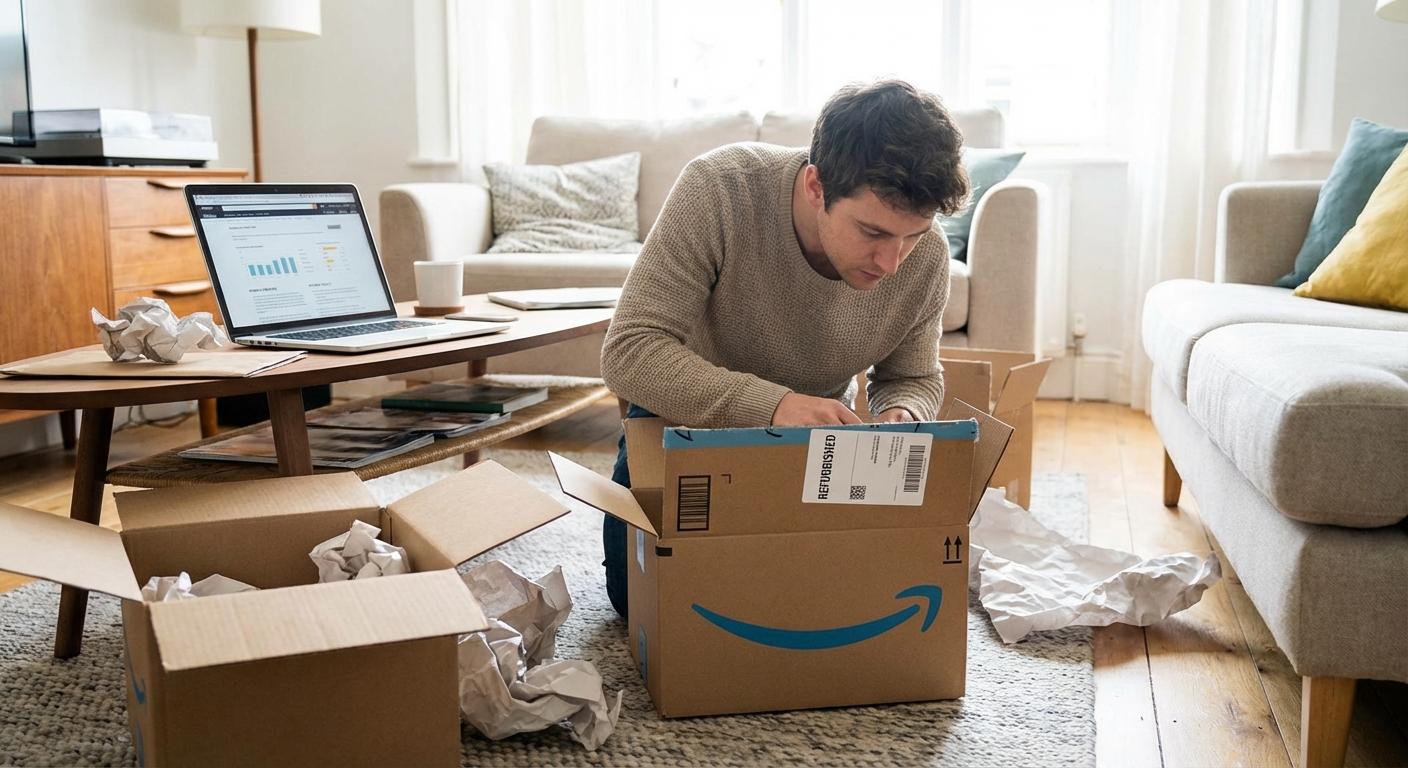
- Repackaging as “Used – Like New” or “Open Box”
- Sending to Amazon Warehouse Deals
- Liquidating in bulk to third-party resellers (pallets of returns)
- Recycling or disposing when the item isn’t worth fixing
Amazon’s own financial reports show just how huge this is. In early 2024, Amazon said customers returned over 2 billion items in 2023, with returns heavily spiking after the holidays. Industry-wide, the National Retail Federation estimated that $743 billion in merchandise was returned in 2023, with e‑commerce return rates usually two to three times higher than in-store.
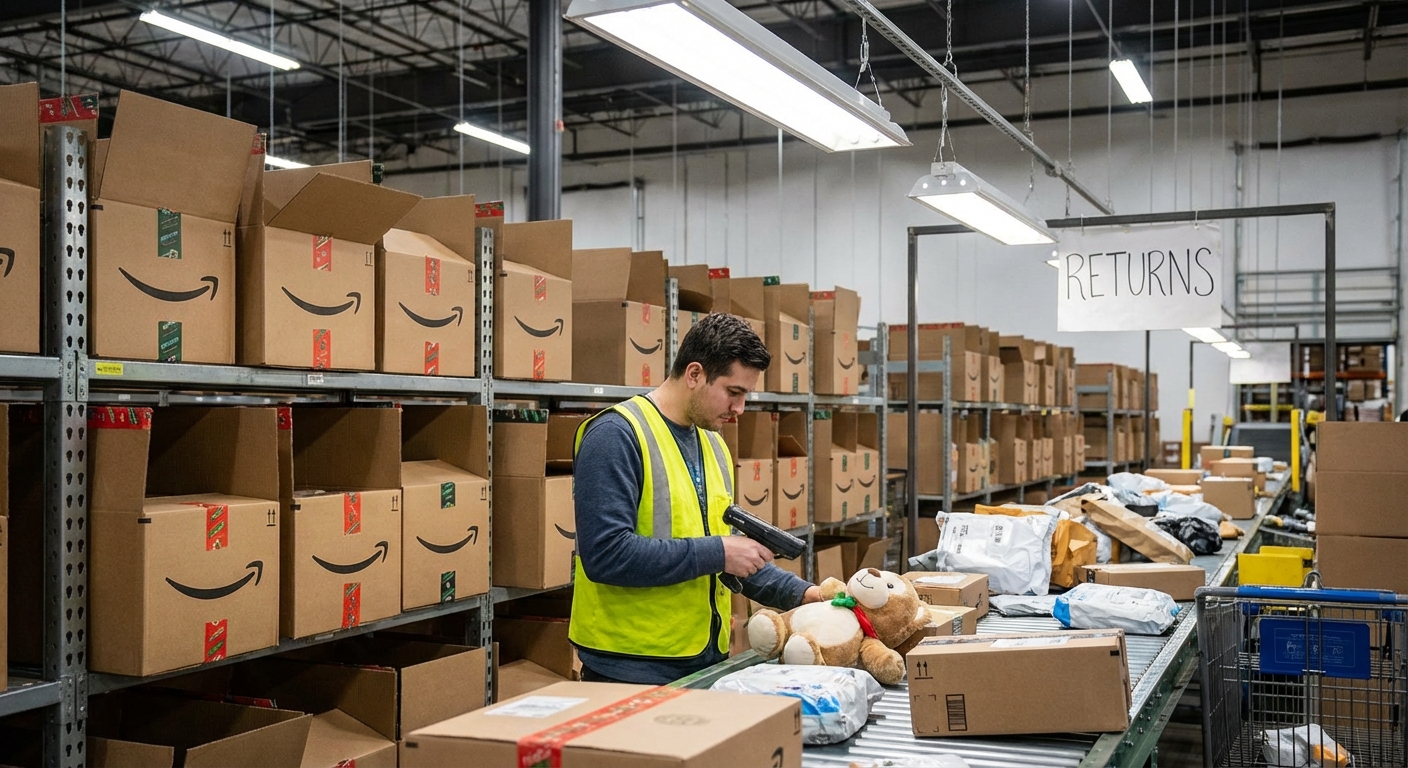
So yeah, your cousin’s unwanted air fryer is statistically very much not alone.
Where the Deals Actually Show Up
In my experience, if you’re hunting for discounted returned Christmas items on Amazon, you’ll mostly run into them in three places.
1. Amazon Warehouse (The Insider Goldmine)
I stumbled into Amazon Warehouse years ago while shopping for a camera lens. The new one was over $500; the Warehouse version was around $360, listed as “Used – Very Good” with “small cosmetic imperfections on the body.” I risked it. When it arrived, I seriously had to squint to see the “imperfection.” That lens is still my workhorse.
You can find Amazon Warehouse by:
- Going to amazon.com/warehousedeals (or searching “Amazon Warehouse” in the search bar)
- Filtering by category (Electronics, Home, Toys, etc.)
- Looking at the condition labels:
- Used – Like New: Usually just an opened box
- Used – Very Good: Minor cosmetic marks, complete
- Used – Good: Some wear, maybe a repackaged box
- Used – Acceptable: Heavier wear, older units, or missing something
Around Christmas and especially early January, I’ve seen:
- Toys 30–60% off
- Small kitchen appliances 25–50% off
- Headphones and speakers 20–40% off
The key is that many of these come from holiday returns, either because someone didn’t like the gift, got a duplicate, or simply changed their mind.
2. “Used & New From…” Listings on Product Pages
When I tested this on random gift-y products — like LEGO sets and instant cameras — I noticed a little link under the Buy Now button: “Used & new from $X.XX”.
Those links often reveal:
- Amazon Warehouse offers
- Third‑party used items
- Open-box returns
If you’re buying something that isn’t super personal (think: tools, toys, tech accessories), that section can easily shave 10–40% off the price… with almost no downside if you read the description carefully.
3. Third-Party Liquidation and Resale
A lot of Christmas returns are sold off in huge pallets to liquidation companies, who then:
- Resell them on Amazon
- List them on eBay or other marketplaces
- Open discount or bin stores locally
I’ve literally spotted an item that I returned to Amazon pop up later on a completely different website, marked as “open box” with a discount.
If you’ve ever visited one of those chaotic local “bin stores” where everything is $5 or $10 on certain days — a good chunk of that inventory is ex-Amazon Christmas returns.
Pros of Shopping Returned Amazon Christmas Items
When I intentionally switched part of my post-holiday shopping to returned items, a few benefits became obvious.
1. Big Savings Without Sketchy Vibes
Most of the returned items I’ve bought have been:
- Functionally identical to new
- Just missing the plastic wrap or fancy retail packaging
Paying 30% less because someone else tore the shrink wrap on a board game? I’ll take it.
2. Less Waste, Slightly Better Conscience
Return logistics are brutal on the environment — extra shipping, repackaging, and sometimes outright disposal. The U.S. Environmental Protection Agency has highlighted the enormous volume of packaging and product waste generated by online retail.
Buying from Warehouse or open-box channels means one more item gets used rather than landfilled or shredded. It’s not world-saving, but it’s better than nothing.
3. Surprisingly Good Protections
In my experience, this is where people underestimate Amazon. On most Warehouse deals I’ve bought:
- I’ve had the same 30‑day return window as new items
- Refunds have been just as fast
Amazon explicitly says Warehouse items are eligible for returns (unless labeled otherwise), and I’ve successfully returned a mis-described “very good” blender that looked like it survived a smoothie war.
The Downsides No One Likes to Admit
To be fair, it’s not all win.
1. Condition Descriptions Aren’t Perfect
I’ve had:
- A “Like New” item show up pristine
- A “Very Good” item arrive with a noticeable ding
The grading is done by humans (and some automation), and the consistency varies. If you’re picky about aesthetics, stick to “Like New” or be mentally ready to return.
2. Missing Accessories Can Be a Pain
This one’s real. I once bought a “Used – Good” monitor that showed up without the stand. Totally functional, but not if you don’t have a VESA mount.
Now I:
- Read the condition note line by line
- Watch for phrases like “missing manual,” “may be missing cables,” or “repackaged box”
Sometimes the discount is worth buying the missing cable separately; sometimes it’s not.
3. Limited Quantities and No Guarantee
Returned Christmas items are one-off opportunities. When it’s gone, it’s gone.
I’ve added Warehouse deals to my cart, hesitated a day, and watched them vanish. You can’t always wait for a “better” discount the way you might with regular pricing cycles.
Timing: When Returned Christmas Items Hit Hardest
Here’s what I’ve noticed across several years of obsessive price-watching and a somewhat embarrassing number of orders.
- Dec 26 – Jan 5: Items start trickling in
- Jan 5 – Jan 20: This is the sweet spot; lots of returns processed, lots of Warehouse listings
- Late January – February: Slows down but still solid
Retail data backs this up. UPS has dubbed the first week of January “National Returns Week”, and carriers handle tens of millions of return packages in just a few days. Those boxes eventually become the deals you see a week or two later.
If you got Amazon gift cards for Christmas, using them in early to mid‑January on Warehouse or open-box deals is usually more powerful than rushing to spend them before Christmas.
How I Shop Returned Amazon Items Without Regrets
Here’s the simple framework I use now.
- Start on the normal product page. Check full price, reviews, and model/version.
- Click “Used & new from…” and scan for Amazon Warehouse as the seller.
- Compare savings vs hassle. For big-ticket items, I usually want at least 20% off to justify going used.
- Read the notes carefully. Anything like “Significant cosmetic damage” is usually a skip unless it’s for a workshop or garage.
- Screenshot the listing. If condition doesn’t match the description, I reference this during a return.
- Test quickly once it arrives. I never let Warehouse items sit unopened past a few days; I want time to return.
When I follow that, my “regret rate” on returned/used items has been under 10%, and every regret has been fixable with a return.
When You Should Not Buy Returned Amazon Items
From my experience and from talking with friends who are less comfortable with risk, there are a few categories where I usually stick to new:
- Car seats, helmets, and safety gear – You can’t see internal damage
- Medical devices that contact your body (e.g., CPAP machines, certain monitors) unless professionally refurbished
- Highly giftable items for people who care about presentation – Some recipients really do care about a pristine box
For almost everything else — laptops, tablets, tools, coffee makers, toys — I’m very happy to roll the dice if the discount is right.
Final Take: Is It Worth Chasing Returned Amazon Christmas Sales?
If you’re willing to:
- Read condition notes
- Accept the occasional return
- Be flexible about box perfection
…then shopping returned Amazon Christmas items — especially via Amazon Warehouse — is one of the most underrated ways to stretch your money post‑holiday.
In my experience, the best wins have been:
- High-end products I couldn’t justify at full price
- Duplicates of items I already know I like (extra Echo, extra controller)
- “Nice to have” upgrades I’d never pay retail for
You’re essentially letting other people’s return habits subsidize your wish list. And once you see how many “used” items arrive looking nearly new, it gets very hard to go back to paying full price unless you truly need that sealed-box feeling.
Sources
- National Retail Federation – 2023 Consumer Returns in the Retail Industry - Data on U.S. return rates and value
- Amazon – About Amazon: Returns and Recommerce Programs - Overview of how Amazon handles returns, refurbishing, and resale
- UPS – National Returns Day Press Release - Insight into post-holiday return volumes and timing
- U.S. Environmental Protection Agency – Facts and Figures about Materials, Waste and Recycling - Broader context on waste from consumer goods and packaging
- Harvard Business Review – Retailers Are Squandering Their Best Opportunity to Learn from Returns - Analysis of the retail returns ecosystem and its implications