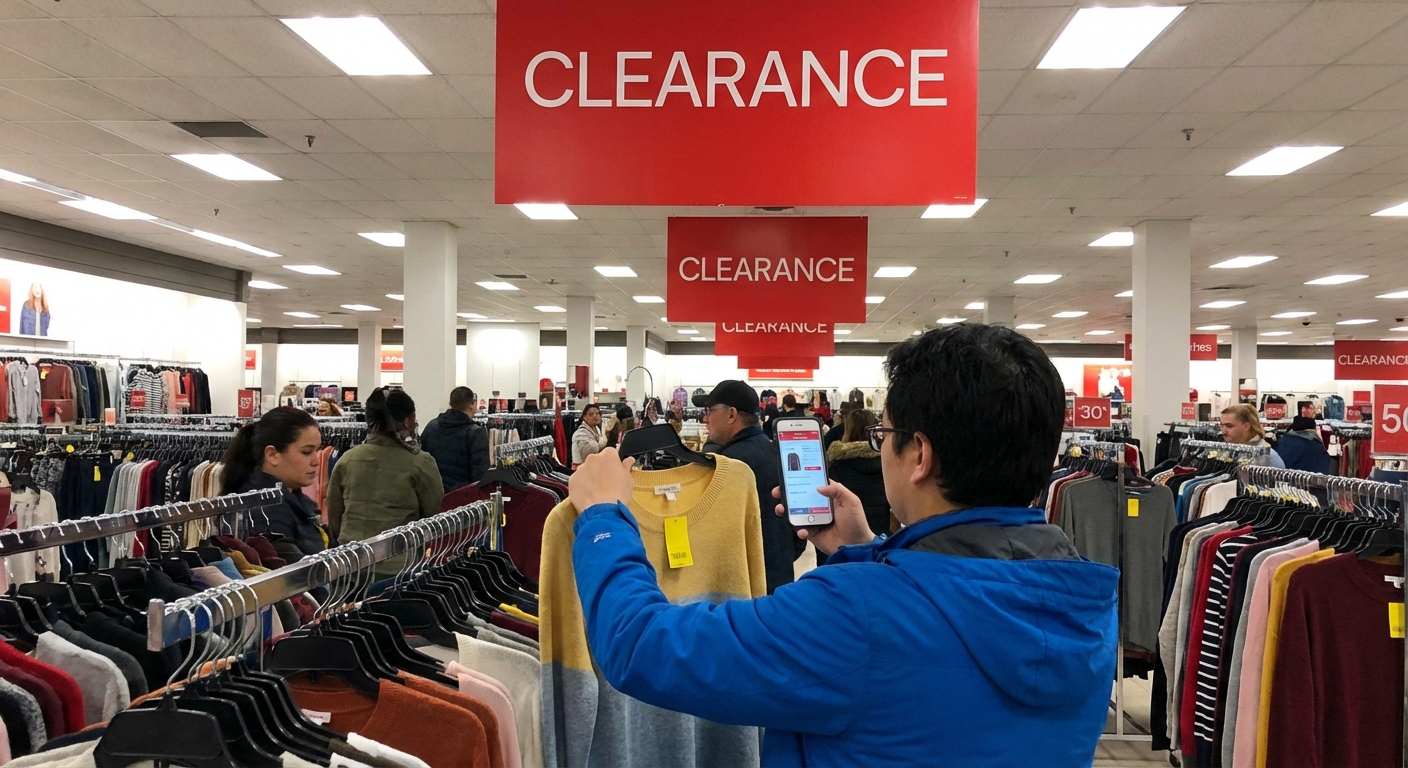
JCPenney Clearance Buying Guide
lly scored a $9.97 Liz Claiborne blazer that had originally been tagged at $89. And it wasn’t a fluke.
That one find turned into a full-on hobby. I started tracking markdown patterns, comparing in-store vs. online clearance, and even chatting with associates about how the system actually works. This guide is everything I’ve learned the hard way—so you don’t have to.
How JCPenney Clearance Actually Works
When I first started paying attention, I assumed “clearance” was just one flat discount. Nope. JCPenney runs layered markdowns that get progressively more aggressive.
From my experience and a lot of receipt-studying, here’s the basic markdown lifecycle for many items:
- Initial promo – Item goes on sale (often 20–40% off MSRP). Not clearance yet.
- First clearance cut – Marked as clearance, usually around 50–60% off.
- Deeper clearance – You’ll see prices drop further, often into the 70–80% off range.
- Final markdown / liquidation – Random-looking numbers like $3.97, $5.97, $9.97. This is often the last stop before the item disappears.
When I tested this over a month on a pair of Worthington work pants, the tag went from $44 (full price) to $26.40 (promo), then $17.99 (first clearance), and finally $9.97 before it vanished from the rack entirely.
JCPenney itself has publicly emphasized its focus on “value pricing” and promotions. In its 2023 statements, the company talked about re-anchoring the brand around deals and affordability, which lines up with what I’ve seen on the ground.
Decoding JCPenney Price Tags (The Fun Part)
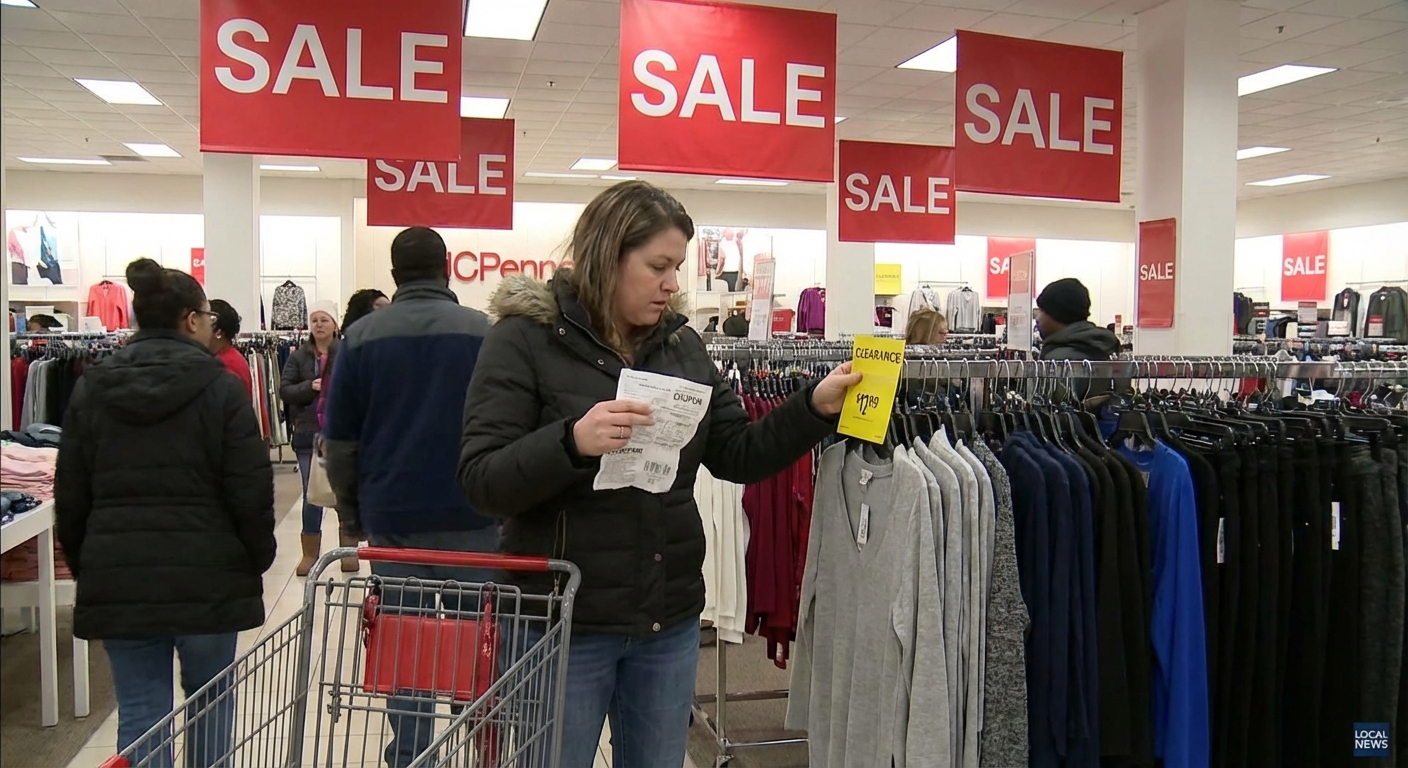
One of the first things I learned: the magic is in the numbers.
In my experience shopping multiple locations:
- Tags ending in .00 or .99 – Usually regular price or standard sale.
- Tags ending in .49 or .79 – Often mid-level markdowns.
- Tags ending in .97 – This is where I pay attention. These are often final or near-final markdowns.
When I tested this over a few weeks, I kept screenshots of the online prices and compared them to in-store tags. Almost every time I saw a .97 tag, I never saw that item get marked down again in that store. Sometimes it disappeared entirely the following week.
That doesn’t mean every .97 item is perfect. I’ve bought a $7.97 top that pilled after three washes. But if I’m already on the fence about an item and see that .97, I know I probably won’t get another shot at it in that size and color.
Best Times to Hit JCPenney Clearance
I asked three different associates at two different JCPenneys (yes, I’m that person) about when they mark things down. They all gave versions of the same answer: markdowns tend to cluster.
Weekly rhythm
In my experience:
- Midweek (Tuesday–Thursday) is when I most often see fresh markdown stickers. Many stores do price changes early in the week, though it can vary by location.
- Mornings are gold if you can swing it. The racks are neater, and I’m not fighting through crammed hangers.
Monthly & seasonal patterns
Here’s when I’ve found the best clearance:
- End of season – After big events like back-to-school, Black Friday, and post-Christmas, clearance ramps up. Winter coats and boots usually tank in price in January/February; swimwear and summer dresses get serious cuts in August/September.
- Holiday weekends – JCPenney often stacks extra discounts (like an additional 20–25% off) on top of clearance during major holiday promos. I’ve combined a .97 final markdown with an extra percent-off coupon more than once.
JCPenney’s own promotional calendars and weekly ads (on their site and app) usually hint at these events, and I’ve learned to time my bigger hauls accordingly.
Stacking Deals Without Losing Your Mind
When I tested different combinations of offers, I realized not all discounts are created equal.
Coupons vs. clearance
JCPenney is known for coupons, but they don’t always apply to clearance. You’ll often see fine print like “excludes select brands and clearance.” That said, I’ve seen plenty of:
- Extra % off clearance events (e.g., “Extra 20% off clearance with coupon or JCPenney credit card”).
- Dollar-off coupons (like $10 off $50) that apply even when part of your cart is clearance.
Pro tip from my own receipt experiments: when you use a dollar-off coupon on a mix of full-price and clearance items, the discount usually spreads across items proportionally. That can make a clearance item ridiculously cheap per line item.
Rewards and the JCPenney card
I’m picky about store cards, so I waited and watched before applying. What I’ve seen:
- JCPenney Rewards (free program) gives you points on purchases that convert into reward certificates. Those often work on clearance.
- JCPenney credit card occasionally unlocks extra clearance stackers—think “extra 30% off select clearance with your card.”
The big downside: high interest rates. For me, any savings evaporate if you’re carrying a balance. I use the card only when I know I’ll pay it off immediately. If you’re not that type of person, the rewards probably aren’t worth the mental overhead.
In-Store vs. Online Clearance: Where the Real Deals Hide
When I tested prices side by side, I was surprised by how often in-store beat online, and vice versa. JCPenney’s systems don’t always sync perfectly.
In-store clearance perks
From my trips across three different locations:
- I regularly find $3–$7 items that are still listed at $15–$20 online.
- Local stores sometimes markdown based on regional demand. For example, I found heavy winter coats on deep clearance in March in a warmer state, while they were still higher-priced online.
- You can inspect quality: stitching, fabric feel, zipper performance. I’ve skipped more than one too-good-to-be-true deal after giving it a tug-test.
Online clearance advantages
On the flip side, when I combed through jcpenney.com:
- There’s way more size and color variety, especially in plus, tall, and petite.
- You’ll see online-only promotions, like extra percent-off clearance codes or free shipping thresholds.
- The “Clearance” filter + sorting by “Lowest Price” has become my time-saver.
What I do most now: find something in person, then quickly check the JCPenney app or site in the aisle. I’ve had times where the online price was actually lower—and the associate price-matched it when I showed them.
What’s Actually Worth Buying on Clearance (and What I Skip)
Not all clearance is created equal. After a few fails (looking at you, see-through leggings), I built some personal rules.
Consistently good bets
In my experience, these have performed well even at rock-bottom prices:
- Men’s dress shirts and ties – Especially from Stafford and JF J. Ferrar. I’ve gotten $60 shirts for under $15 that held up for years.
- Kids’ basics – T-shirts, leggings, pajamas. Kids outgrow stuff so fast that clearance is perfect for “play clothes” and backup outfits.
- Home goods – Towels, sheets, small kitchen items. JCPenney’s home section, especially brands like JCPenney Home, hits a nice quality-for-price sweet spot.
- Seasonal décor – Holiday decorations, throw pillows, table runners. I stock up for next year when everything hits 70–80% off.
Stuff I’m more cautious about
From painful personal experience:
- Dress shoes – I’ve had mixed luck. Some felt great in store and then destroyed my feet after 3 hours. On final clearance, there’s usually no size exchange.
- Super-trendy pieces – If it’s very “of the moment,” I only buy it clearance if I already know how I’ll style it. Otherwise it sits in my closet.
- Low-price electronics and gadgets – The return window can be limited, and some of these are off-brand or seasonal imports.
Balanced view: clearance is amazing for experimentation, but I don’t treat it like free money. I still try things on, check fabric content (more cotton, less mystery polyester for me), and imagine at least three outfits I can build with the item.
Red Flags: When to Walk Away From a “Deal”
Clearance can trigger this weird psychological thing: fear of missing out. When I tested my own behavior, I realized I was more likely to rationalize a mediocre item if it had a red sticker.
Now I watch for these red flags:
- Damaged with no additional discount – Missing buttons, broken zippers, makeup stains. Some stores will markdown damaged goods further if you ask nicely, but if they don’t, I usually leave it.
- Weird fit even after adjustments – If I’m convincing myself I’ll “just wear a belt” or “only wear it with a jacket,” I put it back.
- Fabric that feels cheap or scratchy – I’ve learned that if it doesn’t feel good in the store, it won’t magically feel better at home.
- No returns allowed – Some clearance is marked “final sale.” JCPenney’s general policy does allow returns on most clearance items within their standard window, but I always double-check the receipt and signs at the register.
A good deal isn’t just a low price; it’s cost per wear. A $10 shirt you wear once is more expensive than a $30 shirt you wear 20 times.
Smart Strategies I Actually Use Now
Here’s how I shop JCPenney clearance today, after a lot of trial and error:
- I scan first, dig second. I walk the clearance section once quickly to spot standout pieces, then circle back to really dig through.
- I check tags and the app. I look for .97 endings and then compare in-store vs. online price in the app. I’ve saved an extra few bucks this way more than once.
- I set mental rules. For clothing, if I can’t imagine 3 outfits or 2 occasions to wear it, I pass—no matter how cheap.
- I keep a “needs” list. When I tested this, it cut my impulse buys massively. If I know I need black work pants and new towels, I laser-focus on those.
- I’m honest about returns. If the item is final sale or I know I’m bad about returning things, I treat it like a non-returnable purchase and think twice.
Clearance is where JCPenney hides some of its best values, but the real power is combining that with your own filters and a bit of insider knowledge.
When I stopped treating clearance like a chaotic bargain bin and started treating it like a pricing system to decode, my wardrobe got better, my home got nicer, and my budget didn’t scream at me.
Sources
- JCPenney Official Website – Clearance Section - Current clearance offerings and pricing patterns
- JCPenney Return Policy - Details on returns and exchanges, including clearance
- Forbes – How Department Stores Are Reinventing Themselves - Context on department store pricing and promotional strategies
- Harvard Business Review – The Psychology Behind Irrational Consumer Behavior - Explains why deep discounts and “free” deals influence our decisions
- Consumer.gov – Shopping for Bargains - Government tips on spotting real vs. fake deals