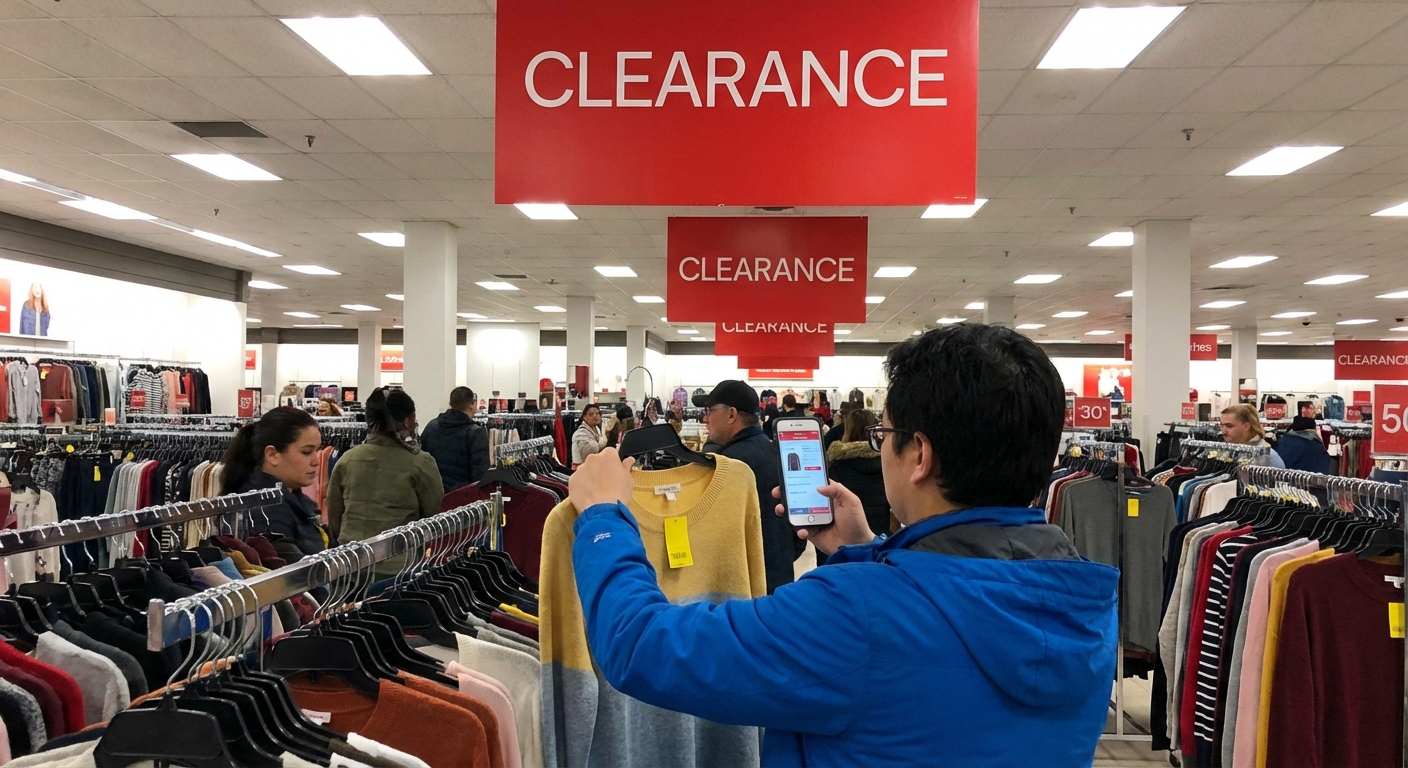
JCPenney Clearance Deals and Smart Shopping Guide
A few months ago, I walked into my local JCPenney just to “kill 10 minutes” before meeting a friend. Forty minutes later I was at the register with a $90 winter coat… for $18. When the cashier told me the final price after stacked discounts, I actually asked her to repeat it. Twice.
That moment sent me down a rabbit hole of figuring out how JCPenney’s clearance system really works — both in-store and online — and how to time things so you’re not just saving a little, you’re absolutely squeezing every drop out of their markdowns.
This is the guide I wish I had before I started testing all of this.
How JCPenney Clearance Actually Works (Behind the Scenes)
When I started paying attention to tags instead of just colors and logos, JCPenney’s clearance suddenly made sense.
Markdown cycles I’ve seen in-store
In my experience, most apparel at JCPenney goes through multiple markdown phases:
- Initial markdown – Usually 25–40% off regular price.
- Promotional clearance – 50–60% off, often combined with temporary promos.
- Deep clearance – 70–80% off, sometimes more with extra coupons.
That $90 coat I grabbed? It had a regular price tag, a red clearance sticker, and then another tiny yellow sticker on top. The barcode stayed the same, but the system recognized the newest price.
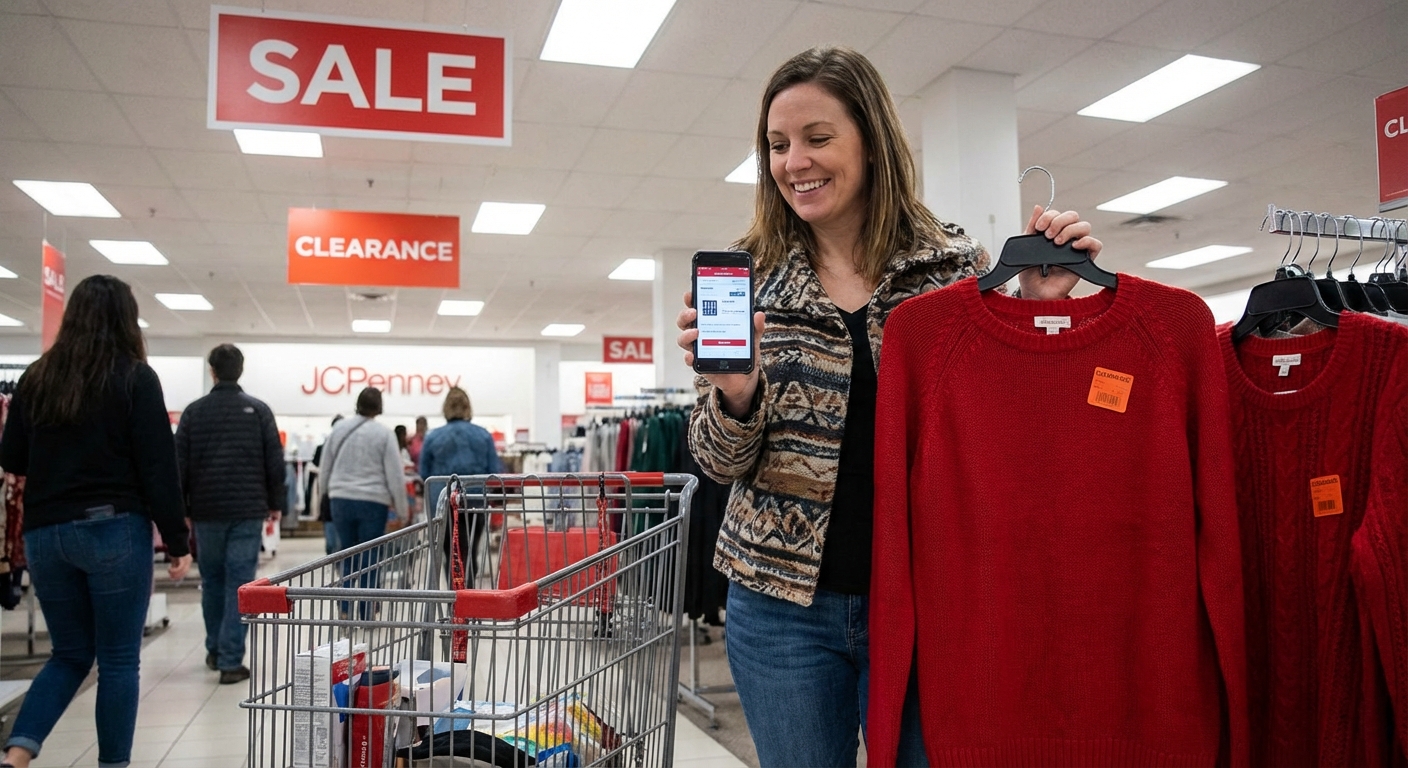
From talking with two different associates (yes, I asked), they both said their store typically:
- Marks down seasonal apparel every 4–6 weeks
- Pushes final markdowns on seasonal items close to the change of season (think winter coats in late February/early March, swimwear in late August)
It’s not perfectly uniform nationwide, but the pattern is real. JCPenney’s own earnings reports and press releases over the years mention “inventory optimization” and “clearance initiatives” as part of their strategy, which lines up with what I’ve seen on the floor.
Clear Signs You’re Looking at the Deepest Markdown
I used to just scan for red stickers and hope for the best. Now I look at three clues:
1. Tag style and color codes
- Red clearance stickers usually mean standard markdown.
- Extra small yellow stickers (often placed on top) tend to be deeper, sometimes “last call” pricing.
- Some stores add a “Final Sale” label on racks when they’re really trying to clear space.
It’s not published policy, but after a few months of comparing tags, patterns emerged.
2. Price ending patterns
When I tested this across a couple of JCPenney locations and online, I noticed:
- Prices ending in .99 or .00 are often regular or promo.
- Prices ending in .97 or .49 have frequently been final or near-final markdowns.
It’s not 100% guaranteed, but in my experience, those .97 tags rarely drop much further.
3. Rack signage
I’ve learned to take the time to read the actual rack sign, not just the big number.
“Up to 80% off clearance” sounds great, but the tiny print sometimes says “select items only.” I’ve had employees confirm that only some SKUs hit the max discount, so I always scan a few different pieces at the price checker.
The Online Clearance Game: Hidden Deals and Filters
I used to think in-store clearance was always better. Then I started digging into JCPenney.com’s clearance section with filters, and things changed.
Here’s what’s worked consistently for me:
Use the right filters
On JCPenney’s website, I:
- Go to Sale & Clearance → Clearance
- Filter by Discount and choose 60%+ off
- Sort by Price: Low to High
- Then layer Brand or Size so I’m not scrolling forever
When I tested this method, I was finding $40–$60 tops in the $6–$10 range regularly. The key is skipping the top of the page and going straight to the deepest discount filters.
Online vs in-store pricing (they don’t always match)
More than once, I’ve scanned an item in-store with the JCPenney app and found:
- Online price lower than the in-store clearance sticker
- Or vice versa
In my experience, if the online price is lower, some stores will price match, but not all. There’s no universal policy for all clearance, and staff told me it’s manager-discretion. That’s one of the limitations here—you can’t fully rely on it.
Still, I always:
- Check the online price before paying
- Politely ask at customer service if they’ll honor it for that specific item
Worst case, I just order it online for pickup and skip the argument.
Best Times of Year to Hit JCPenney Clearance
After about a year of tracking my own purchases and deals, some clear patterns popped up.
Seasonal changeovers
In my experience, the biggest clearance drops tend to cluster around:
- Late January–February – winter apparel, boots, cold-weather accessories
- Late April–May – heavier spring collections
- Late July–August – swimwear, summer dresses, sandals
- Late October–November – fall fashion, some home goods
JCPenney has publicly discussed aligning inventory with seasonal demand in past financial disclosures, which matches these timing shifts.
Major holiday weekends
I’ve consistently seen extra clearance promos layered on:
- Presidents Day
- Memorial Day
- Labor Day
- Black Friday / Cyber Week
On those weekends, you’ll often see clearance plus extra 20–30% off coupons (with exclusions, of course), so your $18 coat suddenly becomes $14… or less.
Stacking Savings: Coupons, Rewards, and Store Hacks
I’m not a full-time couponer, but JCPenney makes stacking discounts shockingly doable when you know what to look for.
1. JCPenney Rewards (actually decent if you shop semi-regularly)
When I tested their rewards program over a few months:
- I earned $10 rewards relatively quickly just from clearance purchases.
- Points appeared within a few days of purchase.
- I was able to stack rewards on clearance most of the time.
The catch: some promotions are “after all discounts” or exclude certain brands. I’ve had one instance where a reward wouldn’t apply to a heavily marked-down brand-name item.
2. Coupons that apply to clearance
JCPenney often runs:
- Percent-off total purchase coupons
- Dollar-off threshold coupons (like $10 off $50)
Not all work on clearance, but many do. The specific wording matters a lot.
My rule now:
- If the coupon says “excludes clearance”, I don’t argue.
- If it doesn’t mention clearance specifically, I politely ask the cashier to try it.
I’ve had coupons apply to 70–80% off clearance more often than not.
3. Price checkers and scanners
Here’s a tiny thing that’s saved me real money: I always scan items at the in-store price checker or app.
At least 3–4 times, I’ve found:
- Rack sign says “50% off”
- Scanner shows it’s actually 70–80% off
That’s how I found a $60 men’s dress shirt for $7.97. The tag still showed the older markdown; the system didn’t.
Pros and Cons of Hunting JCPenney Clearance
I’m pretty enthusiastic about the deals, but it’s not all perfect.
What I love
- Insane value when timed right – I routinely pay thrift-store prices for brand new items.
- Stacking potential – Clearance + rewards + coupons can feel a bit like legal cheating.
- Quality vs price – Some of JCPenney’s private labels (like St. John’s Bay, a.n.a, and Liz Claiborne) hold up surprisingly well.
What drives me a little crazy
- Inconsistent selection – Sizes and colors can be all over the place, especially in-store.
- Regional differences – What’s on clearance in one store might be full price in another.
- Coupon fine print – Some exclusions feel like a puzzle you need a law degree to decode.
Also, there’s the obvious risk: buying something just because it’s cheap. I’ve done it; one pair of “but they’re only $8!” shoes lived in my closet for a year before getting donated.
Smart Strategy: How I Shop JCPenney Clearance Now
Here’s the approach that’s consistently worked for me, boiled down.
- Make a list first. I decide what I actually need (e.g., “black work pants, kids’ jeans, guest towels”) before going.
- Hit clearance with a system. I go by department, scan quickly for my sizes and brands I trust, and don’t get sucked into every rack.
- Scan suspiciously cheap items. If the deal looks good, I check the scanner or app because it might be even better.
- Check the app at the register. I quickly look for:
- Active coupons
- Lower online prices for the same SKU
- Only buy what passes the “full price” test. I ask myself: “Would I seriously consider this at full price?” If the answer is hard no, I put it back, no matter how wild the discount is.
When I follow my own rules, I end up with:
- Fewer regret purchases
- Closet full of pieces I actually wear
- Receipt totals that make me weirdly proud
When JCPenney Clearance Isn’t the Best Option
For balance: I don’t think JCPenney wins every category.
From my own comparisons:
- Ultra-fast fashion basics – Some online-only retailers beat JCPenney on super cheap tees or leggings, though often with weaker fabric quality.
- Niche outdoor gear – Dedicated outdoor brands or outlets tend to have better tech features for serious hiking or snow sports.
- Premium designer labels – Department store outlets or off-price chains sometimes carry higher-end labels at similar or lower prices.
But for mid-range, everyday clothing, home items, and decent brands at clearance pricing, JCPenney has become one of my go-tos.
The trick is not treating it like a random treasure hunt, but more like a game you actually know how to play.
If you start noticing markdown cycles, tag patterns, and how your local store moves inventory, you’ll see what I did: JCPenney clearance isn’t just “a sale,” it’s basically a slow-moving algorithm you can learn to read.
Sources
- JCPenney Official Website – Rewards and Offers - Details on rewards structure, coupons, and promotions
- U.S. Securities and Exchange Commission – J.C. Penney Company, Inc. Filings - Company reports discussing inventory and merchandising strategies
- Forbes – How Department Stores Are Rethinking Inventory - Context on markdowns and inventory optimization in department stores
- CNN Business – The State of Department Stores - Background on department store trends and clearance dynamics
- Harvard Business Review – Retail Markdown Optimization - Insight into how retailers plan markdown cycles and pricing