Junk Drawer Gadgets Explained
You know the one. Half tape dispenser, half archaeological dig.
When I finally decided to tame my own junk drawer, I thought I’d just be tossing dried-up pens and mystery keys. Instead, I stumbled into a weirdly fascinating category: junk drawer gadgets—those tiny tools and gizmos that live in chaos but quietly save our butts.
I started pulling everything out and realized a pattern: a lot of these “random” items actually fall into a few useful families. Once I understood what each gadget really does (and which ones are pure clutter), my junk drawer went from shame zone to secret home toolkit.
Here’s what I’ve learned, tested, and low-key obsessed over.
The Hidden Power of the Junk Drawer
When I tested this idea on my own kitchen, I counted 37 items in my junk drawer. Only 14 did anything useful.
The rest? Duplicates, dead batteries, ancient coupons, and—no exaggeration—four half-used rolls of tape.
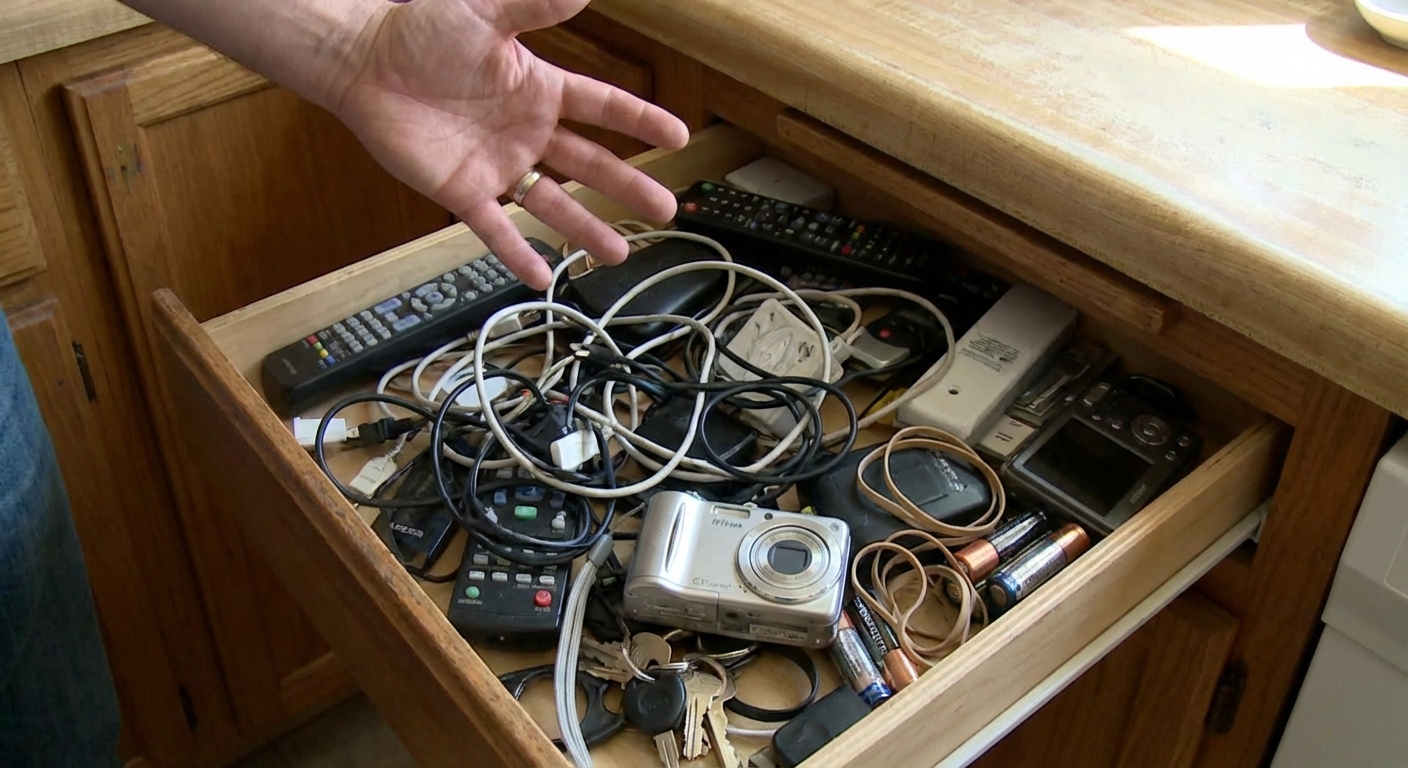
But those 14 useful things did the work of a mini hardware store:
- Quick home repairs
- Light-level electrical fixes (like swapping outlet covers)
- Package opening and box breaking-down
- Emergency battery swaps
- Measuring, marking, and hanging small stuff
Professional organizers talk about this constantly. The National Association of Productivity & Organizing Professionals (NAPO) actually recommends creating a “household command center” rather than a random stash, and the junk drawer is often their starting point.
I didn’t build a fancy command center, but I did turn my drawer into a deliberate toolkit, starting with the gadgets I kept reaching for.
Category 1: Cutting Gadgets (Not Just Scissors)
1. Mini Utility Knife
I used to open boxes with my nicest chef’s knife. Then one day I nicked the blade on a packing staple and felt like I’d committed a culinary crime.
I picked up a mini retractable utility knife and it hasn’t left my junk drawer since.
Why it earns its place:- Slices through shipping tape, clamshell packaging, and zip ties
- Retracts fully, which is safer if you’ve got kids or curious roommates
- Blades are cheap and replaceable
When I tested three different styles, the ones with a locking slide mechanism felt way safer than the “friction only” sliders that sneak back out on their own.
Watch-out: Don’t use it on surfaces you care about; it will scratch tables and countertops if you’re not careful.2. Precision Scissors
I recently discovered that those tiny embroidery-style scissors work way better than big kitchen scissors for small household stuff.
They’re perfect for:
- Trimming loose threads on throw pillows
- Cutting tags off new towels or blankets
- Snipping herbs when I don’t want to dig out the kitchen shears
In my experience, investing in one good pair of stainless steel scissors beats owning five dull, mystery pairs scattered everywhere.
Category 2: Micro Fix-It Tools
3. Mini Screwdriver Set
If you only upgrade one junk drawer gadget, make it this.
The amount of times a mini Phillips screwdriver has rescued me:
- Tightening loose cabinet door handles
- Opening battery compartments on kids’ toys
- Fixing the arm of my sunglasses before a vacation
I keep a 4-in-1 pocket screwdriver with two Phillips and two flathead tips. Electricians have been using these forever—Klein Tools and Wiha both make solid ones—and I totally get why.
Pro tip from painful experience: Don’t use a random butter knife as a screwdriver. The leverage is terrible, you’ll mangle screws, and you might twist the knife handle. I’ve ruined both hardware and cutlery that way.4. Micro Hex/Allen Keys
Those tiny L-shaped keys from IKEA and flat-pack furniture? I used to toss them.
Now I keep one small labeled bag with:
- 2–3 common metric hex keys
- 2–3 common imperial sizes
When I tested loosening a wobbly barstool, the exact same hex size from the original furniture kit saved me from replacing the whole thing.
If you really want to level up, compact folding hex key sets (like a pocketknife of Allen wrenches) live happily in a junk drawer and cover almost everything.
Category 3: Measuring, Marking & Hanging
5. Mini Tape Measure
The first time I tried to buy storage bins without measuring my shelves, I ended up living with a too-tall bin that wouldn’t fit anywhere for six months.
A 10- or 12-foot tape measure in the junk drawer fixes this forever.
I grab mine to:
- Check if a plant stand will fit under a window
- Measure wall space for frames
- Confirm if a new rug will clear a door swing
The U.S. Department of Energy even notes that correct measurements matter for things like weatherstripping and door sweeps, which can impact your energy efficiency and bills. That all starts with… actually having a tape measure handy.
6. Painter’s Tape & a Sharpie
This combo looks boring but functions like a temporary labeling system for your whole house.
When I tested this in a weekend declutter, painter’s tape and a Sharpie helped me:
- Mark which cords belonged to which device
- Label “fix later” items so I didn’t forget what was wrong
- Create temporary labels for bins in the pantry
Painter’s tape is low-tack, so it won’t rip paint or leave residue on containers. I’ve used it on glass, plastic, and finished wood with no drama.
Category 4: Power & Light Gadgets
7. Battery Basics (But Smarter)
I used to toss every loose battery into the drawer like a tiny metal lottery. Bad idea.
The U.S. Fire Administration warns that 9-volt batteries stored loosely with metal objects can actually cause fires if the terminals touch something conductive. Tossing them into the junk drawer with paper clips and keys is… not ideal.
Here’s what I do now:
- Keep 2–4 AA and 2–4 AAA batteries in their original packaging or a small battery case
- Tape terminals on 9V batteries that are waiting for recycling
- Don’t keep a giant hoard—just a “buffer supply”
I also picked up a $10 battery tester. When I tested my pile, roughly half the “dead” batteries still had usable charge. Now I check before I toss.
8. Compact Flashlight or Keychain Light
The power went out once while I was cooking, and the only flashlight I could find was on my phone—which was at 9% battery.
I moved a small LED flashlight into the junk drawer the next day. The difference is huge:
- Better beam for finding things in dark closets
- Saves your phone battery in outages
- Actually bright enough to check under appliances
The Department of Homeland Security’s Ready.gov site even recommends keeping flashlights in multiple home locations, not just one “emergency kit” you never touch.
Category 5: Tiny Household Heroes
9. Command Hooks & Adhesive Strips
I recently discovered I can solve about 30% of my minor house annoyances with adhesive hooks and strips instead of nails or screws.
They handle:
- Lightweight picture frames
- Oven mitts or aprons on the inside of pantry doors
- Charging cables on the side of a nightstand
I keep a small zip bag with:
- 2–4 medium hooks
- A few extra adhesive strips
When I tested different brands, the 3M Command brand really did remove cleaner than cheap no-name versions—which tended to leave residue or tear paint.
10. Felt Pads & Rubber Bumpers
If you’ve ever heard a cabinet door slam or felt a chair scrape loudly across hardwood, this one’s for you.
Furniture felt pads and peel-and-stick bumpers:
- Protect floors from scratches
- Quiet cabinet door slams
- Stabilize wonky picture frames
I slapped bumpers on the inside corners of my bathroom cabinet doors, and the difference in noise was ridiculous. It’s one of those “once you notice, you can’t un-notice” upgrades.
What To Toss (Or At Least Relocate)
As much as I love gadgets, not everything deserves junk drawer citizenship.
Based on my own decluttering experiments, I moved out or tossed:
- Old keys with unknown locks (I taped the few real ones to labeled index cards instead)
- Dried-out pens and almost-empty glue sticks
- Duplicate tools (three tape measures is a lifestyle choice, not a necessity)
- Super specialty items I used once a year (these live in a toolbox or craft bin now)
Professional organizer Lorie Marrero (author of The Clutter Diet) often talks about “setting a container boundary.” Your junk drawer is that boundary. If it’s full, something has to earn its way in or something else gets evicted.
How to Turn Your Junk Drawer into a Secret Weapon
Here’s what worked when I finally got mine under control:
- Empty the whole drawer. Yes, the whole chaotic pile.
- Group by function: cutting, fixing, measuring, power, hanging, misc.
- Decide what job your junk drawer should do. Quick fixes? Mail and keys? Both?
- Pick your essential gadgets (10–15 max).
- Use small containers (old food storage, shallow boxes) as dividers—no need for fancy organizers.
When I did this, I stopped buying duplicates because I actually knew what I owned. I also shaved minutes off annoying tasks—no more hunting for scissors, no more guessing on picture hanging.
And the best part? That drawer doesn’t feel like a guilty secret anymore. It’s just… my tiny, slightly chaotic, incredibly useful home command center.
If your junk drawer currently looks like a crime scene, don’t worry. Mine did too. But once you understand which gadgets actually pull their weight—and why—they turn from clutter into one of the most practical “rooms” in your house.
Sources
- Ready.gov – Build a Kit - Official U.S. government guidance on what emergency items to keep at home, including flashlights and batteries.
- U.S. Fire Administration – Battery Safety - Fire safety recommendations for storing and handling household batteries.
- NAPO (National Association of Productivity & Organizing Professionals) - Professional organizing tips and approaches to common clutter zones like junk drawers.
- 3M Command Brand – Damage-Free Hanging Solutions - Official site explaining proper use and removal of adhesive hooks and strips.
- U.S. Department of Energy – Weatherstripping - How accurate measuring supports effective weather sealing and energy savings.