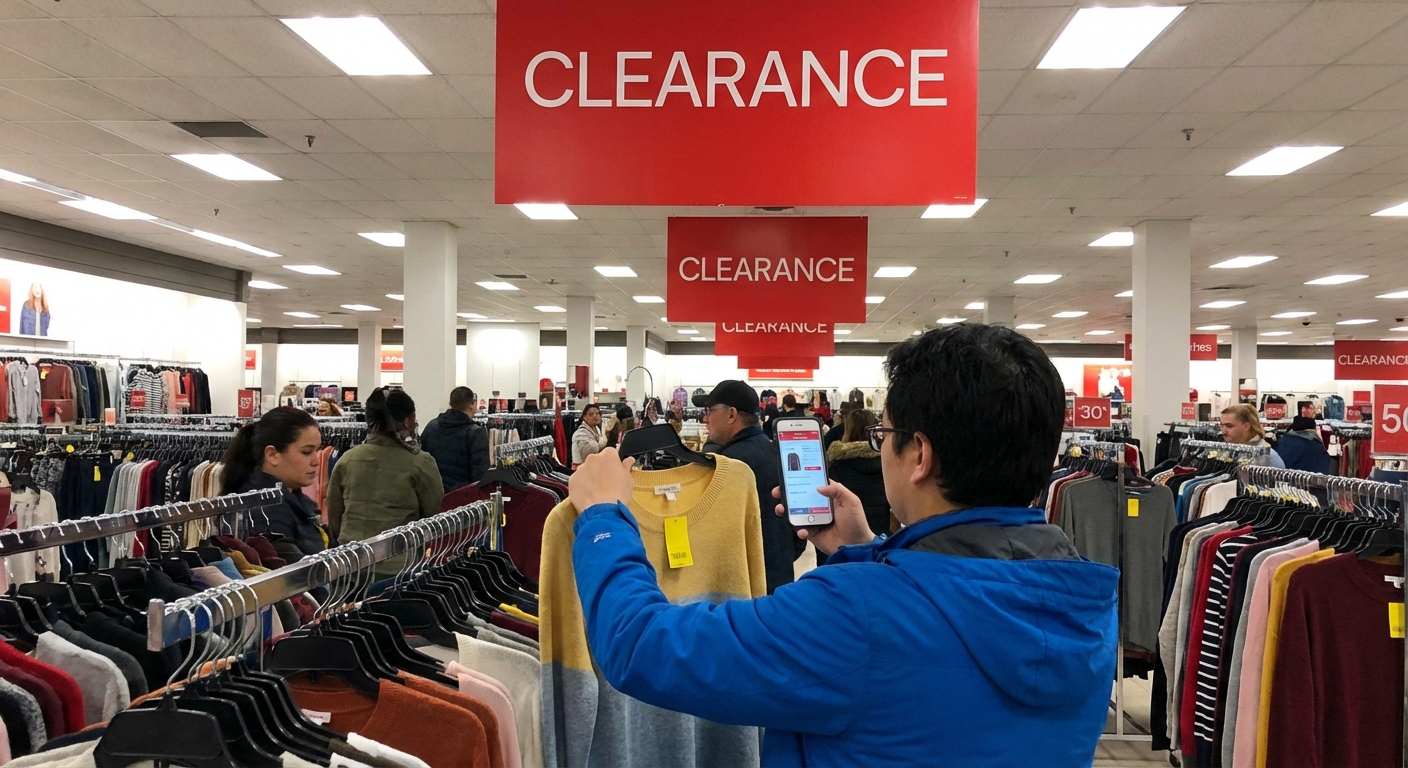
Kohl’s Jewelry Clearance Sale Guide
of a DoorDash order.
I’d stacked a yellow clearance tag with a promo code, Kohl’s Cash, and my Kohl’s Rewards… and the cashier laughed and said, “You basically stole this.” That was the day I decided to actually study Kohl’s jewelry clearance instead of just wandering in and hoping for the best.
This guide is everything I’ve learned from obsessively checking the jewelry cases, refreshing the app, and yes, occasionally standing in the aisle with a calculator like a total nerd.
How Kohl’s Jewelry Clearance Really Works
In my experience, Kohl’s jewelry pricing looks chaotic, but there’s a pattern under the madness.
The three basic price layers
When I started tracking tags and receipts, I noticed most clearance deals sit on top of three basic price layers:
- Regular price (MSRP) – The high, "department store" price you’ll rarely pay.
- Sale price – Regular promo sales like 40–60% off fine jewelry, often advertised in weekly ads.
- Clearance price – Yellow or red tags, usually 60–80% off the original price… before stacking extra discounts.
Then Kohl’s does the very Kohl’s thing: it lets you stack.
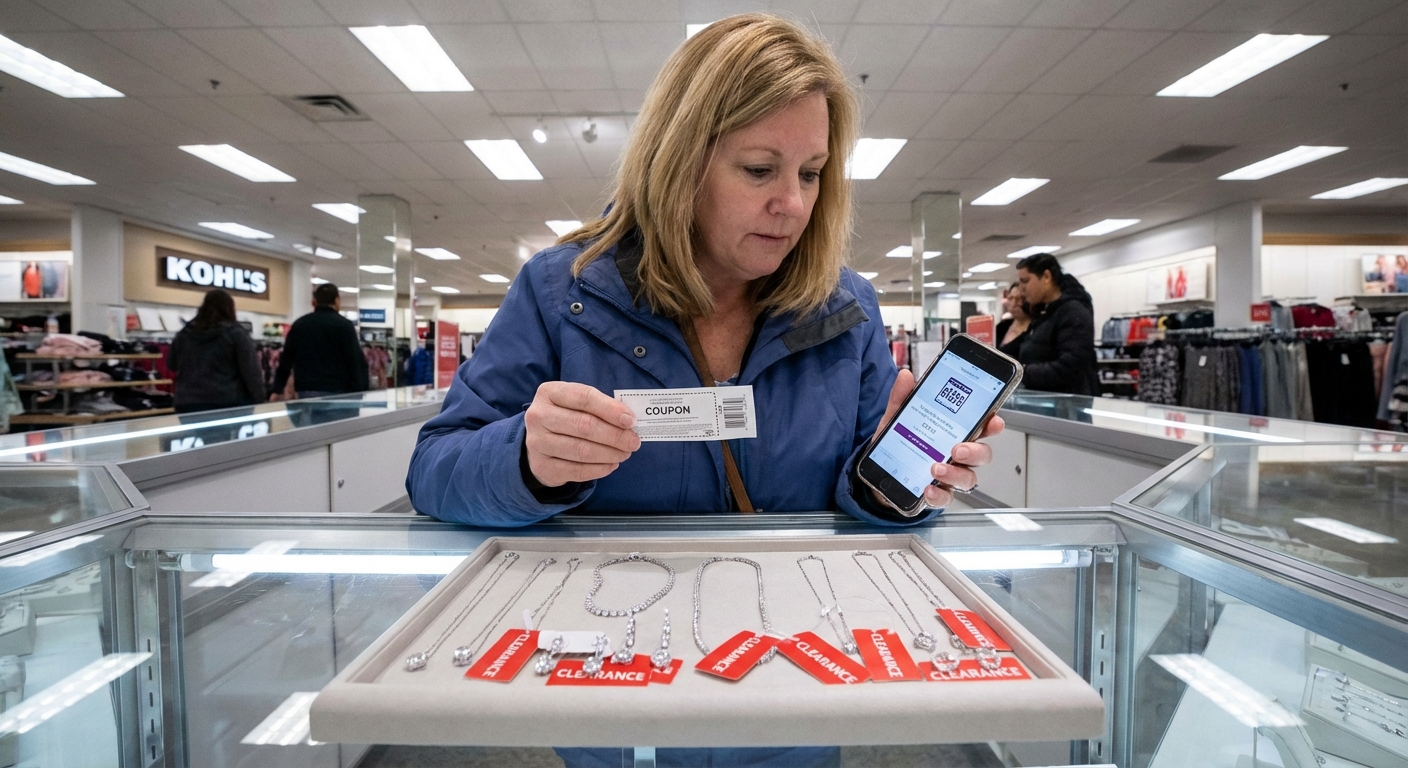
In one of my better hauls, I found a sterling silver necklace originally marked $120. It had a yellow clearance tag at $35.99. That day, I used:
- An extra 20% off mobile coupon
- $10 Kohl’s Cash from a previous clothing purchase
- Rewards applied automatically at checkout
My final out-of-pocket cost: about $14 plus tax.
I actually went home and checked the brand’s direct website, and the same piece was still listed close to the original MSRP.
When Kohl’s Does the Deepest Jewelry Markdowns
I started noticing that my craziest finds always happened around the same times of year.
1. Right after major holidays
When I tested going the week after these occasions, the jewelry clearance cases suddenly exploded:
- Valentine’s Day
- Mother’s Day
- Christmas/New Year
That’s when a lot of seasonal heart pendants, birthstone styles, and “Mom” pieces drop harder into clearance. Employees at two different stores casually confirmed this to me in early 2023 and 2024 when I asked.
2. End-of-season resets
I’ve had the best luck during:
- Late January / early February – Post-holiday reset
- Late July / August – Summer markdowns before back-to-school
- Late September / October – Pre–holiday assortment refresh
Kohl’s themselves mentions seasonal clearance rotations and assortment optimization in their investor discussions about inventory management and margin (see Kohl’s 10-K filings cited in business coverage by outlets like Forbes).
So if you only want to check occasionally, those are the windows I’d target.
How to Spot the Best Clearance Jewelry (Without Wasting an Hour)
When I first started digging through the cases, everything kind of looked shiny and confusing. Over time, I built a quick mental checklist.
Check the metal first
I’ve learned it’s way too easy to get blinded by sparkle and forget the basics.
I always look for:
- .925 or “sterling silver” stamped on the tag or piece
- 10k or 14k gold (not just “gold-tone” or “gold-plated”)
- Stainless steel for men’s pieces (surprisingly durable and low-maintenance)
If the tag only says “base metal,” “mixed metal,” or “fashion jewelry,” I treat it as short-term trendy, not long-term.
Use the barcode + Kohl’s app trick
One of the most useful things I discovered:
I started scanning the clearance tags with the Kohl’s app barcode scanner. Sometimes the in-system price is lower than the sticker. I’ve had a ring tag say $29.99, scan in the app as $17.99, and ring up at the lower price.
It doesn’t happen every time, but it’s worth the 10-second check.
Certification & stone info
Whenever I see diamonds or “genuine” gemstones on clearance, I look for:
- Carat total weight (ct. t.w.)
- Whether the gems are lab-created or natural
- Any notes about treated stones (heat-treated sapphires, etc.)
Kohl’s diamond and fine jewelry typically follow the same FTC jewelry marketing rules as other U.S. retailers, and they outline gemstone labeling standards on their site. Once I read up on basic diamond and gemstone terminology from reliable sources, I stopped overpaying for pieces that just looked fancy.
Stacking Discounts: Where the Magic (and the Math) Happens
If you’re going to hunt Kohl’s jewelry clearance, you have to understand how stacking actually works in practice.
What usually stacks on clearance jewelry
In my experience, this combo is the sweet spot:
- Yellow-tag clearance price as your base
- % off coupon (ex: 15–20% off, sometimes 30%) – but coupons sometimes exclude fine jewelry
- Kohl’s Cash – earned on prior purchases, usually $10 for every $50 spent during promo periods
- Kohl’s Rewards – 5% back in rewards value, which you can redeem later
One random Tuesday, I bought two clearance necklaces:
- Clearance subtotal: ~$52
- Extra 20% off coupon: –$10.40
- Kohl’s Cash: –$10
- Final pre-tax total: about $31.60
When I checked the original price on their tags, it totaled around $200.
The fine print that trips people up
Here’s where it’s not all sunshine and sparkles:
- Some promo codes exclude fine jewelry and prestige brands (I’ve had a 30% off coupon do absolutely nothing at checkout for a diamond bracelet.)
- Kohl’s Cash can’t be used on certain brands or categories during specific events.
- Not every clearance item is eligible for every offer – the POS system will just quietly refuse a discount.
Kohl’s coupon exclusions and limitations are spelled out on their website and updated regularly, and I’ve learned to quickly scan for “fine jewelry exclusions” before I mentally spend imaginary discounts.
In-Store vs. Online: Where I Actually Find Better Deals
I’ve shopped both like a maniac. Here’s how it’s shaken out for me.
In-store wins: deeper, weirder, surprise deals
My biggest percentage-off scores have always been in-store because:
- Stores mark down odd sizes or last-one pieces further
- Some items hit the clearance case locally but don’t show up well online
- I can physically inspect clasps, stones, and plating quality
More than once, I’ve found something on clearance in-store that wasn’t even appearing in online search results anymore.
Online wins: sorting, filters, and sanity
What I love about shopping Kohl’s clearance jewelry online:
- Filter by metal type, stone, price, and customer ratings
- Quickly see if something is part of a bigger promotion (like extra % off clearance)
- Read reviews – these have saved me from flimsy clasps more than once
One time I almost grabbed a pair of clearance hoop earrings in-store, then checked the item number online and saw multiple reviews mentioning the hinge snapping. I put them back so fast I think I left a breeze.
Now I sometimes do the hybrid method:
- Browse and shortlist styles online
- Then hunt for similar or better-marked items in the physical case
What’s Actually Worth Buying on Clearance (And What I Skip)
Over time, patterns emerged.
My best value categories
The stuff that’s consistently worth grabbing on clearance, in my experience:
- Sterling silver basics – hoops, chains, simple pendants
- 10k or 14k gold stud earrings – small but wearable every day
- Men’s stainless steel – chains and bracelets that hold up ridiculously well for the price
- Lab-created gemstones and diamonds – you get more look per dollar, and the labeling is usually clear
These are the pieces I still wear years later.
What I approach with caution
Not necessarily bad, but I’m pickier with:
- Ultra-trendy fashion jewelry that feels flimsy – I treat this as one-season wear
- Statement pieces with lots of glued stones – if one falls out, it’s hard to fix cheaply
- Anything that looks tarnished in the case – clearance or not, if it’s already dull, I skip it
I’ve found that if a piece feels light and hollow in a cheap way, clearance doesn’t magically make it good value. It just makes it cheaper regret.
Reality Check: Pros and Cons of Kohl’s Jewelry Clearance
After a few years of very intentional hunting, here’s my honest take.
Why I keep going back
- When the stars align (right timing + right coupons), the price-per-quality ratio is insane.
- You can build a real-metal core jewelry collection slowly, on a budget.
- Stacking rewards and Kohl’s Cash makes it feel like a game, and yeah… that’s fun.
The flip side
- Selection is inconsistent; some days you’ll find nothing good at all.
- Fine jewelry exclusions on coupons can make a deal go from “jaw-dropping” to just “meh.”
- Not everything labeled “originally $XXX” is actually worth that anchor price; you still have to judge quality.
I see Kohl’s jewelry clearance as a treasure hunt, not a guaranteed steal every time. On the right day, though, it’s genuinely one of the best mainstream places I’ve found to upgrade jewelry without paying close-to-luxury prices.
How I’d Play It if I Were You
If you want a simple plan instead of memorizing all the store quirks, here’s the strategy that’s worked best for me:
- Create a free Kohl’s account and download the app so you can track offers, scan barcodes, and earn rewards.
- Time your visits around post-holiday and end-of-season periods, especially February, August, and October.
- Decide your priorities before you walk in: real metal basics vs. fun trendy pieces.
- Scan tags with the app to catch any silent markdowns.
- Check the exclusions on every coupon or promo code before you mentally plan your stack.
- Walk away from anything that looks dull, flimsy, or too good to be true on “compare at” value.
The first time you score a legit sterling or gold piece for what feels like costume jewelry prices, you’ll understand why I keep circling the jewelry counter every time I step into Kohl’s “just to see what’s new.”
Sources
- Kohl’s – Official Jewelry & Clearance Section - Official product categories, materials, and current promotions
- Federal Trade Commission – Jewelry Guides - U.S. rules on jewelry marketing, metal and gemstone descriptions
- Forbes – How Kohl’s Is Trying To Turn Around Its Business - Retail and inventory strategy context for Kohl’s
- Gemological Institute of America (GIA) – Gemstone Treatments & Terminology - Background on gemstone treatments and labeling
- Consumer.gov – Shopping for a Used or New Product - General consumer guidance on reading offers and comparing value