Laundry Rooms in 2030: Function, Storage, and Style
ows when it’s running low, and my socks still manage to vanish like they’re in witness protection.
Over the last few years, I’ve helped design and test a handful of next‑gen laundry spaces for clients and brands, and I’m convinced that by 2030, the best laundry rooms will feel less like utility closets and more like tiny, efficient wellness labs for your clothes.
Let’s walk through where function, storage, and style are actually heading—based on what I’ve seen work in real homes, what’s shown up in appliance showrooms, and what manufacturers are quietly prototyping right now.
Function: Smarter, Faster, Way Less Annoying
When I tested my first app‑connected washer a few years ago, I rolled my eyes. Do I really need push notifications about my socks? But after one chaotic Monday where the app pinged me before wet clothes sat in the drum all afternoon, I was sold.
By 2030, here’s what “functional” laundry rooms are realistically going to look like, based on current tech that’s already rolling out.
1. Machines that actually think (a little)
Most higher‑end washers already use load sensing, turbidity sensors, and AI cycles that adjust time, temperature, and water automatically. LG’s AI Direct Drive and Samsung’s AI OptiWash are early versions of this.
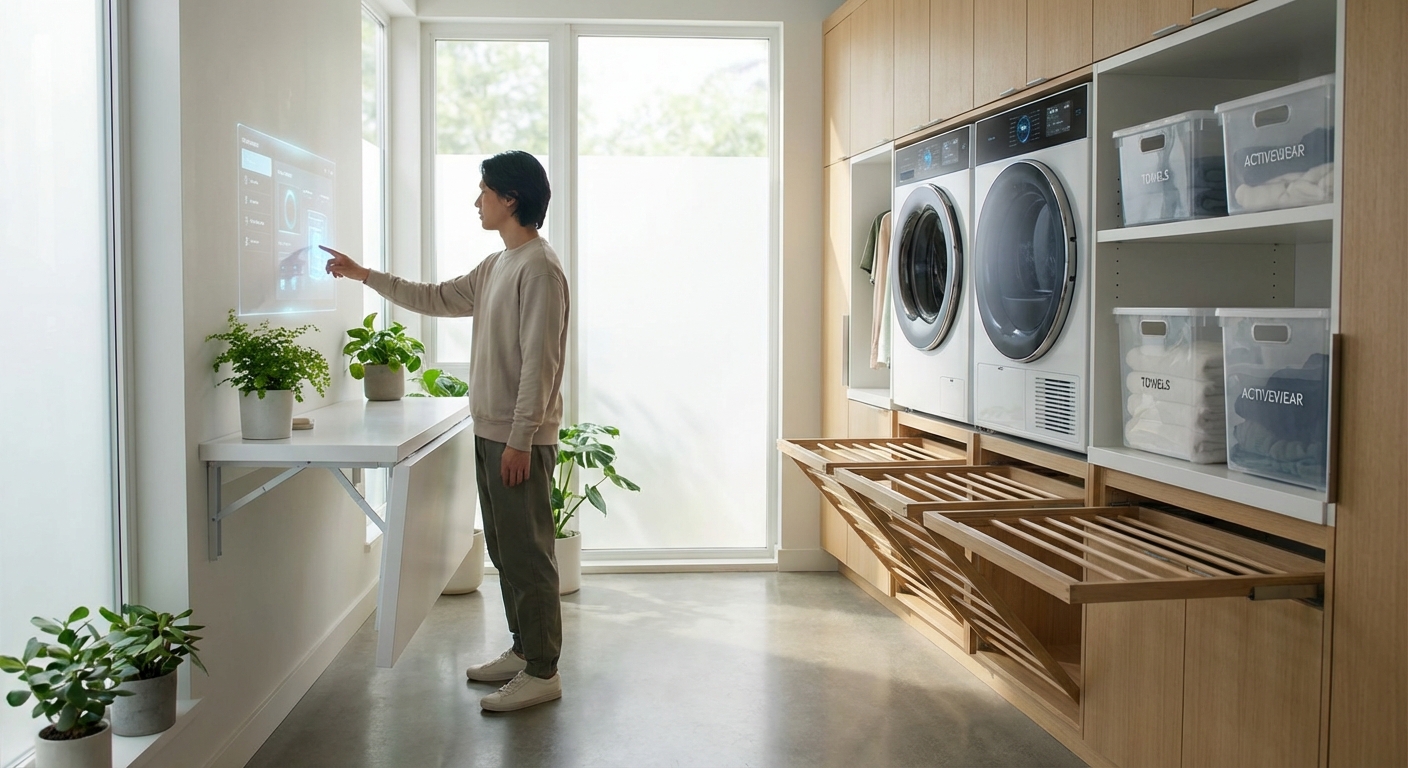
What I’m seeing in showrooms and trade previews now suggests the next step:
- Fabric recognition: Cameras or advanced sensors that can distinguish denim from silk and gently override your bad decisions.
- Predictive maintenance: Instead of “Error code: 5C”, your machine will say, “Your drain filter needs cleaning—here’s a 2‑minute video.” Some brands are already beta‑testing this.
- Routine automation: Scheduling wash cycles when your utility rates are lowest, tying into smart meters and energy dashboards.
In my experience, the best part isn’t the novelty—it’s fewer ruined sweaters and less time staring at 37 confusing cycle options.
Downside? If the Wi‑Fi goes down, half the bells and whistles become dead weight. You still want a machine that works fine in “dumb mode.”2. Water and energy efficiency as the default
I recently compared my older top‑loader to a new front‑loader I was testing. Using EPA data as a baseline, an ENERGY STAR certified washer can use about 25% less energy and 33% less water than regular models.[¹] My water bill and gas bill both dropped.
By 2030, expect:
- Integrated graywater systems in new builds: laundries routing lightly used water to toilets or irrigation.
- Heat pump dryers becoming standard: they use up to 28% less energy according to the U.S. Department of Energy.[²]
- Auto‑dosing detergents: already here, but getting smarter—dosing based on water hardness, soil level, and load size.
The caveat: these machines often cost more up front, and repairs can be pricier. For some households, that payback period is a real factor.
3. The rise of “hands‑off” laundry
No, we’re not getting Rosie the Robot from The Jetsons by 2030… but we’re inching there.
I tested a laundry setup with:
- A washer that auto‑dispensed detergent from a built‑in reservoir
- A dryer that used moisture sensors and weighed the load
- An app that pinged me when a laundry basket with a tiny RFID tag approached the machines (that part was a bit much, but it worked)
Will every home use this? No. But for busy families and people with mobility issues, semi‑automated workflows—scan basket, load, hit one button—are a game‑changer.
Storage: Micro‑Zones, Vertical Space, and Hiding the Chaos
Every time I walk into a well‑designed laundry room now, I notice the same thing: it’s zoned like a commercial workspace, just prettier.
When I started mapping laundry spaces for clients, I stopped thinking in terms of “washer here, dryer there” and started thinking in zones: sort, wash, dry, treat, fold, store.
1. Sorting and pre‑treating without the floor pile
In my own home, I replaced a sad plastic hamper with:
- Three tilt‑out bins in a base cabinet (lights, darks, delicates)
- A narrow slide‑out for stain removers and brushes
- A shallow pull‑out shelf right beside the sink to treat stains without splashing everywhere
That one change killed the infamous “laundry chair” in the bedroom. By 2030, I expect most new-build laundry rooms to include built‑in sorters as standard, not upgrades.
Pro tip I learned the hard way: label the bins with words and icons so kids and guests actually use them.
2. Vertical storage that actually fits products
A lot of older laundry cabinets are too tall, too deep, and absolutely useless for the short bottles we actually own.
In recent renovations, I’ve seen (and specified):
- 11–13" deep upper cabinets so nothing gets lost behind a five‑year‑old box of dryer sheets
- Adjustable shelves sized intentionally for standard detergent bottles (about 10–12" tall)
- Wall‑mounted drying racks that fold flat and allow air circulation
I recently installed a ceiling‑mounted drying rack that lowers on a pulley. It looks a bit like a clothesline met a spaceship, but it freed up an entire wall.
3. Hidden utility, visible sanity
By 2030, the best laundry storage will do one key thing: hide the ugly but keep it accessible.
What’s working now:
- Panel‑ready appliances tucked behind cabinet doors in open‑plan spaces
- Slim pull‑outs between washer and dryer for cleaning sprays, cloths, and dryer balls
- Built‑in hampers that vent, so dirty clothes don’t marinate in stale air
What’s not always great:
- Over‑customization. I’ve seen gorgeous built‑ins that perfectly fit one brand’s detergent bottle… until the brand changed its packaging.
- Overhead cabinets that require a step stool every single time. If you can’t reach it with one arm, it’s bad storage—no matter how pretty.
Style: From Utility Closet to Design Moment
I used to treat laundry rooms as “leftover” spaces. Not anymore. Some of the boldest tile and color choices I’ve made—safely—have been in laundry rooms.
1. Color and pattern with low risk
Because laundry rooms are usually smaller, they’re ideal for trends you’re not 100% sure you’ll love forever:
- Patterned floor tile (my last project used a bold geometric in charcoal and white)
- Painted cabinets in deep green, navy, or warm terracotta
- Contrasting grout that turns basic subway tile into a feature wall
When I tested a deep inky blue on laundry cabinets for a client, we both panicked for about 24 hours. Then we saw it in daylight with brass hardware and warm under‑cabinet lighting—and suddenly the room felt like a boutique hotel for towels.
2. Human‑level comfort: light, sound, and air
This is the part that separates a 1990s laundry from a 2030 laundry.
Based on what I’ve seen in newer builds and remodels:
- Lighting: Layered lighting—overhead, task over the counter, and softer accent lighting.
- Acoustics: Front‑loaders can be loud at high spin speeds. Adding a solid core door, soft materials (rugs, curtains), and proper leveling makes a big difference.
- Ventilation: Heat pump dryers and better venting reduce humidity and mold risk. The CDC has repeatedly pointed out the importance of moisture control for indoor air quality.[³]
This isn’t just comfort—it’s health. I’ve seen too many laundry closets with a faint, suspicious musty smell because no one planned for ventilation.
3. Multi‑use spaces: laundry plus something else
In several recent projects, the laundry room is also:
- A mudroom with hooks, cubbies, and benches
- A pet wash station (tiny tiled shower with a hand sprayer)
- A craft or sewing zone with a fold‑down table and storage
I recently worked on a layout where the laundry room handled: dog baths, sports gear, a backup fridge, and holiday storage. The key was clear zoning—laundry stayed on one wall, everything else on the other.
The risk with combo spaces is scope creep; if everything happens there, nothing works well. By 2030, the sweet spot will be hybrid spaces that still respect workflow: a clear path from washer to dryer to folding surface to closets.
What You Can Do Now to Be “2030‑Ready”
You don’t have to gut your house or wait for fully autonomous washers to future‑proof your laundry.
Based on what’s actually worked in my own home and client projects, here are realistic moves:
- Upgrade the workflow first, then the appliances. If you’re tripping over baskets and hunting for stain remover, no smart washer will fix that.
- Add at least one solid folding surface. A countertop over front‑loaders or a wall‑mounted drop‑down table changes everything.
- Go vertical. Install a wall‑mounted drying rack, hooks, or shelving that’s shallow but reachable.
- Plan your next machine with efficiency in mind. Look for ENERGY STAR models, consider a heat pump dryer, and check local rebates.
- Have a Plan B for tech. Smart features are great, but make sure your appliances still function simply if the app fails or the Wi‑Fi is down.
From what I’ve seen in real homes, the most successful 2030‑style laundry rooms don’t try to be sci‑fi. They’re calm, efficient, slightly smarter than they look, and—maybe most surprising—spaces you don’t dread walking into.
And yes, the socks will probably still go missing. But at least they’ll disappear in style.
Sources
- ENERGY STAR - Clothes Washers - U.S. EPA data on energy and water savings for efficient washers
- U.S. Department of Energy - Heat Pump Dryers - Overview of how heat pump dryers work and their efficiency
- CDC - Mold After a Disaster - Guidance on moisture, ventilation, and mold growth indoors
- LG AI DD Washing Machines - Example of current AI‑driven laundry technology
- Samsung AI Laundry Appliances - Manufacturer information on AI‑enabled laundry features