Lush Product Selection Guide
walking out with way too many bath bombs and zero clue if any of them were actually right for my skin.
After a few years of testing, returning, over-spending, and quizzing Lush staff like it was a job interview, I’ve finally figured out how to shop Lush in a way that’s fun and smart. This guide is basically the roadmap I wish I’d had.
Step 1: Know Your Skin (and Scalp) Before You Sniff Anything
When I first discovered Lush, I shopped with my nose, not my brain. That’s how I ended up using a super-fragranced, citrus-heavy shower gel on my already-dry winter skin. Spoiler: my arms were not thrilled.
In my experience, the single most useful way to navigate Lush is to classify yourself before you even click the website or step into the store:
- Face: dry, oily, combination, sensitive, acne-prone, barrier-damaged
- Body: normal, dry/itchy, keratosis pilaris (those little bumps), fragrance-sensitive
- Scalp/hair: oily roots, dry ends, dyed, curly/coily, heat-damaged, flaky scalp
Lush actually labels many products by skin type, but those labels can be a bit broad. For example, something marked “for all skin types” might be way too intense for truly sensitive skin because of essential oils.
What’s helped me:
- If your skin stings easily or you react to perfume, treat yourself as sensitive at Lush, even if you’re oily.
- If your scalp gets itchy with strong fragrance, start with unscented or lightly scented hair products.
A quick 3–5 minute self-check before shopping can literally save you money and a flare-up.
Step 2: Decode Lush Ingredients (Without a Chemistry Degree)
When I tested Lush products more systematically (yes, I made a spreadsheet—I’m that person), I noticed that how my skin reacted depended more on the active ingredients than on the cute product name.
Here’s how I mentally sort Lush ingredients now:
Powerhouse naturals that usually play nicely
These tend to be the safer bets, as long as you’re not allergic:
- Oatmeal / oat milk / calamine – incredibly soothing; great in Oatifix, Dream Cream.
- Glycerin – humectant that draws water into the skin; nearly everywhere.
- Cocoa butter & shea butter – occlusive and rich; amazing in Buffy, King of Skin, massage bars.
- Aloe vera – calming and hydrating; shows up in more gentle cleansers and masks.
Ingredients to treat with a little caution
These aren’t bad. They’re just intense if your skin is fussy:
- Essential oils (citrus, peppermint, cinnamon, clove, tea tree) – can be irritating in higher doses.
- Scrubby bits (ground almond shell, sea salt, sugar) – if you’re acne-prone or have rosacea, go gently.
- Strong surfactants – Lush uses SLS (sodium lauryl sulfate) in some shampoos and soaps; some scalps hate it, some don’t care.
Dermatologists regularly call out fragrance and essential oils as common irritants for sensitive skin. The American Academy of Dermatology has repeated this in multiple guidance documents for patients with eczema and contact dermatitis.
Practical move I use: I always patch test new Lush products on the inside of my elbow or behind my ear for 24 hours before going full face or all-over body.
Step 3: Choosing Lush Skincare That Actually Works for You
Cleansers
When I finally stopped buying whatever smelled “fresh” and started matching cleansers to my skin situation, things improved fast.
- Dry or sensitive skin: I’ve had great luck with Ultrabland (a cold-cream style cleanser with almond oil and beeswax). It melts off SPF and makeup without wrecking my barrier.
- Oily or acne-prone: Herbalism and Coalface are classics. Herbalism is more gentle and balanced; Coalface can be a bit much if you’re on acne treatments already.
What I’ve noticed: Lush cleansers often skip the harsh foaming face-wash vibe. They’re more balmy or paste-like. That’s actually a plus for barrier health.
Fresh face masks
When I tested the masks, I realized Lush masks are more like “treats” than medical-grade treatments—which is fine, as long as expectations match.
Some standouts:
- Oatifix – my go-to when my skin’s dry, tight, or slightly sunburned. Smells like breakfast, feels like a hug.
- Mask of Magnaminty – minty clay mask that feels like it’s doing a lot. Great for a deep clean, but I limit it to once a week max.
Pros:
- Fresh ingredients, fun textures, instant gratification.
Cons:
- Short shelf life.
- Not a replacement for targeted actives like retinoids or prescription acne meds.
Dermatology literature backs this up in a way: cosmetic masks provide temporary improvements in hydration and texture, but long-term change usually comes from consistent use of evidence-backed actives (like retinoids, niacinamide, etc.).
Step 4: Bath, Body & Shower – Where Lush Really Hooks You
This is where my wallet cries and my senses cheer.
Bath bombs & bubble bars
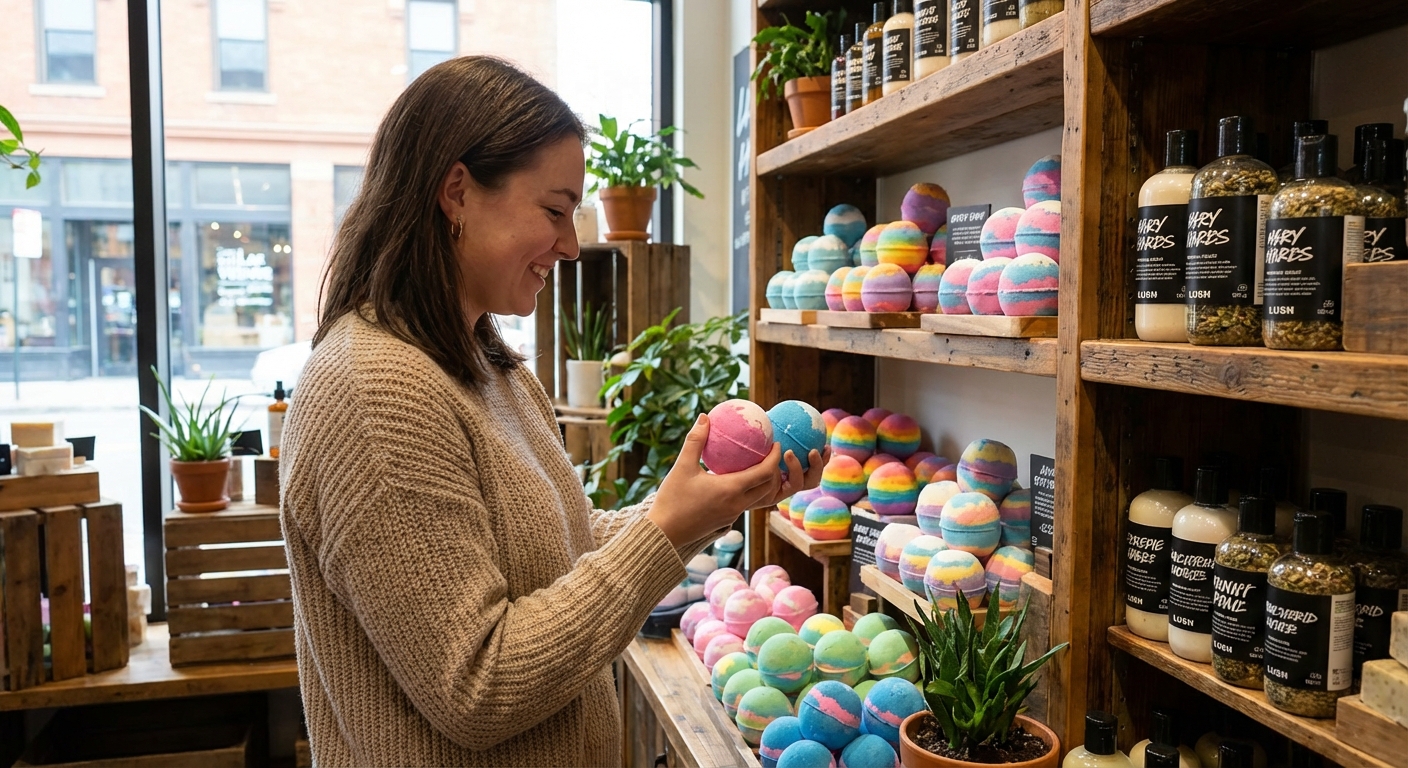
The first time I used Twilight bath bomb after a terrible day, I genuinely slept better. Was it the lavender? The hot water? The pink-purple galaxy vibes? Probably all of the above.
My rules now:
- If you have sensitive areas (you know the ones), avoid bombs loaded with glitter and heaps of fragrance.
- If you’re dealing with eczema or very dry skin, I lean toward more oat and butter-based products, and I rinse off with clean water after the bath.
Body lotions & creams
Lush body care is where I’ve seen the most visible difference.
- Dream Cream – cult classic for a reason. The combo of oat, lavender, and olive oil has calmed my winter leg itch more than some prescription creams I’ve tried. It’s even been mentioned by people with eczema in online communities and articles.
- Ro’s Argan – in-shower body conditioner. I use it when I’m too lazy for lotion but still want to feel like a glazed donut.
Downside: Some of these have stronger fragrance. Patch test if your skin throws tantrums.
Step 5: Haircare – Where People Either Fall in Love or Flee
I was skeptical of shampoo bars at first. A bar? On my hair? But when I tested Seanik (the blue, oceany one), my fine, flat hair actually had volume.
Picking your Lush shampoo
- Oily roots / fine hair: Volumizing bars like Seanik or Jumping Juniper can work, but they do contain SLS, which some scalps hate.
- Dry, curly, or color-treated hair: I’ve had more luck with liquid shampoos like Fairly Traded Honey—more gentle, more slip.
The trade-off:
- Pros: insanely travel-friendly, low waste, long-lasting if you let them dry between uses.
- Cons: can be drying if you’re already prone to scalp irritation or have textured hair that craves moisture.
Trichologists (hair and scalp specialists) often warn that strong sulfates plus already-fragile hair can equal breakage over time. So if your hair is bleached, high-porosity, or tightly coiled, I’d start with Lush’s more nourishing formulas and go slow.
Step 6: Fragrance Strategy – How Not to Give Yourself a Headache
I made the mistake of layering a super-scented Lush shower gel, body lotion, and perfume on the same day. I smelled like an entire candy store, and not in a chic way.
What works better for me:
- Pick one hero scent per day.
- If I use a strong shower product, I keep the lotion more neutral.
- I skip heavily fragranced body products on days I use actives like exfoliating acids to reduce irritation.
There’s research showing that fragrance is a top trigger for contact dermatitis. That doesn’t mean everyone has to avoid it—but it does mean if your skin’s already inflamed, going “less is more” is smart.
Step 7: Price vs. Performance – When Is Lush Worth It?
Let me be blunt: Lush is not cheap. I’ve absolutely had moments at the register thinking, “Did I just spend that much on something I literally wash down the drain?”
How I now justify (or skip) purchases:
Worth it for me:- Products that combine experience + results, like Dream Cream, Ultrabland, certain masks.
- Things that truly replace multiple products (a shampoo bar that lasts 2–3 bottles’ worth, a body conditioner that makes lotion optional).
- Super glittery, single-use bath items that don’t do anything for my skin.
- Scrubs that are mostly sugar and oil—I can DIY similar versions for way less.
Lush has been fairly transparent about sourcing and ethics on their site, and they’ve been vocal about issues like animal testing. If ethical sourcing and packaging reduction matter to you, that’s part of the value equation too.
Step 8: Shopping Smarter – Online vs. In-Store
When I tested both experiences, I noticed each has big pros.
In-store
- You can try textures and scents in real time.
- Staff are usually walking ingredient encyclopedias. I always ask, “What do you personally use for [my issue]?” and “What didn’t work for you?” You get honest tea more often than you’d think.
Online
- Easier to check full ingredient lists and Google anything you’re not sure about.
- You can filter by vegan, self-preserving, or specific categories.
My personal system now:
- Test and sniff in-store.
- Read reviews and ingredient breakdowns online.
- Start with smaller hauls instead of one giant, chaotic splurge.
Final Thoughts: How to Build Your Own Lush Lineup
If I had to boil my Lush strategy down after years of trial and error, it’d be this:
- Match product to skin/scalp reality, not vibes. A neon bath bomb is fun, but your moisture barrier will still be there tomorrow.
- Respect essential oils and fragrance. Enjoy them, but don’t pretend they’re always gentle.
- Use Lush as the “experience layer,” not your entire routine. I keep my basic dermatologist-approved routine, then slot in Lush for cleansing, pampering, and some body care.
- Patch test, always. Even the nicest ingredients can be a no-go for you personally.
When I treat Lush like a sensory, ethical add-on to my routine instead of a magic cure-all, I enjoy it way more—and my skin actually looks better for it.
Sources
- American Academy of Dermatology Association – Skin care: Tips for sensitive skin - Guidance on fragrance, irritants, and caring for reactive skin
- Lush Cosmetics – Ingredients Library - Official descriptions and sourcing details for Lush ingredients
- Harvard Health Publishing – The science of skin care - Overview of evidence-based skin care, hydration, and barrier support
- U.S. National Library of Medicine – Fragrances and skin reactions - Research review on fragrance as a common cause of contact dermatitis
- Lush Cosmetics – Our values - Brand’s statements on ethics, sourcing, and animal testing