Makeup Essentials Kit: Face, Eye, and Lip Products Explained
nd 27 nude lipsticks and thought, yeah… I’m in trouble.
Over the years (and plenty of makeup fails), I’ve tested, decluttered, rebuilt, and streamlined my kit so many times that I can now pack a full face into a tiny makeup bag and feel 100% camera-ready. In this guide, I’ll break down exactly what you actually need for face, eyes, and lips — and what’s optional hype.
No 32‑step routine. Just a smart, realistic essentials kit.
Step 1: Face Essentials – Your Base, But Smarter
When I tested my first high-coverage foundation, I thought more coverage automatically meant “better skin.” Spoiler: it made me look like I was wearing a mask… and not in the cute Halloween way.
Over time, I realized your face products should do two things:
- Even out your skin tone
- Let your actual skin still look like skin
1. Primer (Optional but Helpful)
What it does: Smooths texture, boosts longevity, and can add hydration or mattify. When I use it: On long days, events, or when my skin is being fussy. I recently discovered that silicone-based primers really do grip foundation better on my combo skin — but they can pill if layered over very thick skincare. Quick tip: Match primer to skin needs, not trends:- Oily/combination: Look for “mattifying” or “oil control” formulas with ingredients like silica.
- Dry: Hydrating primers with glycerin or hyaluronic acid.
A 2017 review in the Journal of Cosmetic Science found silicone elastomers improve the feel and wear of base products, which explains why those blurring, velvety primers feel so addictive.
2. Foundation or Skin Tint (Pick One)
You don’t need three different base products. One good formula that matches your skin type and undertone will carry you.
My experience: When I switched from full-coverage foundation to a buildable skin tint for daily use, people started asking what skincare I was using. Nothing changed — I just wasn’t hiding my skin under heavy pigment. Choose by coverage & finish:- Sheer/light (tints, serum foundations): Best for everyday, no-makeup-makeup
- Medium: Flexible for work, dinner, photos
- Full: Great for events, but easy to overdo
- Cool: Pink/rosy
- Warm: Golden/yellow/olive
- Neutral: Mix of both
I often test shades on my jawline in natural light; indoor store lighting lies. A 2021 paper in Skin Research and Technology highlighted how artificial lighting skews color perception, which honestly tracks with every bad shade match I’ve ever bought under fluorescent lights.
3. Concealer (The Real MVP)
If I had to pick just one base product forever, it’d be concealer. When I tested going “foundation-free” for a week and used only spot concealing under eyes, around the nose, and on blemishes, my skin looked fresher and I cut my morning routine in half.
You’ll want:- One shade that matches your skin for blemishes
- Optional: One slightly brighter shade for under eyes (not more than 1–1.5 shades lighter, or it looks obvious)
Creamier formulas work better under the eyes; more matte, drier ones last longer on spots.
4. Setting Powder (Targeted, Not All Over)
When I used to set my whole face with powder, everything looked flat and older — not the vibe. Now I only powder where it counts:
- T‑zone (forehead, nose, chin)
- Under eyes (lightly, with a small fluffy brush)
Translucent loose powder is usually the most forgiving. A 2019 consumer survey cited by L’Oréal found that setting powders significantly improved perceived makeup longevity for oily and combination skin types, which mirrors what I’ve noticed on long shoot days.
5. Blush, Bronzer & Highlighter (The Dimension Trio)
You don’t strictly need all three, but at least one is essential so your face doesn’t look like a flat canvas.
Blush:In my experience, blush is the fastest way to look alive on a Zoom call. Cream blush melts into the skin and is more forgiving; powder blush is easier to control. I reach for:
- Peach/coral for warmth
- Rose/mauve for neutral everyday looks
Bronzer is for adding warmth, not drawing brown stripes under your cheekbones. Look for a shade 1–2 tones deeper than your skin with a neutral or slightly warm undertone.
Highlighter:When I tested a glittery highlighter once, my pores said absolutely not. Now I stick to fine, pearly formulas on tops of cheeks, bridge of nose, and cupid’s bow. Subtle glow > disco ball.
Step 2: Eye Essentials – Defined, Not Overcomplicated
My first “eyeshadow palette” phase was chaos. Twelve colors, only two of which I actually touched. These days my eye essentials kit is lean but powerful.
1. Brows: Frame the Face
I used to underestimate brows until I saw side-by-side photos: one with filled brows, one without. Same makeup, completely different face.
You only need one of these:
- Pencil (most precise, great for sparse brows)
- Tinted gel (fast, adds color + hold)
- Powder (softest look)
I personally favor a micro-brow pencil for hair-like strokes, then a clear gel to hold everything in place. The American Academy of Ophthalmology has warned about over-tweezing and harsh chemical tints, so I’m pretty conservative with permanent brow treatments and prefer makeup fixes.
2. Neutral Eyeshadow (Really: 2–4 Shades)
A basic, everyday eye look only needs:
- A shade close to your skin tone (all over lid)
- A slightly deeper shade (crease/outer corner)
- Optional: A shimmer for the lid
When I tested limiting myself to a mini 4‑pan neutral palette for a month, I stopped wasting time deciding between random colorful shades I’d never wear and got more consistent, flattering looks.
Look for a small palette with:
- 2–3 matte neutrals
- 1 shimmer or satin
3. Eyeliner (Optional but Powerful)
You don’t have to wear eyeliner daily, but the right one makes a big difference.
Types I keep in my kit:- Brown pencil: For soft definition, smudged along the lash line
- Black liquid or felt tip: For winged liner or nights out
For hooded eyes (mine are mildly hooded), I draw the liner super thin at the inner corner and only thicken it toward the outer third. I actually learned that trick from Lisa Eldridge years ago and it’s still the most foolproof method I use.
4. Mascara (Non-Negotiable)
I’ve tested so many mascaras for length, volume, curl, flake-resistance… and honestly, formula matters less than matching it to your lashes:
- Straight lashes: Curl first, then use a lighter formula (heavy can weigh them down)
- Short lashes: Lengthening with a smaller brush
- Sensitive eyes: Hypoallergenic formulas (often labeled ophthalmologist-tested)
The American Academy of Ophthalmology notes that old mascara (over 3 months) can harbor bacteria, which is why I’m ruthless about tossing dried-out tubes.
My personal hack: I wipe excess product off the wand with a tissue before first use; I get less clumping and more control.
Step 3: Lip Essentials – Color, Comfort, and a Tiny Bit of Drama
When I tested wearing a bold lip to an otherwise bare-face day, the compliments were… suspiciously high. Lips are powerful.
You don’t need a drawer full of lipsticks. A streamlined lip wardrobe can be:
- One MLBB ("my lips but better") shade
- One bold color
- One comfortable gloss or balm
1. Everyday Lip Color
This is your grab-and-go shade. Mine is a rosy-brown cream that honestly looks like my natural lip color plus 10%.
Look for:
- Cream or satin finish (more forgiving than matte)
- Shade close to your natural lip tone
I’ll sometimes use this as a cream blush too — monochromatic looks are not only trendy, they’re efficient.
2. Statement Lip
Red, berry, deep nude, terracotta — pick one shade that makes you feel a bit extra.
Matte liquid lipsticks last the longest, but in my experience they can crack and feel dry by hour 4–5. I usually:
- Exfoliate gently (washcloth + balm)
- Apply a thin layer of balm first
- Blot, then apply color
A 2017 study in Clinics in Dermatology noted that frequent use of long-wear lip products can worsen lip dryness, so I try not to wear super-mattes back-to-back days.
3. Gloss or Balm
Gloss is a cheat code for looking put-together in 10 seconds. Clear or lightly tinted gloss + brows + mascara = you’re done.
If you hate sticky gloss, go for:
- Lip oils
- Lightweight balms with a sheen
I recently discovered that a sheer tinted balm with SPF 30 is my best friend on beach days — a lot of people forget lips can burn. The U.S. FDA and the American Academy of Dermatology both emphasize sun protection for lips to reduce cancer risk, so SPF lip products earn a permanent spot in my kit.
What Actually Belongs in a Makeup Essentials Kit
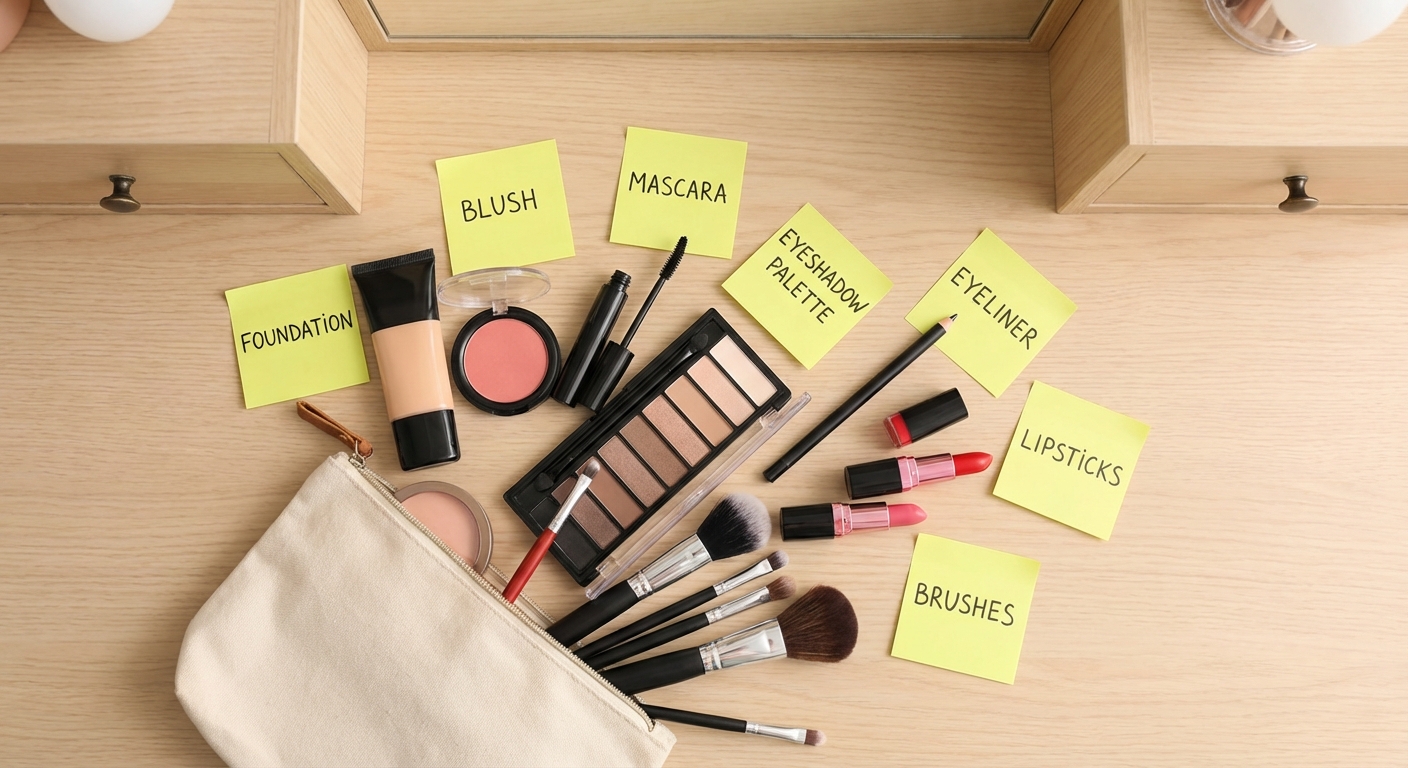
If I strip my makeup bag down to what I truly use all the time, it looks like this:
- One flexible base: skin tint or medium coverage foundation
- One concealer
- Targeted setting powder
- Blush (cream or powder)
- Optional: bronzer or subtle highlighter
- Brow pencil + clear or tinted gel
- Small neutral eyeshadow palette
- Brown pencil liner (and optional black liquid)
- Mascara
- Everyday lipstick
- Statement lipstick
- Tinted balm or gloss (bonus points for SPF)
Everything else — colorful palettes, glitter liners, contour sticks, false lashes — is fun, and I own some of it, but it’s not essential.
When I finally built my kit around what I actually reach for instead of what’s trending on TikTok, getting ready became faster, cheaper, and a lot more fun. No guilt over unused products, no decision fatigue at 7 a.m., and my skin looks more like… me.
If you’re building or rebuilding your kit, start with this core, test how it fits your real life, then add the fun extras slowly. Makeup should feel like play, not a part-time job.
Sources
- American Academy of Ophthalmology – Eye Makeup Safety Tips – Guidance on safe use of mascaras, liners, and eye products.
- American Academy of Dermatology – Are You Applying Sunscreen Correctly? – Includes recommendations on SPF use, including for lips.
- Clinics in Dermatology – Adverse reactions to cosmetics (2017) – Discusses skin and lip irritation from cosmetic ingredients.
- L’Oréal Groupe – Makeup Science & Innovation – Industry overview of how modern makeup formulas are developed and tested.
- Skin Research and Technology – Effects of Illuminant on Skin Color Perception – Explores how different lighting conditions impact shade matching.