Obsolete Gadgets That May Have Resale Value
that one universal remote that never actually worked universally.
Instead, I pulled out a chunky gray Nintendo Game Boy, a Sony Discman, and a Motorola flip phone that looked like it escaped from a 2004 music video. On a whim, I started checking resale prices.
When I saw what some of these “obsolete” gadgets were going for, I literally said out loud, “Ok, I’ve been throwing money in the trash for years.”
So let’s talk about the forgotten tech in your drawers that might still be worth something — and how to tell what’s junk and what’s secretly collectible.
Why Old Tech Can Still Be Worth Real Money
In my experience, there are four big reasons some outdated gadgets hold or even gain value:
- Nostalgia and collecting – People who grew up with a device often want it back later. That’s why first-gen iPods and original Game Boys have a fanbase.
- Design and rarity – Limited editions, unusual colors, or first-generation models become trophies for collectors.
- Functionality – Some “old” tools still work better for specific tasks (e.g., dedicated audio players for audiophiles).
- Cultural significance – Gear that changed an industry — the first iPhone, the Walkman, early VR headsets — becomes tech history.
The resale market isn’t just a vibe, it’s measurable. The second-hand electronics segment is part of the broader recommerce market that analysts at Cowen estimated could reach around $64 billion by 2024 in the U.S. alone, driven by younger shoppers and sustainability trends.
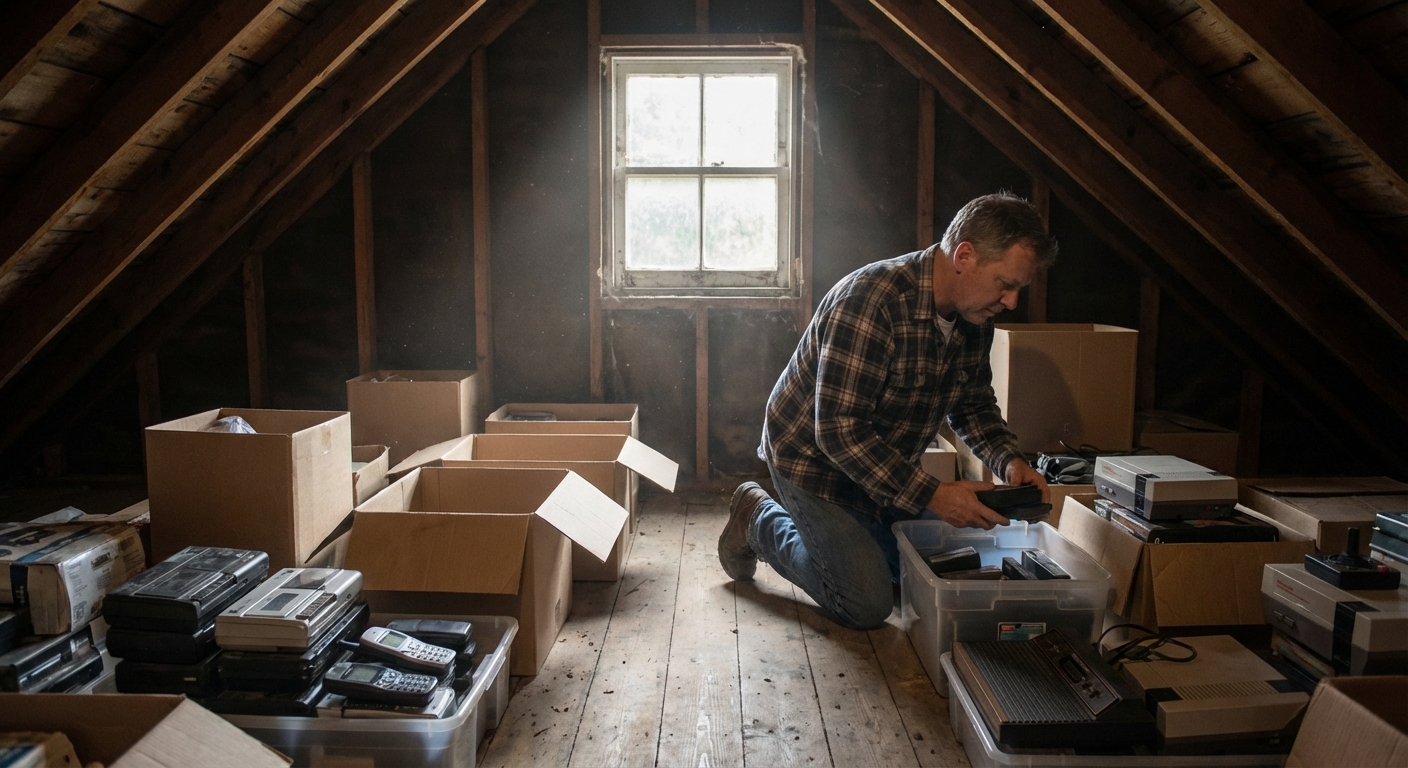
When I tested a few sales on eBay and Swappa, I noticed a pattern: condition, original packaging, and rarity matter way more than age. A scratched-up gadget from 2012 is often worth less than a pristine one from 2005.
1. Old Game Consoles & Handhelds
I’ll start with the one that surprised me the most.
That Game Boy I dug up? A classic DMG-01 in decent shape, with Tetris still inside. When I checked recent sold listings on eBay (pro tip: always look at sold prices, not asking prices), similar units were going for $60–$120, sometimes more with the box and manuals.
Consoles that can have solid resale value
- Nintendo Game Boy / Game Boy Color / Game Boy Advance – Special editions (Pokémon, Zelda, translucent shells) can jump higher.
- Nintendo 64, GameCube, Wii – Certain colors and limited runs, like the Indigo GameCube or special bundle editions, regularly attract collectors.
- Sony PlayStation 1 & 2 – The PS2 is still one of the bestselling consoles ever, and working units plus controllers are very resellable.
- SEGA systems – Genesis, Dreamcast, and even Game Gear can fetch nice prices, especially boxed.
In my experience, buyers pay a big premium for:
- Original box and inserts
- Official controllers and power supplies
- Working video output (HDMI mods can help, but original condition usually sells better to collectors)
- Yellowed plastic, missing cords, or non-working disc drives drop resale value fast.
- Shipping consoles can be a pain — they’re fragile and heavy, so you’ll want good packing materials.
If you’re not sure what you have, searching the model number plus “boxed” or “limited edition” can instantly show you if you’ve struck gold or just nostalgia.
2. Vintage iPods and MP3 Players
When I tested a first-gen iPod (the one with the actual moving scroll wheel) on the resale market, I went in expecting maybe $20. People were listing them for $200–$600 depending on condition and capacity.
And it’s not just Apple.
Models to keep an eye out for
- Apple iPod Classic (especially 1st–5th gen) – Collectors love the original FireWire models and high-capacity Classics.
- iPod Mini & iPod Nano special colors – Some discontinued colors and U2 special editions carry a premium.
- High-end MP3 players – Brands like Cowon, iRiver, and early high-resolution Sony Walkman models still have niche demand from audio geeks.
Why? Two big reasons:
- Repair/Mod culture – There’s a booming subculture of people upgrading old iPods with SSDs and new batteries.
- Offline listening – Not everyone wants streaming or subscriptions. Some just want a brick of music.
- Small, cheap to ship, easy to test.
- Even “dead battery” units can sell for parts.
- Fake listings and knockoffs exist, especially on older iPod models.
- Scratches and engraving can reduce value unless the model is ultra-rare.
I always plug them into a computer and check if they’re recognized by iTunes or Finder before listing. That alone can double the price versus “untested/as-is.”
3. Film Cameras & Early Digital Cameras
I used to assume any “old camera” was worthless. Then I watched a friend flip a thrifted Canon AE-1 film camera for a few hundred dollars. That woke me up fast.
Film cameras that might be worth something
- 35mm SLRs like the Canon AE-1, Nikon F series, Pentax K1000.
- Point-and-shoot film compacts – Yashica T4, Olympus Stylus Epic (Mju-II), Contax T series.
- Instant cameras – Original Polaroid SX-70 and some 600 models.
The resurgence of film photography is real. Kodak publicly announced a ramp-up in film production in recent years because demand came back hard, especially from Gen Z and millennials.
Early digital cameras are more hit-or-miss, but:
- First-generation or historically significant models (like the Sony Mavica that saved photos to floppy disks) can attract collectors.
- Some high-end early DSLRs and Leica digital models can still have real value.
- Does the shutter fire?
- Does the viewfinder look clear, no fungus or haze?
- Does the film advance or does the motor sound weird?
- Repairs can be specialized and expensive.
- Lenses can be worth more than the bodies, so you need to research both separately.
4. Retro Audio: Walkmans, Discmans, and Stereo Gear
When I tested an old Sony Walkman cassette player I found at a flea market (paid $5), it sold for $80 after a basic clean and belt replacement. That wasn’t a fluke.
Audio gear that can attract collectors
- Sony Walkman (cassette and MiniDisc) – Certain models (like Sports yellow units, or high-end metal-bodied ones) are serious collector targets.
- Sony Discman & portable CD players – Especially models with optical output or ESP (Electronic Shock Protection) for audiophiles.
- Hi-Fi components – Vintage receivers from Pioneer, Marantz, Technics, Yamaha, and NAD can be lucrative if they work.
The vinyl and cassette resurgence isn’t just aesthetics; people want the full experience, including era-correct playback gear.
Pros:- Audiophile communities actively trade and restore these.
- Even non-working units can go to parts and modders.
- Cassette mechanisms often need new belts.
- Heavy receivers are expensive to ship and easy to damage if packed badly.
I always record a short video showing the device playing audio and responding to controls. That massively cuts down on buyer disputes.
5. Old Mobile Phones (Yes, Really)
I laughed when I saw a Nokia 3310 selling online for more than some budget smartphones. Then I realized it wasn’t about performance — it was meme value and nostalgia.
Phones that can still fetch cash
- Nokia brick phones (3310, 8210, 5110) – Iconic design and long battery memes.
- Motorola RAZR – The original flip icon from mid-2000s.
- Early iPhones – Sealed 1st-gen iPhones have sold for eye-watering prices at auction; used ones still have a market.
- BlackBerry devices – Especially rare colors or corporate models, mostly as collector pieces.
The BBC and other outlets have reported on “dumb phone” comebacks, with some people intentionally ditching smartphones, which keeps a small but steady demand alive.
Reality check:- Most carriers don’t support 2G and are dropping 3G, so many of these are basically decorative.
- That means you’re selling to collectors, not everyday users.
So I’m honest in listings: these are generally for display, prop use, or nostalgia, not for modern daily use.
How to Check If Your Old Gadget Has Resale Value
Here’s the exact process I use when I find an old device:
- Search sold listings on eBay – Filter by “Sold items” and “Used condition” to see real-world prices.
- Check niche marketplaces – Swappa for phones, Reverb for audio gear, KEH/B&H for cameras.
- Look up model numbers – Often printed under the battery, on the bottom, or in settings.
- Assess condition honestly – Original box, manuals, and cables can boost value by 20–50%.
- Test the basics – Power on, basic functions, ports, and buttons.
If I see multiple recent sales at decent prices and I can accurately describe the condition, I list it. If prices are all over the place or only new/sealed versions sell, I usually donate or recycle.
When It’s Better to Recycle Than Resell
Not every old gadget is a hidden goldmine. Some stuff really is just e-waste. I’m blunt with myself about:
- Generic DVD players (unless they’re high-end or region-free)
- Very early, low-spec Android phones
- Damaged or swollen batteries
- Printers (with rare exceptions)
For these, I use manufacturer or retailer recycling programs. In the U.S., the EPA maintains guidelines and links to certified recyclers, and brands like Apple and Best Buy run take-back programs that are much better than tossing electronics in the trash.
Final Thoughts: Your Drawer Might Be a Mini Vintage Shop
When I tested the resale route on my own stash of “obsolete junk,” I ended up:
- Selling three gadgets I hadn’t touched in years
- Making enough to cover a newer device I actually use
- And, accidentally, getting weirdly deep into retro tech communities
Not every dusty gadget is valuable, and there’s definitely some overhype around “rare” items. But if you’re willing to do a bit of research and be honest about condition, there’s a very real chance your old tech can still find a second life — and put a little cash back in your pocket.
If you’re staring at a box of cables and mystery devices right now, I’d say this: test a few, research a few, and list just one. Once that first “obsolete” gadget sells, it’s weirdly addictive.
Sources
- U.S. Environmental Protection Agency – Electronics Donation and Recycling - Official guidance on safely donating or recycling electronics.
- BBC News – Why old Nokia and flip phones are making a comeback - Coverage of the renewed interest in basic and retro phones.
- Kodak – Film Photography & Product Information - Details on continued and increased film production reflecting ongoing demand.
- Apple – Apple Trade In Program - Example of an official trade-in and recycling pathway for older Apple devices.
- Forbes – Secondhand Market Growth and Recommerce Trends - Analysis of the booming resale and recommerce market for consumer goods, including electronics.