Old Navy Budget Shopping Guide
room session where half my cart didn’t fit and the other half went on clearance two weeks later, I decided I needed an actual strategy.
So I treated Old Navy like a case study in budget shopping.
Over a few months, I tracked prices, tested fabrics, grilled store associates (nicely), and compared online vs in‑store deals. This Old Navy Budget Shopping Guide is the exact playbook I now use to keep my total under control and still walk out with things I actually wear.
Why Old Navy Is a Budget Goldmine (If You’re Strategic)
Old Navy sits in that sweet spot between dirt-cheap fast fashion and mid-tier mall brands. You’re getting:
- Trendy basics and seasonal stuff
- Inclusive sizing (petite, tall, plus, maternity)
- Constant promotions and loyalty rewards
In my experience, the trap isn’t that Old Navy is expensive. The trap is that the promos are so loud you feel like everything is a deal, even when it’s… not.
When I tested this, I tracked the price of a pair of High-Waisted Pixie Pants for six weeks. The “original” price was $44.99. I never once saw them actually selling for that. The real range was $22–$32 with rotating promos. That taught me something: at Old Navy, full price is mostly a suggestion.
Step 1: Learn Old Navy’s Discount Rhythm
I used to assume the best deals hit on Black Friday and that was that. Nope.
Weekly & Monthly Patterns
From watching their site and app like a total nerd, here’s what I’ve seen repeat:
- Midweek markdowns: New clearance tags usually hit around Tuesday/Wednesday in many stores. When I asked an associate, she laughed and said, “Yeah, Wednesday is when people who actually know how to shop come in.”
- Weekend promos: Friday–Sunday, you’ll often see big % off banners: 30–40% off your purchase, or “Today only” doorbusters.
- End-of-season drops: The steepest price cuts show up at the end of each season—January (holiday/winter clearance), April (winter/spring), July (summer), and October (back-to-school leftovers).
Retail analysts have actually documented these cycles broadly. For instance, a 2023 Deloitte retail report highlighted how retailers time aggressive markdowns at quarter ends to clear inventory and boost earnings [Deloitte, 2023]. Old Navy plays the same game.
My rule: If it’s not at least 30% off and it’s a non-essential trend piece, I wait.Step 2: Master the Online vs In‑Store Game
I learned this the hard way with a denim jacket.
Online: $29 with a 30% off code.
In-store: Same jacket, same day… tagged $49.99 with a tiny 20% promo.
I pulled up the app in front of the register and asked (politely) if they could match it. The associate adjusted the price in two seconds.
Here’s how I work it now:
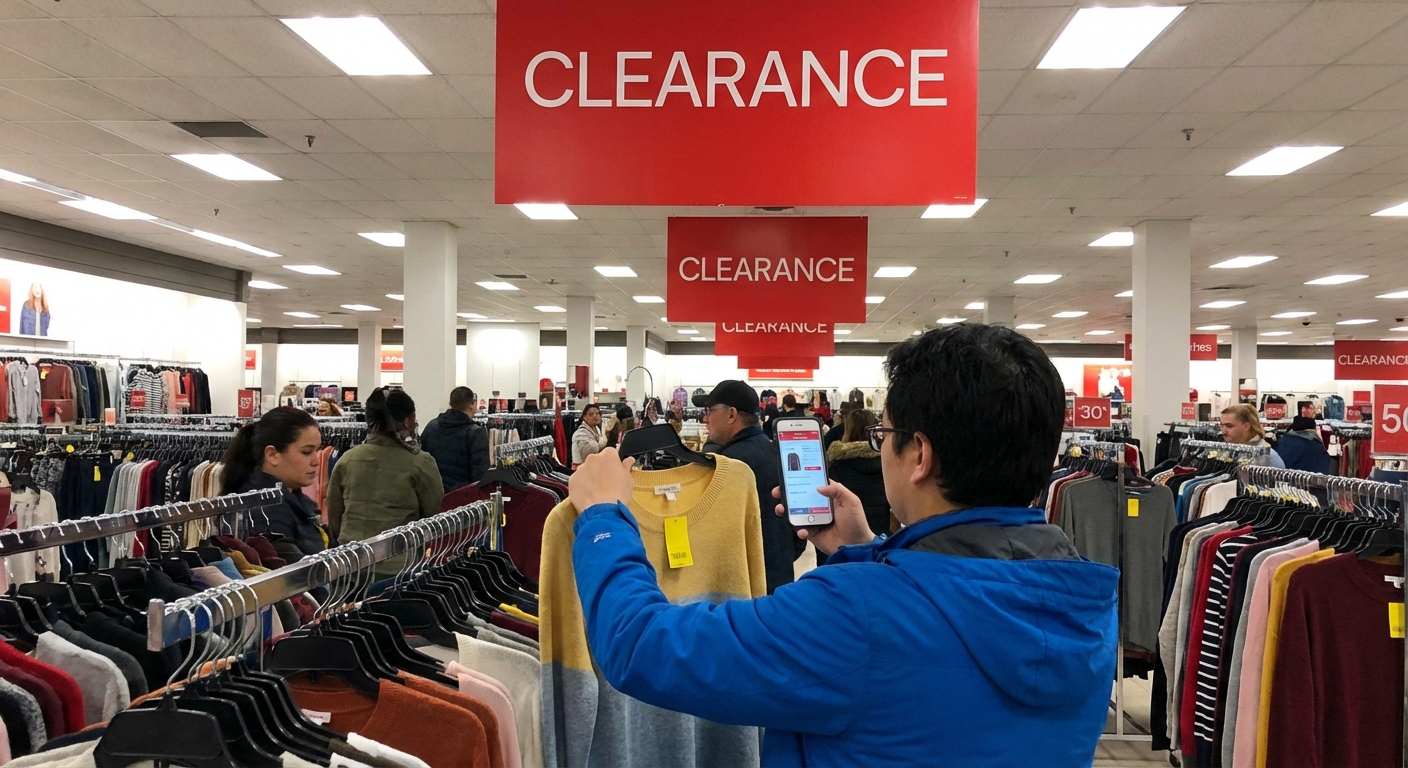
- Check the app in the aisle: Scan the barcode; sometimes the app price is lower than the tag.
- Ask for price match: Old Navy will usually honor their own online price in-store on full-price items. The policy isn’t always prominently posted, but associates have confirmed it to me multiple times.
- Online-only codes: Email and app promos often don’t apply in store. If the online total beats in-store even with shipping, I order from my phone while literally standing in the store and choose free ship-to-store or curbside pickup.
Is it a little extra? Yes. Does it save $10–$30 per trip? Also yes.
Step 3: Use Rewards & Stacking (Without Losing Your Mind)
Old Navy’s loyalty program is part of the larger Old Navy/Gap/Banana Republic/Athleta ecosystem (the Navyist Rewards program, rebranded in 2021). It can feel like alphabet soup, but used right, it’s powerful.
How I Stack (When Possible)
Here’s my personal order of operations:
- Start with a % off promo (sitewide or order-level)
- Apply rewards dollars (earned from past purchases or card use)
- Use free shipping or pickup if available
Not every promo stacks, and some are category-specific. I’ve learned to read the fine print—yes, it’s annoying, but brands rely on us not doing that.
In my experience, the sweet spot is when I can combine:
- A 30–40% off event
- $10–$20 in rewards
- Free ship-to-store
On a $100 haul, that usually drags my real out-of-pocket down to the $50–$60 range.
Caution: I don’t recommend opening a store credit card just for the first-time discount—Consumer Financial Protection Bureau data consistently shows higher interest rates on store cards vs general credit cards, often above 25% APR. If you’re not paying in full monthly, that “saved” $30 gets eaten instantly in interest.Step 4: Know What to Buy at Old Navy (and What to Skip)
This is where experience and a bunch of slightly embarrassing try-ons kicked in.
My Old Navy “Always Buy” List
From testing wash, wear, and “did this shrink into a crop top?” risk:
- Activewear leggings & bike shorts: The PowerSoft and Extra High-Waisted lines are legitimately good. My PowerSoft leggings have survived two years of weekly wear with minimal pilling.
- Kids basics: Tees, joggers, pajamas. They’re not heirloom quality, but kids grow out of things before they fall apart anyway.
- Seasonal basics: Simple tees, tank multipacks, solid-color sweatshirts. Ideal for trend colors you don’t want to commit big money to.
When I tested a PowerSoft legging vs a random Amazon brand, Old Navy’s fabric blend (usually around 77% polyester, 23% spandex) held shape better after 10 cold washes and line-drying.
My “Approach With Caution” List
- Ultra-light knits: Those tissue-thin sweaters look great on day one, then pill around the arms by wash three—especially acrylic-heavy blends.
- Dress pants: Fit can be hit-or-miss; I’ve had waistbands stretch out insanely fast. If you buy them, hang-dry and maybe size down.
- Very trendy prints: They go on deep clearance fast. If you just wait 3–4 weeks, that loud floral maxi is usually half price.
This lines up with what consumer advocates often note: cheaper fabrics with high synthetic content tend to wear out faster [Consumer Reports, 2022]. Old Navy isn’t unique here, but it’s worth factoring into price expectations.
Step 5: Fit, Fabric & The Try-On Strategy
The number of times I’ve fallen for a cute mannequin outfit only to look like a wrinkled throw pillow in the fitting room… yeah.
My current try-on rules
- Always sit-test jeans and pants: If the waistband is already digging in while you’re in the fitting room, it’ll be unbearable in real life.
- Check the fabric tag: I’ve learned my personal limits. For sweaters, I aim for at least some cotton or wool content. 100% acrylic at Old Navy price points usually means short lifespan.
- Move around: Reach up, bend, twist. Old Navy’s cuts can run wide through the body but tight in the arms or shoulders.
I also started snapping quick mirror photos instead of trusting my brain in the moment. When I scroll later, it’s painfully obvious which pieces I liked only because I was riding the sale high.
Step 6: Clearance Without Chaos
Old Navy clearance sections used to overwhelm me—racks jammed with random sizes, mystery stains, and buttonless cardigans. Then I forced myself to develop a system.
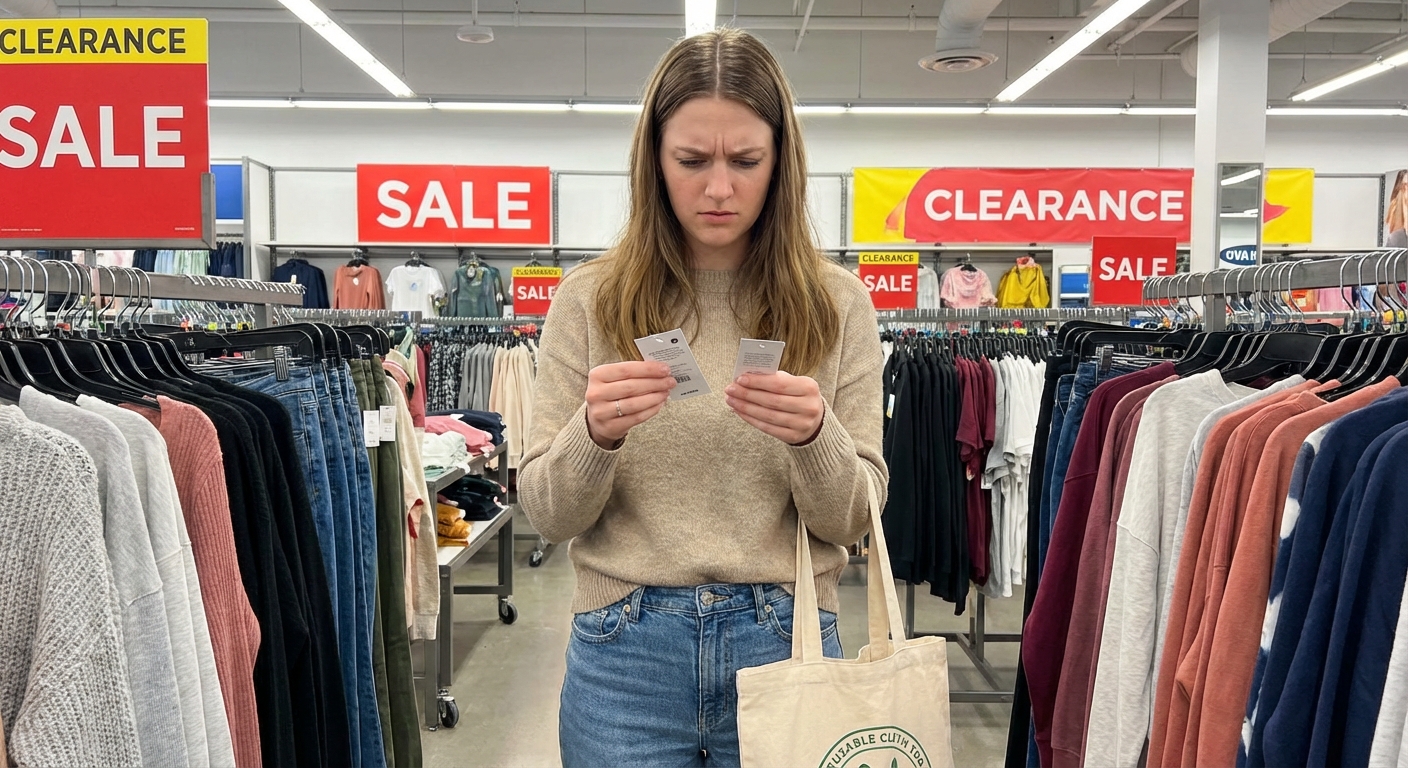
Here’s what works for me:- Scan every tag: Sometimes something is cheaper than the sticker because it’s been marked down again in the computer.
- Check for final sale: Those items can’t be returned, period. I only buy final sale if I’ve tried the exact item and size before.
- Inspect seams and zippers: I’ve found tops with twisted seams and dresses with broken zips hiding in clearance.
The upside? I once grabbed a $49.99 denim dress for $8.47 because it was a “last size” and had been marked down three times. No flaws, just lonely.
When Old Navy Isn’t the Best Deal
For all the promo noise, Old Navy isn’t always the smartest buy.
Situations where I skip:
- Heavy-use basics I’ll wear for years (e.g., a winter coat, workhorse black trousers): I’ll go up a tier in quality and longevity.
- Special-occasion clothes: I find the tailoring and fabric at Old Navy can look more casual in person than online.
- When similar items are cheaper at warehouse clubs or off-price stores: I’ve seen nearly identical joggers at Costco or TJ Maxx for less.
The Federal Trade Commission has even cautioned shoppers about reference pricing and “permanent sales,” where the “original” price rarely applies [FTC, 2017]. Knowing that, I treat every Old Navy price tag as a negotiation, not a fact.
My Go-To Old Navy Budget Formula
If you like simple rules, here’s the one I actually follow now:
- Never buy on the first sighting unless it’s a genuine wardrobe gap.
- Wait for at least 30% off, ideally 40%+ on non-essentials.
- Check the app for lower prices and rewards while I’m in the store.
- Try on for fit and fabric, not just vibe.
- Buy basics in multiples only after they pass the wash test.
Once I started using this formula, my Old Navy spend dropped by about a third over three months—while my “regret buys” pile basically disappeared.
And honestly? It’s a lot more fun to walk out with three things I absolutely love for $60 than eight maybes for $160.
Sources
- Navyist Rewards Program – Official Old Navy - Details on Old Navy/Gap Inc. rewards structure and benefits
- Federal Trade Commission: Pricing – Truth in Advertising - Guidance on reference pricing and sale claims
- Consumer Reports – How to Make Your Clothes Last Longer - Discussion of fabric composition and durability
- Deloitte 2023 Holiday Retail Survey - Insights into retail discounting and promotional patterns