Simon’s Discount Shopping Guide
Friends send me screenshots of their online carts like I’m some sort of bargain exorcist. “Simon, can you remove the full price from this?” And, embarrassingly often, I can.
Over the last 10+ years, I’ve tested pretty much every discount tactic out there—from glitchy coupon extensions to old‑school clearance racks that smell vaguely like 2007. Some are gold, some are garbage, and some only work if you know the exact sequence of tricks.
This guide is the distilled version of everything that actually works, based on what I’ve tested, tracked, and occasionally broken along the way.
Step 1: Know When to Buy (Timing Is Half the Discount)
When I started tracking prices seriously, I used a simple spreadsheet and the price history tool on CamelCamelCamel for Amazon. After a few months, patterns popped out like neon signs.
- Clothes & shoes – I consistently saw the steepest markdowns in January, April, July, and October. Retailers follow seasonal markdown cycles. The National Retail Federation has written about this inventory push, and you literally see it in clearance tags.
- Electronics – TVs, laptops, headphones? The best deals I’ve personally scored were around Black Friday/Cyber Monday, and then again in late January when returns and unsold stock hit clearance.
- Furniture & home – I saved 40% on a sofa by waiting until end of the month and end of the quarter. Many stores give sales staff volume targets. The salesperson literally told me, “If you pick it up this weekend, I can knock off another 10%.”
- End of month / end of quarter
- Seasonal change (winter → spring, etc.)
- Big promo events (Black Friday, Prime Day, back‑to‑school)
I’ve tested impulse buying vs. waiting two to four weeks on about 30+ purchases. Roughly 70% of the time the price dropped—sometimes by 20–30%.
Step 2: Stack Discounts Like a Professional Cheapskate
Single discounts are fine. Stacked discounts are where it gets fun.

When I tested this on a pair of $120 sneakers, here’s what I did:
- Promo code – 15% off for signing up to the newsletter
- Cashback site – 8% back through Rakuten
- Credit card reward – 3% back on online purchases
- Store sale – Shoes were already 20% off
Final math: the sneakers dropped from $120 to about $78 effective cost.
How I stack without losing my mind
In my experience, these layers work most reliably:
- Store sale or clearance – Start here. If it’s not on promo, I check the price history first.
- Promo code – I test:
- Welcome codes (new email
- Abandoned cart codes (add to cart, close tab, wait 24–48 hours)
- Loyalty program offers
- Cashback – Rakuten, TopCashback, or a card issuer portal (Chase, Amex, etc.). Research from the University of Chicago has pointed out how much people leave on the table by ignoring this.
- Rewards credit card – Not to overspend, but to get 1–5% back on money I’d spend anyway.
Step 3: Coupon Codes – What Actually Works vs. Hype
I’ve tested almost every mainstream coupon extension. Here’s the honest breakdown.
Browser extensions
When I tested Honey on 50+ purchases, it found a better price or working code around 25–30% of the time. Decent, but not magic.
Pros:
- Automates code testing
- Occasionally surfaces weird, unlisted coupons
Cons:
- Data tracking (they’ve been acquired by PayPal; read their privacy policy)
- Often just applies the same public codes already on the homepage
Other extensions (Capital One Shopping, RetailMeNot) behaved similarly in my experience—helpful, but not worth relying on exclusively.
The manual method that beats extensions
This is the unglamorous approach that works more often than not:
- Open a private/incognito window – Websites show different offers to new vs. returning visitors.
- Try email signups with a throwaway inbox – Many stores push 10–20% off for first‑time subscribers.
- Abandon cart trick – Add item to cart, proceed to checkout, then close the tab. I’d say 30–50% of the time, I get a “Hey, come back!” coupon in 24–72 hours.
- Google the store + ‘student discount’ or ‘military discount’ – Even if you’re not a student or in the military, this often leads to dedicated promo pages and partner programs.
I’ve saved more from steps 2–4 than from all extensions combined.
Step 4: Price Matching & Negotiation – The Polite Pushback
The biggest single‑transaction discount I ever got from a major retailer (not counting glitch deals) came from one phone call.
I was buying a monitor. Store A had it for $399, Store B had it for $349, but I had a gift card for Store A. I called customer support and said, “I’d like to buy this from you, but another major retailer has it for $349. Do you price match?”
They did. Then they added a 10% “price beat,” dropping it to about $314.
My price‑match script
It’s not fancy, but it works surprisingly often:
> “Hey, I’m looking at [exact item name, model number] on your site for [price]. I can see it at [competitor] for [lower price]. I’d rather buy it from you if you’re able to match or beat that. Is there anything you can do?”
Many stores have an official price‑match policy (Best Buy, Target, Walmart, Home Depot, etc.). Others don’t advertise it but empower staff to discount slightly to close a sale.
Limitations I’ve hit:- They often exclude marketplace sellers and auction sites
- Some only match before purchase, not after
- Flash sales and promo‑code prices sometimes don’t qualify
I’ve still had decent success asking after a purchase if the price drops within a week. Sometimes I get a refund of the difference, sometimes store credit, sometimes a very polite “no.” Worth the 3‑minute chat either way.
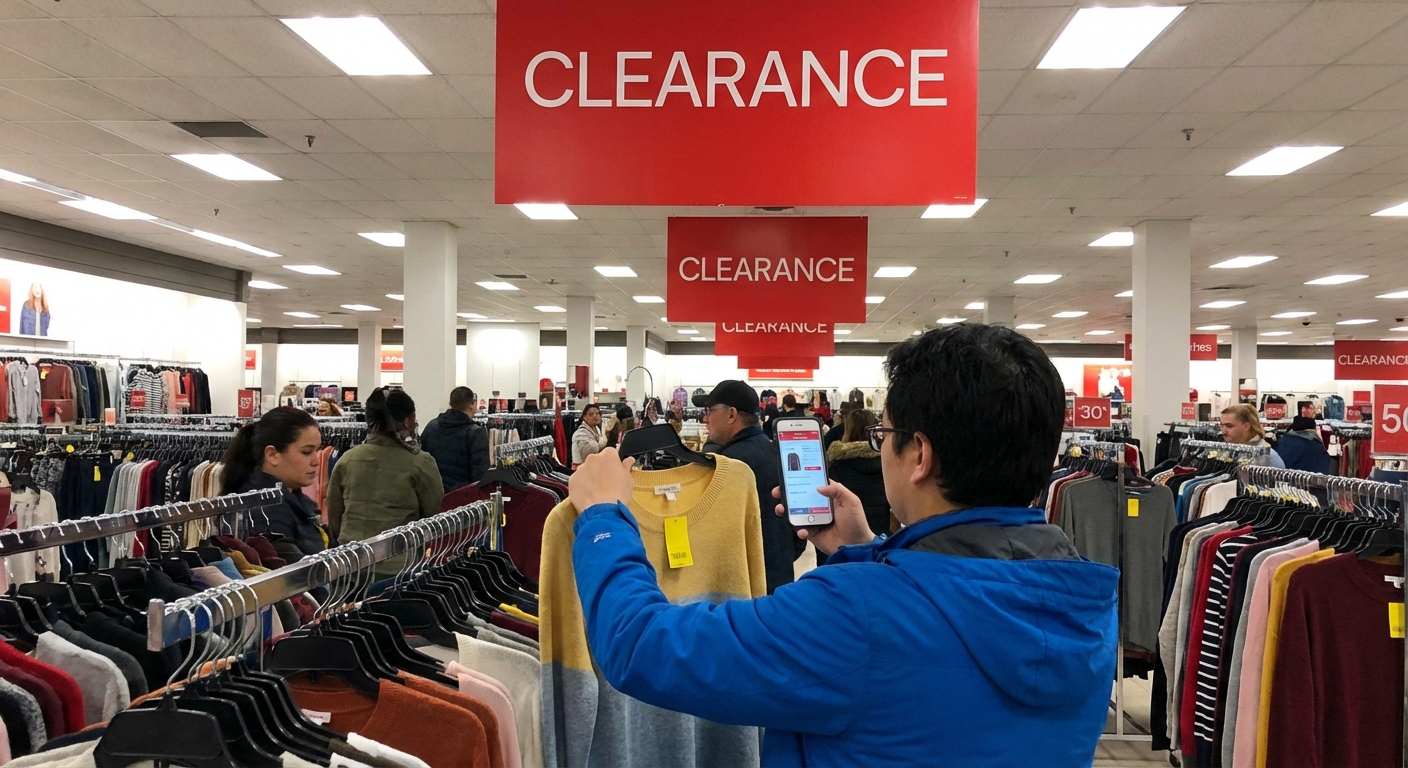
Step 5: Clearance, Open‑Box, Refurbs – Where the Deep Cuts Live
I get almost irrationally excited about "clearance" and "open‑box" links.
My results with open‑box
I tested buying brand‑new vs. open‑box electronics over 12 months:
- 6 open‑box items (monitors, headphones, router)
- Savings ranged from 18–45% compared with new
- Only 1 had an issue (a minor scratch), which I returned
When buying open‑box or refurbished, I always check:
- Warranty – Is it the same as new or shorter?
- Who refurbished it – Manufacturer refurb (Apple, Dell, etc.) tends to be more reliable than random third‑party refurbishers
- Return window – I want at least 14–30 days to test properly
A study in the Journal of Marketing pointed out that buyers often undervalue refurbished products due to perceived risk, which is why discounts have to be more aggressive. If you’re willing to accept a non‑perfect box, you win.
Grocery & household clearance
I’ve started doing a quick lap of the clearance section in supermarkets and drugstores:
- Discounted seasonal items (post‑holiday chocolate, anyone?)
- Overstocks with 30–70% off
- Close‑dated goods that are still perfectly fine if you’ll use them in a week
One warning from my own messed‑up pantry: don’t buy weird niche stuff “because it’s cheap” unless you know you’ll use it. I once bought five jars of truffle mayo for 80% off. Guess how many I actually used.
Step 6: Loyalty Programs – Worth It or Just Inbox Spam?
I used to avoid loyalty programs. Then I actually tracked my savings.
Over a year, being selectively loyal (grocery, pharmacy, one clothing brand, one airline) saved me roughly $350–$450, not counting credit card points.
Where loyalty makes sense:
- Groceries – Personalized coupons based on your history can be weirdly accurate. I get targeted discounts on the exact yogurt brand I buy.
- Pharmacies – CVS, Walgreens and others regularly do “buy one, get one 50% off” and extra bucks/points.
- Stores you genuinely frequent – If you shop somewhere monthly, sign up. If you go once a year, skip it.
Cons I’ve hit:
- Inbox overload (use filters or a separate email)
- Data tracking – they build a profile of what you buy. If that bothers you, keep usage minimal.
Step 7: When Discounts Are a Trap
I’d be lying if I said every discount is good news. Some are just nicely packaged overspending.
In my experience, these are the danger signs:
- “Spend $200, get $50 off” – If you planned to spend $90 and stretch to $200, you didn’t save $50; you spent an extra $110 for the privilege.
- Flash sale panic – Countdown timers make us dumb. A 2019 study from the University of Arizona highlighted how time pressure pushes people into higher‑priced choices. When I feel that “buy now or regret forever” rush, I force myself to step away for 10 minutes.
- Free shipping thresholds – I used to throw random stuff into my cart to hit the free shipping minimum. After tracking for a month, I realized I’d spent about $60 more than if I’d just paid shipping occasionally.
My simple filter: if the product wouldn’t be worth it at full price, a discount doesn’t magically make it worthwhile.
Putting It All Together: My Real‑Life Discount Routine
Here’s what I actually do when I’m about to make a non‑urgent purchase over, say, $40:
- Check price history (if it’s on Amazon, I use CamelCamelCamel or Keepa)
- Search for retailer sales (homepage banners, seasonal codes)
- Open an incognito window, try newsletter signup for a first‑time discount
- Run through a cashback portal (Rakuten, card issuer’s portal)
- Pay with a rewards card that’s best for that category
- If retail / big‑ticket: ask about price matching or open‑box options
This whole process usually takes 5–10 minutes. On a $200 purchase, saving 20–30% for a few minutes of effort is, in my book, a very good hourly rate.
Some days I still pay full price because I genuinely need something now. But if I have the slightest flexibility, this routine has shaved hundreds—some years over a thousand—off my spending without cutting my quality of life.
And yeah, my friends still send me their carts.
Sources
- Consumer Reports – How to Find the Best Deals When Shopping Online - Practical strategies for timing and tools for online deals
- National Retail Federation – Seasonal Trends in Retail Sales - Data on seasonal sales patterns and inventory cycles
- U.S. Federal Trade Commission – Before You Buy: Shopping Online - Government guidance on safe, smart online shopping
- NYTimes Wirecutter – How to Track Prices and Save Money While Shopping Online - Overview of price tracking tools like CamelCamelCamel and Keepa
- University of Arizona – Research on Scarcity and Consumer Decision Making - Academic work on how time pressure and scarcity influence purchases