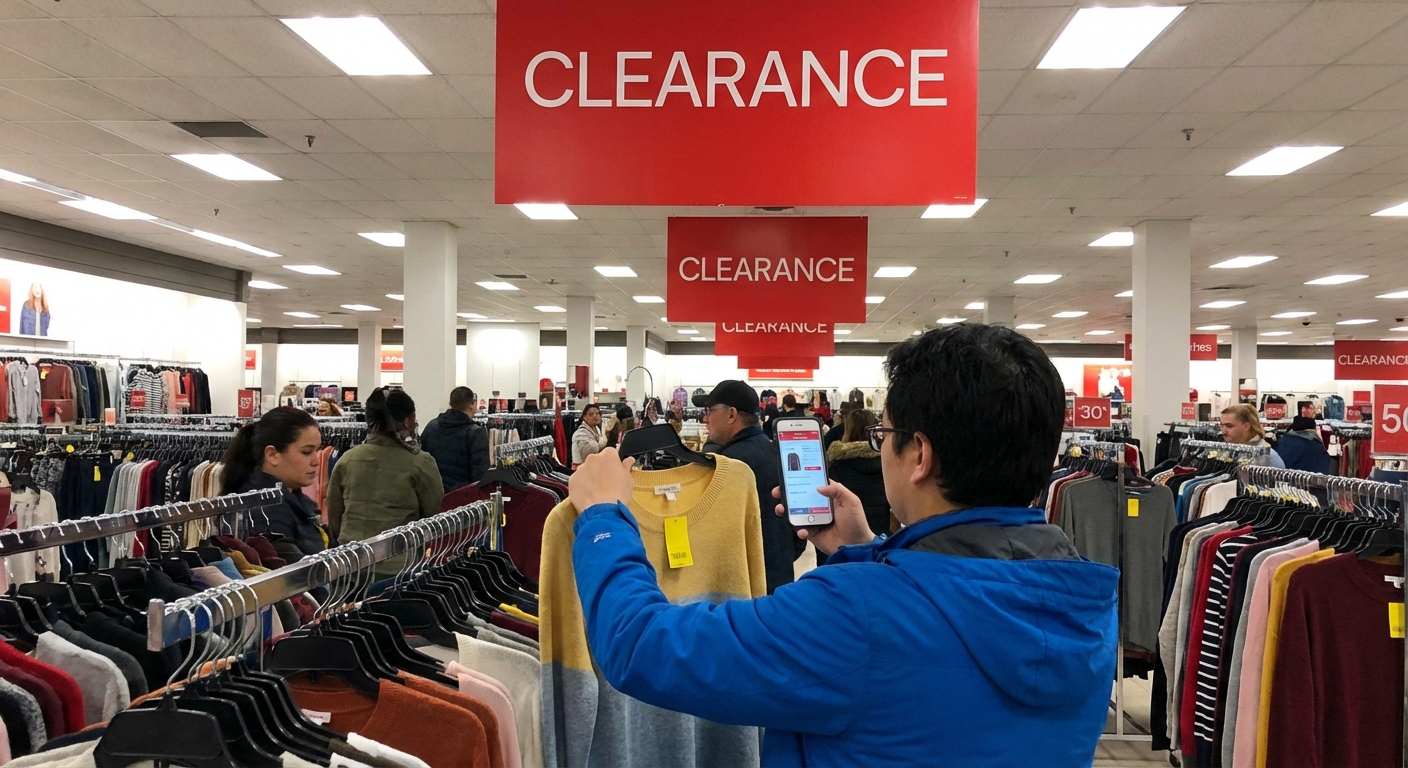
Target Clearance Sections Guide
One random Tuesday, I wandered into a Target for paper towels and walked out with a $9.99 cordless handheld vacuum that had been $39.99 the week before. That was the day I realized Target’s clearance sections aren’t just a messy rack in the back—they’re a whole strategy.
Over the past year, I’ve started tracking markdown patterns, talking with store employees, and testing every hack I’ve seen on TikTok and Reddit. Some of those “tips” were total nonsense. Some were almost freakishly accurate.
This guide is everything that’s actually worked for me—plus a few things that absolutely did not.
Where Target Hides the Good Clearance
I used to think clearance was just that one sad endcap by the fitting rooms. Nope. When I started deliberately walking every aisle (yes, I became that person), I found consistent patterns.
In my experience, these are the hot zones:
1. Endcaps on the back of aisles
Target loves to use the backs of endcaps for clearance. The front-facing ones usually have current promos; the backside is where the weird markdown magic lives.
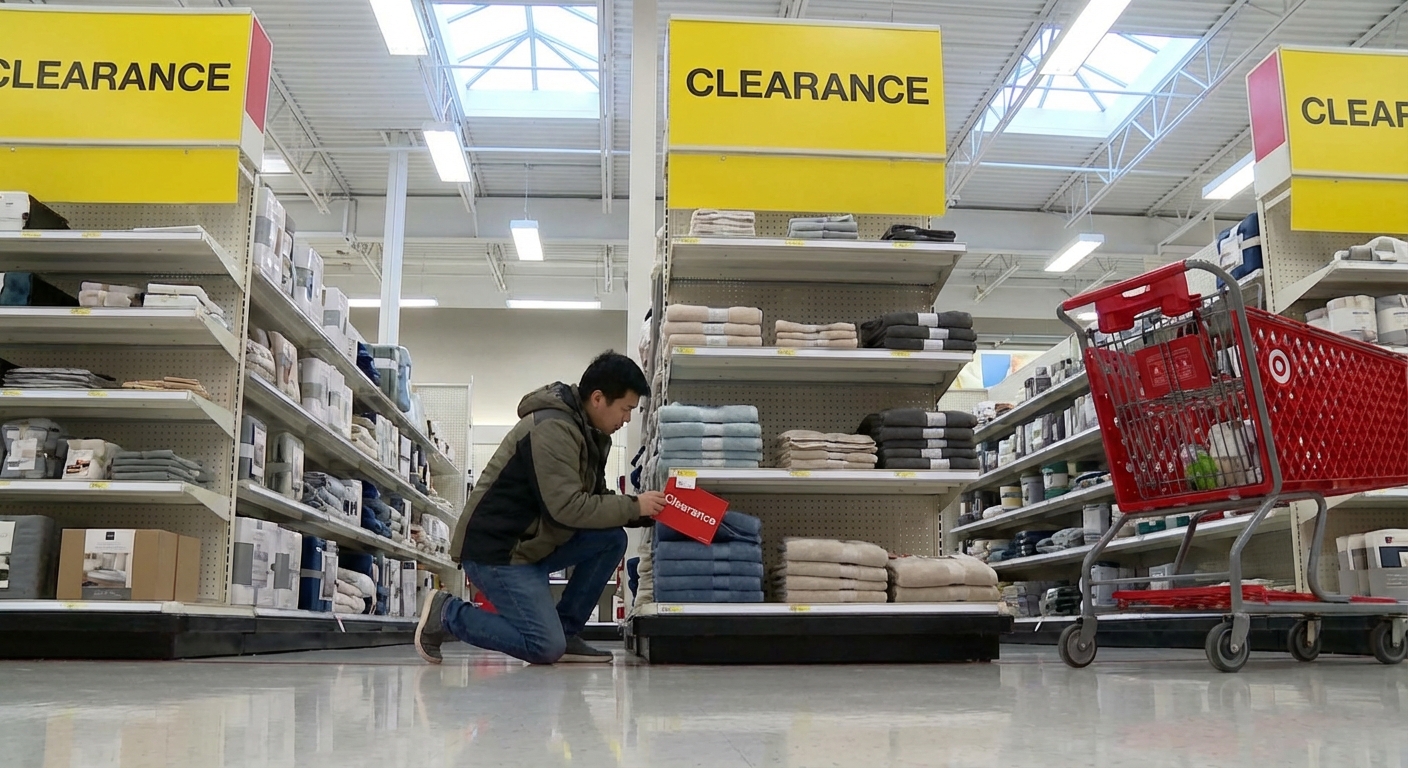
I’ll walk the perimeter of each department, scanning those hidden endcaps:
- Home & Kitchen – usually near small appliances and storage
- Beauty & Personal Care – random hair tools, gift sets, and discontinued brands
- Toys – post-holiday toy purges can be wild
I recently scored a $79.99 air fryer for $23.98 on a random home endcap in July. No big yellow “CLEARANCE” sign. Just a tiny red sticker.
2. Seasonal swap zones
After Christmas, Halloween, Easter, and back-to-school, Target basically evacuates seasonal aisles.
From what I’ve seen:
- Holiday items often start at 30–50% off, then move to 70–90% as Target clears space
- The deepest discounts usually kick in after a few days of slow sales, not instantly
I tested this with Halloween: I went the day after (meh, 30–50% off). I waited until day four—suddenly costumes were 70% off and candy was ridiculous. I bought a $25 costume for $7.50 just to have on hand for a future themed party.
3. Random single items in regular aisles
The sneakiest clearance of all: items that look full-price on the shelf but scan lower.
Sometimes Target doesn’t update the shelf tag right away. I’ve grabbed candles, storage bins, and shampoo that rang up cheaper than their shelf labels.
Now I scan anything that feels like it might be getting phased out—seasonal colors, weird sizes, old packaging.
How Target’s Markdown System Actually Works
There’s a lot of mythology online about Target’s secret codes and magic markdown days. I’ve tested as much of it as a normal person reasonably can.
The yellow and red clearance tags
When I tested prices across multiple stores in my area, the pattern was consistent:
- Clearance tags show the original price, the new price, and a tiny percentage off in the corner (though not always obvious)
- Final “last chance” markdowns are usually weird prices like $3.48 or $7.98
Some older blogs claim that if a clearance price ends in a specific number (like $.04 vs $.08) it means it’s the last markdown. From what I’ve seen, that rule isn’t universal anymore. It varies by store and region.
Weekly markdown “day of the week” myth
There’s a popular rumor that each department has a set markdown day (like Home on Thursdays, Clothing on Mondays, etc.). I asked three different Target employees in different states. Their answers:
- One said, “We used to have set days a few years ago, but it’s more flexible now.”
- Another said it depends on the shipment schedule and inventory needs.
- The third literally laughed and said, “I wish it was that organized.”
In my experience, clearance gets updated throughout the week, with heavier activity early in the morning and earlier in the week—but it’s not a reliable enough pattern to plan an entire trip around.
Tools That Actually Help You Win Clearance
The biggest game-changer for me has been treating Target like a data source, not just a store.
1. The Target app (secret weapon)
When I tested the Target app against in-store prices, I found a few key things:
- If you’re on the same store’s Wi‑Fi, the app usually shows that store’s specific pricing
- Sometimes the app shows online-only prices that are lower than in-store
- Target will often honor the lower online price at Guest Services (though this can vary, and they won’t usually stack it on top of clearance)
I scan clearance barcodes with the app to:
- Check if it’s even cheaper online
- See if other nearby stores have it in stock
I’ve had mixed luck with price adjustments—some stores are super helpful, some stick hard to policy. Be prepared for both.
2. RedCard and Target Circle
I’m not sponsored by Target (I wish), but:
- RedCard gives an extra 5% off almost everything, including most clearance
- Target Circle offers rotate, and occasionally there are stackable offers that apply to clearance
One time I combined:
- A 50% off clearance rug
- A 15% Circle home decor offer
- My 5% RedCard
That $120 rug came home with me for under $40. That’s the moment I realized stacking is the real sport.
3. BrickSeek, Deal forums, and reality checks
Sites like BrickSeek and Reddit’s r/Target often post clearance sightings. When I tested these, I learned:
- They’re great for trends (e.g., “Hey, Magnolia home collection is getting clearanced out nationwide”)
- They’re bad for guarantees (your store might never get the same markdowns)
I treat them as “maybe” inspiration, not promises.
What’s Actually Worth Buying on Clearance
Not all clearance is a win. I’ve had some regret buys that still haunt my hall closet.
Categories I hunt aggressively
Home & kitchen — especially:- Small appliances being replaced by new models
- Storage bins, baskets, and organizers
- Off-season bedding colors
- Discontinued shades or limited packaging runs
- Gift sets after holidays (often cheaper than buying a single item at regular price)
- Post-birthday-party gifts for your “gift closet”
- Lego sets and board games after major shopping seasons
Categories I’m more cautious about
Electronics- Often final sale
- Sometimes older tech that won’t get software updates
- I always search reviews and check release dates before buying
- Shorter dates, obviously
- I’ve had some wins (fancy snacks, random granola) and some truly weird impulse buys I regretted
- Amazing deals, but easy to over-buy
- I ask myself: “Would I pay almost full price for this?” If the answer is no, I put it back.
Timing Your Trip: When the Deals Peak
No one wants to live at Target (well… most of us). So I’ve tested different times and days to see patterns.
In my experience:
- Weekday mornings: Best chance of freshly marked clearance, especially Tuesday–Thursday
- Right after major holidays: Good, but not the absolute best markdowns
- 3–7 days after a major holiday: The real clearance bloodbath
- Late at night: Great if you hate crowds, but markdowns for the day are usually done
I also pay attention to floor resets—when Target completely rearranges an area. That’s when older lines or colors quietly get shoveled into clearance.
The Ethical (and Practical) Side of Clearance Hunting
There’s a slightly obsessive side to this hobby that can get unhealthy—and expensive.
Things I’ve learned the hard way:
- A 70% off thing you don’t need is still 30% too expensive
- Hoarding “future gifts” can become clutter fast
- Some resellers clear entire sections, which is frustrating for regular shoppers and retail workers
I try to:
- Stick to a pre‑written list of categories I’m allowed to browse (like organizers, kids’ gifts, home basics)
- Limit myself to a monthly clearance budget
- Skip buying multiples unless I have a specific person or event in mind
Target’s own corporate responsibility reports talk about inventory management and waste reduction; clearance is part of that ecosystem, not just a bargain bin. When I remember I’m helping move old inventory responsibly (and not just hoarding stuff), I make better decisions.
What No One Tells You About Target Clearance
A few rapid-fire truths I’ve learned:
- Not every store gets the same markdowns; higher-income areas often have faster and deeper clearance cycles
- Clearance can go back to full price if the system reclassifies an item (I’ve watched this happen in real time in the app)
- You can return most clearance items, but check your receipt—some final markdowns are marked “as is” or final sale
- Sometimes the real win isn’t buying, it’s walking away and realizing you just saved 100% by not grabbing a $6 throw pillow you’ll never use
When I treat Target clearance sections like a strategic game instead of a chaos bin, I save more money, bring home less random junk, and actually enjoy the hunt.
Will you score a $5 espresso machine every trip? Absolutely not. But if you learn your local store’s patterns, use the app, and stay picky, you’ll be shocked how often you walk out with something you genuinely needed at a price that feels almost illegal.
Sources
- Target Corporate – Clearance, promotions, and pricing information - Official overview of Target’s shopping and pricing practices
- Target RedCard Benefits – Target.com - Details on RedCard discounts and policies
- U.S. Bureau of Labor Statistics – Consumer Expenditures - Data on how Americans spend on retail and household items
- Harvard Business Review – The Psychology Behind Why We Buy - Insight into consumer behavior and discount appeal
- Federal Trade Commission – Shopping Online and In Stores - Guidance on fair pricing and consumer rights