Target Deals and Offers Guide
g, I realized I’d been leaving a lot of money on the table. When I tested a more intentional strategy — pairing Circle offers, store promos, and clearance — my monthly Target spend dropped by about 25% without buying less.
This guide is exactly what I wish I’d had when I started: a practical, no-fluff way to squeeze real value out of Target’s deals and offers.
Understanding Target’s Savings Ecosystem
Target doesn’t have just “sales”; it has an entire ecosystem of overlapping offers. Once you understand the structure, it stops feeling random and starts feeling… kind of like a game.
In my experience, the big pillars are:
- Target Circle (the free loyalty program)
- Category & storewide promos (like “Spend $50, get a $15 gift card”)
- Stackable manufacturer coupons
- RedCard (Target Circle Card) extra savings
- Clearance and seasonal markdown cycles
When I tested combining these instead of just grabbing the weekly ad item, the difference was wild. On a single household restock trip — detergent, paper towels, cleaning sprays, and snacks — I saved $31 off a $110 cart just by stacking.
Let’s break it down.

Target Circle: The Base Layer of Savings
Target Circle is free, and if you’re shopping there without it, you’re basically tipping the store for no reason.
How Target Circle Actually Works
When I first signed up, I assumed it was just random coupons. It’s a bit more structured than that:
- Personalized offers (based on what you actually buy)
- Category offers (like 20% off snacks or 10% off beauty)
- Manufacturer coupons (these often mimic traditional paper coupons but are digital)
- Rewards (a small % back on purchases, usually 1%, that converts into Target spending)
According to Target’s own data, the Circle program had over 100 million members by 2023, and they’ve continued expanding offer types and app integration.
How I Use It in Real Life
I recently tested a very simple habit shift: I wouldn’t walk into Target unless I’d opened the app and clipped offers for what I knew I needed.
For example, one week I:
- Clipped 15% off household cleaners
- Added a $3 off Tide manufacturer coupon
- Used a spend $50, get $15 gift card household promo
On that trip, I:
- Paid less than Costco per ounce for detergent
- Stocked up on trash bags and all-purpose cleaner
- Walked out with a $15 gift card for next time
The con? Target Circle offers rotate and can be super specific. Sometimes what you actually need… just doesn’t have an offer that week. I’ve learned to leave things on the shelf instead of forcing a “deal” that isn’t one.
Storewide & Category Promos: Where the Big Wins Happen
The offers that really move the needle tend to be:
- “Spend X, get a Y gift card” (like $15 off $50 on household or baby)
- Buy 3, get a $10 gift card (often household brands, haircare, or pet)
- BOGO 50% off across categories (beauty, toys, books)
When I plan around these promos — especially for stuff we burn through constantly — that’s when the savings percentage jumps.
A Real Cart I Built Around a Promo
When I tested a “Spend $50, get a $15 gift card” on baby items, I:
- Bought diapers, wipes, and baby wash that were already slightly discounted
- Used a manufacturer coupon on diapers
- Applied a Circle percent-off offer on baby toiletries
Final math:
- Shelf price total: about $68
- After Circle + coupons: around $56
- Got a $15 gift card back
Net: roughly $41 for what would’ve been $68.
The downside is psychological: you can get tricked into buying extras just to “hit the threshold.” I’ve definitely thrown a random bag of candy into my cart just to hit $50. Now I give myself a rule: if I wouldn’t buy it without the promo, it doesn’t count.
RedCard (Target Circle Card): Worth It or Not?
I dragged my feet on getting a Target RedCard for years because I hate store cards. Eventually, I tested the debit version — which links to your checking account — and it’s been less scary than I expected.
Benefits I actually use:- Extra 5% off most purchases
- Extended returns window (helpful for home goods and clothing I’m unsure about)
- Occasional cardholder-only promos
For a family spend of, say, $300/month at Target, that 5% alone is about $15 a month, or $180 a year, before Circle offers.
Cons / Cautions:- The credit version is still a credit card — if you carry a balance, the interest kills any savings.
- 5% off doesn’t stack with some specialty promos (like certain prescriptions or gift cards).
In my experience, the debit RedCard hits the sweet spot: consistent savings without the “oh no, I forgot to pay the bill” risk.
Clearance, Seasonal Timing, and Markdown Patterns
Here’s where it starts to feel like insider baseball.
Target has fairly predictable markdown rhythms. While exact days and practices can vary by store and region, patterns I’ve personally seen — and that line up with many deal forums — look like this:
- Holiday seasonal items (like Halloween, Christmas, Valentine’s): often follow a pattern like 50% off, then 70%, then up to 90% off over 1–2 weeks after the holiday.
- Home décor and bedding: Target tends to clear out old collections as new seasonal lines drop, especially after big resets (think early January and late summer).
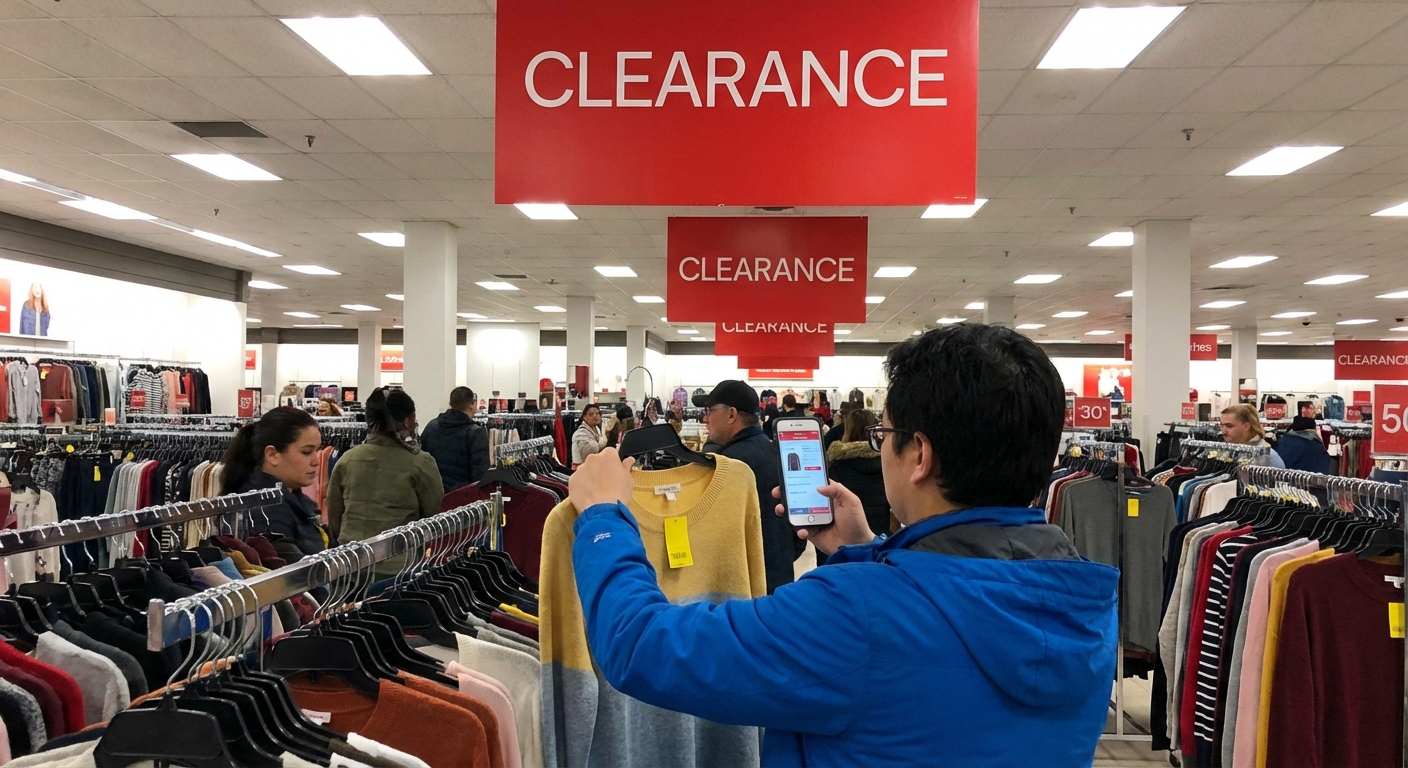
- End caps: Those little red clearance tags on the aisle ends can be deceptively good if you know regular prices.
When I tested waiting until the second wave of markdowns after Christmas (instead of raiding the 50%-off bins on December 26th like everyone else), I picked up:
- Wrapping paper for under $1 a roll
- Gift bags and tissue for pennies on the dollar
- Neutral gift boxes I use all year
Downside: you need storage space, and you won’t always get the “cute” designs — you’re shopping what’s left.
Online vs. In-Store: Where the Better Deals Are
I used to assume in-store was always cheaper. Then I started price-checking the app while standing in the aisle.
What I’ve seen:- Sometimes the online price is lower than in-store. I’ve had success asking Guest Services to match Target’s own online price.
- Online often has extra Circle or category offers you won’t see highlighted in-store.
- Drive Up and Order Pickup can trigger additional promos, especially around busy seasons.
On a recent test, I built the same cart two ways:
- In-store, just grabbing what I needed
- In the app, making sure I optimized Circle offers + online pricing
The app build won by about 10–12% after everything stacked.
The con: it takes a bit more time and focus. Some days, I just don’t have the patience and accept paying “convenience tax.”
Stacking Strategy: How to Max Out a Single Trip
Here’s the basic stack I try to achieve when I’m doing a big Target run:
- Start with a promo: like “Spend $50 on household, get $15 gift card”
- Layer Circle percent-off offers: 10–20% off categories or brands
- Add manufacturer coupons: digital or paper
- Apply RedCard 5%: on the remaining balance
Example from a household restock trip I actually did:
- $60 of qualifying household items during a gift card promo
- 15% Circle offer on one cleaning brand
- $3 manufacturer coupon on laundry detergent
- RedCard 5% at checkout
After offers + gift card value, my effective discount was around 30%.
But here’s the honest part: sometimes the puzzle isn’t worth solving. If you’re only grabbing milk, bananas, and a pack of sponges, chasing a promo threshold will cost you more than it saves.
When Target Isn’t the Best Deal
As much as I love Target’s ecosystem, it’s not unbeatable.
In my experience, Target loses in these scenarios:
- Bulk basics: Warehouse clubs (Costco, Sam’s) often beat Target on giant packs of basics if you’ll actually use them.
- Certain groceries: Aldi or local grocers may undercut Target on produce and staple foods.
- Specialty electronics: Sometimes Amazon or direct-from-brand sales are lower, especially during events like Prime Day or Black Friday.
I still sanity-check big-ticket items using quick price comparisons. If Target’s within a few bucks and I’m stacking gift cards or Circle offers, I’ll stay. If it’s way off, I don’t force it.
Final Take: Is Chasing Target Deals Worth the Effort?
When I first started leaning into Target deals, it felt like a part-time job. Now it’s just a short pre-trip ritual:
- Open app
- Check weekly ad + Circle
- Decide if there’s a promo worth planning around
- Build my cart intentionally instead of wandering
On a busy week, I might just clip a few offers and call it a day. On a stock-up week, I lean harder into promos and stacking.
In my experience, if you’re already shopping at Target regularly, learning how to ride their deals wave doesn’t just save money — it makes the whole thing oddly satisfying. Like you’re playing the same game as everyone else… but with the cheat codes turned on.
Sources
- Target Corporate – Target Circle Overview - Official details on Target Circle program structure and benefits
- Forbes – Target’s Loyalty Program Hits 100 Million Members - Coverage of Target Circle’s growth and impact
- Consumer Reports – How to Save Money at Big-Box Stores - Research-backed strategies for maximizing savings at retailers like Target
- NYTimes – The Psychology of Retail Sales and Promotions - Explores how sales and promos influence shopper behavior
- USA.gov – Credit Cards: Use and Management - Guidance on responsibly using store and credit cards, relevant to Target RedCard users