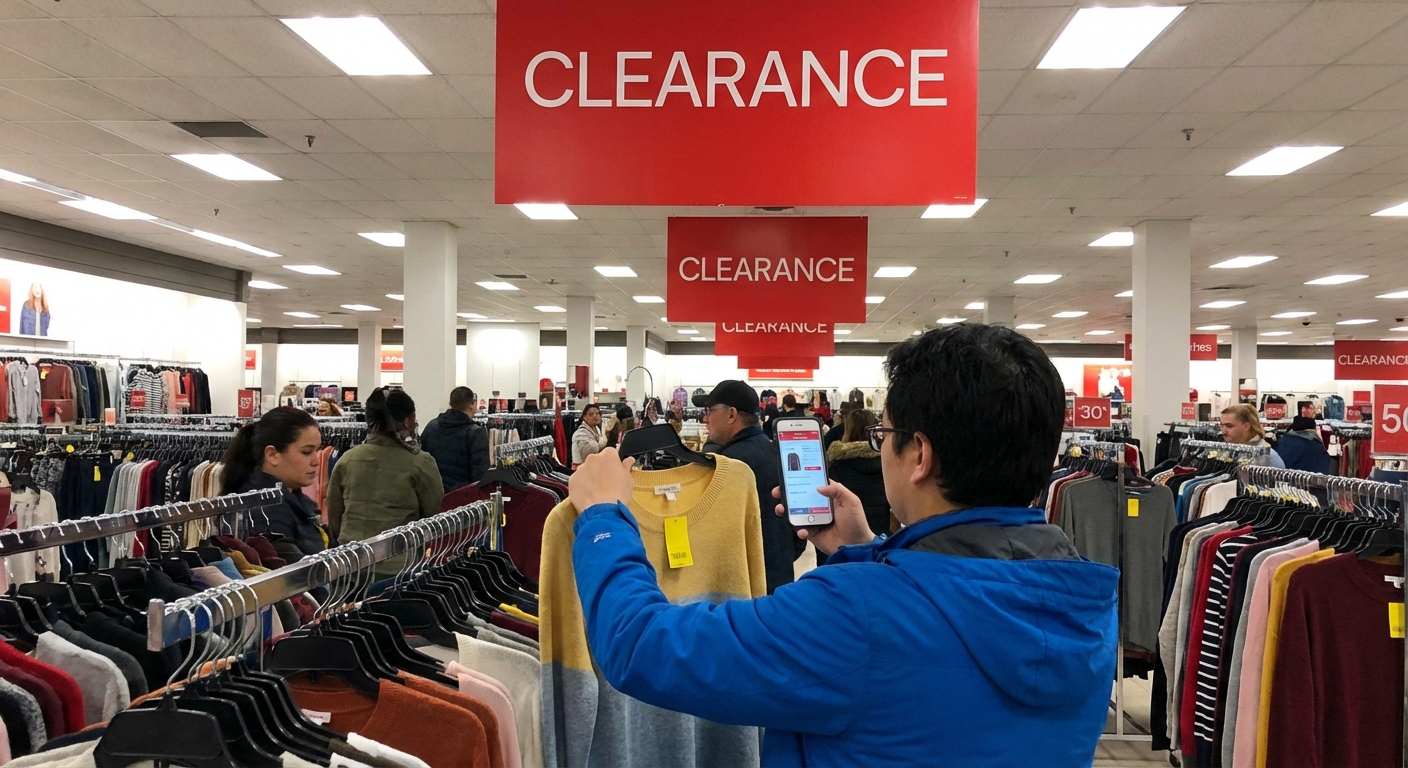
The “Second Cart” Trick That Made Online Shopping Way Less Chaotic
At any given time I had: three different air fryers, a neon lamp I absolutely did not need, six nearly identical black hoodies, and a $200 “ergonomic” chair that looked like a Transformer. Half the time I’d panic-buy something random at midnight, then forget to return it, then feel guilty every time I looked at my bank app.
Then I stumbled into a weird little system that completely changed how I shop online: a “second cart.”
Not a wishlist. Not some boring budget spreadsheet.
An actual second, off-platform cart where I “shop like a maniac” first… then decide like a rational human later.
And it’s made me buy better stuff, return less, and feel way less like I’m losing a psychological battle to bright red “SALE ENDS SOON” banners.
Here’s how it works, what I messed up along the way, and why this system secretly plays on the same psychology ecommerce teams use on you—just in reverse.

Why Your Online Cart Is So Emotionally Loud
I didn’t realize how noisy my brain got around shopping until I started paying attention to what happened when I hit “Add to cart.”
My inner monologue was basically:
- “This is 40% off, it’s a crime not to buy it.”
- “Future me will definitely bake bread every weekend.”
- “I deserve this. I had a long day. And also a long life.”
That chaos isn’t random. It’s literally how most ecommerce sites are designed.
Retailers use a mix of:
- Anchoring – Showing the high “original” price next to the sale price so the discount feels huge
- Scarcity & urgency – “Only 3 left!” or “Sale ends in 2 hours!” to trigger FOMO
- Social proof – “15,394 people bought this in the last week!” to make it feel safe and popular
The American Marketing Association and countless behavioral economics studies have documented how these tactics nudge us toward impulse decisions based on emotion more than need or usefulness. And it works. A 2021 survey from PWC found that 53% of global consumers say promotions heavily sway their shopping decisions—often more than actual necessity or quality.
When I started digging into this, what struck me wasn’t “brands are evil.” It was: they have a system. We don’t.
We open an app “to browse” with:
- No clear categories
- No rules for future-us
- No dedicated space for “just looking”
So we end up with carts that feel like a personality test we’re failing.
That’s where the second cart comes in.
How My “Second Cart” System Actually Works (And Why It’s Not Just a Wishlist)
Here’s the basic idea: your real cart isn’t on the shopping site at all.
It lives somewhere neutral: a notes app, Notion, Google Sheets, even a private Pinterest board. Anything that’s:
- Not screaming SALE
- Not one click away from checkout
- Not full of tracking cookies and urgency timers
Here’s how I use mine step by step.
Step 1: I Shop Like a Gremlin First
When I’m in “scroll and crave” mode, I let myself add anything that catches my eye… but I never leave it in the retailer’s cart.
Instead, I copy it into my second cart with four tiny pieces of info:
- Product name + link
- Price (and any discount I’m seeing)
- Category (clothes, kitchen, tech, gifts, etc.)
- “Why now?” – one short sentence in my own messy words
Example from my actual second cart:
> Item: Minimalist desk lamp – warm light
> Price: $59 (no sale)
> Category: Home / Workspace
> Why now? My current lamp is way too harsh and makes late-night work feel like an interrogation room.
I don’t judge it. I don’t edit my reasons. I just brain-dump.
This part mimics what sites want you to do—impulsively collect items—but moves it to a space where you’re not two clicks from regret.
Step 2: I Let Everything “Cool” For a Bit
The second cart has one non-negotiable rule for me:
> If it’s not food, medicine, or a real emergency, it lives in the second cart at least 48 hours.
Sometimes longer. Sometimes I batch items and review them once a week.
This isn’t about moral purity. It’s about letting the brain chemistry reset. Research from consumer psychology and dopamine studies shows that the reward centers of our brain light up during the anticipation of getting something new—often more than from actually owning it.
That little time gap lets anticipation cool down so I can see what still holds up when I’m not half asleep and doomscrolling.
Step 3: I Review With “Future Me” in the Room
When I come back to the second cart, I pretend I’m my own slightly skeptical friend.
For each item I ask:
- Does this solve a recurring annoyance? (Or did TikTok convince me I have a problem?)
- Would I be annoyed if I didn’t buy this in a month?
- Is there something I already own that does 70% of the job?
- Will this cost me extra time? (Cleaning, charging, organizing, maintaining)
The big one for me is that second question. When I tested this with a pair of very aesthetic, very unnecessary wireless speakers, I realized I’d be… totally fine never owning them. I just liked the vibe of the ad.
If an item still holds up, it “graduates”:
- I move it into a “Buy This Week” or “Buy Next Month” section
- Or, if it’s a big purchase, into a separate “Savings Goal” tab
It doesn’t sound dramatic, but this tiny gatekeeping step probably saved me from the air fryer apocalypse.
Why Not Just Use Wishlists?
I tried.
The problem with in-app wishlists:
- They still sit inside dopamine land
- They’re built to pull you back with “PRICE DROP!” and “SALE ENDING!” notifications
- They blur the line between “want someday” and “I’m actually planning for this”
My second cart feels more like a private decision lab. No marketing. No nudges. Just me, my brain, and an unflattering look at my late-night impulses.
What Changed When I Started Tracking “Return Regret” Instead of Just Spending
The wildest shift wasn’t actually in how much I spent (though that went down). It was in how I felt about what I kept.
Before the second cart system, I had this recurring cycle:
- See something “on sale”
- Panic buy
- It arrives, I half-like it
- I procrastinate returning it
- I end up keeping it out of guilt/laziness
It wasn’t just money. It was the emotional clutter of “I guess I’m the type of person who buys gadgets and then doesn’t use them.”
So I added one more column to my second cart: “Did I regret this?”
After I actually buy something and use it for a few weeks, I go back and label it:
- “Loved – used weekly”
- “Meh – used a few times”
- “Regret – barely touched or feels off”
Over a couple months, patterns emerged:
- I almost never regretted replacements for things I already used to death
- I often regretted “aspirational lifestyle” purchases (looking at you, fancy juicer)
- I rarely regretted boring upgrades (better surge protectors, decent socks, a good can opener)
- I frequently regretted “limited edition” anything
This matched what consumer research keeps finding: we think the most exciting purchases will make us happiest, but functional, high-utility items quietly deliver more satisfaction over time.
Knowing my personal regret patterns made future decisions absurdly easier.
When I tested this recently on a $120 “smart” water bottle, I could instantly see: “Oh. This is another aspirational gadget. Historically, these end up in the regret column.” I passed. No moral judgment, just data.
The Weird Side Effect: Shopping Feels… Calmer Now
I didn’t expect a spreadsheet (mine happens to be a Notion page) to make shopping feel more human, but it actually did.
Here’s what shifted for me.
1. I Stopped Arguing With Myself in the Cart
Before:
I’d stare at my retailer cart thinking, “You don’t need this. But also you deserve this. But also you’re trying to save. But also SALE.”
Now:
The retailer’s cart is never the decision place. It’s just the checkout room. All the actual “Should I?” conversations happen in the second cart, where there’s no countdown timer screaming at me.
That separation removed so much tension.
2. “Treat Yourself” Feels Real Instead of Random
I’m not anti-shopping. I like nice things. I like little treats.
The second cart didn’t kill that; it focused it.
Now, when I decide to splurge, it’s usually on something that’s been in the “waiting” area for weeks, survived multiple reviews, and still feels exciting and genuinely useful.
The hit of joy isn’t drowned in guilt anymore. I planned for it. I voted for it several times.
3. I Buy Less Stuff—But Better Stuff
Because everything has to survive the cool-down period, weak contenders quietly die off.
When I do buy, I’m more willing to spend a bit extra on:
- Higher quality fabrics
- Brands with decent repair/return policies
- Products with solid expert or long-term user reviews (not just “it arrived fast!”)
This lines up with what consumer advocates and sustainability researchers have been pushing for years: fewer, better purchases tend to win long-term for your wallet and the planet.
When This System Doesn’t Work (And What I Had to Fix)
I wish I could say the second cart turned me into a perfectly reasonable shopper overnight. It didn’t.
Here’s where I crashed it into a wall and what I changed.
Problem 1: “Emergency” Purchases That Weren’t
At first, I kept telling myself things were urgent:
- “These boots will sell out in my size.”
- “This sale will never come back.”
- “I have an event next weekend, I need a new outfit.”
When I looked honestly, maybe 10% of those were actually time-sensitive.
Now I use a stricter filter:
If I’d be truly inconvenienced or unsafe waiting a week (think: broken shoes, lost charger I need for work, upcoming travel needs), it can skip the 48-hour rule. Cute shirt? It can wait.
Problem 2: I Over-Engineered It
I went through a phase where I had:
- Color-coded categories
- Priority scoring from 1–10
- A whole rating system for “joy vs utility”
It became a part-time job. Guess what I did when it felt like work? Ignored it… and went back to impulse buying.
What stuck long-term was the simplest version:
Name, link, price, category, and “why now?” + a short review later (“loved / meh / regret”).
If a system is too heavy, your brain will just route around it. Mine did.
Problem 3: I Tried to Be a Monk About It
There was a week where I got High On Discipline and decided I’d only buy “functional necessities” from now on.
That lasted about three days.
Strict deprivation tends to backfire. Behavioral research on dieting, budgeting, and habit change says the same thing: if you eliminate all rewards, you eventually binge.
So I made a rule: at least one thing in my second cart can be a pure, joyful, slightly unnecessary treat each month—as long as it survives the cool-down and still feels worth it.
That small allowance kept me from exploding into a $300 “oops” haul.
How to Try a Second Cart Without Turning It Into a Spreadsheet Cult
If you’re curious to test this, here’s a lightweight way I’ve suggested to friends that doesn’t require being a productivity nerd.
- Pick your “cart” home.
Notes app, Google Doc, Notion, Excel—whatever you actually open.
- Create just three sections.
- “Considering”
- “Buy This Month”
- “Bought – How It Went”
- For the next 2–3 weeks:
- Whenever you want something online, drop it into “Considering” instead of the retailer cart.
- Add price + a one-sentence “why now?”
- Give it at least 48 hours.
- Once a week, spend 10–15 minutes reviewing.
- Move a few items to “Buy This Month” if they still make sense.
- Delete anything that feels “meh” on second look.
- After you buy, revisit.
- Move it into “Bought – How It Went” after a few weeks of using it.
- Write a brutally honest mini review for future you.
The goal isn’t perfection or never buying anything dumb again. It’s shrinking the number of “Ugh, why did I even get this?” moments.
In my experience, once you’ve seen your own regret patterns in writing, it’s hard to unsee them. That alone starts changing how you respond to those “SALE ENDS AT MIDNIGHT” emails.
And when you do choose to hit checkout, it feels less like you were tricked by clever UX and more like you actually chose the thing.
Which, for something as everyday as shopping, feels quietly radical.
Sources
- American Marketing Association – Promotions and Consumer Behavior – Overview of how discounts, coupons, and sales tactics influence purchasing decisions
- PwC Global Consumer Insights Survey 2021 – Data on what actually drives consumer purchases, including the role of promotions and digital experiences
- Harvard Business Review – The Psychology Behind Impulse Buying – Explores emotional triggers and decision-making patterns that lead to unplanned purchases
- Consumer.gov – Managing Your Money & Shopping – U.S. government guidance on smarter shopping habits, comparison, and avoiding common traps
- University of Cambridge – Research on Dopamine and Reward – Explains how dopamine and anticipation drive impulsive behaviors, including spending