The Surprising Power of “Ugly” Land: How I Learned to See Value in Dirt
a tiny patch of “useless” land that completely rewired how I see real estate—and frankly, how I see value.
This isn’t some fantasy about buying a $500 desert parcel and becoming a millionaire overnight. It’s about how I learned to spot overlooked land, what actually makes dirt valuable, and where people (including me) get burned when they rush in.
If houses feel too expensive or too competitive, land can be a weird, underpriced back door into real estate—if you know what you’re looking at.
How I Fell Down the “Vacant Land” Rabbit Hole
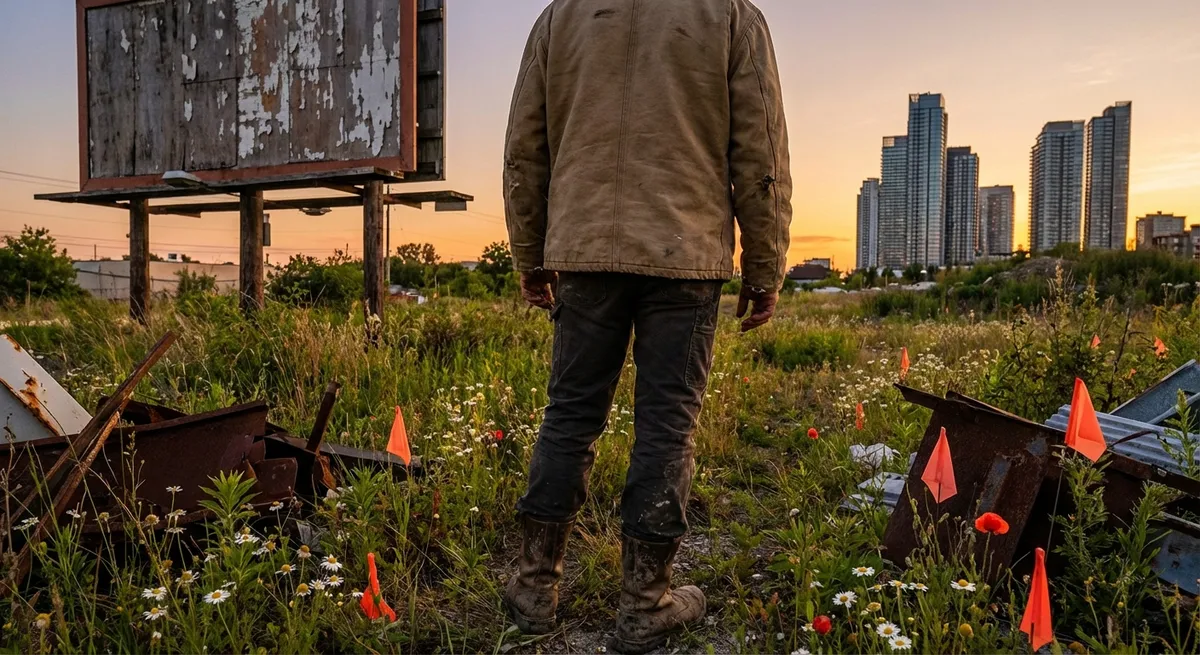
I recently discovered an online listing for a skinny, awkwardly shaped lot behind a strip mall. It looked like the kind of land you’d only appreciate if you were a raccoon. No photos of sunsets, just a blurry shot of a chain-link fence and a dumpster lurking in the corner.
But the price was… suspiciously low for the city it was in.
I called the agent out of curiosity. She basically shrugged verbally: “It’s been sitting for years. No one wants it.” To her, it was a headache. To me, it felt like an unopened mystery box.
That same night, I fell into a research spiral: zoning codes, easements, setbacks, infill development. I discovered a whole niche of investors who rarely touch houses—they just flip or develop land. No tenants, no leaky roofs, no 2 a.m. toilet emergencies. I’d always thought land was the boring cousin of “real” real estate. Now it felt like I’d been ignoring the main character.
When I tested some basic due diligence on that lot—checking zoning, utilities, comps, and city plans—it stopped looking like random dirt and more like a puzzle with an actual answer. I didn’t end up buying that specific parcel (I’ll explain why), but it pushed me into a completely different way of thinking:
Houses are just temporary outfits. The land is the actual body.
The Moment I Realized Dirt Has a Business Plan
The turning point for me was when I stopped asking:
“Is this land pretty?”
and started asking:
“What is this land allowed to become?”
Here’s how I break it down now when I look at a parcel:
1. Zoning: The Rulebook for the Dirt
In my experience, zoning is where most newbies (including past-me) get blindsided.
That first lot I looked at? I pulled the zoning info from the city’s website (many cities have public GIS or zoning maps). Turned out it was zoned for neighborhood commercial use. Not single-family homes. Not tiny homes. Not my fantasy micro-cabin retreat. Think small offices, retail, maybe a café.
Suddenly, the price made sense. The buyer pool was narrower.
I started comparing:
- Residential zoning (R-1, R-2, etc.) – usually good for single-family or small multi-family. More emotional buyers. Banks understand it.
- Commercial zoning (C-1, C-2, etc.) – better for businesses, but financing can be tougher. Higher upside, higher complexity.
- Mixed-use – unicorn territory in the right area. You can sometimes stack residential over commercial.
When I found a second parcel—this time a corner lot near a bus line—also zoned neighborhood commercial but on a busier street, I realized: not all commercial dirt is equal. The second had visibility, traffic counts, and nearby shops. Same “category,” very different potential.
2. Highest and Best Use: The “What If” Math
Appraisers use the term “highest and best use” to describe the most profitable, legally allowed, physically possible use for a property. I used to think that was just jargon. Then I tried to apply it myself.
For one property I analyzed—a small, vacant residential lot surrounded by duplexes—I literally wrote this in a notebook:
- Could it hold a single-family home? Yes.
- Could it hold a duplex under current zoning? Also yes.
- Would the resale value of a duplex beat the cost to build + land cost? Strong maybe.
Instead of daydreaming about building my “dream house,” I forced myself to run rough numbers. I checked recent duplex sales using online portals. I looked up average construction costs per square foot for my area (local builders sometimes post ballpark ranges). I added 10–15% for “stuff will go wrong,” because it always does.
That lot went from looking “expensive” to oddly underpriced once I viewed it as a future duplex, not just a single home site.
That’s when land stopped being random dirt and started feeling like a blueprint.
The Land Deal I Almost Did… And Why I Walked Away
Everyone loves stories that end in “and then I cashed out.” My first serious land analysis ended in “and then I backed off slowly like from a wild animal.”
Here’s what happened.
I found a narrow infill lot in an older neighborhood. The area was gentrifying, prices were climbing, and the parcel was walking distance to a light rail station. On paper, it looked like the kind of deal YouTube gurus brag about.
I did my usual checks:
- Zoning: Allowed for a small single-family home. Good.
- Utilities: Water, sewer, and power lines in the street according to the city’s public utility map. Also good.
- Comps: New construction homes within a 0.5-mile radius were selling for strong numbers. Very good.
Then I went deeper.
I pulled the county’s parcel map and saw a tiny note: “Easement – drainage.” I called the planning department and asked someone to walk me through it like I was five.
Turns out a good chunk of the lot was within a drainage easement. I technically couldn’t build over that section. Once I overlaid the buildable area with the required setbacks (distance you must keep from property lines), the dream house footprint became laughably tiny.
If I’d bought it just based on “zoned residential, utilities nearby, cute neighborhood,” I would’ve owned a very expensive, unbuildable lawn.
Walking away from that deal felt like a loss at the time. Now I look at it as the tuition I paid in time and phone calls instead of cash.
Where the Real Land Risk Hides (And How I Try to Spot It)
Land looks simple on the surface. No building inspections, no roof issues. But the real dangers are sneaky and invisible. These are the things I now obsessively check before I even think about making an offer:
Environmental Surprises
I once looked at a cheap parcel that used to be near an old gas station. A quick search for “state environmental site database + [my state]” led me to a map of known or suspected contaminated sites.
The lot I was eyeing wasn’t on the list, but a neighboring parcel was flagged as a former underground storage tank location. That alone didn’t kill the deal, but it made me ask harder questions. If there’s contamination, cleanup can be insanely expensive—and lenders may run.
A lot of states have public databases (like the U.S. EPA’s Envirofacts or state-level DEQ/DEP sites) where you can check if your “bargain” land might come with bonus toxins.
Access and Legal Right-of-Way
Another time, I found a ridiculously cheap rural parcel on a hill with great views. The catch: no obvious road touching it on the map. The listing comment: “Access believed to be via unrecorded easement.”
“Believed to be” is not what you want to see when your money’s on the line.
I learned the hard way that:
- “Landlocked” parcels (surrounded by other properties with no legal road or easement) can be practically worthless.
- Even if a dirt path physically exists, you need a recorded easement for legal access.
- Surveyors and real estate attorneys become your best friends very quickly.
I didn’t move forward on that hilltop lot either, but it taught me to never assume access just because Google Maps shows a faint track.
Utility Reality vs. Utility Hopes
Just because a listing says “utilities nearby” doesn’t mean “cheap and easy to connect.”
On one semi-rural parcel, I called the water district and asked for a rough estimate to bring a water line from the main road to a hypothetical house site. The number made me physically wince. It was more than the land itself.
Now, I try to:
- Call the utility companies before making offers.
- Ask for written estimates if possible.
- Verify if there are capacity issues (some areas have building moratoriums because systems are at their limits).
Why “Ugly” Land Sometimes Beats Pretty Houses
When I started talking about land with more experienced investors, I noticed a pattern. The ones who’d been through multiple market cycles treated land like a long game, not a quick flip.
Here’s what’s actually drawn me toward land, despite the hidden traps:
Lower Carrying Costs (Usually)
In my experience, vacant land often has:
- Lower property taxes than improved properties.
- No maintenance costs (no roofs, no HVAC, no leaks).
- No tenants, which means no vacancy, no evictions, no phone calls.
I’ve seen investors hold strategic infill lots for years at relatively low cost while the neighborhood around them matures.
Optionality
A single parcel can be:
- A future home site
- A small rental project
- A hold-and-sell-to-builder play
- Sometimes even a piece cities want for road-widening or public projects down the line
One planner I spoke to casually mentioned that their city sometimes buys corner parcels years later for intersection upgrades. They didn’t promise anything, of course, but it made me realize: land has ways of becoming valuable that go beyond “slap a house on it.”
Barriers to Entry Are Mostly Knowledge
Houses are emotional. Everyone can imagine living in one. Land requires imagination and a tolerance for paperwork and zoning language that reads like it was written by aliens.
That scares people off—which can keep prices more rational in certain niches.
When I tested this theory in my local market, I noticed something interesting: on the MLS, nice houses triggered bidding wars. Meanwhile, some buildable lots sat for months with stale photos and little description beyond “nice lot, buyer to verify.”
Translation: opportunity for anyone willing to do the unsexy homework.
The Part No One Likes to Admit: When Land Just… Sits
To be fair, there’s a dark side to land that doesn’t show up in hype videos.
I’ve watched investors get stuck with parcels they can’t realistically build on or sell quickly. Reasons I’ve seen up close:
- Zoning changes that reduced what they could do.
- Shifts in city planning priorities (for example, favoring dense infill over sprawl, leaving fringe parcels stranded).
- Overestimating how fast an area would “turn around.”
- Buying purely on a “path of progress” story without verifying actual infrastructure or demand.
Land is not liquid like stocks. If you wake up one day and decide you hate your dirt, it may take a while—and a price cut—to move it.
On one forum, I read about an owner who’d been holding a rural parcel for a decade, waiting for a nearby highway expansion that kept getting delayed. Every year, they paid taxes, with no clear timeline of when their big moment would arrive.
That story stuck with me. It’s easy to romanticize “someday this will be worth a fortune.” But “someday” can stretch a long time.
How I Now Evaluate Land Deals (Without Pretending I’m a Guru)
I’m not a land baron. I’m still building my experience, parcel by parcel. But here’s the mental checklist I run through now whenever a piece of land catches my eye:
- What is this legally allowed to become?
I pull zoning and read the code sections. If I can’t understand it, I call the planning department and ask blunt, specific questions.
- Is there clear, legal access?
I check parcel maps, recorded easements, and sometimes talk to a local surveyor.
- Are utilities available—and at what cost?
I verify water, sewer/septic, power, and in some areas, internet. I don’t trust vague listing descriptions.
- Are there physical or environmental deal breakers?
Flood zones, steep slopes, wetlands, contamination, weird easements. I search public databases and ask for help when I’m unsure.
- What’s the realistic highest and best use in the next 5–10 years?
Not just what zoning allows today, but what the market around it seems to support. I cross-check with city comprehensive plans if they’re available.
- What’s the exit strategy… or two?
Could I sell to a builder? To an owner-occupant? Would it cash flow as a small project? If my only plan is “hope values go up,” that’s usually a red flag.
I try to underwrite land like it’s a small business, not a lottery ticket.
Why I Keep Looking at Dirt Anyway
After all the late-night zoning rabbit holes and awkward calls to planning departments, I still get excited when I see a weirdly placed lot or a neglected infill parcel.
In my experience, land forces you to think more like a developer and less like a consumer. It pushes you to imagine not just what is there, but what could be there—and whether the numbers and rules actually support that vision.
I don’t think land is some magic shortcut to wealth. It’s slower, more paperwork-heavy, and sometimes more frustrating than just buying a boring rental house. But it’s also one of the few spaces where an ordinary person with a laptop, a phone, and a bit of stubborn curiosity can uncover value other people literally drive past every day.
The next time you see an “ugly” lot—behind a strip mall, wedged between two houses, sitting lonely on a corner—try this experiment: instead of thinking “who’d want that?”, ask “what is this legally allowed to become, and who might need that in a few years?”
That simple shift is how I stopped seeing dirt as background noise and started seeing it as a quiet, waiting opportunity.
Sources
- U.S. Environmental Protection Agency – Envirofacts – Searchable database of environmental data, including information on contaminated sites and facilities
- U.S. Federal Housing Finance Agency – House Price Index – Provides data and context on property value trends that help compare land vs. improved property markets
- National Association of Realtors – Vacant Land Guide – Professional guidance on evaluating and transacting vacant land
- Urban Land Institute – Research and reports on land use, development trends, and highest-and-best-use concepts
- U.S. Department of Housing and Urban Development – Zoning and Land Use Resources – Background on zoning, land use regulation, and how policy shapes what can be built where