Tree Hut Scrub Buying Guide
overthinking, the sniff tests, the impulse buys… and the returns. This guide is everything I wish I had before I started casually hoarding sugar scrubs.
I’m not sponsored by Tree Hut (sadly), but I’ve tested a ridiculous number of their scrubs on my very real, sometimes sensitive, sometimes dry skin. I’ll walk you through how to actually choose the right one — based on ingredients, skin type, scent preferences, and what you’re trying to fix.
Why Tree Hut Scrubs Blew Up (And Whether They’re Worth It)
I first grabbed a Tree Hut scrub because TikTok made me do it. Specifically, the Moroccan Rose one that everyone was calling “a spa in a jar.” I hated how dull and bumpy my skin looked on my arms and thighs, so I figured, worst case, I’d at least smell good.
After a week of using it three times, I noticed two very real, very un-filtered changes:
- The KP (those little chicken skin bumps) on my upper arms looked smoother.
- My self-tanner applied way more evenly, instead of clinging to dry patches.
So I went down the rabbit hole.
From an ingredient and price standpoint, Tree Hut hits a sweet spot:
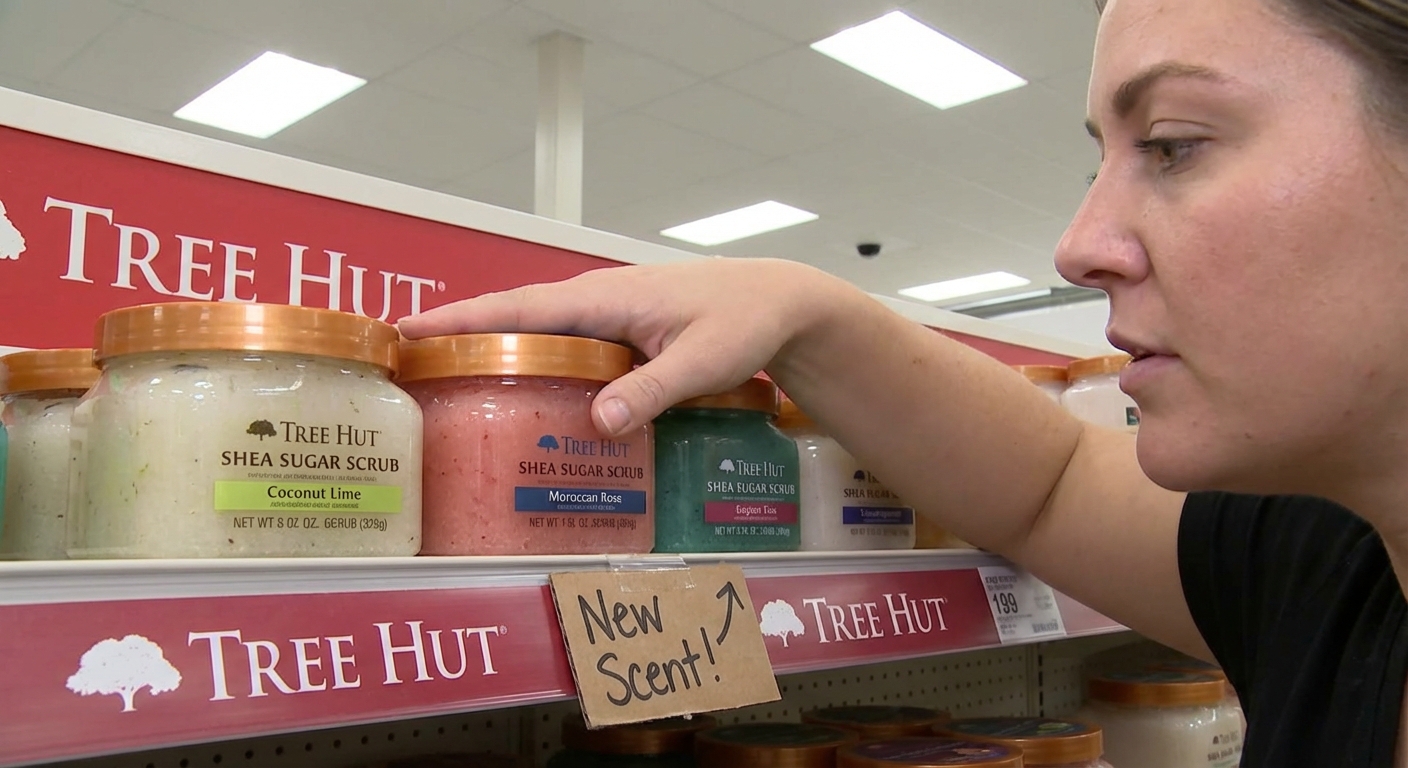
- Physical exfoliant: Primarily sugar crystals (sucrose), which are gentler than salt scrubs and dissolve with water.
- Occlusive + emollients: Often shea butter, sunflower seed oil, safflower oil, and glycerin, which help lock in moisture.
- Fragrance-forward: This is either a perk or a problem depending on your skin.
- Price: Usually around $7–$10 for 18 oz at Target, Walmart, or Ulta — cost per ounce is low compared to many spa brands.
Are they worth the hype? In my experience: yes, if you pick the right formula and don’t scrub like you’re sanding a table.
Step 1: Know Your Skin Type (And Be Brutally Honest)
Before you grab the cutest jar, figure out what your skin can handle. When I tested different Tree Hut scrubs, I realized my legs could take way more grit than my chest or upper arms.
If you have sensitive or reactive skin
Signs: Redness, stinging from fragranced products, eczema-prone.
- Look for gentler, creamier textures and avoid over-fragranced lines.
- Start with once a week and do a patch test on the inner forearm.
- In my experience, Tropic Glow and Coconut Lime felt slightly gentler than some of the heavily perfumed holiday limited editions.
If you have dry or flaky skin
Signs: Ashy legs, rough patches on knees, elbows, ankles.
- You can usually tolerate denser scrubs and more frequent use (2–3 times a week).
- Hydrating formulas with shea butter and plant oils are key.
- I found Vitamin C and Coconut Lime especially good for that post-shave glow.
If you have body acne or KP (keratosis pilaris)
Signs: Tiny bumps, especially on upper arms or thighs.
- Physical exfoliants like Tree Hut can smooth texture but won’t fix acne alone.
- Pair with a chemical exfoliant (like a salicylic acid body wash) on off days. The American Academy of Dermatology specifically recommends gentle exfoliation and moisturizers with lactic or salicylic acid for KP.
- Go easy on pressure — aggressive scrubbing can inflame spots.
Step 2: Understand the Ingredients Label (Without Getting a Chemistry Degree)
When I tested different scents, I noticed some felt richer, some rinsed cleaner, and some were borderline too perfumey. The ingredient list usually explained why.
Here’s how I read a Tree Hut jar now:
1. Exfoliating agents
- Sucrose (sugar) – Main scrub particle. Gentler than salt, dissolves as you rinse.
- Silica or fine grit – Sometimes added for extra “scrub” feel.
If your skin is easily over-exfoliated, look for formulas where water and oils are higher on the list relative to sucrose. That usually means a creamier feel.
2. Moisturizers & oils
You’ll almost always see:
- Butyrospermum parkii (Shea) Butter – Occlusive, great for dry skin barrier.
- Glycerin – Humectant that draws in water.
- Sunflower seed oil / safflower oil – Lightweight plant oils.
This combo is why my skin never feels stripped after rinsing, unlike cheaper salt scrubs I’ve tried that left me paradoxically drier.
3. Fragrance & potential irritants
- Parfum (Fragrance) – Big one. If you’re sensitive, this is your red flag.
- Some scrubs include essential oils like citrus, which can be irritating in the sun (photosensitivity).
Dermatologists often flag fragrance as one of the most common contact allergens.[^1] If you struggle with rashes or eczema, I’d be careful with daily use.
4. Actives & “bonus” ingredients
Depending on the line, you’ll see:
- Ascorbic acid or derivative (Vitamin C line) – Antioxidant, brightening in theory, though rinse-off time limits impact.
- Collagen, peptides, or niacinamide – Nice supporting players, but again, it’s a wash-off product.
When I tested the Vitamin C Shea Sugar Scrub, my skin didn’t magically even out hyperpigmentation, but it did look brighter immediately just from the combination of exfoliation + oils + light-reflecting moisture. The long-term “brightening” is more about consistent exfoliation than miracle actives.
Step 3: Match the Scrub to Your Goal
Let’s get specific. Here’s how I choose now, after going through… more jars than I will publicly admit.
1. For ultra-smooth shave days
When I want glassy-looking legs:
- I exfoliate with Tree Hut scrub the day before shaving, not the same day, to avoid irritation.
- I reach for: Coconut Lime or Watermelon. They rinse clean, and the light scent plays well with most lotions.
In my experience, doing this routine reduced ingrowns on my knees and ankles significantly, especially when combined with a sharp razor and a non-drying shave gel.
2. For stubborn dry patches
My elbows and ankles get embarrassingly dry in winter.
- I use a denser scoop and focus on circular motions for 20–30 seconds.
- I follow with a thick unscented cream, not a body spray or light lotion.
- Tree Hut picks I reach for: Shea based classics like Coconut Lime or seasonal vanillas.
3. For “I just want to smell amazing” shower nights
Let’s be honest: a lot of Tree Hut’s appeal is the fragrance.
Scents I’ve personally tested that get the most “what are you wearing?” comments:
- Moroccan Rose – Soft, floral, slightly powdery; feels very “spa day at home.”
- Tropic Glow – Warm, gourmand, a bit like Sol de Janeiro vibes.
- Watermelon – Sweet but surprisingly not cloying once rinsed.
The catch? Stronger scent = higher risk of irritation if your skin is sensitive.
How Often Should You Use Tree Hut Scrubs?
I experimented with daily use (for science), and my skin got over-exfoliated — tight, slightly stingy, and more reactive to lotions.
What’s worked best for me and aligns with dermatology recommendations:
- Normal to dry skin: 2–3 times per week.
- Sensitive skin: 1–2 times per week.
- Oily but acne-prone skin: 1–2 times per week plus a chemical exfoliant on other days.
The American Academy of Dermatology suggests most people don’t need daily body exfoliation and warns that overdoing it can damage the skin barrier and lead to increased dryness and irritation.[^2]
When I pulled back to 2–3 times weekly and focused on gentle pressure instead of scrubbing like a Brillo pad, my skin looked healthier and stayed smoother longer.
Pros and Cons After Long-Term Use
Because nothing is perfect, even if it smells like a dessert bar.
What I love
- Price-to-size ratio is excellent.
- Texture: The sugar crystals are dense but not scratchy when used with enough water.
- Immediate results: My skin looks noticeably smoother after one use.
- Availability: Easy to find at major retailers, often on sale.
What I don’t love
- Fragrance-heavy: Not ideal for very sensitive or eczema-prone skin.
- Jar packaging: Water can get inside in the shower if you’re clumsy like me; less hygienic than tubes.
- Rinse-off actives: The fancy ingredients (vitamin C, collagen) are a nice touch but shouldn’t be the reason you buy. They’re not on your skin long enough to work like a serum.
If you have a diagnosed skin condition (eczema, psoriasis, severe body acne), I’d honestly talk to a dermatologist before going hard on any physical scrub. Sometimes a gentle chemical exfoliant (like lactic acid) is safer.
How to Use Tree Hut Scrubs So They Actually Work
This is the exact routine I keep coming back to:
- Shower with warm, not hot, water. Hot water = barrier damage and extra dryness.
- Wash your body first. You don’t want to scrub over sunscreen, sweat, and oil.
- Turn the water down or off. Apply scrub to damp (not dripping) skin.
- Use gentle, circular motions for 30–60 seconds per area. If your skin turns bright red, you’re going too hard.
- Rinse thoroughly. No gritty crystals left behind.
- Pat dry and moisturize within 3–5 minutes. I try to trap that post-scrub glow with a body butter or cream.
When I stick to this, my skin genuinely feels like I paid for a body polish treatment — without the spa bill.
Quick Buying Checklist (So You Don’t Stand in the Aisle for 20 Minutes)
When I’m in Target or scrolling online, here’s my mental checklist:
- What’s my skin doing right now? Sensitive, broken out, or dry and dull?
- How strong is the scent? If I can smell it through the seal, I treat it as “special occasion,” not daily.
- Where am I using it? Legs and arms can usually handle more than chest or neck.
- What’s the texture like? If you can, tilt the jar — is it super packed with sugar or more creamy?
If you’re brand new to Tree Hut, my safe starter picks based on testing on myself and sampling through friends:
- All-around beginner choice: Coconut Lime Shea Sugar Scrub
- If you love floral and spa-like: Moroccan Rose Shea Sugar Scrub
- If you want warm, cozy, gourmand: Tropic Glow Firming Sugar Scrub
Once you know how your skin reacts, then you can go wild with limited editions and layering scents.
Final Thoughts From Someone Who’s Bought Way Too Many Jars
Tree Hut scrubs can absolutely earn a permanent spot in a body care routine — if you respect your skin barrier and choose formulas that match your skin type, not just your nose.
In my experience, the biggest wins have been:
- Smoother texture on arms and legs
- Better self-tanner application
- That “I just got a body treatment” feeling at home
The biggest fails? Every time I tried to use them daily on already irritated skin or assumed the “vitamin C scrub” would fix hyperpigmentation by itself.
Use them as what they’re best at: a satisfying, sensorial, effective physical exfoliator. Pair them with a solid moisturizer and, on off days, a gentle chemical exfoliant if your skin tolerates it. That’s when the glow really kicks in.
Sources
- American Academy of Dermatology – How to Safely Exfoliate Your Skin - Dermatologist guidance on exfoliation frequency and methods.
- American Academy of Dermatology – Keratosis Pilaris: Diagnosis and Treatment - Recommendations for managing KP with exfoliation and moisturizers.
- Tree Hut Official Website – Shea Sugar Scrubs - Official product descriptions and ingredient lists.
- U.S. Food & Drug Administration – Fragrances in Cosmetics - Overview of fragrance use and potential for irritation in cosmetic products.
- Harvard Health Publishing – The Dangers of Over-Exfoliating Your Skin - Discussion of skin barrier damage from excessive exfoliation.