Understanding Canine Dietary Needs at Every Life Stage
ng weight, and getting weirdly itchy. That’s when I fell down the rabbit hole of canine nutrition — and once I started tracking what he ate at each life stage, the changes were honestly wild.
This isn’t theory for me. I’ve messed up, fixed it, and watched the difference in real time — shinier coat, better energy, fewer vet trips. So let’s break down what dogs actually need as puppies, adults, and seniors, and how you can feed smarter without needing a degree in biochemistry.
Why Life Stage Nutrition Actually Matters
When I first heard “life stage specific diet,” I thought it was marketing fluff. Then I learned that growth, maintenance, and senior health are literally different physiological states with different nutrient demands.
Most vets follow standards from AAFCO (Association of American Feed Control Officials) and the FEDIAF guidelines in Europe, which set nutrient minimums for:
- Growth & Reproduction (puppies and pregnant/nursing dogs)
- Adult Maintenance (healthy adults)
- All Life Stages (covers growth, so nutrient-dense)
When I tested an “all life stages” high-calorie food on my very lazy, very neutered adult dog, he put on weight fast — because it was designed to also fuel puppies. That’s when I stopped treating all kibbles as interchangeable.
Puppy Nutrition: Building the Whole Dog
When I brought home my first puppy, I thought “more food = more growth = good.” My vet very calmly informed me that too-fast growth in large breeds can actually damage their joints. That was a fun panic spiral.
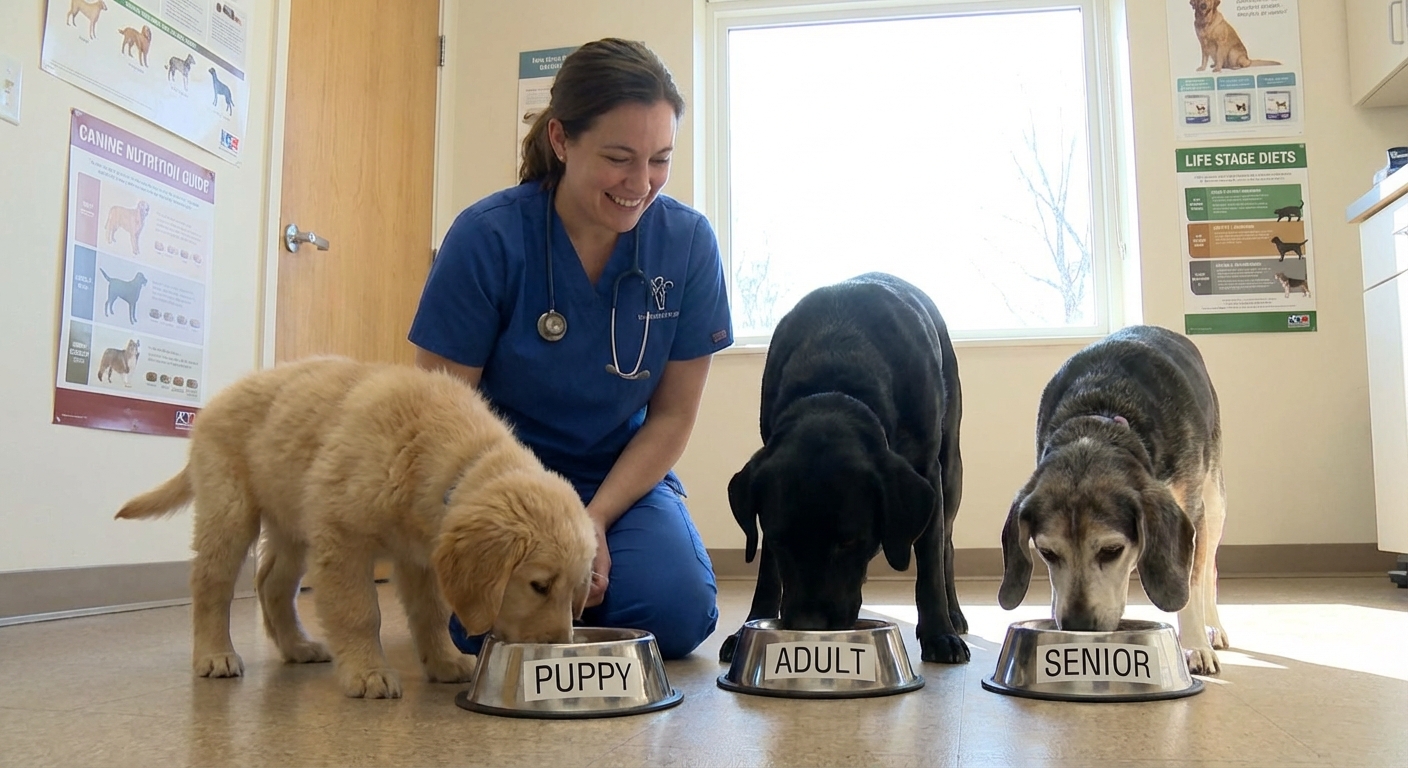
What puppies really need
Puppies need more of pretty much everything, but in the right proportions:
- Higher protein (often ~22–32% on a dry matter basis) for muscle development
- Higher fat (often 10–25%) for energy and brain development
- Controlled calcium & phosphorus, especially in large breeds
- DHA (docosahexaenoic acid) for brain and vision development
Large-breed puppies (Labs, Goldens, Shepherds, etc.) especially need controlled calcium. The 2013 study by Dr. Lisa Freeman at Tufts highlighted that excess calcium in large-breed pups increases the risk of developmental orthopedic disease. I remember standing in the pet store, flipping bags over, checking calcium percentages like a paranoid scientist.
How often to feed puppies
In my experience:
- 8–12 weeks: 3–4 meals per day
- 3–6 months: 3 meals per day
- 6–12 months: 2–3 meals per day
I learned the hard way that free-feeding (leaving the bowl full all day) turned my food-motivated puppy into a furry bowling ball. Scheduled meals helped me track appetite, poop quality, and avoid overfeeding.
What I watch for in a puppy food label
I now look for the AAFCO statement that literally says:
> “Formulated to meet the nutritional levels established by the AAFCO Dog Food Nutrient Profiles for growth, including growth of large-size dogs (70 lb or more as an adult).”
If it doesn’t specifically mention growth (and large-breed growth when relevant), I put it back on the shelf.
Adult Dogs: Maintenance, Not Mayhem
Once my dogs hit adulthood, I assumed they could just stay on puppy food because “more nutrients can’t hurt, right?” Wrong. It can absolutely hurt — mostly in the form of extra pounds and long-term joint and metabolic issues.
What adult dogs actually need
Most healthy adults need a maintenance diet, not a growth diet:
- Moderate protein (often 18–25%, higher if active)
- Controlled fat depending on activity level
- Balanced omega-3 and omega-6 fatty acids
- Appropriate fiber for gut health
I noticed my moderately active mixed breed thrives on about 22–24% protein and moderate fat; when I tried a super high-protein, high-fat performance formula meant for working dogs, she got diarrhea and rocket-fuel zoomies.
Activity level changes everything
When I fostered a Border Collie who did daily agility sessions, I had to switch him to a performance diet with higher calories and fat. Meanwhile, my couch-loving senior Beagle needed a weight-management formula with fewer calories but similar nutrients.
If your dog:
- Lives a mostly indoor, chill life → standard adult maintenance
- Runs, hikes, or works daily → higher-calorie, performance-style food
- Gains weight looking at a treat bag → lower calorie, higher-fiber adult food
The key number I look at now is kcal per cup on the bag. Some foods are 280 kcal/cup, some are 450+ kcal/cup. Those two are not interchangeable.
Senior Dogs: Less “Old Dog,” More “Managed Metabolism”
My wake-up call with senior nutrition came when Milo, at 10, was still eating the same formula he’d loved at 3. His bloodwork came back with early kidney changes and his weight had quietly crept up.
That’s when I learned: “Senior” isn’t just about age, it’s about organ function and lifestyle.
What changes with age
Older dogs often have:
- Slower metabolism (easier weight gain)
- Loss of lean muscle mass
- Higher risk of kidney and liver issues
- Dental problems that affect what they can chew
The best shift I made for Milo was moving him to a senior or “mature” formula that had:
- Slightly fewer calories
- Moderate-to-high quality protein (not super low — that’s outdated advice for most seniors)
- Joint support (glucosamine, chondroitin)
- Higher omega-3s for inflammation and cognition
A 2010 paper in the British Journal of Nutrition noted that senior dogs benefit from maintained or even increased protein to protect muscle mass, as long as kidney function is monitored. That matched what my vet told me: “We don’t starve their muscles just because they had a birthday.”
When special diets matter
I’ve had to navigate a few of these:
- Kidney disease: lower phosphorus, controlled but good-quality protein
- Pancreatitis history: low-fat diet, very strict about table scraps
- Arthritis: weight control plus diets enriched with omega-3s (EPA/DHA)
This is where I stop guessing and lean completely on recent bloodwork and my vet’s input. Generic “senior” food isn’t enough when there’s real disease on the table.
Homemade, Raw, and Trendy Diets: What I’ve Actually Seen
I’ve tried a lot: prescription diets, boutique grain-free, home-cooked, and briefly, a commercial raw diet that my dog loved and my wallet hated.
Home-cooked diets
Pros I experienced:
- Total control over ingredients
- Great for dogs with allergies or many dietary restrictions
Cons:
- Huge risk of imbalance if you don’t use a veterinary nutritionist
- Time-consuming and more expensive than I expected
When I tested a home-cooked recipe I found on a random blog (yes, I know), my dog developed a dull coat and flaky skin in a month. A board-certified veterinary nutritionist later pointed out it was low in zinc and certain essential fatty acids.
Now I only trust:
- Recipes formulated by board-certified veterinary nutritionists (DACVN)
- Tools like BalanceIT, recommended by vets
Raw diets
I’ve seen dogs with beautiful coats on raw food, and I’ve also seen diarrhea, bacterial infections, and one nasty Salmonella scare in a friend’s household. The CDC and FDA have both flagged raw pet foods as a real pathogen risk — not just for dogs, but for humans handling the food.
In my experience, if someone wants to go raw, it absolutely needs to be:
- Commercially prepared by a reputable company
- Formulated to meet AAFCO standards
- Handled with strict food safety
Not “chicken wings and beef scraps from the freezer.”
Grain-free and boutique diets
I fell for the grain-free craze years ago. Then the FDA started investigating a potential link between some grain-free, boutique, and exotic-protein diets and dilated cardiomyopathy (DCM) in dogs around 2018.
Is the science still evolving? Yes.
Did I stop casually recommending grain-free to friends? Immediately.
Now I only consider grain-free when there’s a vet-diagnosed grain allergy (which is actually pretty rare compared to protein allergies), and I pick brands with strong nutritional research behind them.
How I Choose a Dog Food Now (Without Losing My Mind)
After years of trial and error, here’s my personal checklist:
- Life-stage appropriate: Puppy, adult, or senior-specific, or truly appropriate “all life stages” when needed
- Meets AAFCO standards and ideally has feeding trials, not just formulated diets
- Transparent brand: They employ veterinary nutritionists, share research, and have a way to contact them
- Matches my dog’s reality: Age, weight, activity level, health issues, and my budget
And I always reassess when something changes: new meds, reduced activity, unexplained weight gain, or weird poop. Diet doesn’t fix everything, but it’s one of the most powerful levers we’ve got.
Final Thought: Feed the Dog in Front of You
If there’s one lesson I’ve learned from feeding everything from chaotic puppies to stiff, dignified seniors, it’s this: the “right” diet isn’t a brand, it’s a match.
Your job isn’t to find the fanciest food. It’s to:
- Match nutrients to life stage
- Adjust as their body and health change
- Stay curious, ask your vet hard questions, and ignore 90% of internet drama
When I finally dialed in Milo’s senior diet, he went from sleeping all day to doing his awkward little zoomies again. Not like a puppy, but like a dog who still felt good in his own body.
That’s the real goal at every life stage: not perfection — just a dog who feels good enough to chase one more ball.
Sources
- FDA: Questions & Answers: FDA’s Investigation into Potential Connections Between Certain Diets and Canine Dilated Cardiomyopathy - Background on grain-free and DCM concerns
- Tufts University Cummings School – Petfoodology - Evidence-based articles by board-certified veterinary nutritionists
- WSAVA Global Nutrition Committee – Selecting Pet Foods - Guidelines for choosing appropriate commercial diets
- Merck Veterinary Manual – Nutrition in Puppies - Clinical overview of puppy nutrition and growth
- CDC – Get the Facts! Raw Pet Food Diets Can Be Dangerous to You and Your Pet - Risks associated with raw pet foods