Versatile Power Tool and Features Guide
uld handle anything around the house. Then I burned out a bargain drill driving 4" lag screws into a deck post and watched a friend’s oscillating multi-tool basically save a bathroom remodel.
This guide is my honest breakdown of the most versatile power tools for home & garden projects, what features actually matter, and where I personally wasted money.
The Big Question: Cordless or Corded?
I started out as a corded-only purist. No dead batteries, full power, life is good. Then I tried installing a pergola while dragging an extension cord through flower beds and over a rose bush. Not my smartest moment.
When cordless wins (most of the time)
In my experience, for 80–90% of home and garden projects, cordless tools are the sweet spot:
- Freedom of movement: Climbing a ladder to clean gutters with a cordless blower felt life-changing.
- Modern batteries are no joke: Brushless motors + 18V/20V lithium-ion packs deliver serious torque now.
- One battery ecosystem: Once I locked into one brand, swapping the same batteries between drill, impact driver, trimmer, and blower saved a ton of hassle.
The key features I now watch for:
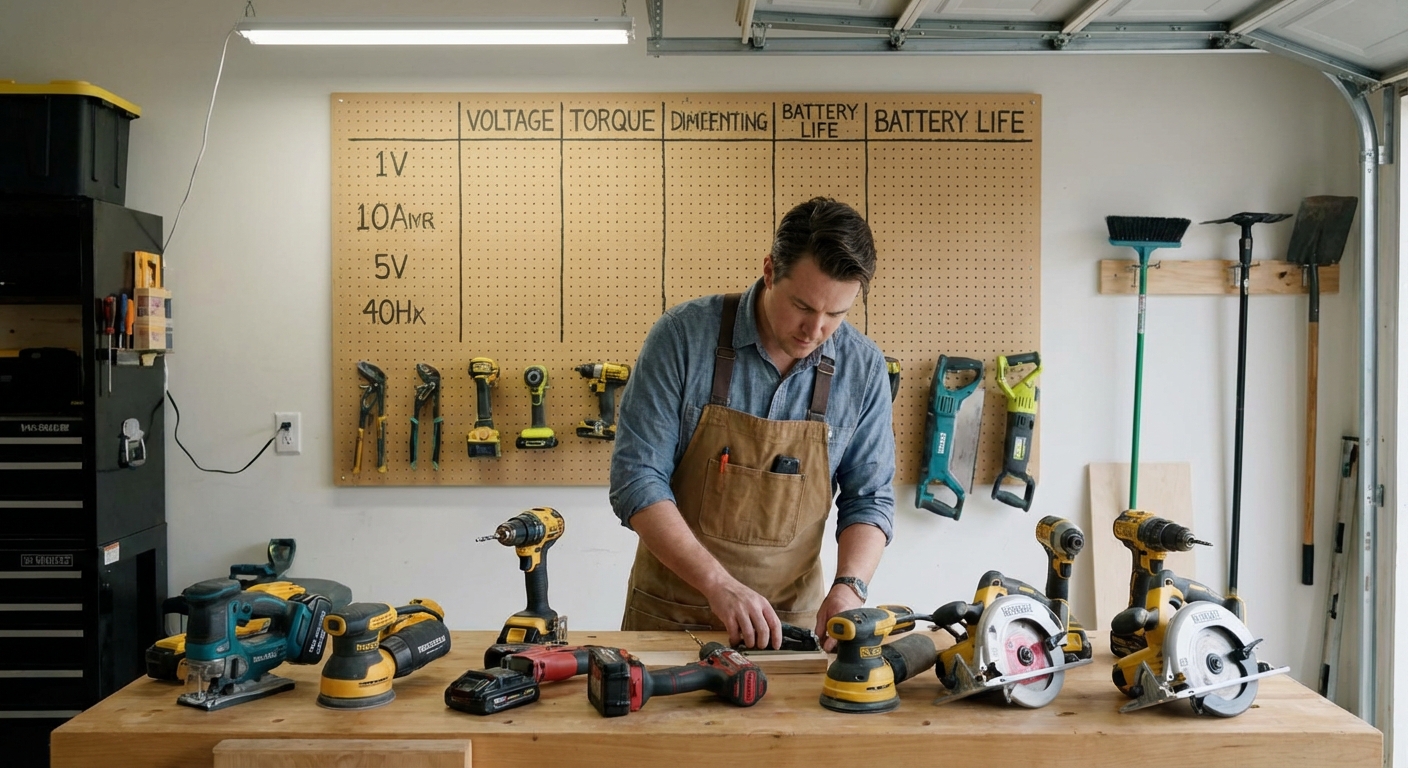
- Voltage platform: 18V/20V max is the practical all-rounder. 12V tools are lighter but can struggle with structural work; 40V+ is mostly for heavy outdoor gear.
- Amp-hours (Ah): Higher Ah means longer runtime. For real work, 4.0Ah+ is where it stops being annoying.
- Brushless motor: When I tested a brushed vs brushless drill on the same lag screws, the brushless ran cooler and finished the job without that struggling sound.
When corded still makes sense
Corded tools still win when:
- You’re doing continuous heavy-duty work (sanding entire floors, cutting lots of hardwood)
- You don’t want to buy into a battery system
- You’ve already got power handy and don’t want to rotate chargers
For my workshop table saw and miter saw, corded is still king. For almost everything else around the house and yard, cordless has taken over.
The Core Versatile Tools I Actually Use
I’ve bought and sold (and broken) more tools than I care to admit. These are the ones that earned a permanent spot.
1. The Drill/Driver – Non‑negotiable MVP
If you only buy one power tool, make it a decent drill/driver.
What matters in real life:
- Torque and speed settings: I want at least 2-speed gearbox and an adjustable clutch. When I tested a single-speed cheap drill on cabinet hinges, it stripped screws nonstop.
- ½" chuck: This lets you use larger bits (spade bits, augers) for things like running cables through studs.
- LED light: Sounds like a gimmick until you’re installing shelves in a dim closet at 11 p.m.
Use cases I didn’t expect:
- Mixing small batches of paint with a mixing paddle
- Drilling pilot holes in fence posts for cleaner, straighter screws
- Using wire brushes to clean rusted garden hardware
2. Impact Driver – The Fastener Assassin
I resisted buying an impact driver for years because I thought, “My drill is fine.” Then I tried to assemble a raised garden bed with 4" construction screws. Halfway in, my drill was smoking.
When I tested an impact driver on the same project, it drove those screws like it was nothing.
Key features I now look for:
- Variable speed + multiple impact modes: So you don’t over-torque smaller screws
- ¼" hex chuck: Fast bit changes, perfect for outdoor assembly projects
- Assist modes: Some brands have “wood” and “ self-tapping metal” modes that prevent overdriving
Where it shines:
- Decking and pergolas
- Fence repairs
- Building raised beds and planters
- Driving long construction screws into pressure-treated lumber
Downside? It’s loud. My impact driver sounds like a machine gun when it hits resistance. I keep hearing protection in my garden cart now.
3. Oscillating Multi-Tool – The Problem Solver
I didn’t really get oscillating multi-tools until a bathroom renovation forced me to cut a notch in a baseboard right next to a tiled floor. Circular saw? Too big. Hand saw? Too slow.
When I tried an oscillating multi-tool, it sliced a clean, flat cut right up against the tile. I was instantly sold.
What I pay attention to:
- Tool-free blade change: If it needs an Allen key, I’ve learned I’ll lose the key.
- Variable speed dial: Slower for metal and detail work, faster for wood
- Compatible accessory system: Starlock or a widely supported mount means more blade options
Real-world uses:
- Trimming door jambs when installing new flooring
- Cutting out a damaged section of drywall without tearing everything
- Flushing off old nails or screws poking out of deck boards
- Scraping old caulk or adhesive in tight corners
It’s not the fastest tool for long cuts, but for weird, tight, “how am I supposed to cut that?” jobs, nothing beats it.
4. Random Orbital Sander – The Finish Maker
For garden and home projects that people actually see, surface finish matters. When I refinished an old outdoor bench, switching from a basic sheet sander to a random orbital sander cut my sanding time almost in half and gave a smoother finish.
What matters more than the marketing:
- 5" hook-and-loop pad: Quick paper changes, widely available discs
- Dust collection: Hook it to a shop vac and you’ll dramatically cut down on airborne dust (and cleanup).
- Variable speed: Slower for delicate surfaces or between-coat sanding
I use mine for:
- Refinishing outdoor furniture
- Smoothing cut edges on fence boards
- Prepping planters and trim for paint
Con: it’s easy to over-sand edges and create dips if you park in one spot. I learned that the hard way on a cedar tabletop.
5. Outdoor Workhorses: String Trimmer & Leaf Blower
Once my drill/driver and impact were sorted, the next most life-improving upgrade was going cordless for yard tools.
#### Cordless string trimmer
When I replaced my gas trimmer with a 40V cordless model, my neighbors probably appreciated not hearing me fight with a pull cord every Saturday.
I focus on:
- Battery compatibility with my other tools
- Bump-feed or easy-load head so refilling line doesn’t make me question my life choices
- Adjustable shaft/handle for comfort
It’s powerful enough for regular edging and grass trimming; for very thick brush, gas still wins, but I rarely need that.
#### Cordless leaf blower
I recently discovered that a cordless blower is wildly useful beyond leaves:
- Clearing sawdust from the garage
- Blowing debris out of gutters (carefully)
- Cleaning off patio furniture quick before guests arrive
Look for:
- CFM (air volume) and MPH (air speed) together — marketing loves big MPH numbers, but volume matters for moving piles
- Variable trigger for delicate areas like mulch beds
Downside: continuous full-power use can eat battery fast, especially on lower Ah packs.
Must-Have Features That Actually Matter
Through a mix of research and some dumb purchases, I’ve narrowed down the features that genuinely improve day-to-day use.
1. Battery ecosystem > individual tool deals
Once you’re locked into a battery platform, switching brands gets expensive. I made the mistake of chasing a sale on a different brand’s blower, and now I own two totally separate charger setups. Not ideal.
Look at:
- The range of tools available on that battery system
- How long the brand has supported that platform
- Availability and price of extra batteries
2. Ergonomics and balance
This sounds soft, but after a weekend of building a fence, I learned that grip comfort, weight balance, and trigger feel make a huge difference.
When I test tools in-store now, I:
- Hold them at arm’s length like I’m overhead-drilling
- Swap the grip between hands
- Check how easily I can adjust settings one-handed
3. Safety features you’ll be glad you had
Having had a 7-1/4" saw kick back toward me once, I no longer ignore safety features:
- Electric brake: Stops drill drivers and saw blades quickly after releasing the trigger
- Overload protection: Prevents burning out the motor when you push too hard
- Lock-off switches on saws and grinders
I still wear safety glasses and hearing protection, but good tool design backs you up.
What the Pros and Research Say
I’m not the only one banging this drum. A few things that helped shape how I buy tools now:
- The U.S. Department of Energy notes that brushless motors are more efficient and durable than brushed equivalents, which lines up with my experience of cooler-running, longer-lasting tools.[¹]
- Consumer testing (and a lot of contractor chatter) consistently shows battery platform consistency is more valuable long-term than chasing the single “best” drill or driver.
- Tool manufacturers like DeWalt, Milwaukee, and Makita all emphasize ecosystem in their product lines — not just standalone tools, which tells you where the industry thinks the real value is.
Honest Downsides and Limitations
To keep this real, here’s where versatile power tools don’t magically fix everything:
- You can absolutely overspend: A mid-range tool in the right hands beats a flagship model used wrong.
- Batteries degrade: After about 3–5 years of regular use, even good packs lose capacity.
- Cordless isn’t perfect for every job: If you’re running tools all day (floor sanding, framing a whole addition), corded or high-voltage pro gear still wins.
- There’s a learning curve: I had to unlearn forcing tools and let the blade/bit do the work. Once I did, everything lasted longer—and so did my shoulders.
How I’d Build a Smart Starter Setup
If I were starting from scratch for home & garden use, here’s the order I’d buy in (all on one battery platform):
- Drill/driver kit (with two batteries)
- Impact driver (often sold in a combo kit with the drill)
- Oscillating multi-tool for problem-solving cuts
- Random orbital sander for finishing
- String trimmer and blower on the same battery system
Then I’d add specialty tools only when a specific project demands them.
That approach has kept my shed from turning into a graveyard of single-purpose gadgets—and made weekend projects a lot less frustrating.
Sources
- U.S. Department of Energy – Electric Motor Systems - Background on motor efficiency and technology (including brushless designs).
- Consumer Reports – Cordless Drill Buying Guide - Independent testing and advice on drill features and performance.
- DeWalt Official Site – 20V MAX System Overview - Example of a modern cordless tool ecosystem and compatible tools.
- Makita LXT System – Cordless Tool Platform - Details on a popular battery platform spanning indoor and outdoor tools.
- Occupational Safety and Health Administration (OSHA) – Hand and Power Tools - Safety guidance and best practices for using power tools at home or on the job.