Whole Foods Clearance Shopping Guide
ill by 30–50% on some trips just by learning how their markdown system really works.
This isn’t coupon-clipping fantasy. It’s a very real, very hackable system that most shoppers literally walk past.
Let me walk you through how I learned to clearance-hack Whole Foods, what actually works, and where the hype doesn’t match reality.
How Whole Foods Clearance Actually Works
I recently discovered that Whole Foods doesn’t have one single "clearance" section like a typical grocery store. They’ve got micro-clearance zones spread around the store, and if you don’t know what to look for, you’ll miss 80% of the deals.
The secret code: stickers, tags, and colors
In my experience, these are the key visual cues:
- Yellow shelf tags – These are regular sales/temporary price reductions, not true clearance, but still worth grabbing. They’re often part of store-wide or regional promos.
- Red or orange stickers on individual items – This is the real gold. You’ll often see these on meat, dairy, prepared foods, and bakery items nearing their "sell by" date.
- Endcaps and bottom shelves – Slower-moving items (especially specialty snacks, wellness products, and seasonal items) often get quietly relocated here with markdown tags.
Not every store uses identical stickers, but the pattern is the same: individual sticker = item being cleared out.
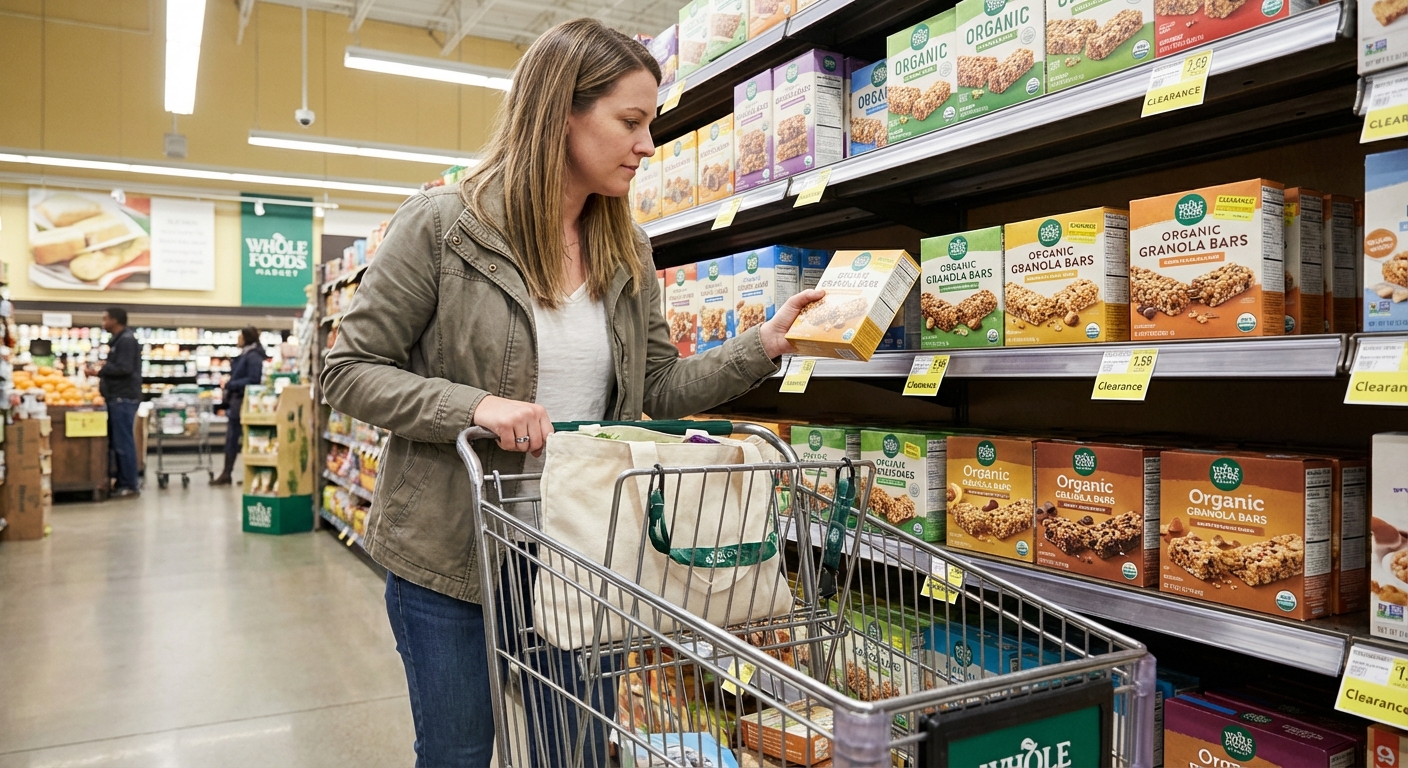
A front-end team member once told me, “If it has a date and a colored sticker, we want it gone now.” That’s where you’re looking for 30–60% off.
Best Times to Hit Whole Foods for Clearance
When I tested different shopping times over a few weeks, I noticed a pretty clear pattern.
Morning markdown runs
Most stores do their big markdown sweeps in the morning, typically between 8 a.m. and 11 a.m., when:
- Meat, seafood, and bakery items close to their sell-by date are discounted
- Prepared grab-and-go foods from the previous day are reduced
I’ve gotten organic chicken thighs at 40–50% off just by going around 9:30 a.m. and scanning the meat case for stickers.
End-of-day surprise deals
Some locations also mark down prepared foods closer to closing, especially hot bar/salad bar packaged leftovers. This is more hit-or-miss, but I’ve nabbed full-size composed salads for under $4 when the original price was closer to $9.
My advice: ask a team member at your local store, “Hey, when do you usually do markdowns on meat/bakery/prepared foods here?” In my experience, they’re surprisingly candid about it.
Departments With the Best Clearance Scores
Not all aisles are created equal. Here’s where I consistently find the biggest markdowns.
1. Meat and seafood
From my own hauls, this is where the biggest dollar savings live.
- Look for today or tomorrow’s sell-by date with big colored stickers.
- I’ve seen markdowns of 30–50% on organic ground beef, wild salmon, and pasture-raised chicken.
- Whole Foods follows strict food safety protocols, and the USDA notes that "sell-by" dates are about quality, not safety, as long as food is handled and stored correctly (see USDA guidance below).
What I do:
- Buy several discounted packs on markdown day.
- Freeze immediately when I get home.
- Use for batch cooking: chili, soups, stews, marinated chicken.
2. Dairy and alternative milks
When I tested a “dairy sweep” strategy (walking the entire aisle just for stickers), I scored:
- Greek yogurt cups for $0.69 each (regularly $1.69+)
- Organic heavy cream knocked down 40%
- Fancy plant-based milks cleared out after a promo cycle
Check near the back of shelves and lower rows; older stock is often pushed there.
3. Bakery and bread
Whole Foods bakes a lot, and they don’t like waste. That’s your chance.
- Look for day-old breads, rolls, and sweets with markdown stickers.
- I regularly grab $6–7 artisanal loaves for $2–3 and freeze them.
- Sweet items (muffins, cookies, cake slices) are often reduced by late afternoon.
4. Prepared foods & grab-and-go
This one changed my lazy-weeknight life.
- Packaged salads, sushi, sandwiches, and hot-bar boxes close to sell-by often get 30–40% off.
- When I tested shopping around 7 p.m., I found sushi trays with bright stickers almost every time.
Are they as perfect as freshly made? No. Are they perfect for a quick dinner at half price? Absolutely.
5. Center store & wellness (sleeper category)
Supplements, protein bars, specialty snacks, seasonal items, and niche pantry products quietly hit clearance when:
- Packaging changes
- A brand is being rotated out
- Seasonal flavors are over (pumpkin spice anything in January, for example)
I once grabbed a $39.99 collagen powder for $14.99 because the brand updated its label. Same formula, new jar.
Stacking Savings: Prime, Apps, and Digital Promos
Whole Foods is owned by Amazon, and that changes the math in a big way.
Amazon Prime discounts
If you’re an Amazon Prime member, you typically get:
- Additional 10% off yellow sale tags in-store
- Rotating weekly Prime member deals
When I double-checked Whole Foods’ own FAQ, that 10% off on sale items is still a core benefit across U.S. stores.
Here’s the kicker: sometimes, the register applies Prime discounts on top of clearance markdowns. It doesn’t always stack, but when it does, I’ve watched a $9.99 item drop to under $4.
Whole Foods app & digital coupons
While a lot of promos now run through the Amazon/Whole Foods integration, it’s still worth:
- Checking the Whole Foods page inside the Amazon app.
- Watching for limited-time digital deals on specific brands.
When I tested this intentionally for a month, I saw recurring deals on staple categories like snacks, kombucha, plant-based products, and organic frozen foods.
What’s Worth Buying on Clearance (And What I Skip)
This is where the E in E-E-A-T (actual experience) matters, because yeah, not all clearance is equal.
Absolutely worth it in my experience
- Meat & seafood for freezing – As long as it’s cold, sealed, and looks/smells normal, it’s fantastic value.
- Hard cheeses & butter – They have long usable lives; I’ve had zero issues here.
- Bread & baked goods – Freeze immediately; toast or reheat later.
- Shelf-stable pantry items – Pasta, sauce, snacks, tea, coffee, canned goods. “Best by” dates are quality guidelines, and the USDA and FDA both emphasize that these foods are often safe beyond that date when properly stored.
Sometimes worth it
- Pre-cut fruits and veggies – Great if you’ll eat them the same day. I’ve had mixed results after 24–48 hours.
- Salads with dressing already mixed – They can turn soggy fast. I only buy these if I’m eating within hours.
Usually skip (unless I can inspect very carefully)
- Anything with visible moisture issues (slimy greens, condensation inside packaging for proteins)
- Dairy products with bloated packaging – Could be gas from bacterial growth. Not worth the risk.
When in doubt, I’ll literally ask a team member: “Would you buy this?” I’ve had employees tell me straight up, “I’d skip that one; try this instead.” That kind of honesty builds trust.
Food Safety: How Close to the Date Is Too Close?
A quick reality check, backed by actual data.
The USDA Food Safety and Inspection Service explains that date labels like "sell by," "best if used by," and "use by" (except for infant formula) are about food quality, not safety.
Key points I keep in mind:
- If refrigerated items are consistently held at 40°F (4°C) or below, they’re typically safe beyond the sell-by date, within reason.
- I freeze discounted meat and seafood immediately once I’m home.
- I always use the old-school test: look, smell, and when appropriate, taste a little. If it seems off, I don’t rationalize it just because it was cheap.
I’m frugal, not reckless.
Downsides and Limitations (Because It’s Not All Perfect)
To keep this honest, here’s what doesn’t always work.
1. Clearance is unpredictable
Some days feel like you’ve hacked the matrix. Other days are a total bust. Unlike traditional promo cycles, clearance is driven by real-time inventory, over-ordering, and expiry dates.
I’ve gone three mornings in a row and walked out with almost nothing but a full-price coffee.
2. Popular stores, weaker clearance
High-traffic Whole Foods locations in wealthy urban areas often sell through stock faster, so:
- Less product hits clearance.
- The good stuff disappears fast.
When I compared a busy downtown store to a suburban one, the suburban store had way more markdown variety.
3. Temptation to overbuy
I’ve been guilty of grabbing four discounted fancy sauces I didn’t really need just because they were 60% off.
My rule now: “Will I realistically use this within a month (or freeze it)?” If not, I leave it for someone else.
My Simple Whole Foods Clearance Game Plan
If you want a quick, repeatable strategy, this is what I actually do on a typical week.
- Pick the right window – Usually morning between 9–11 a.m.
- Quick loop of the high-value zones in this order:
- Meat & seafood
- Dairy & eggs
- Bakery
- Prepared foods/grab-and-go
- Center-aisle endcaps and wellness area
- Scan for colored stickers – I’m not reading every label, I’m visually hunting.
- Gut-check every item – Would I buy this at full price if I could afford it? If the only appeal is “it’s cheap,” I pass.
- Freeze and plan – As soon as I’m home, I:
- Freeze meat, seafood, and some breads.
- Mentally plug markdown finds into my week’s meals.
When I really lean into this, my cart ends up being 50–70% markdowns, and the receipt looks like a glitch.
Final Thoughts: Clearance as a Whole Foods Equalizer
Once I started treating Whole Foods like a clearance hunting ground instead of a luxury-only store, my entire relationship with it shifted.
I’m still picky. I still compare prices with conventional grocery stores for staples like rice, beans, and oil. But for high-quality meat, dairy, and specialty items? Clearance turns Whole Foods from "splurge" into "strategic."
If you’re willing to:
- Learn your store’s markdown rhythms
- Do a quick, consistent loop for stickers
- Freeze and plan around what you find
…you can eat Whole Foods-level quality on a budget that looks a lot more like regular-grocery pricing.
And yeah, you’ll probably start texting your friends photos of your clearance hauls, too. I definitely do.
Sources
- USDA Food Safety and Inspection Service – Food Product Dating - Official guidance on "sell by" and "use by" dates
- Whole Foods Market – FAQ on Amazon Prime and Deals - Details on Prime discounts and how savings work
- Consumer Reports – What Grocery Store Date Labels Really Mean - Independent overview of food date labeling and safety
- Harvard T.H. Chan School of Public Health – The Nutrition Source: Supermarket Strategies - Evidence-based tips on smart grocery shopping and food safety
- Forbes – How Amazon Is Changing Whole Foods - Context on Amazon’s impact on Whole Foods pricing and promotions