Yankee Candle Scent Guide
e a department store perfume counter gone rogue. If you've ever felt personally attacked by a wall of glass jars and seasonal labels, this guide’s for you.
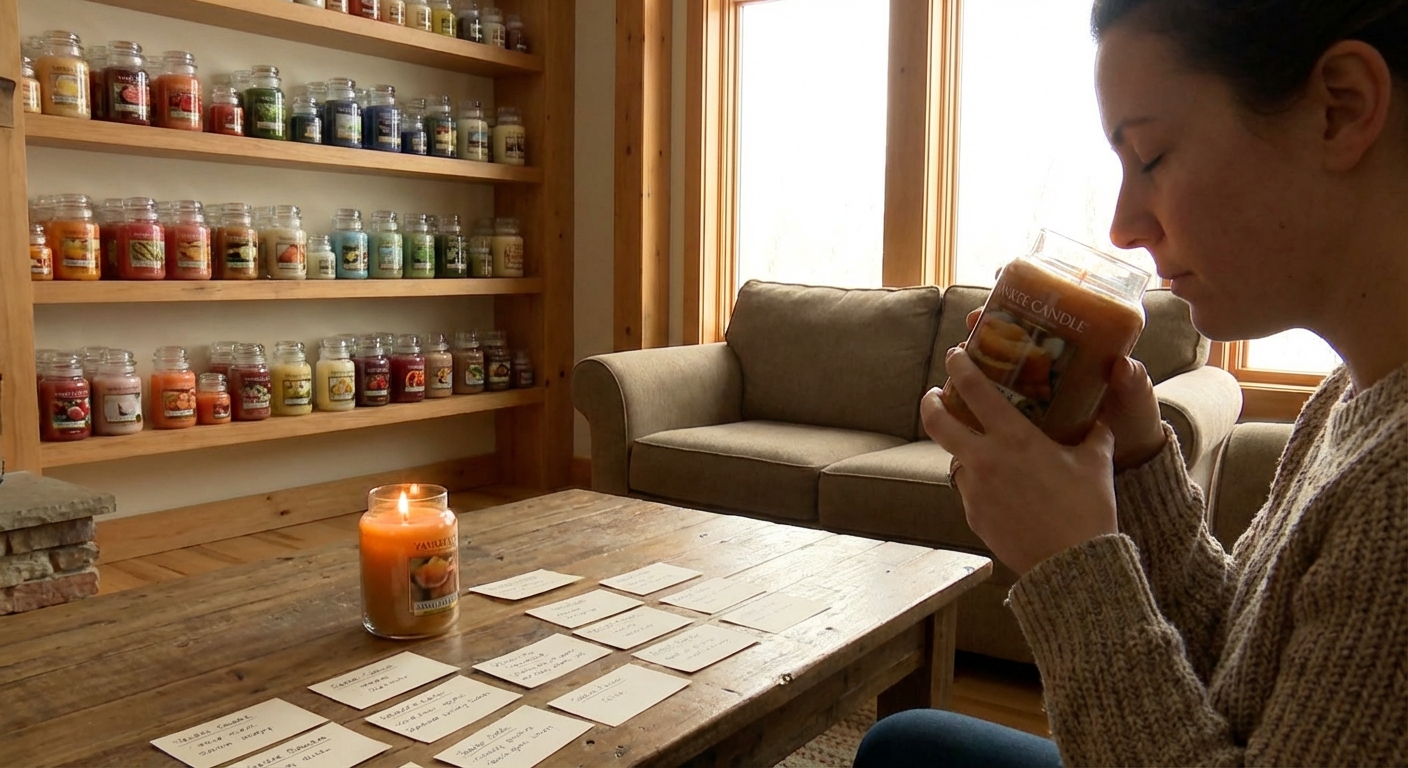
I’ve been burning Yankee Candles on and off for over a decade—tiny apartments, a drafty old house, and now a small home office where I test way too many fragrances. When I tested different scents side by side (same room, same burn time, windows closed), I started noticing patterns: which ones actually fill a room, which turn cloying, and which are just pure cozy magic.
This Yankee Candle scent guide pulls together that trial-and-error, plus what we know about fragrance notes, wax performance, and a bit of science around scent.
How Yankee Candle Scents Are Built (Quick Nerdy Breakdown)
When I first started comparing fragrances, I kept seeing “top, middle, and base notes” on the website and thought, Okay, perfume, but in a jar. Then I actually paid attention.
Here’s how it plays out in real life:- Top notes – What you smell first when you open the lid. Think bright citrus, herbs, light florals.
- Middle (heart) notes – What you get after 20–40 minutes of burning. Florals, fruits, spices.
- Base notes – The lingering vibe. Woods, vanilla, amber, musk.
Yankee describes each candle with this structure, and in my experience, it’s surprisingly accurate. For example, when I tested Clean Cotton, that initial hit is fresh and slightly sharp (ozone + citrus), but once it’s been burning, it softens into more of a laundry-room-on-Sunday feeling.
Insider tip: If you’re easily overwhelmed, avoid candles with heavy base notes like rich amber + patchouli for small rooms. They can feel suffocating after 90 minutes.
The Main Yankee Candle Scent Families (And Who They’re For)
Yankee groups their fragrances into families. After many failed impulse purchases (RIP to the headache-inducing florals I bought in 2018), here’s how I’d describe them from experience.
1. Fresh & Clean
These are your “my house is actually tidier than it is” scents.
Great for: Bathrooms, kitchens, small apartments, office spaces. My personal standouts:- Clean Cotton – Smells like sun-dried laundry. It’s bright, a bit soapy. When I tested this in a 300 sq ft living room, the throw was medium-strong after about 40 minutes.
- Pink Sands – Technically a bit fruity, but the overall impression is clean and vacation-y. I use this when I want something crowd-pleasing.
- Hard to offend guests
- Good at masking “someone just cooked” smells
- Can lean “detergent-y” or artificial if you’re sensitive
- Some fresh scents have lighter throw; you may need a larger jar for impact
2. Floral
I used to avoid florals because so many smelled like grandma’s powder room. Then I discovered that Yankee does a spectrum from dewy garden to full-on perfume.
Great for: Bedrooms, bathrooms, tea-and-book afternoons. Worth trying:- Lilac Blossoms – This one shocked me. It smells like standing next to an actual lilac bush. When I tested it, I only burned it for 45 minutes and the whole hallway picked it up.
- Midnight Jasmine – Strong, romantic, and a bit intense. Beautiful in short bursts, but in my experience, it can give me a bit of a headache if I burn it more than two hours.
- Feels luxurious and “special occasion”
- Great for masking pet odors when guests are coming over
- Very polarizing—your favorite might be someone else’s migraine
- Strong florals can cling to curtains and fabric for hours
3. Fruity & Sweet
These are the “I want my kitchen to smell like a bakery or smoothie bar” candles.
Great for: Kitchens, living rooms, casual gatherings. My go-to picks:- Lemon Lavender – Technically fresh + fruity + herbal. It’s soothing and surprisingly sophisticated. I burned this while working and realized I was subconsciously more relaxed.
- Black Cherry – Deep, juicy, and strong. When I tested it in a small office, it almost felt too powerful at full burn; I now use it in open spaces only.
- Instantly cozy and welcoming
- Pairs well with cooking and entertaining
- Can smell artificial if you prefer natural-style fragrances
- Very sweet scents may become sickly if burned for more than a couple of hours
4. Woody, Spicy & Cozy
These are the classic “candle season” scents—think fall, holiday, and rainy days. This is the family where Yankee really shines.
Great for: Living rooms, reading nooks, evenings. Must-try classics:- Balsam & Cedar – This is Christmas tree in a jar. When I tested this in December, even my skeptical friend asked what I’d done to make the house smell so “expensively festive.” Strong throw, especially in the Large Jar.
- Midsummer’s Night – Masculine, cologne-like, slightly mysterious. I use this sparingly—two hours tops—or it can be a bit much.
- Spiced Pumpkin – It’s been around forever for a reason. Warm pumpkin, clove, cinnamon. I tested this during a fall movie night and everyone commented on it.
- Incredible for ambiance
- Great throw in most of these scents
- If you’re sensitive to spice, some blends can feel heavy
- Definitely seasonal—doesn’t always match a hot July afternoon
Picking the Right Candle for Your Space (Not Just Your Nose)
I used to buy purely by sniffing in-store, then wonder why some candles seemed weak at home. Once I started paying attention to room size, airflow, and wax type, things improved a lot.
Room Size & Candle Size
In my experience:
- Small rooms (bathroom, tiny office): Small Tumbler or Small Jar is enough
- Medium rooms (bedroom, standard living room): Signature Large Tumbler / Large Jar
- Open concept spaces: You may need two candles placed apart or a single very strong-fragrance candle
Yankee’s own guidance (and honestly, they’re not wrong) tends to suggest a Large Jar or Large Tumbler for rooms ~200–400 sq ft.
Airflow Matters More Than You Think
When I tested the same candle in two scenarios—window cracked vs. fully closed—the scent strength was noticeably different. Too much airflow, and the fragrance just escapes; zero airflow, and it can get stuffy.
My sweet spot: a lightly ventilated room, door open, no fan directly on the flame.
Burn Performance: Soy Blend vs Original Paraffin
Yankee now sells both their original paraffin jars and the Signature soy-blend line. I’ve burned both extensively.
From my actual side-by-side tests:- Paraffin (Classic Jars)
- Often slightly stronger throw
- Can tunnel if you don’t let it melt edge-to-edge on the first few burns
- Soot is manageable but you must trim the wick
- Signature Soy-Blend (Tumbler & updated jars)
- Smoother, more even burn in my experience
- Often a softer, more nuanced scent throw
- Flames are usually calmer, and I see less visible soot
There’s ongoing debate about paraffin vs. soy. The U.S. Consumer Product Safety Commission notes that properly made and used candles (including paraffin) are generally safe, but you should trim wicks and avoid drafts to reduce soot. I still crack a window slightly if I’m burning multiple candles for hours.
Scent Strength, Throw, and Realistic Expectations
One thing I really wish I’d understood early on: not every Yankee Candle is a room-filler. And that’s not always a bad thing.
Based on my own testing and trawling through way too many reviews:
- Strong throw champs: Balsam & Cedar, Midsummer’s Night, Black Cherry, Spiced Pumpkin
- Medium throw / perfect for smaller rooms: Pink Sands, Lemon Lavender, Clean Cotton
- Softer scents: Certain light florals and airy fragrances can feel very subtle unless you’re close by
If you want a hotel-lobby-level scent, go for:
- Rich woody or spicy scents
- Dark, deep fruits (cherry, berry, fig)
- Larger jars in those families
If you get headaches easily:
- Stick to citrus, herbal, and softer fresh scents
- Burn for shorter sessions (60–90 minutes)
Safety, Headaches, and Sensitive Noses
I have one friend who loves the cozy vibe but gets headaches if a candle is too strong. When I tested burning Midsummer’s Night for three hours in a closed room, even I felt a bit foggy.
What’s helped us:
- Trim the wick to ~1/4 inch before each burn (Yankee themselves recommend this)
- Don’t burn more than 3–4 hours at a time
- If you’re sensitive, start with wax melts or tea lights to test a scent
- Opt for fresh or citrus-leaning scents instead of heavy amber/musk
A 2001 study in the Journal of Toxicology and Environmental Health looked at emissions from scented candles and found that typical use in a ventilated space didn’t pose major health concerns for the general population—but individual sensitivities are very real.
I’m not a doctor, just someone who’s over-burned one too many jars. If a candle ever makes you feel off—headache, scratchy throat—blow it out, ventilate, and maybe try a lighter scent next time.
How I Actually Use Yankee Candles at Home
To make this less theoretical, here’s how Yankee fits into my actual routine:
- Workday mornings: Lemon Lavender or Pink Sands in my office for about 90 minutes.
- Cleaning days: Clean Cotton in the hallway so the whole place smells like I tried harder than I did.
- Fall evenings: Spiced Pumpkin or Balsam & Cedar in the living room, never more than 3 hours.
- Guests coming over: One strong, cozy scent (Balsam & Cedar in winter, a fresh or fruity scent in summer) in the main room and maybe an unscented or very light candle in the bathroom.
There’ve been duds along the way—candles that smelled amazing cold but did almost nothing when lit. That happens, even with good brands. But once I matched scent family + room size + burn habits, my “regret buys” dropped a lot.
Final Thoughts: How to Choose Your Next Yankee Candle
If you’re staring at the shelf (or scrolling the site) feeling overwhelmed, here’s the shortcut I wish I had when I started:
- Decide the mood first, not the scent. Cozy? Clean? Energizing?
- Match the scent family to the mood:
- Clean = Fresh
- Romantic/soft = Floral
- Fun/comforting = Fruity & sweet
- Cozy/seasonal = Woody & spicy
- Consider the room size and pick jar size accordingly.
- Start with a proven classic in that family (Balsam & Cedar, Clean Cotton, Lemon Lavender, Pink Sands, Black Cherry).
- Test how your body reacts—if you feel off, try a lighter scent family or shorter burns.
Once you get a feel for what you actually enjoy burning (not just sniffing in-store), Yankee Candle stops being overwhelming and starts feeling like a very fun, very fragrant toolbox.
Sources
- Yankee Candle Official Fragrance Guide - Brand descriptions of scent families, notes, and product types
- U.S. Consumer Product Safety Commission – Candle & Incense Safety - Guidance on safe candle use, soot, and indoor air considerations
- Harvard Health Publishing – The hidden dangers of scented candles - Overview of fragrance sensitivity and indoor air quality
- Journal of Toxicology and Environmental Health Study (via NIH) - Research on emissions from scented candles and potential health risks
- Environmental Protection Agency – Indoor Air Quality - Background on VOCs and indoor air quality considerations