Chilling Vintage Photos and Their Backstories
gic; they’re unsettling, even when nothing overtly horrific is happening.
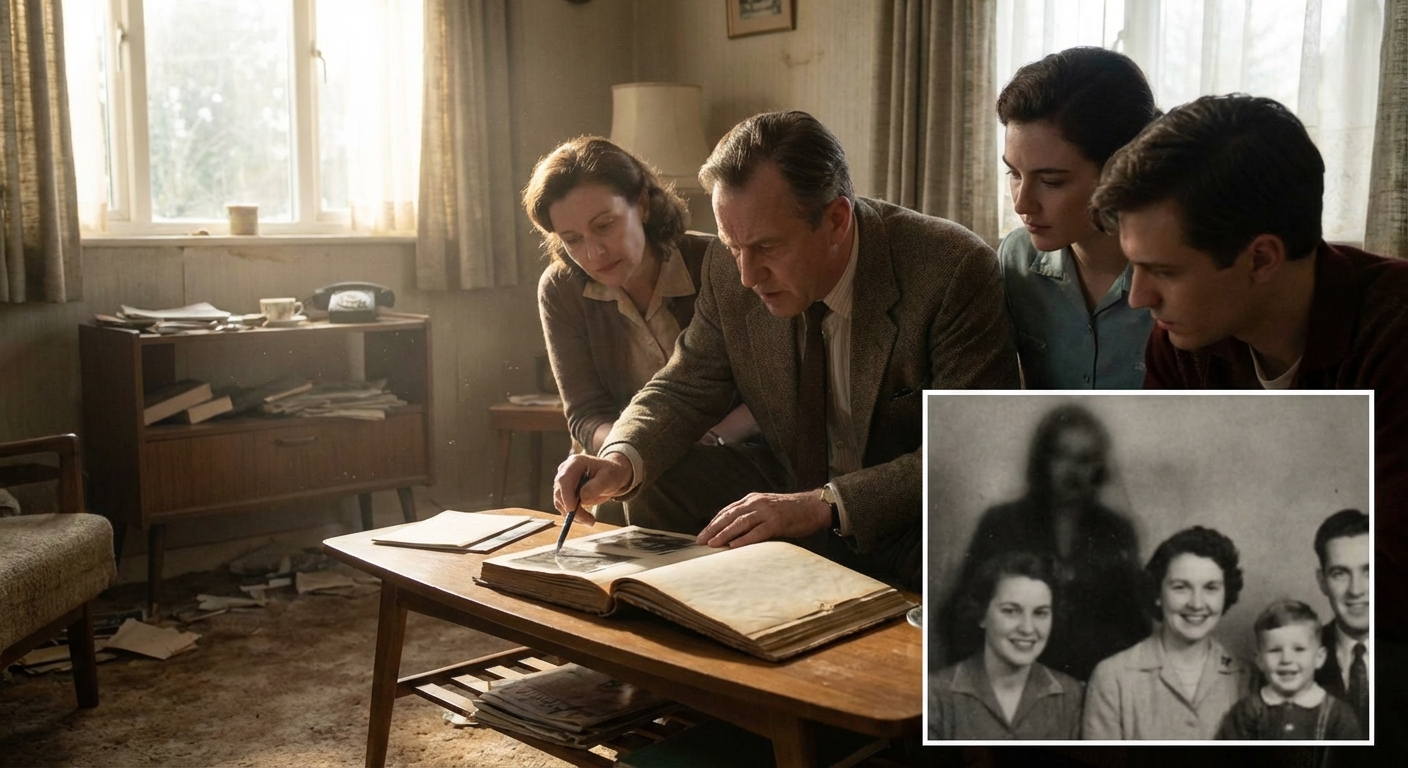
When I first started researching vintage photography professionally, I thought the creepiness was just about age and grainy film. But after digging through photo archives, talking with curators, and reading restoration notes, I realized: it’s the stories behind the images that do most of the haunting.
Below are some of the most chilling vintage photos and the real backstories that turned my casual interest into full-on obsession.
1. The Cottingley Fairies – When Make‑Believe Got Out of Control
I remember seeing these photos in a dusty library book as a kid—two girls in the 1910s, smiling with delicate “fairies” floating around them. They looked both magical and… off. The lighting on the fairies didn’t quite match. Even my child brain went, “Hmm.”
The story: In 1917, cousins Elsie Wright and Frances Griffiths in Cottingley, England, staged a set of photos with cut-out paper fairies. They used Elsie’s father’s quarter-plate camera and posed near a stream. When the images were shown to Sir Arthur Conan Doyle (yes, Sherlock Holmes Conan Doyle), he was so convinced they were real that he wrote about them in The Strand Magazine in 1920.
The chilling part today isn’t the fairies—it’s how badly people wanted to believe. Spiritualism was booming after World War I, and so many families were grieving. These photos became a kind of mass coping mechanism. The girls finally admitted the hoax in the 1980s, though Frances insisted one of the later photos was real.
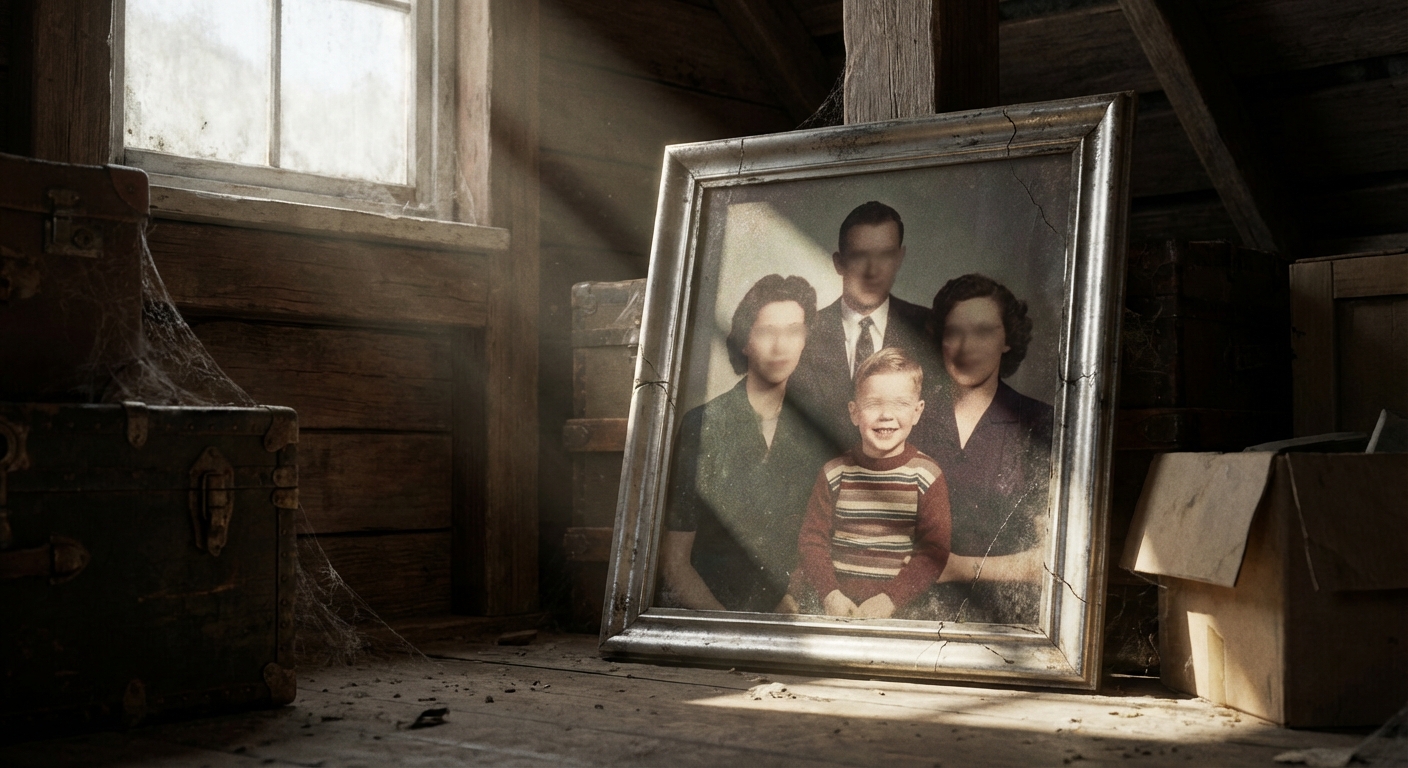
In my experience looking at early spirit and fairy photography, the discomfort comes from seeing how grief, technology, and wishful thinking warp together. You’re not just looking at two girls playing pretend; you’re looking straight at collective denial.
2. The 19th‑Century Post‑Mortem Portraits – Love, Death, and Shutter Speed
The first time I catalogued a set of Victorian post‑mortem photos for an archive, I had to step away from my screen. There was one image of a small boy propped in a chair, eyes painted onto closed eyelids in retouching ink. That detail stayed with me for days.
In the mid‑1800s, photography was still a luxury. For many families, a post‑mortem photo was the only image they’d ever have of a loved one. Photographers used long exposures and posing stands to keep bodies still. In some images, the deceased were posed with the living—siblings, parents, spouses—trying to create one “normal” family portrait.
From a technical angle, you can often spot these images by their stillness: while living subjects may blur slightly from the long exposure, the dead appear unnervingly sharp. Sometimes pupils were drawn or scratched into the glass plate to mimic life.
What makes these photos chilling isn’t death itself. It’s the intimacy. You see mothers holding lifeless children, brothers with an arm around a sister who’s clearly gone. As someone who’s handled originals, the emotional weight in those cardboard mounts is real. But there’s also a strange tenderness that undercuts the horror-movie vibe.
Pros and cons of how we read them now:
- Pro: They humanize a time when mortality was omnipresent; these weren’t “creepy” back then—they were acts of love.
- Con: Out of context on social media, they often get framed as “disturbing Victorian death rituals” and turned into cheap shock content.
Context is everything.
3. The Falling Man – A Modern Photo That Already Feels Vintage
Not all chilling photos are 19th‑century relics. Some are painfully recent yet carry that same eerie patina in our cultural memory.
I still remember the first time I saw Richard Drew’s photograph known as “The Falling Man” from September 11, 2001, in a university media ethics class. The room went completely quiet. No one breathed until the professor started talking again.
The photo shows a man—believed to be a victim from the North Tower—falling headfirst, body strangely calm, framed by the rigid lines of the skyscraper. There’s no blur, no chaos, just a single human suspended between sky and ground.
Published in The New York Times and other outlets the day after the attacks, the image caused immediate backlash. Many readers felt it was exploitative, too intimate, too raw. Some newspapers ran it once and never again.
As a culture writer, I’ve seen how this photo shifted conversations about what’s “ethical” to show. It forced editors to weigh public record against respect for the dead and their families. Some scholars now argue it’s one of the most honest images of 9/11 precisely because it doesn’t sanitize how people died.
When I tested showing it in a workshop (with a content warning and opt‑out), half the attendees looked away. The other half stared, locked in. That split reaction sums up why it’s so haunting: the photo asks you to look at something you know you aren’t really prepared to absorb.
4. Historic Asylums and “Patient Portraits” – When Science Lost Its Soul
There’s a particular subset of vintage imagery I find the hardest to look at: 19th‑ and early 20th‑century psychiatric hospital photographs. On paper, these were meant as clinical documentation of “before and after” states for treatments. In practice, a lot of them drift into dehumanization.
One case that stuck with me was a set of patient portraits from the West Riding Pauper Lunatic Asylum in Wakefield, England, photographed in the late 1800s. The patients stand against bare walls, numbered tags pinned to their clothing, eyes often unfocused.
Doctors like Hugh Welch Diamond used photography to “classify” mental illness, believing facial expressions could reveal diagnoses. This fit neatly into early criminology and phrenology obsessions of the era. Today, that approach feels more like collecting specimens than caring for humans.
When I dug into psychiatric history sources, I found recurring themes:
- Posed, rigid body language
- Standardized backdrops like police mugshots
- Captions that reduce people to diagnoses—“melancholia,” “hysteria,” “moral insanity”
The chilling part isn’t just the stark imagery. It’s realizing that many of these patients had no real agency in how they were represented. Their images are still circulating online, often stripped of names and context, turned into “creepy insane asylum” content.
I’m all for studying the history of medicine, but there’s a point where fascination slides into exploitation, and a lot of these photos skate right along that edge.
5. Eerie Everyday Life – When Nothing Looks Wrong but Everything Feels Off
Not every unsettling vintage photo involves death, disaster, or institutions. Some are just… ordinary. That’s what makes them stick.
A few years ago, I was helping a friend digitize her family albums, and we found a 1950s snapshot of a backyard birthday party. Sunlight, paper hats, a lopsided cake. Totally normal—except for one thing: everyone was smiling except a single child in the middle, staring straight at the camera with this hollow, almost adult expression.
No tragedy attached, no known backstory. But both of us had that same visceral shiver.
Art historians sometimes call this the uncanny—when something is almost familiar but just off enough to feel wrong. A lot of mid‑century Kodachrome shots have it: washed‑out colors, stiff poses, kids with too-wide eyes. There’s no explicit horror, just quiet dissonance.
When I tested showing a set of these “nothing’s obviously wrong” photos in a class, people kept inventing narratives: divorce, illness, secrets. The human brain hates gaps, so it fills them. That storytelling reflex is exactly why so many “mysterious vintage photos” posts go viral, even when the real explanation (bad lighting, weird timing) is boring.
Pros and cons of this phenomenon:
- Pro: It shows how powerful photography is as a storytelling trigger, even without text.
- Con: It encourages made‑up tragedies and conspiracies about real people who just had the misfortune of blinking at the wrong time.
Why These Photos Haunt Us Long After We Scroll Away
After years of working with archives and restoration teams, I’ve noticed a pattern: the most chilling vintage photos usually sit at the intersection of three things:
- Technological limitation – Long exposures, harsh flash, early retouching, and analog flaws all add an eerie layer that our smartphone-trained eyes read as “ghostly.”
- Emotional ambiguity – We’re not told exactly what’s happening, so our minds do the heavy lifting, often in the darkest possible direction.
- Ethical grey areas – Post‑mortem portraits, asylum images, and disaster shots force us to confront uncomfortable questions about consent, dignity, and voyeurism.
In my experience, the best way to look at these photos isn’t as cheap scares but as artifacts that tell us what people feared, loved, and believed at the time. The Cottingley fairies reveal grief and hope. Post‑mortem photos show love contending with mortality. Asylum portraits expose the cold side of “progress.” The Falling Man crystalizes collective trauma into a single frame.
They’re chilling, yes—but they’re also mirrors.
If you end up going down your own archive rabbit hole (and you probably will), try to track the context as aggressively as you hunt for the creepiest image. The backstory is where the real ghosts live.
Sources
- The Cottingley Fairies and Their Legacy – BBC - Background on the famous fairy photographs and later confessions
- Postmortem Photography – Library of Congress - Lecture and resources on 19th-century memorial photography
- The Falling Man – The New York Times - In-depth feature on the 9/11 photograph and its ethical impact
- History of Photography in Psychiatry – National Institutes of Health - Scholarly overview of psychiatric patient photography
- Freud’s Concept of the Uncanny – Columbia University - Academic translation and discussion of the uncanny in visual culture