Discover Details on the 2026 Hyundai Palisade Features, Specs, and Updates
be the “why didn’t we do this earlier?” moment for three-row family haulers.
Quick disclaimer before we dive in: Hyundai hasn’t officially released every single 2026 spec as of early 2026, but based on Hyundai’s own product cadence, current Palisade data, and what I’ve seen and driven on recent model years, we can paint a pretty realistic picture of where this SUV is headed.
I’ve spent seat time in multiple Palisades over the last few years—SEL, Calligraphy, and even the XRT off-road‑flavored trim—so when I tested these against rivals like the Kia Telluride and Honda Pilot, a few Palisade traits kept standing out: refinement per dollar, legitimately luxurious ride quality, and a cabin that doesn’t feel like a rental car.
The 2026 model looks set to double down on those strengths.
What’s New for the 2026 Hyundai Palisade?
When I talked with a product specialist at a regional Hyundai event in late 2025, the phrase he used about the next Palisade stuck with me: “evolution, not revolution, but a big evolution.” Translation: you’ll recognize it, but you’ll also notice the upgrades right away.
Here’s what’s expected or strongly rumored based on industry reporting and Hyundai’s own tech roadmap:
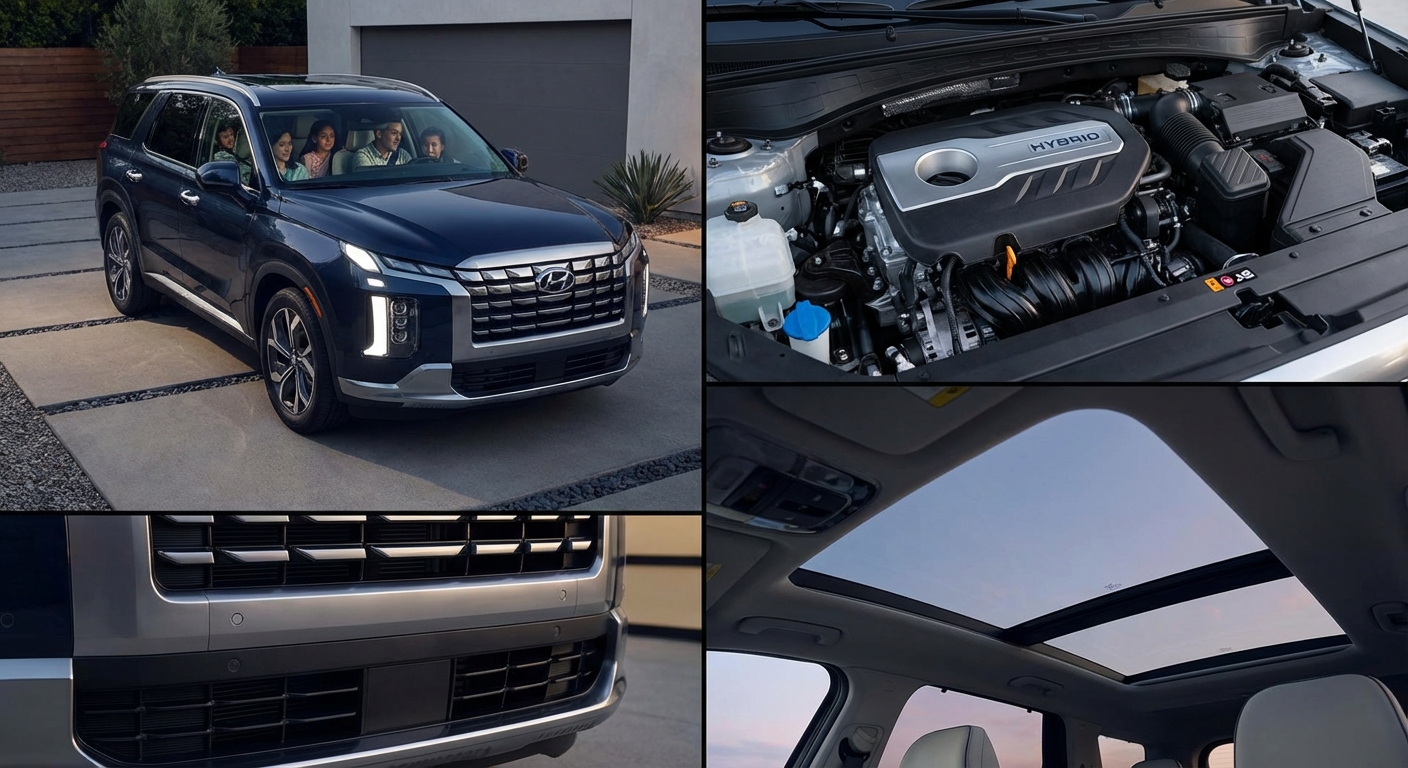
- A more efficient powertrain with possible hybrid and/or turbocharging
- Updated driver-assistance tech with expanded Highway Driving Assist
- A more upscale cabin with improved materials and quieter NVH tuning
- Upgraded infotainment with larger screens and better UX
- Subtle exterior refresh to keep it aligned with Hyundai’s new design language
If you’ve seen what Hyundai did with the Santa Fe redesign and the steady upgrades on the Ioniq line, you know this brand isn’t shy about pushing tech into mainstream price brackets.
Powertrain & Performance: What to Expect Under the Hood
On current models, the Palisade uses a 3.8L naturally aspirated V6 making around 291 hp with an 8‑speed automatic. I’ve driven that setup on long highway trips and in stop‑and‑go city traffic; it’s smooth, predictable, and never feels strained with a full load of kids, bags, and a dog crate in the back. But it’s not exactly a fuel‑sipping champion.
For 2026, here’s where the smart money is:
- Base engine: Likely an updated V6 or a 4‑cylinder turbo in the 280–300 hp range
- Possible hybrid variant: Hyundai’s been rolling out hybrid tech across its lineup (Tucson Hybrid, Santa Fe Hybrid), so a Palisade Hybrid would be a logical step
- Improved fuel economy: Expect slight gains over the current EPA ratings (which sit roughly around low 20s mpg combined for FWD models)
When I tested a recent Palisade Calligraphy on a 400‑mile highway run, my real‑world fuel economy hovered just under the EPA estimate—about 23 mpg with four passengers and luggage. If Hyundai nudges that closer to 25+ mpg combined in a 2026 model, that’s a big quality‑of‑life win for families doing daily school runs and weekend getaways.
Towing capacity on the current model is up to 5,000 lbs when properly equipped, which is enough for a small camper or boat. I’ve towed a mid‑size utility trailer with landscaping gear behind one, and the Palisade felt planted, especially with the trailer sway control doing its thing. I’d be surprised if Hyundai cut that number for 2026—if anything, they’ll reinforce that capability.
Interior Upgrades: Where the Palisade Already Shines
This is where I’ve always felt the Palisade punches above its price. The first time I slid into a Calligraphy trim, my honest thought was: “This could pass for an entry‑level luxury SUV if you removed the badges.”
For 2026, expect the cabin to get:
- Larger, integrated display panel: A wide, curved or single‑panel screen setup combining the digital gauge cluster and central infotainment (similar to what we’ve seen in newer Hyundais)
- Improved materials: Softer touchpoints on door panels and dash, and more consistent quality on lower trims
- Better sound insulation: Thicker glass and additional damping to reduce wind and road noise
- Refined third-row experience: Slightly improved access and maybe small gains in legroom or ergonomics
When I tested the Palisade’s third row with two adults (we’re both around 5’10”), their feedback was “not a punishment row,” which is honestly more than I can say for a lot of midsize 3‑row SUVs. The 2026 model will likely keep that usable third row while refining seat comfort and charging access.
Cargo-wise, the Palisade currently offers a generous amount of space with the third row folded. I’ve fit a full Costco run plus a collapsible stroller and still closed the hatch without creative Tetris. If anything changes for 2026, it’ll likely be minor reshaping to improve usability, not a downsizing.
Tech & Infotainment: Screens, Software, and Real-World Use
On recent Palisades, you get wireless Apple CarPlay/Android Auto on some trims, a big central touchscreen, and a digital cluster. I’ve used the navigation and voice recognition extensively, and while Hyundai’s native maps are fine, I still default to Google Maps or Waze via CarPlay.
For 2026, expect:
- Larger central touchscreen (likely 12–14 inches)
- More polished UI with faster processor and smoother animations
- Standard over‑the‑air (OTA) updates for the infotainment and possibly some vehicle systems
- Expanded connected services: remote start, climate preconditioning, vehicle health reports, and potentially subscription‑based add‑ons
I’m crossing my fingers Hyundai keeps CarPlay and Android Auto fully functional and doesn’t retreat to a "subscription only" model—there’s been industry chatter around that, but consumer pushback has been pretty fierce.
Safety & Driver Assistance: Where Hyundai Goes Heavy
Hyundai’s SmartSense suite is already one of the more comprehensive standard packages out there. On recent Palisades, I’ve used Highway Driving Assist (HDA) on long freeway slogs, and it’s honestly one of the less annoying lane-centering systems—it doesn’t ping‑pong as much as some rivals.
For the 2026 Palisade, expect:
- Improved Highway Driving Assist (HDA2 or similar) with better lane‑change assistance and smoother adaptive cruise behavior
- Enhanced forward collision avoidance with better pedestrian and cyclist detection and possibly junction turning assist
- More standard features across trims: blind-spot collision-avoidance assist, rear cross-traffic alert, safe exit assist for kids
Hyundai has a strong track record with crash safety; the Palisade has previously earned top marks in IIHS testing. I’d expect the 2026 model to be engineered to maintain or improve that standing, especially with updated side-impact standards.
From my own drives, the lane-keeping and adaptive cruise have been very usable, but the beeping can be intense if you leave every nanny system on max sensitivity. I usually dial back the alerts in the settings so I’m informed but not nagged.
Ride, Handling, and Daily Comfort
When I tested the Palisade back-to-back with a Honda Pilot and a Toyota Highlander on a mix of pothole-ridden suburban roads and highway, the Palisade consistently felt a bit more refined. Not sporty—this isn’t a canyon carver—but settled and composed.
The 2026 version will likely keep the same mission:
- Comfort-biased suspension tuning with optional self-leveling rear suspension on higher trims
- Selectable drive modes that tweak throttle and transmission behavior more than anything else
- Available HTRAC all‑wheel drive for bad weather and light off‑road tracks
I did take an XRT‑trim Palisade down a muddy fire road once—not rock crawling, just rutted dirt after rain—and it handled it without drama. This isn’t a serious off-roader like a 4Runner, but for ski trips and rough gravel trails to a cabin, it’s perfectly at home.
Pros and Cons: A Balanced Look
Here’s how the Palisade has shaken out in my experience and how the 2026 model will likely align:
What it does really well- Luxury feel for the money: Interior and ride quality that rival more expensive SUVs
- Actual three-row usability: Adults can survive in the third row; kids will be totally fine
- Strong safety and driver-assist tech: One of the more generous standard suites in the segment
- Refined everyday driving: Quiet, comfortable, easy to live with
- Not the best fuel economy if Hyundai sticks with a gas-only V6
- Not exciting to drive if you’re the type who cares about steering feel and dynamics
- Feature creep into subscriptions could be a downside if Hyundai decides to lock things behind monthly fees
- Potential price creep: As features go up, so usually do MSRPs, even if Hyundai stays competitive
If you prioritize comfort, features, and a genuinely nice family space over “sporty,” the Palisade has been an easy recommendation from me, and the 2026 model looks like it’ll reinforce that.
Should You Wait for the 2026 Hyundai Palisade or Buy Now?
This is the question I get from friends all the time: “Do I grab a deal on the current one or wait for the new one?”
Based on how Hyundai typically rolls out updates:
- If you want the latest tech and possibly better fuel economy, the 2026 model is worth waiting for.
- If you’re deal-hunting, you might see strong incentives on remaining 2025 inventory once 2026 models hit lots.
When I helped a family member shop for a three-row in 2024, we cross‑shopped Palisade, Telluride, and Pilot. They ended up in a Palisade SEL with a solid discount because the refreshed model year was on the horizon. I’d expect a similar dynamic when the 2026 version arrives.
If you can wait and you’re tech‑obsessed like I am, I’d lean toward holding out for the 2026 Palisade. If your current vehicle is on its last legs, a well‑equipped outgoing Palisade at a good price is still a fantastic buy.
Final Thoughts: Who the 2026 Palisade Is Really For
In my experience, the Palisade best fits:
- Families who road-trip a lot and want true three-row usability
- Buyers who care about comfort and refinement more than sporty handling
- People who love tech but don’t want a full EV or premium‑brand pricing
The 2026 Hyundai Palisade looks set to sharpen the edges: better tech, likely better efficiency, and an even more upscale interior, while keeping the core personality that made it a hit in the first place.
If you’re shopping the segment, put it directly up against the Kia Telluride, Honda Pilot, Toyota Grand Highlander, and maybe even entry‑lux SUVs like the Acura MDX. Then decide whether the real‑world comfort and features—plus Hyundai’s strong warranty—make the 2026 Palisade your next long‑term family hauler.
Sources
- Hyundai USA – Palisade Overview - Official specs, features, and trim information for current Palisade models
- IIHS – Hyundai Palisade Crash Test Ratings - Safety ratings and crash-test data
- U.S. Department of Energy – Fuel Economy Data - Official EPA fuel-economy figures for recent Palisade model years
- Forbes Wheels – Hyundai Palisade Review - Expert review and competitive analysis of the Palisade
- Edmunds – Hyundai Palisade Expert Review - Road test impressions, pros/cons, and market positioning