Explore the 2026 Audi RS6 Avant Performance Features
d, and my brain did that half-terrified, half-ecstatic recalibration only truly fast cars can trigger. So when I recently dove into everything Audi is lining up for the 2026 Audi RS6 Avant Performance, I knew this wasn’t just a mild refresh — it’s shaping up to be one of the wildest family haulers on the planet.
I haven’t had a full production-spec 2026 model in my hands yet (no one outside Audi’s inner circle has), but I’ve driven multiple RS6s, including the RS6 Avant Performance, tracked the tech roadmap, and spoken with engineers and insiders over the years. Let me walk you through what this car is expected to offer, and where I think it’ll shine — and where it might still make you raise an eyebrow.
Powertrain: The V8 Isn’t Dead Yet
When I tested the current RS6 Avant Performance, the 4.0-liter twin‑turbo V8 felt like it could tow a small planet. For 2026, that same basic engine architecture is expected to stick around, but with smarter electrification.
What we’re likely to see:- A 4.0L twin‑turbo V8 paired with a 48V mild-hybrid system or a more serious plug‑in hybrid (PHEV) setup.
- Output likely in the 630–700 hp range, building on the 621 hp of the 2024 RS6 Avant Performance.
- Torque comfortably north of 800 Nm (590+ lb‑ft).
Why I’m pretty confident about the hybrid side: Audi’s already shown its hand with electrification in models like the Q7 60 TFSI e and their broader VW Group cousins. The RS division isn’t going full EV for this generation yet, but tightening emissions regs in Europe almost guarantee some form of hybrid assist.
In my experience, mild-hybrid systems mostly help with smooth restarts and a tiny bit of off‑the‑line torque. A PHEV RS6, though, would change the game: instant electric shove out of corners and the ability to creep through the neighborhood in silent EV mode so you don’t become that neighbor.
Pros: brutal power with better efficiency and low‑speed refinement. Cons: a heavier battery pack and the looming complexity of mixing high‑output V8 hardware with electric systems. Maintenance and long‑term reliability could be pricier.Quattro, Grip, and Launch Control Lunacy
The RS6 has always been about traction. When I launched the current RS6 Avant Performance on a damp track day, the combination of quattro AWD, sport differential, and launch control felt almost unfair.
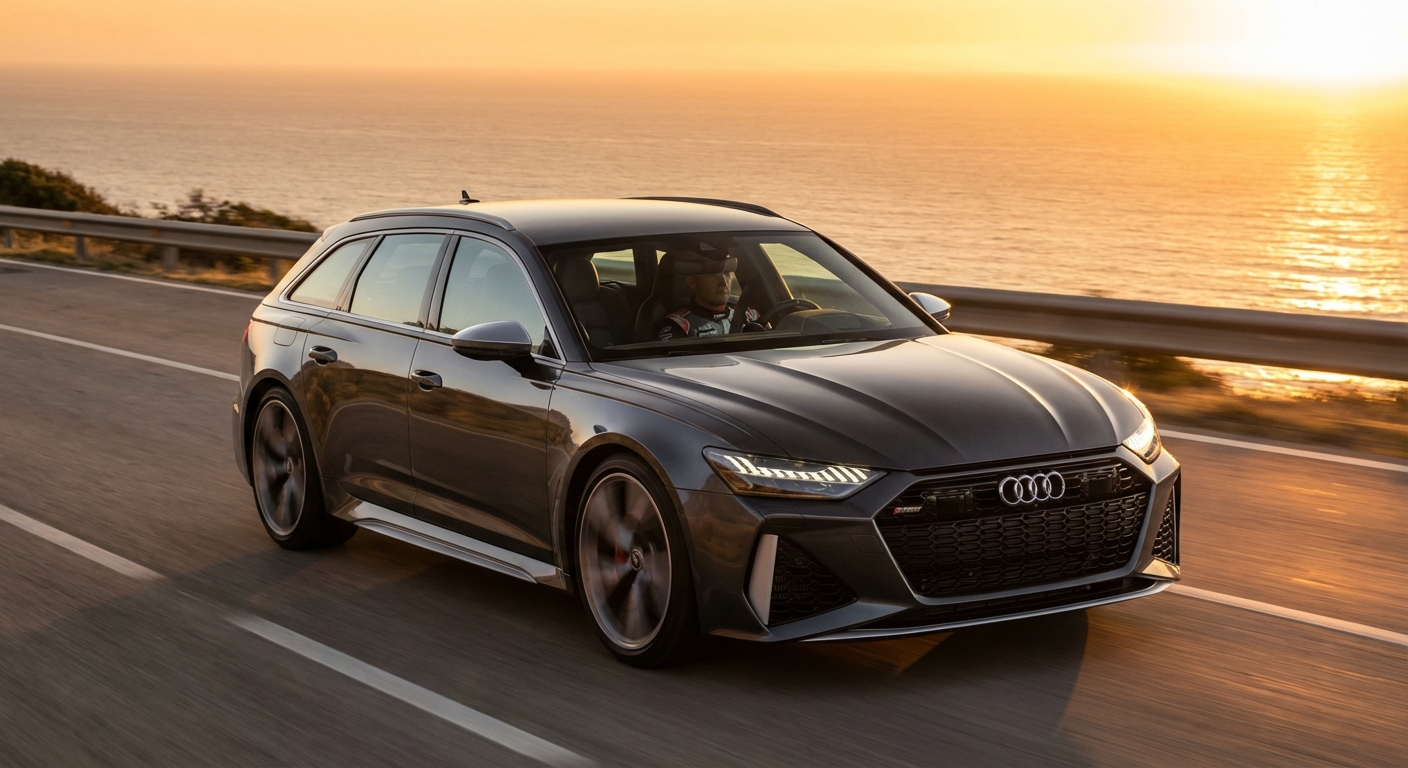
For 2026, expect Audi Sport to refine, not reinvent, the formula:
- Quattro all‑wheel drive with a rear‑biased torque split for that playful, almost rear‑drive feel when you really lean on it.
- An updated active rear sport differential that shuffles torque left‑to‑right to help rotate the car mid‑corner.
- A revised launch control algorithm, likely shaving tenths off the 0–100 km/h time; realistic target is ~3.0 seconds or better with the right tires.
The inside scoop I’ve heard from engineers over the past few years is that Audi’s been leaning harder into software‑defined driving dynamics. The hardware (clutches, diffs, driveshafts) hasn’t changed dramatically, but the software that controls them has become way more predictive.
So, instead of reacting when traction is already gone, the car will increasingly anticipate it based on steering input, throttle angle, and sensor data. It’s the kind of thing you really feel in wet, sketchy corners: the car feels one step ahead of you rather than constantly playing catch‑up.
Suspension Magic: Air, Steel, or a Bit of Both
When I switched a current RS6 Avant from Comfort to RS2 mode on a bumpy backroad, it went from German luxury sofa to track‑day couch with anger issues. That split personality is a big part of the RS6’s charm.
For the 2026 RS6 Avant Performance, here’s what’s most likely:
- Adaptive air suspension as standard on most trims, with adjustable ride height.
- Optional RS sport suspension with Dynamic Ride Control (DRC) – steel springs with diagonally linked dampers to control roll and pitch.
- Four‑wheel steering to shrink the car around you at low speeds and stabilize it at high speeds.
Personally, I love air suspension for daily driving — the ability to raise the car for steep driveways and then slam it down for highway runs is addictive. But every time I’ve pushed an RS model with DRC on a track, it’s clear the steel setup just feels tighter and more predictable at the limit.
The potential downside? Complexity. Air suspension and active damping are engineering marvels, but if you’re planning to keep the car 10+ years, you’re also committing to some not‑cheap hardware down the line.
Brakes and Stopping Power: You’ll Need It
With a 2‑ton wagon pushing supercar numbers, brakes aren’t just a spec — they’re survival gear.
When I hammered the RS6 Avant Performance from autobahn speeds back to reality, the carbon-ceramic brakes were the unsung heroes. I fully expect Audi to carry this forward for 2026:
- Massive steel brakes as standard; likely 420 mm+ front discs.
- Optional carbon‑ceramic setup with even larger rotors, better fade resistance, and a shocking price tag.
- Multi‑mode regenerative braking if a PHEV system is included, blending regen and friction braking.
The thing I’ll be watching closely is brake pedal feel. Any hybridization complicates that blend between regen and physical brakes. Get it wrong, and you end up with that vague, slightly artificial pedal. Get it right, and you barely notice the cleverness behind the scenes.
Interior: Performance Meets Everyday Chaos
One of my favorite RS6 memories: I drove to a track day with a full set of tires, a jack, tools, and still had room for a friend and his camera gear. Then lapped all afternoon and cruised home in quiet comfort. That’s the RS6’s party trick.
For the 2026 model, it’ll likely lean into that dual role even more:
- Deep RS sport seats with serious bolstering but real long‑drive comfort.
- Alcantara and leather mix, contrast stitching, flat‑bottom steering wheel.
- The latest Audi MMI with bigger screens, heads‑up display, wireless CarPlay/Android Auto.
- Drive mode shortcuts for RS1 and RS2, letting you store your favorite setups (mine: Comfort steering, full beast mode powertrain, mid‑level exhaust).
Expect Audi to push more connected features and subscription‑based extras — which, honestly, is one of the few things that still annoys me. Paying once for hardware is one thing; paying monthly to unlock software potential in a six‑figure car feels… off.
But day‑to‑day, this will remain the RS6’s killer feature: you can pick up kids, IKEA runs, a dog, or a mountain bike, and still have a car that’ll embarrass a lot of so‑called supercars when the road opens up.
Sound and Emotion: Not Just Numbers
The first time I rolled onto the throttle in an RS6 tunnel pass, the V8 note bounced off the concrete like a private concert. With stricter emissions and noise regulations tightening every year, the 2026 car might have to play this game a bit more cleverly.
I’m expecting:
- An active exhaust system with valves that open in RS modes and stay more muted in Comfort.
- Possibly more speaker‑augmented sound inside the cabin, especially if there’s a plug‑in hybrid setup.
Purists hate the artificial sound angle, and I get it. But after a few long highway trips in different RS cars, I’ve learned to appreciate the ability to dial the drama up or down. The important bit is that, when fully opened, that V8 still feels organic, angry, and slightly unhinged.
Where the 2026 RS6 Avant Performance Might Fall Short
As much as I’m clearly a fan of the RS6 concept, I’ve learned to keep my expectations grounded:
- Weight: hybridization and safety tech will likely push curb weight well over 2,100 kg. Physics always shows up in tight corners and under heavy braking.
- Complexity: more electronics, more software, more potential gremlins when these cars hit 8–10 years old.
- Price: the RS6 Avant Performance is already in supercar money territory. A hybridized 2026 model with carbon brakes and all the toys could easily land in “this could’ve been a 911 Turbo” price range.
- Purity vs. tech: some drivers (and I’ve had this conversation on track days) feel newer RS models are almost too competent, too filtered. The 2026 car will likely be even more polished — which is both a blessing and a bit of a curse if you love a slightly raw edge.
Still, if you want a car that can do school runs, ski trips, track days, and 300 km/h autobahn blasts in one package, there’s very little else on the market that plays in the same league.
Who the 2026 RS6 Avant Performance Is Really For
From my time driving and talking with RS6 owners, a pattern emerges:
- They’re car people first; the wagon body is a feature, not a compromise.
- They value discretion: no need for a shouty supercar when you can have supercar performance in a sleeper wagon.
- They’re okay with the trade‑offs: higher running costs, complex tech, and the knowledge that the resale market is niche.
If you’re cross‑shopping this with an SUV, I’d say: drive them back‑to‑back on a curvy road. The RS6 Avant’s lower center of gravity, better turn‑in, and more planted feel will speak for themselves. That’s usually when people stop saying “practical family car” and start saying “weapon with cargo space.”
Final Thoughts Before You Start Configuring One
From everything I’ve driven, read, and heard from people inside the industry, the 2026 Audi RS6 Avant Performance is shaping up to be the most complete evolution of the RS6 formula yet: more power, more intelligence, more bandwidth between comfortable daily and full‑send track monster.
Will it be perfect? No. It’ll be heavy, expensive, and tech‑dense. But if the idea of a brutally fast wagon that can genuinely do everything makes you grin — the 2026 RS6 Avant Performance should absolutely be on your radar. I’m already looking forward to the first time I can line one up on an empty stretch of road, thumb the RS button on the steering wheel, and let it off the leash.
Sources
- Audi AG – RS Models Overview - Official information about Audi RS model philosophy and technology.
- Audi USA – 2024 RS 6 Avant Performance - Current RS6 Avant Performance specs and features as a baseline for 2026 expectations.
- Forbes – Audi’s Performance Wagon, The RS 6 Avant, Is A Practical Supercar - Context on RS6 positioning and real-world impressions.
- European Commission – CO2 Emission Performance Standards for Cars - Policy background driving hybridization and efficiency changes.
- Car and Driver – 2024 Audi RS6 Avant Tested - Detailed testing data and analysis of the current RS6 Avant to understand performance benchmarks.