Exploring Old Used Jeeps Inventory
7 test drives, and way too many Facebook Marketplace messages later, I’d basically become that friend everyone texts: “Hey, can you check this Jeep listing for me?”
If you’re staring at a screen full of Wrangler TJ’s, Cherokee XJ’s, and sketchy “clean title, needs nothing” ads, I’ve been exactly where you are. Let me walk you through what I learned actually crawling through old used Jeeps inventory — muddy driveways, auction lots, sketchy back alleys and all.
Why Old Jeeps Are Still Weirdly Addictive
When I first started looking, I kept hearing the same phrase from owners: “It’s a Jeep thing.” Honestly, it sounded like a marketing line… until I drove a 1999 Wrangler TJ with the top off on a cool evening.
There’s something brutally simple and honest about these rigs. Solid axles. Boxy body. You feel every bump, every rock, every pothole. It doesn’t float over the road like a modern crossover — it kind of wrestles with it. And if you’re even a little bit of an enthusiast, that’s addictive.
In my experience, there are three big reasons people go deep into old Jeep territory:
- Off-road capability – Even a stock Wrangler or Cherokee with decent tires can embarrass newer, more expensive SUVs off-road.
- Aftermarket support – Lift kits, bumpers, lockers, armor… you can build exactly what you want.
- Community – Trail runs, forums, YouTube channels, that awkward wave you’re supposed to give other Jeep drivers.
But not all used Jeeps are created equal, and some of the “deals” I looked at were one bad bump away from losing a wheel.
The Main Characters in Old Jeep Inventory
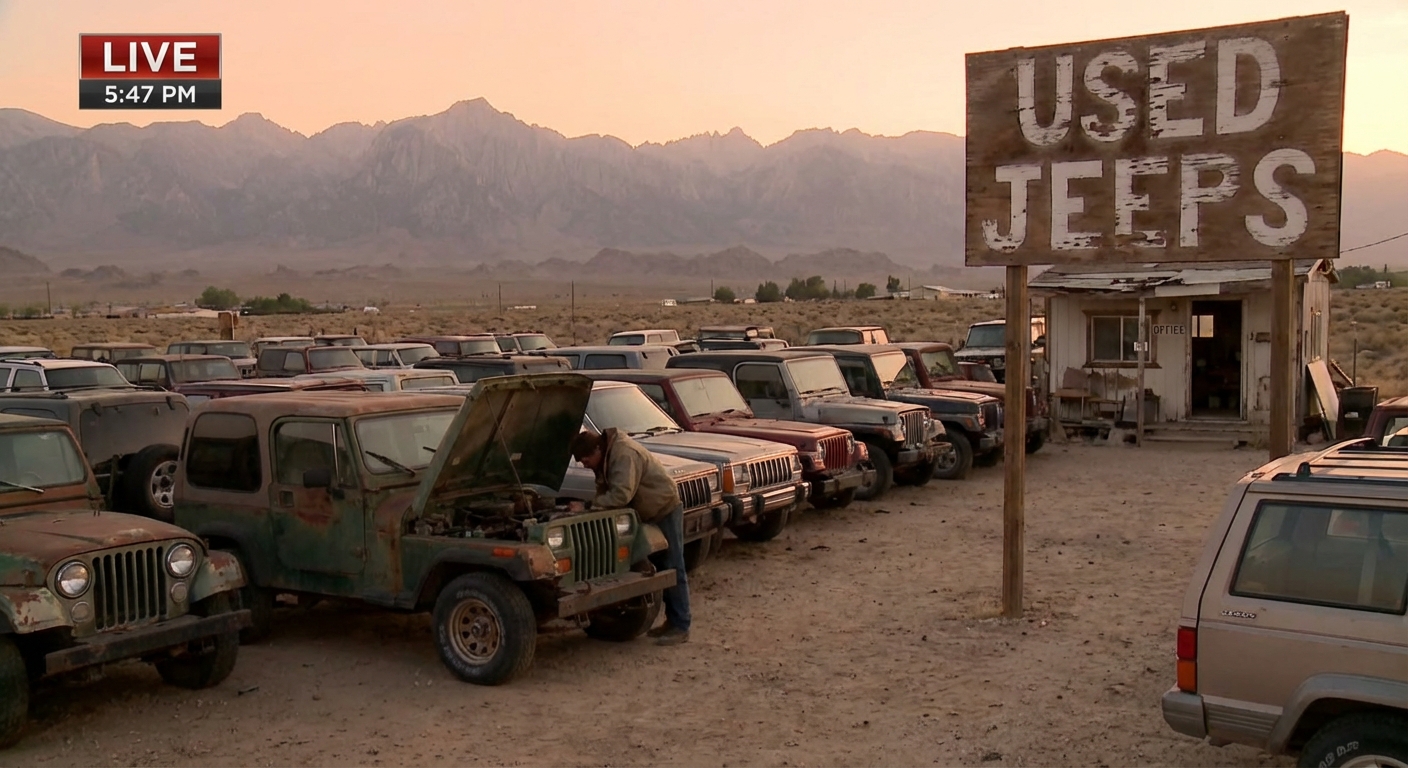
When I was exploring inventories at small dealers, used lots, and private sellers, a few models kept showing up over and over. Each one has its personality — and its quirks.
Wrangler TJ (1997–2006)
This is the one that pulls you in with the classic round headlights and removable doors.
When I tested a 2002 TJ with the 4.0L inline-six and 5-speed manual, I immediately understood the hype. The torque is low and lazy in a good way, the manual shifter feels like it came from a tractor, and visibility is incredible. But I also noticed something else: the frame had rust flakes falling off like Parmesan cheese.
What I learned to watch for:- Frame rust around the control arm mounts and near the rear lower shock mounts
- 5-speed AX-5 vs. NV3550 – the AX-5 behind the 2.5L isn’t as strong as the transmissions used with the 4.0L
- Soft top condition – tears and yellowed plastic windows aren’t cheap to fix
The 4.0L engine itself has a great reputation. According to Jeep’s own historical marketing materials and owner data, these engines regularly cross 200k–300k miles with basic maintenance, though they’re not particularly fuel efficient.
Cherokee XJ (1984–2001)
The XJ is the boxy legend. I drove a 1998 Cherokee that looked like it had survived three owners, two dogs, and maybe one apocalypse. The interior plastics felt like they’d been through a sandblaster, but the drivetrain pulled strong and the solid front axle made it feel planted on rough dirt roads.
Key things I found in the wild:- Rust around the floor pans and rear frame rails
- Cooling system issues – a few XJs I tested ran hot after 20–30 minutes
- Door hinge sag – not a dealbreaker, but a sign of age
XJs are getting older and more collectible, so clean ones in some regions are going up in value. I was shocked how many sellers tried to justify rusted-out examples with: “They don’t make ‘em like this anymore.”
Wrangler JK (2007–2018)
When I moved my search up a bit in price and age, the JKs started popping up — especially 2012+ models with the 3.6L Pentastar V6.
Compared to the TJs, every JK I test drove felt like a luxury vehicle: more space, more comfort, way better highway manners. But they also came with lift kits installed by “my cousin who’s a mechanic,” mismatched tires, and questionable wiring for light bars.
From talking with a local Jeep shop owner, I learned a few patterns:
- 2007–2011 3.8L V6 can be oil burners
- 2012+ 3.6L Pentastar much stronger, but there were known cylinder head issues on some early engines (Jeep extended the warranty on certain VINs)
- Over-lifted Jeeps with giant tires can trash steering and driveline parts if not done right
Where I Actually Found the Good Ones
I assumed the best old Jeeps would be at big franchise dealers. Honestly? The cleanest ones I found came from:
- Private sellers with records – One guy handed me a folder of receipts going back 12 years. I almost hugged him.
- Smaller specialty 4x4 shops – Prices were higher, but they’d already checked frames, bushings, and cooling systems.
- Southern and western states inventories online – Less rust. When I cross-checked VINs using sites like the National Highway Traffic Safety Administration’s VIN lookup, a few of the clean-looking frames had actually been in floods, so that saved me from a big mistake.
I also learned to absolutely ignore listings with only three badly lit photos and “no lowballers, I know what I got” in the description. Every time I went to see one of those, it was rougher than the pictures.
Red Flags I Started Spotting Within 30 Seconds
After a while, walking through old Jeep inventory started to feel like a game of “spot the landmines.” Here are the things that made me suspicious fast:
- Fresh undercoating everywhere – especially on frame rails and suspension. Sometimes it’s legit, sometimes it’s hiding rust.
- Mismatched tires – suggests corners were cut; also a hint the owner didn’t care about proper maintenance.
- Steering that wanders all over the road – worn tie rod ends, ball joints, or track bar. Fixable, but not free.
- Electrical chaos – random switches drilled into the dash, loose wiring for light bars, or tangled mess under the steering column.
When I took a particularly lifted JK onto the freeway, the steering wheel started shaking violently at 55 mph. Classic “death wobble.” The owner called it “just a Jeep thing,” but every experienced Jeep tech I’ve spoken with calls it what it is: a suspension or steering geometry problem that needs fixing, not ignoring.
Pros and Cons Once the Honeymoon Wears Off
After owning an old Jeep for a bit, honeymoon goggles come off. Here’s the honest version from my experience and from talking with other owners on forums and in person.
What’s fantastic:- You can still get parts everywhere. AutoZone, RockAuto, junkyards — the supply is massive.
- Modifying is genuinely fun. I installed my own quick-disconnect sway bar links in an afternoon with basic tools.
- The community is oddly generous with knowledge. I’ve had strangers send me full PDF factory service manuals.
- Fuel economy. My 4.0L Wrangler with bigger tires lives around 14–16 mpg, and that’s being gentle.
- NVH (noise, vibration, harshness). If you want a quiet, cushy commute, an old Jeep will try to change your mind… or your spine.
- You can go down the upgrade rabbit hole fast. Lift, gears, armor, winch — the costs stack up.
From a safety perspective, older Jeeps lack many modern systems: no advanced driver assistance, limited airbags, less sophisticated crash structures. The Insurance Institute for Highway Safety (IIHS) crash tests on older models show this clearly. For some people, that’s a dealbreaker. For others, it’s a trade-off they accept knowingly.
How I’d Shop Old Used Jeeps If I Had to Start Over
If I rewound the clock to when I first started exploring old used Jeeps inventory, here’s how I’d approach it with what I know now:
- Pick your use case first. Daily driver + weekend trails? Occasional off-road toy? Overlanding rig? Your answer changes whether a TJ, XJ, or JK makes more sense.
- Set a total budget, not just purchase price. I’d automatically reserve 20–30% for maintenance and immediate fixes.
- Insist on a cold start test. Every Jeep I saw that “was already warmed up for you” had some startup quirk the seller didn’t want me to hear.
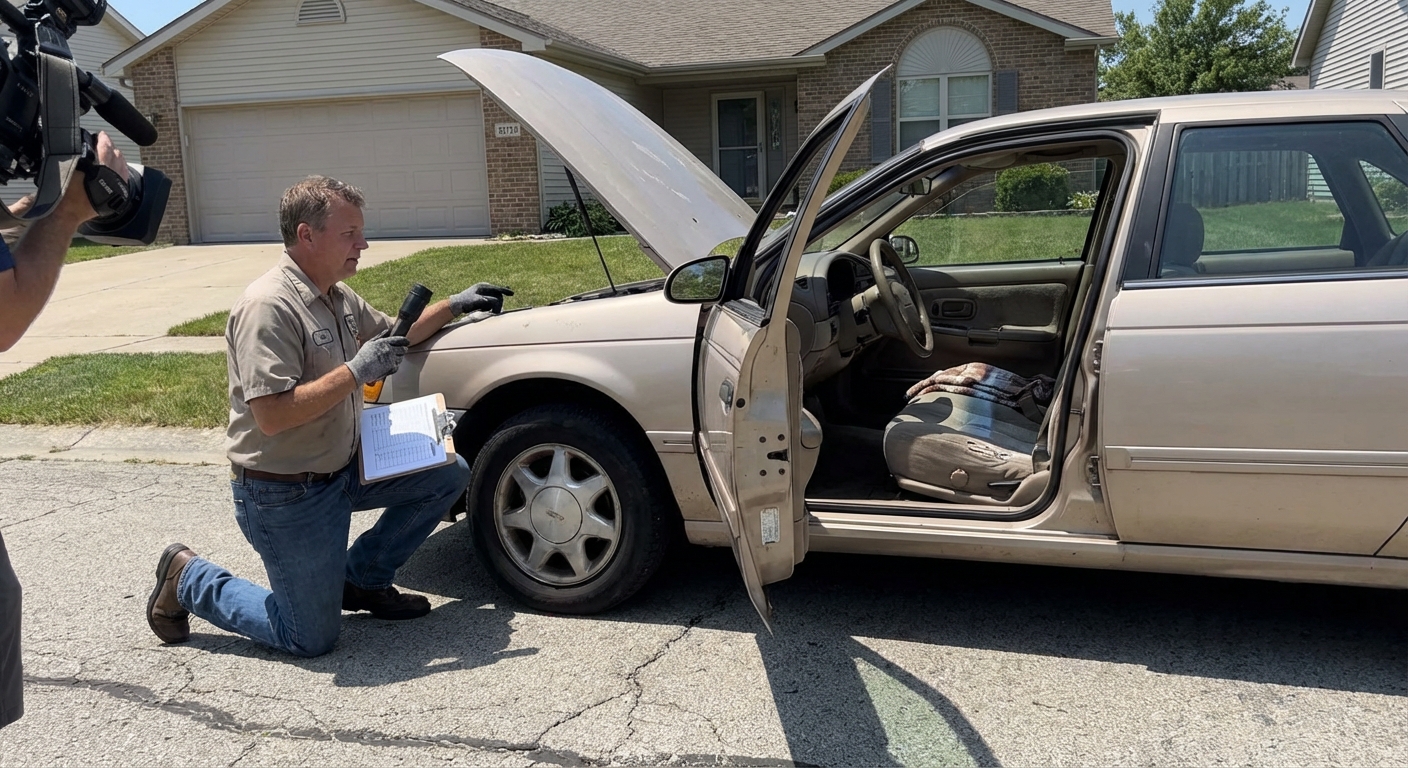
- Bring a flashlight and a friend who’s blunt. I missed early rust on one frame because I didn’t want to crawl in the dirt. That mistake cost me an inspection fee later.
- Get a pre-purchase inspection from a shop that knows Jeeps. General mechanics are fine, but a good Jeep shop can instantly spot lift kit problems, gear ratio mismatches, and weak points.
When I finally bought my own old Wrangler, it wasn’t the prettiest one I’d seen. The paint was faded, the interior had that “previous owner liked snacks” vibe, but the frame was solid, service records were real, and the drivetrain felt honest. That’s the sweet spot in this world.
If you’re patient and a little picky, the right Jeep is out there, probably sitting under a faded carport somewhere, waiting for someone who sees past the rust spots and bad LED light bar installs.
Sources
- NHTSA VIN Lookup - Official U.S. government database for checking recalls and safety issues by VIN
- Jeep Official Heritage Page - Chrysler/Stellantis overview of Jeep model history and lineage
- IIHS Vehicle Ratings - Crash test results and safety evaluations for various Jeep models
- Forbes: Why Jeep Wranglers Hold Their Value - Analysis of Wrangler resale trends and market demand
- University of Michigan Transportation Research Institute - Research hub for automotive safety and vehicle performance studies