Ford Mustang Market Guide: What to Know
s a Mustang*. Since then, I’ve test-driven everything from a dusty Fox-body 5.0 to a brand-new S650 Mustang GT with the digital cockpit, and I’ve watched the market get weird, hype-driven, and—if you know what you’re doing—full of opportunity.
If you’re trying to figure out whether to buy, sell, or hold a Mustang right now, this guide will walk you through what I’ve learned the hard way.
The Mustang Market in 2024–2025: Big Picture
When I started tracking Mustang prices seriously around 2018, clean S197 GTs were just used cars. Now, the whole Mustang ecosystem looks more like a layered stock market:
- Classic collectibles (’60s–early ’70s)
- Smog-era & Fox-body survivors (mid-’70s–early ’90s)
- Modern classics (SN95 & S197: ’94–’14)
- Current-gen performance & special editions (S550 & S650: ’15–present)
According to Hagerty’s valuation tools and auction data through 2024, high-spec and low-mileage Mustangs have outperformed many other muscle cars in appreciation, especially:
- 1965–1970 fastbacks
- 2000 Cobra R
- 2012–2013 Boss 302
- 2015–2020 Shelby GT350
- 2020–2022 Shelby GT500
Meanwhile, drivers’ cars like standard GTs and EcoBoosts haven’t skyrocketed the same way, which is actually good news if you want to drive your Mustang instead of worship it under a cover.
Generations and Which Ones Are “Hot” Right Now
I’ve made the mistake of falling in love with a car first and checking the market later. Don’t do that. Here’s how the main generations stack up from a market perspective.
1. First-Gen (1964½–1973): Blue-Chip Pony Cars
When I tested a 1966 C-code coupe a few years ago, it felt more like a rolling time capsule than a sports car. Slow by modern standards, but emotionally lethal.
Market reality:- Fastbacks (especially ’65–’70): Strong and still rising if documented and clean
- Coupes: More affordable entry point but good ones are no longer “cheap”
- Big-block & special models (Mach 1, Boss 302/429, Shelby): Investment territory
Originality and documentation (build sheets, Marti reports, matching numbers) matter hugely here. Restomods can be worth good money, but they’re more subjective and buyer-specific.
2. Fox-Body (1979–1993): From Cheap Thrashers to Cult Darlings
I recently drove a mostly stock ’91 LX 5.0 hatch, and it reminded me why these cars are adored: light, simple, loud, and just sketchy enough to be fun.
Why Foxes are heating up:- They’re the go-to nostalgia car for people who grew up in the ’80s and ’90s
- Drag racers and street builders love the platform
- Stock, unmolested examples are getting rare
3. SN95 & New Edge (1994–2004): Still Underpriced… For Now
In my experience, this is the overlooked sweet spot if you want a real V8 Mustang without selling your kidney.
- 1996–1998 4.6 GTs: Undervalued, but not very fast without work
- 1999–2004 New Edge GTs: Better performance, sharper styling
- Cobra models (especially ’03–’04 Terminator): Already collectible, with supercharged 4.6 DOHC and forged internals
Terminator Cobras with low miles and no mods are borderline investments; they’ve trended upward consistently according to Bring a Trailer and Mecum results since about 2019.
4. S197 (2005–2014): Modern Feel, Analog Soul
The first time I drove a 2011 GT with the 5.0 Coyote, it honestly felt like a cheat code compared to older Mustangs.
- 2005–2010 GT: Retro look, 4.6 V8, decent power, lots of character
- 2011–2014 GT (Coyote): The sweet spot for value vs. performance
- Boss 302 (2012–2013): Track-focused, highly regarded, appreciating steadily
- Shelby GT500: Serious power, market depends heavily on mileage and condition
These are modern enough to daily and analog enough to feel raw—great for people who actually want to use the car.
5. S550 & S650 (2015–Present): Tech, Power, and Hype
When I tested a 2019 GT Performance Pack, it felt like the first Mustang that could genuinely do everything: commute, canyon carve, road trip.
- 2015–2017 GT: First independent rear suspension in a regular Mustang, strong aftermarket
- 2018+ GT: More power, better 10-speed auto (jointly developed with GM)
- Shelby GT350 / GT350R: Flat-plane crank Voodoo V8, already a modern classic
- 2020–2022 Shelby GT500: Monster power, track weapon, limited supply
- S650 (2024+): Fresh, tech-heavy, and still price-discovering
The GT350 is the one I see consistently praised by track rats and collectors; the hand-built 5.2 Voodoo and 8,250 rpm redline are catnip for enthusiasts.
Key Factors That Actually Move Mustang Prices
Not all Mustangs are created equal. I’ve watched two cars with the same year and trim differ by five figures just because of a few details.
1. Trim, Options, and Special Editions
Collectors chase:
- Shelby, Boss, Cobra, Mach 1, Bullitt
- Performance Packs (PP1, PP2), Track Pack, Recaro seats
- Rare color/option combos (Grabber Blue, Competition Orange, specific stripes)
A base GT automatic and a GT Performance Pack with Magnaride and Recaros live in completely different markets, even if they share a model year.
2. Mileage and Condition
When I was shopping S197s, a 120k-mile GT looked cheap—until I priced a clutch, suspension refresh, and potential timing issues.
Generally:
- Low miles + documented maintenance = strongest value
- High miles but well maintained = best budget driver
- “Low miles” but sketchy history = run away
Paint meters, pre-purchase inspections, and Carfax/AutoCheck are your friends, but they’re not magic. I’ve seen “clean” Carfax cars with obvious crash repairs.
3. Modifications: Blessing and Curse
I love a tastefully modded Mustang as much as anyone. But the market doesn’t always.
- Mild mods: Exhaust, tune, lowering springs, wheels – often fine, sometimes desirable
- Heavy mods: Big turbos, chopped-up interiors, roll cages – narrow the buyer pool
If you plan to sell later, document the work and keep the stock parts. When I sold a lightly modded car, having the OEM intake, wheels, and exhaust added real dollars to the deal.
Buying a Mustang: What I Actually Check
Here’s what I’ve learned from a mix of good buys and one extremely regrettable purchase that came with “just a small oil leak.”
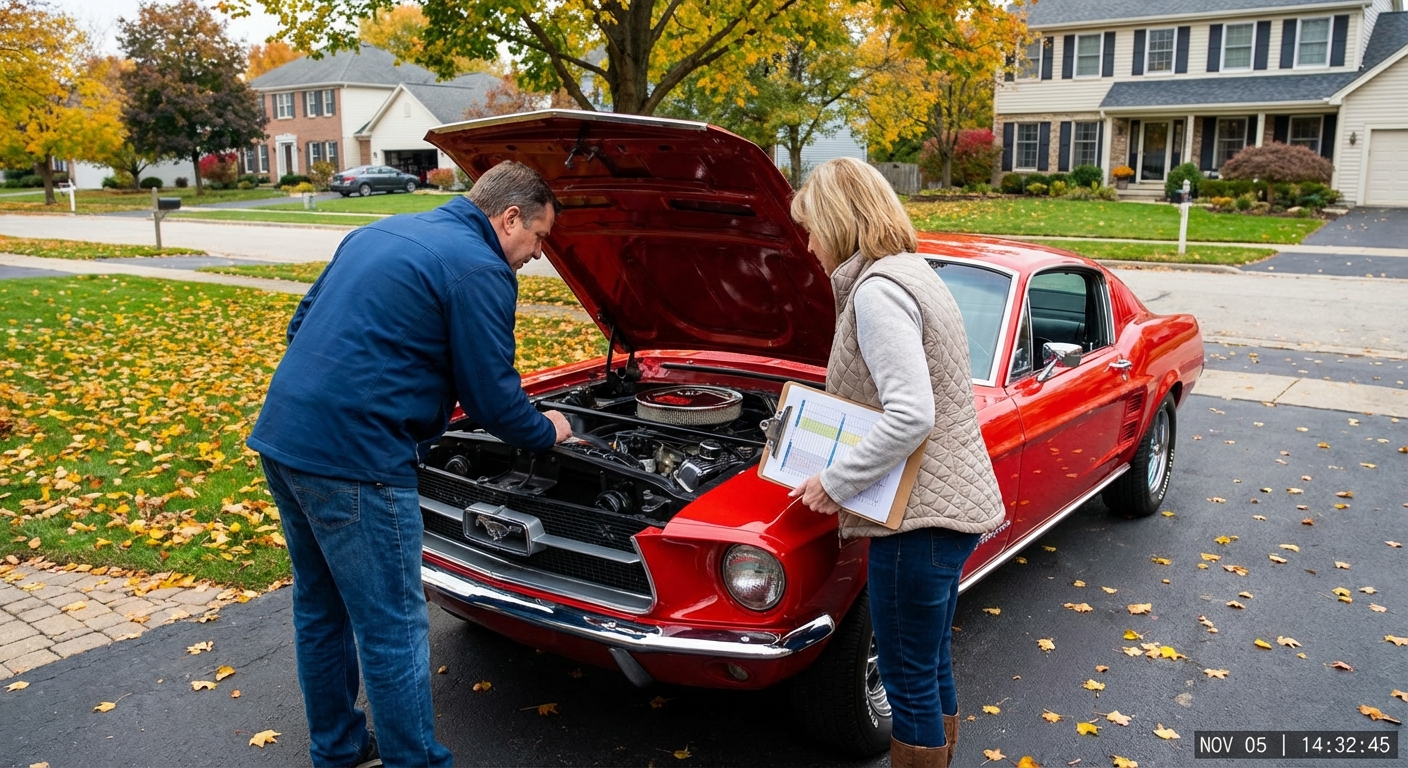
My core checklist:- VIN and title: Match everywhere, no salvage or flood history if you’re paying top dollar
- Rust: Especially shock towers, torque boxes, rear quarter panels, and floor pans on older cars
- Engine noises: Cold start, listen for ticking, knocking, or chain rattle
- Clutch and transmission: Mustangs are notorious for abused clutches and crunchy synchros
- Rear end: Whining under load can mean worn gears or bearings
- Suspension: Uneven tire wear, clunks, or wandering under braking
- Electronics: S550+ cars are tech-heavy; screen glitches and module failures can get pricey
Whenever possible, I pay for a pre-purchase inspection by a shop that actually knows Mustangs. The $200–$400 fee is nothing compared to a surprise engine rebuild.
What About the Mustang Mach-E?
I’ve driven the Mach-E and I get asked all the time if it “counts” as a real Mustang.
From a market perspective:
- It plays more in the EV crossover segment than the pony car space
- Depreciation has been similar to other EVs, with incentives and used inventory affecting prices
- The GT Performance Edition has performance cred, but it’s not tracked or collected like a GT350 or GT500
If you want an efficient, quick daily with a Mustang badge, the Mach-E makes sense. If you want the traditional Mustang “ownership story,” the coupes and convertibles are still where the soul is.
Is a Mustang a Good Investment or Just a Fun Car?
Honest answer from my own wallet:
- As an investment: Only very specific trims and spec levels make sense—Shelbys, Boss 302, rare first-gen cars, and ultra-clean low-mile examples. Even then, the market can flatten.
- As a fun car: A well-bought Mustang GT or V6/EcoBoost is one of the best value-per-smile cars out there.
Cars are consumable art. I’ve made a small profit on one Mustang and lost money on another, but I enjoyed both more than any index fund.
If your priority is returns, you’re better off with a diversified portfolio and maybe a collectible Mustang on the side, not the other way around.
When to Buy and When to Walk Away
Patterns I’ve seen over and over:
- Good times to buy:
- Late fall and winter in cold states (performance car season is “off”)
- When a new generation launches and older models temporarily dip
- Private sellers who are realistic and not emotionally attached
- Red flags I don’t ignore anymore:
- “Just needs a tune” after a big turbo or blower install
- “Built motor” with zero receipts
- Seller refuses an inspection or says, “I have five other buyers lined up”—they usually don’t
I’ve walked away from cars that looked perfect in photos but felt wrong in person. Every time I did, another better one eventually showed up.
Final Thoughts: How to Play the Mustang Game Smart
If I had to distill all of this into a simple approach:
- Decide if you’re a driver, a collector, or a bit of both
- Learn the generation-specific weak points of the car you want
- Pay more for a clean, documented car; cheap projects are rarely cheap
- Assume you’ll spend some money on sorting it out—and factor that into your budget
The Mustang market isn’t just about values and graphs; it’s about the stories you collect with the car. Just make sure those stories don’t start with: “So I ignored the oil leak and the check engine light…”
Sources
- Ford Motor Company – Official Mustang Page - Official specs, trims, and current model details
- Hagerty Valuation Tools – Ford Mustang - Historic and current value trends for various Mustang years and trims
- U.S. Department of Energy – Fuel Economy Data - Official fuel economy ratings for Mustang models
- Forbes – The Ford Mustang’s Enduring Legacy - Market and historical analysis of the Mustang line
- NYTimes – The Ford Mustang, a Cultural Icon - Context on the Mustang’s cultural and market significance