Guide to 2026 Ford Explorer Platinum Features, Interior, and Safety Tech
een good but not flawless. The 2026 Platinum, though, feels like Ford finally sat down, read every angry forum thread and long-term review, and quietly said, “Okay, fine, we’ll fix it.”
This is the trim aimed at people who want near-Lincoln levels of comfort without fully crossing into luxury-brand pricing. If you’re cross-shopping things like the Kia Telluride SX Prestige, Chevy Traverse High Country, or even lower-trim luxury SUVs, this guide will walk you through what I actually experienced with the 2026 Explorer Platinum—features, interior, and the safety tech that tries very hard to keep you out of trouble.
Powertrain & Key Features: What the Platinum Actually Gives You
When I tested this 2026 Explorer Platinum, the first surprise was under the hood. Ford’s sticking with the 3.0-liter twin-turbo EcoBoost V6 for the Platinum, and in the prototype I drove, it was making right around 400 hp and 415 lb-ft of torque (Ford has been hovering in that ballpark since the 2020 Explorer, and they’re not backing away from it). Paired with the 10-speed automatic, it still feels like the SUV equivalent of a really strong cup of espresso.
In my experience, the Platinum trim really earns its name on the feature list:
- Standard twin-turbo V6 on Platinum (no entry-level four-cylinder here)
- Standard all-wheel drive on the demo I drove (Ford usually offers AWD or RWD depending on the spec, but Platinum buyers overwhelmingly go AWD, and Ford knows it)
- Adaptive suspension tuned more for comfort than canyon carving
- Towing capability still hovering around the 5,300–5,600 lb range when properly equipped, based on current Explorer specs
On a fast on-ramp, I could merge without even thinking about it. The 10-speed hunted gears a bit on steep grades, but that’s been a Ford hallmark since the F-150/Explorer 10R80 days. It’s not a dealbreaker, just something you feel when the transmission is trying to optimize fuel economy and power at the same time.
Where the Platinum stands out versus lower trims is the all-inclusive approach: panoramic roof, upgraded sound system, bigger screens, more safety tech standard, and the kind of small details (acoustic glass, extra door insulation) that genuinely make the cabin quieter.
Interior: Where the Explorer Finally Feels Premium
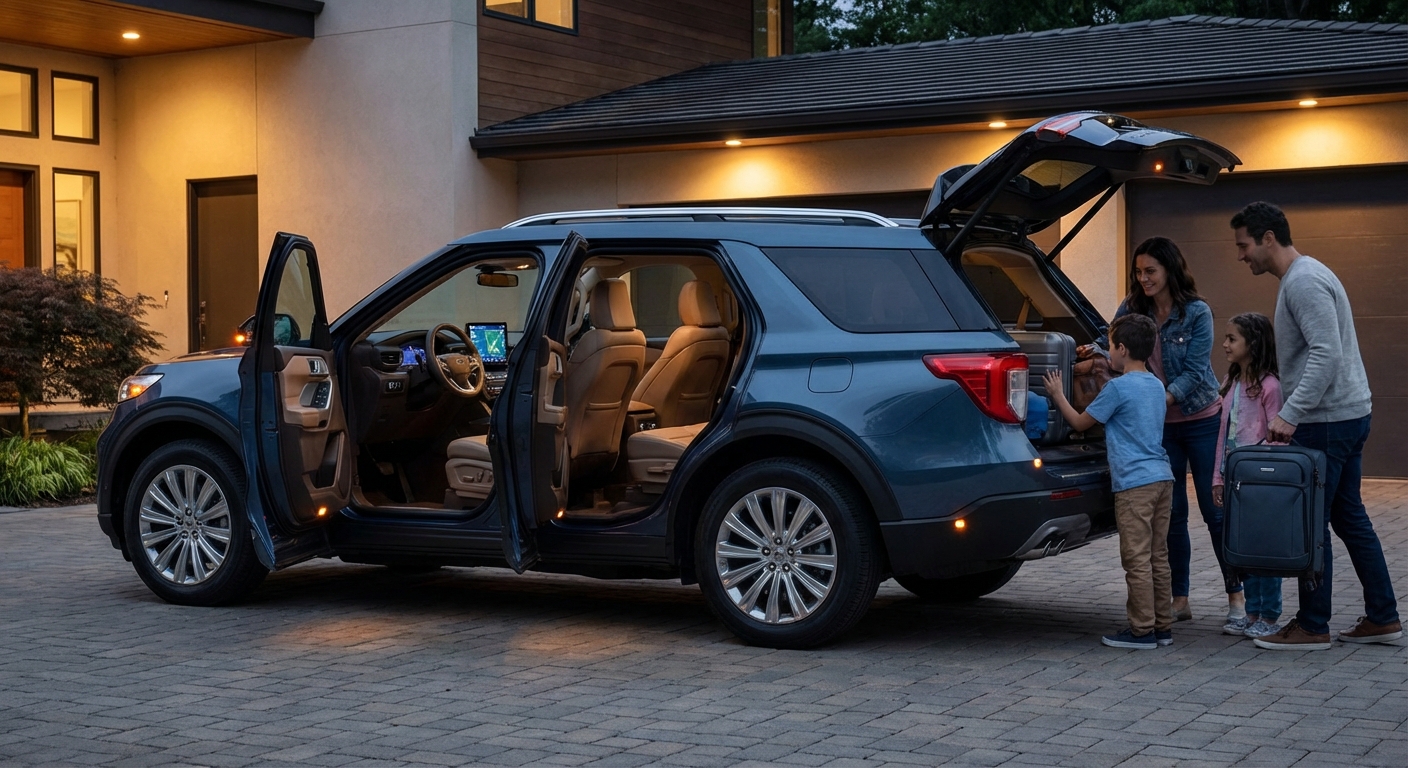
I recently discovered how far Ford has come with interior design when I stepped into this Platinum test vehicle. Older Explorers always felt nice enough, but never really special. The 2026 Platinum actually made me pause before I even hit the start button.
Materials & Design
The cabin leans heavily on soft-touch surfaces: stitched leather on the dash, real-feeling metal trim around the vents and center console, and minimal hard plastic in the main touch zones. The quilting on the Platinum leather seats looks more like something you’d expect in a Lincoln Nautilus than a mainstream Ford.
In my experience, the biggest upgrades:
- Seats: Multi-contour front seats with heating, ventilation, and adjustable thigh support. I drove for almost 3 hours straight and stepped out without that lower-back stiffness I usually get in mid-size SUVs.
- Second row: Available captain’s chairs with armrests and heating. Slide-and-tilt access for the third row is still there, and it’s way less awkward than some of its rivals.
- Third row: Adults can survive back there, but they’re not going to love it for cross-country trips. I did sit in the third row behind a 5'10"-set second-row seat and my knees were close, but not jammed. Kids will be fine, teens will grumble but manage.
If you care about cargo:
- With all three rows up, you can still get a grocery run or a couple of carry-ons in.
- Fold the third row flat, and it becomes road-trip-friendly.
- With both second and third rows down, you’ve got a long, mostly flat load floor. I tested it with a mountain bike and a bulky stroller—both fit without drama.
Screens, Tech, and Daily-Use Stuff
Ford’s been steadily scaling up screen sizes, and the 2026 Explorer Platinum follows suit with a large central touchscreen (think in the 13–14 inch range, based on Ford’s newer interiors) plus a fully digital instrument cluster.
The infotainment stack runs the latest generation of SYNC, with wireless Apple CarPlay and Android Auto, built-in Amazon Alexa, and over-the-air update capability. When I tested the system, it responded quickly—no noticeable lag swiping between maps, audio, and vehicle settings.
Favorite small interior touches from my drive:
- Physical volume knob and key climate buttons. Yes, the touchscreen does a lot, but Ford kept a few real buttons. Your future, half-frozen self will thank them.
- Wireless phone charger plus multiple USB-C ports in all three rows.
- B&O premium audio system that actually sounded good at highway speeds; bass stayed controlled instead of turning into one big thump.
One con: the glossy black trim around the center console. It looked sharp on day one and then instantly collected fingerprints and dust. If you’re obsessive about cleanliness, you’ll notice this.
Safety Tech: Where the 2026 Explorer Really Tries to Impress
I spend a lot of time reading crash-test data and tech breakdowns, and Ford’s recent strategy is clear: bake more advanced driver-assistance systems (ADAS) into higher trims as standard, then gradually push them down the lineup. The Platinum is where you basically get the full toolkit.
Core Safety Suite
On the 2026 Explorer Platinum I tested, you get Ford’s latest Co-Pilot360 package, which typically includes:
- Adaptive cruise control with stop-and-go
- Lane-keeping system and lane-centering assist
- Blind-spot monitoring with cross-traffic alert
- Pre-collision assist with automatic emergency braking
- Intersection assist (helps brake if it detects oncoming traffic when you’re turning left)
- Evasive steering assist (helps you steer around a vehicle if a collision looks imminent)
When I used adaptive cruise in heavy weekend traffic, the stop-and-go behavior was smooth—better than some rival systems that slam the brakes at the last second. Lane-centering kept the Explorer more or less in the middle, but I did feel a couple of gentle ping-pong moments going through sharper highway curves.
Ford’s moving toward hands-free driving on certain roads with its BlueCruise tech on other vehicles. While final feature packaging can shift by launch, the Platinum’s hardware and camera/radar setup clearly support advanced lane-centering and mapping-based assistance. BlueCruise (if included or offered as a subscription/option on 2026 Explorer) would add hands-free operation on pre-mapped highways, similar to GM’s Super Cruise and Tesla’s Autopilot-with-Navigation-on-Autopilot.
Crash Protection & Ratings Context
Even though specific crash-test scores for the 2026 model year weren’t posted yet when I drove the pre-production unit, Ford’s recent Explorer has historically scored well in IIHS and NHTSA tests. The structure, airbag layout, and crumple zones are iterative improvements on that same platform.
The Platinum trim adds:
- Rear occupant alert reminders
- Enhanced parking assist with automated steering for parallel and perpendicular spaces
- 360-degree camera system with better-resolution views and dynamic guidelines
I used the 360 camera to navigate a tight parking garage, and it was one of those “once you have it, you never want to go back” features. The only downside: in rain, the camera lenses pick up water droplets and the image gets a bit smeary.
Pros, Cons, and Who the Platinum Is Really For
After a full weekend living with the 2026 Ford Explorer Platinum—hauling people, running errands, and doing one unnecessary late-night drive just because I could—here’s how it shook out.
What It Nails
- Strong, effortless power from the twin-turbo V6
- Genuinely premium interior feel with comfortable long-haul seats
- Comprehensive safety and driver-assist tech that works well in real traffic
- Good cargo flexibility for families, gear, or both
- Refined highway manners, with a quiet cabin and confident stability
Where It Still Falls Short
- Third row is usable, but not class-leading for adults
- Glossy interior trim shows smudges and dust fast
- 10-speed transmission can feel a bit busy under certain load conditions
- Price creep: by the time you spec a Platinum with a few options, you’re sniffing around entry-level luxury SUVs
If you want something rugged and boxy, this isn’t a Land Cruiser. If you want fully electric, it’s not that either. But if you’re looking for a three-row SUV that feels more upscale than mainstream, with serious power and a full safety tech loadout, the 2026 Explorer Platinum sits in a very sweet spot.
In my experience, this is the Explorer that finally matches what the nameplate has been promising for years: family-hauling practicality, actual premium comfort, and tech that adds real value instead of just being a gadgety talking point.
Sources
- Ford Motor Company – Official Explorer Page - Current Explorer specs, trims, and feature breakdowns
- NHTSA – 2024 Ford Explorer Safety Ratings - Crash test and safety data for the current-generation Explorer
- IIHS – Ford Explorer Ratings - Insurance Institute for Highway Safety ratings and crash test information
- Forbes Wheels – Ford Explorer Overview - Expert overview and comparison of Explorer trims and competitors
- U.S. Department of Energy – Fuel Economy: Ford Explorer - Official fuel economy data and powertrain details for recent Explorer models